Rosy Boa Morphs: Coastal, Desert & Mexican
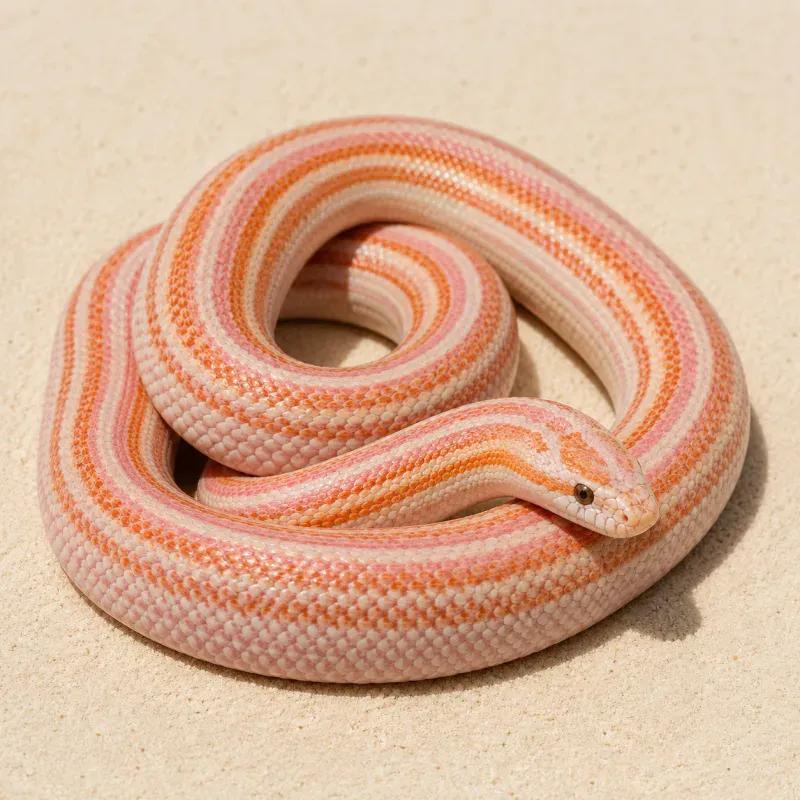
Overview of Rosy Boas
Rosy boas (Lichanura trivirgata) are among the most docile and manageable pet snakes, perfect for beginners and experienced keepers alike. Native to the southwestern United States and northwestern Mexico, these beautiful constrictors are prized for their vibrant color patterns and calm temperament. This comprehensive guide covers everything you need to know about rosy boa morphs, locality variations, and expert care—from enclosure setup to breeding.
Rosy boas are small, terrestrial snakes that rarely exceed 4 feet in length. They are known for their gentle nature, simple husbandry requirements, and fascinating color variations. Unlike many other pet snakes, rosy boas are ovoviviparous—they give birth to live young, which adds to their appeal for breeders and hobbyists. Their lifespan in captivity can reach 20–30 years with proper care, making them a long-term commitment but a rewarding one.
This guide will walk you through every aspect of rosy boa care, including detailed morph and locality information, step-by-step enclosure setup, heating and lighting protocols, feeding schedules, handling techniques, health management, and breeding procedures. Whether you are a first-time snake owner or a seasoned herpetoculturist, you will find practical, actionable advice to ensure your rosy boa thrives.
Rosy Boa Morphs and Localities
Rosy boas exhibit remarkable diversity across their range. While selective breeding has produced stunning captive morphs, many keepers still value locality-specific traits. Below is an overview of the three primary wild types and popular designer morphs. Understanding the differences helps you choose a snake that matches your aesthetic preferences and care expectations.
Coastal Rosy Boa
Found along the Pacific coast of Baja California, Mexico, coastal rosy boas (Lichanura trivirgata coastal) typically display three bold, dark stripes on a lighter background—often orange, yellow, or cream. They are slightly larger and more robust than other varieties, making them a favorite among keepers who prefer a sturdier snake. Coastal localities include San Quentin, San Ignacio, and Bahía de los Ángeles, each with subtle color differences. For example, San Quentin coastal rosy boas often have bright orange or salmon backgrounds, while San Ignacio specimens may show more muted yellows.
Coastal rosy boas are known for their bold, high-contrast patterns that remain vibrant throughout their lives. They are also slightly more tolerant of cooler temperatures due to their coastal habitat, but still require the same thermal gradient in captivity. Their size—ranging from 36 to 48 inches—makes them ideal for a 20-gallon long enclosure, though larger individuals may appreciate a 40-gallon breeder tank.
Desert Rosy Boa
Inland desert populations (e.g., from Arizona, California, and Sonora) tend to have narrower stripes and more muted colors—grays, tans, and browns—to blend with rocky terrain. Their pattern often fades with age, especially in older specimens. Desert rosy boas are the most common in the pet trade due to their hardiness and adaptability. Key desert localities include the Mojave Desert, Sonoran Desert, and the Colorado Desert. Each has distinct characteristics: Mojave Desert rosy boas often have a grayish ground color with dark brown stripes, while Sonoran Desert specimens may show more reddish tones.
These snakes are slightly smaller than coastal varieties, typically reaching 30–40 inches. They are excellent burrowers and appreciate a substrate that allows them to tunnel. Desert rosy boas are also known for their calm demeanor, making them ideal for beginners. Their muted colors may appeal to keepers who prefer a more natural, understated appearance.
Mexican Rosy Boa
Mexican rosy boas (from mainland Mexico) exhibit high contrast with bright red, orange, or yellow stripes on a dark brown or black ground color. They are generally smaller and more slender, with adults reaching 24–36 inches. This makes them perfect for smaller enclosures, though they still require adequate space to explore. Mexican localities include those from Sonora, Sinaloa, and Chihuahua. The Sonoran Mexican rosy boa is particularly prized for its vivid red-orange stripes, while Sinaloan specimens may show more yellow.
Mexican rosy boas are slightly more delicate than their coastal and desert counterparts, but with proper husbandry they are equally hardy. They may be more prone to stress if overhandled, so give them time to acclimate. Their smaller size and striking colors make them a popular choice for keepers with limited space.
Captive Morphs
Through selective breeding, keepers have developed a range of color and pattern morphs, including:
- Albino — Lack melanin, resulting in white, yellow, and pink tones. Albino rosy boas are stunning but may be more sensitive to bright light, so provide plenty of hides.
- Anerythristic — Reduced red pigment, producing gray and black patterns. This morph often shows a beautiful silver-blue sheen.
- Hypomelanistic — Reduced black pigment, making colors brighter and more vivid. Hypo rosy boas often have a pastel appearance.
- Striped — Continuous dorsal stripe instead of broken bands. This pattern mutation is highly sought after and can be combined with other color morphs.
- Patternless — Uniform color with no stripes. Patternless rosy boas are rare and often have a smooth, solid appearance.
When buying a rosy boa, always ask about the locality or morph lineage to understand its potential adult size, color, and temperament. Reputable breeders will provide detailed lineage information and health records. Avoid purchasing from unknown sources without clear documentation, as this can lead to unexpected health or behavioral issues.
Enclosure Setup
Rosy boas are terrestrial and appreciate a secure, escape-proof enclosure. A 20-gallon long tank (30″×12″×12″) is adequate for an adult; juveniles can start in a 10-gallon tank. Provide a tight-fitting lid with clips, as these snakes are escape artists. For larger coastal specimens, a 40-gallon breeder tank (36″×18″×16″) offers extra floor space, which is more important than height. Avoid tall terrariums designed for arboreal species; rosy boas need horizontal space to roam and burrow.
When setting up the enclosure, place it in a quiet area away from direct sunlight, drafts, and high-traffic zones. Sudden temperature fluctuations and constant disturbances can stress your snake. Use a glass aquarium with a screen lid for ventilation, or a front-opening PVC enclosure for easier access and better heat retention. Ensure the lid fits snugly and use clips or locks to prevent escapes.
Substrate
Use a dry, burrow-friendly substrate such as aspen shavings, cypress mulch, or a sand/soil mix. Avoid cedar or pine, which emit toxic oils. Keep the substrate 2–3 inches deep to allow burrowing. Aspen shavings are the most popular choice because they are absorbent, easy to spot-clean, and allow natural burrowing behavior. Cypress mulch retains a bit more moisture, which can be beneficial during shedding but must be monitored to avoid excessive humidity. A sand/soil mix (e.g., 50% play sand, 50% organic topsoil) mimics their natural desert habitat and supports burrowing, but ensure the soil is free of fertilizers or pesticides.
Spot-clean the substrate daily by removing feces and urates. Replace the entire substrate every 4–6 weeks or as needed to maintain hygiene. If you use a sand/soil mix, consider baking it in the oven at 200°F for 30 minutes to sterilize it before use, but be cautious as this can be messy. Always provide a substrate that is completely dry to the touch to prevent scale rot.
Furniture
Include at least two hides (one warm, one cool), a shallow water dish, and climbing branches or rocks (ensure stability). Rosy boas enjoy exploring, so clutter the enclosure with fake plants or cork bark. The hides should be snug—just large enough for the snake to curl up inside—to provide a sense of security. You can use commercial reptile hides, half-logs, or even overturned flower pots with a cut-out entrance. Place one hide on the warm side and one on the cool side to allow thermoregulation without sacrificing security.
Add branches, driftwood, or sturdy rocks for climbing and rubbing against during shedding. Ensure all furniture is stable and cannot topple over, which could injure your snake. Fake plants (silk or plastic) add visual appeal and create hiding spots. Cork bark tubes are excellent for burrowing and can be placed both horizontally and vertically. A shallow water dish should be heavy enough to prevent tipping; use a ceramic or stone dish that is easy to clean. Place the water dish on the cool side to help maintain humidity levels.
Heating and Lighting
Rosy boas are ectothermic and require a thermal gradient to regulate body temperature. Use an under-tank heater (UTH) or a ceramic heat emitter (CHE) on a thermostat to create a warm side of 85–90°F (29–32°C) and a cool side of 70–75°F (21–24°C). Nighttime temps can drop to 65°F (18°C). A thermostat is non-negotiable—it prevents overheating, which can cause burns or even death. Connect the UTH or CHE to a reliable thermostat with a probe placed on the warm side substrate to accurately regulate temperature.
For a 20-gallon tank, a UTH rated for 10–20 gallons is sufficient. Place the UTH under one side of the tank, covering no more than one-third of the floor area. Never place a UTH inside the tank, as it can cause thermal burns. If using a CHE, position it above the warm side with a protective guard to prevent contact. CHEs are better for maintaining ambient temperatures in cooler rooms but can dry out the enclosure, so monitor humidity.
Use a digital thermometer with two probes—one on the warm side and one on the cool side—to monitor the gradient daily. An infrared temperature gun is also helpful for spot-checking surface temperatures. Avoid heat rocks, which are notorious for causing burns. Always provide a temperature gradient so your snake can move between warm and cool areas as needed.
UVB lighting is not strictly necessary but can benefit overall health and color vibrancy. If used, provide a low-level UVB bulb (5–6%) on a 12-hour cycle. Always provide a photoperiod with ambient room light. UVB helps with vitamin D3 synthesis and calcium metabolism, which is especially important for breeding females. However, rosy boas are crepuscular (active at dawn and dusk), so they may not bask under UVB. If you choose to use UVB, ensure the bulb is placed at the correct distance (typically 12–18 inches from the basking spot) and replace it every 6–12 months as output diminishes.
Maintain a consistent day/night cycle of 12 hours of light and 12 hours of darkness. Use a timer for convenience. During the night, no additional lighting is needed; a drop in temperature is natural and beneficial for your snake's circadian rhythm.
Humidity and Hydration
Rosy boas come from arid regions and need low humidity—around 30–50%. Misting is rarely needed; instead, provide a humid hide (a plastic container with damp sphagnum moss) during shedding. Overly high humidity can lead to respiratory infections or scale rot. Use a digital hygrometer to monitor humidity levels in the enclosure. If humidity is too high, increase ventilation by using a screen lid or adding a small fan. If too low (below 30%), you can place a shallow dish of water on the warm side to slightly elevate humidity, but avoid misting the substrate directly.
Always offer a clean water dish large enough for the snake to soak if desired. Change water daily. The water dish should be shallow to prevent drowning—rosy boas are not strong swimmers. During shedding, the humid hide is crucial: fill a small plastic container with damp sphagnum moss and cut an entrance hole. Place it in the middle of the enclosure so the snake can choose to use it. The humidity inside the hide should be around 70–80%, but the overall enclosure humidity remains low.
Signs of dehydration include wrinkled skin, sunken eyes, and stuck shed. If you notice these, provide a humid hide and ensure fresh water is always available. Avoid soaking your snake forcibly; instead, allow it to use the humid hide. With proper humidity, rosy boas will shed in one complete piece, which is a sign of good health.
Diet and Feeding
In captivity, rosy boas thrive on pre-killed frozen-thawed rodents. Feed appropriately sized prey (roughly the same width as the snake’s widest part). Frozen-thawed prey is safer than live prey because it eliminates the risk of the rodent biting and injuring the snake. Thaw the prey in warm water (not boiling) until it reaches room temperature, and use tongs to offer it. Never use a microwave, as it can cook the prey and cause hotspots that burn the snake.
Feeding schedules vary by age and size:
- Hatchlings: Pinky mice every 5–7 days. Hatchlings can start with a pinky mouse (1–2 grams) after their first shed, which typically occurs within 7–10 days of birth.
- Juveniles: Fuzzy or hopper mice every 7–10 days. As the snake grows, increase prey size gradually—fuzzy mice (3–5 grams) for snakes 15–25 grams, hopper mice (5–8 grams) for snakes 25–50 grams.
- Adults: Adult mice or small rats every 10–14 days. Adult rosy boas typically weigh 150–300 grams; feed an adult mouse (25–30 grams) or a small rat (30–40 grams) depending on the snake's size.
Do not handle for 48 hours after feeding to prevent regurgitation. These snakes are opportunistic feeders and may become obese if overfed; monitor body condition. A healthy rosy boa should have a rounded, but not overly fat, body with a visible spine. If the spine is prominent, increase feeding; if the body is round with no spine visible and fat rolls appear, reduce prey size or frequency.
Always feed in the enclosure to minimize stress. Some keepers prefer to feed in a separate container, but this can cause unnecessary handling. Use a feeding tank only if your snake associates the enclosure with handling and becomes defensive; otherwise, feed in the enclosure. After feeding, leave the snake undisturbed for at least 48 hours. If regurgitation occurs, wait 7–10 days before offering a smaller meal, and check your temperatures—regurgitation is often caused by inadequate heat.
Handling and Temperament
Rosy boas are known for their calm, gentle nature. They rarely bite and tolerate handling well. Start with short sessions (5–10 minutes) and gradually increase duration. Support the snake’s body fully and avoid sudden movements. Never handle during shed or after a meal. When picking up your rosy boa, approach from the side or below, not from above, as this can mimic a predator and cause stress. Gently scoop the snake with both hands, ensuring its body is supported along its entire length.
With regular handling, rosy boas become exceptionally tame and can be a joy to interact with. Handle your snake 2–3 times per week for 10–15 minutes, gradually increasing to 20–30 minutes as it becomes accustomed. Avoid handling more than once a day, as this can cause stress. During shedding, the snake's eyes will appear blue or milky, and its skin will become dull; avoid handling during this time. Also, do not handle for at least 48 hours after feeding to prevent regurgitation.
If your rosy boa is new, give it 1–2 weeks to acclimate to its enclosure before handling. Start with short sessions and observe body language: if the snake hisses, vibrates its tail, or musks (releases a mild odor), it is stressed—return it to the enclosure and try again later. With patience, most rosy boas become docile and even seem to enjoy exploring outside their tank.
Common Health Issues
Rosy boas are generally hardy, but watch for these problems:
- Respiratory infections — Symptoms: wheezing, bubbles from nose/mouth, open-mouth breathing. Usually caused by high humidity or low temps. If you suspect an RI, raise the warm side temperature to 90°F (32°C) and reduce humidity. If symptoms persist for more than 48 hours, consult a reptile veterinarian.
- Scale rot — Caused by wet substrate; manifests as discolored, raised scales, often on the belly. Remove the snake to a dry quarantine enclosure with paper towels, clean the affected area with a diluted antiseptic (e.g., chlorhexidine), and ensure the primary enclosure is dry. Severe cases require veterinary treatment.
- Mites — Tiny black or red dots on skin, often seen crawling on the snake or in the water dish. Treat with reptile-safe mite spray and quarantine the snake. Clean and disinfect the entire enclosure, and replace substrate. Repeat treatment according to product instructions.
- Obesity — Overfeeding leads to fat deposits, especially near the tail. Adjust feeding schedule and increase exercise by providing more climbing opportunities. Obesity can lead to fatty liver disease and reduced lifespan.
- Dystocia (egg binding) — In females; symptoms include straining, lethargy, and lack of appetite. Requires immediate veterinary intervention, as it can be life-threatening.
- Inclusion body disease (IBD) — Rare but serious; symptoms include regurgitation, disorientation, and head tremors. There is no cure, so prevention through quarantine of new snakes is essential.
Annual vet check-ups are recommended, especially for breeding animals. A reptile-experienced vet can perform a fecal exam to check for parasites (e.g., cryptosporidium, pinworms) and assess overall health. Always quarantine new snakes for at least 30–60 days to prevent the spread of diseases.
The Most Common Problems
Avoid these pitfalls to keep your rosy boa healthy:
- Overhandling — Can cause stress; limit handling sessions to 15–20 minutes, 2–3 times per week. Watch for signs of stress such as hissing, tail vibration, or musk.
- Poor temperature gradient — Without proper heat, snakes cannot digest food. Ensure the warm side is 85–90°F and the cool side is 70–75°F. Use a thermostat and digital thermometers.
- High humidity — Leads to respiratory and skin issues. Keep humidity at 30–50% and avoid misting the enclosure.
- Live prey — Pre-killed is safer to avoid injury to the snake. Live rodents can bite, causing infections or death.
- Inadequate hides — Snakes need security to feel safe. Provide at least two snug hides on opposite ends of the temperature gradient.
- Using improper substrate — Cedar and pine are toxic; avoid them. Also, avoid substrates that are too dusty or too moist.
- Ignoring quarantine — New snakes should be quarantined for at least 30 days to prevent disease spread.
- Feeding too frequently — Overfeeding leads to obesity and health issues. Stick to the recommended schedule.
Comparison Table: Coastal vs. Desert vs. Mexican Rosy Boas
| Trait | Coastal | Desert | Mexican |
|---|---|---|---|
| Adult length | 36–48 in (90–120 cm) | 30–40 in (75–100 cm) | 24–36 in (60–90 cm) |
| Body build | Robust | Moderate | Slender |
| Color pattern | Bold stripes on light background (orange, yellow, cream) | Muted, narrow stripes (gray, tan, brown) | High contrast, bright stripes (red, orange, yellow) on dark ground |
| Natural range | Baja California coast | SW USA, NW Mexico deserts | Mainland Mexico |
| Difficulty | Beginner | Beginner | Beginner |
| Enclosure size | 20–40 gallon long | 20 gallon long | 10–20 gallon long |
| Temperature needs | Warm side 85–90°F | Warm side 85–90°F | Warm side 85–90°F |
| Humidity | 30–50% | 30–50% | 30–50% |
Breeding Rosy Boas
Breeding rosy boas is relatively straightforward. Provide a cooling period (brumation) of 8–12 weeks at 55–65°F (13–18°C) to stimulate reproductive behavior. After warming up, introduce the male to the female’s enclosure. Gestation lasts 3–4 months, and females give birth to 2–12 live young (ovoviviparous). Hatchlings are independent from birth and can eat pinky mice within a week.
Before breeding, ensure both snakes are healthy, at least 2 years old, and weigh a minimum of 150 grams for females and 100 grams for males. Begin brumation in November: gradually reduce temperatures over 2 weeks, and stop feeding during this time. Maintain a cool, dark environment with fresh water. After 8–12 weeks, gradually raise temperatures back to normal over 2 weeks, and resume feeding. Introduce the male to the female's enclosure for a few hours each day for several days. Watch for copulation, which may last several hours.
After mating, remove the male and continue feeding the female normally. Around 2–3 weeks before birth, you may notice the female's belly swelling and she may stop eating. Provide a nesting box with damp sphagnum moss to help her feel secure. Birth occurs within 3–4 months; the young will be born in thin membranes that they quickly break out of. Remove the neonates to a separate enclosure with a water dish and paper towels. They will shed within 7–14 days, after which you can offer pinky mice.
Always keep detailed records of lineage to preserve locality purity or track morph genetics. Record pairing dates, brumation details, birth dates, and number of offspring. This information is invaluable for future breeding decisions and for buyers who want to know the genetic background.
Frequently Asked Questions
What is the best morph for a beginner?
All three primary localities—coastal, desert, and Mexican—are rated as beginner-friendly in the comparison table. Coastal rosy boas are slightly larger and more robust, while Mexican are smaller and more slender; choose based on size preference and color pattern, but all are equally manageable for new keepers. If you prefer a snake with bold colors and a larger size, coastal is a great choice. If you have limited space, the Mexican rosy boa is ideal.
How often should I feed an adult rosy boa?
Adults should be fed adult mice or small rats every 10–14 days, as stated in the feeding guide. Overfeeding can lead to obesity, so monitor body condition and adjust the schedule if needed. If your adult snake is maintaining a healthy weight, you can feed every 14 days; if it appears thin, feed every 10 days. Always use a feeding schedule that keeps the body condition score at a 2–3 out of 5 (where 5 is obese).
Do rosy boas need UVB lighting?
UVB lighting is not strictly necessary for rosy boas, but if provided, a low-level UVB bulb (5–6%) on a 12-hour cycle can benefit overall health and color vibrancy, as mentioned in the heating and lighting section. If you choose not to use UVB, ensure your snake gets adequate vitamin D3 through its diet (rodents provide sufficient D3). Many keepers successfully maintain rosy boas without UVB for years.
What temperature should the warm side of the enclosure be?
The warm side should be maintained at 85–90°F (29–32°C) using an under-tank heater or ceramic heat emitter on a thermostat. The cool side should be 70–75°F (21–24°C), with nighttime drops to 65°F (18°C) allowed. Always use a thermostat to prevent overheating, and place the probe on the warm side substrate to ensure accuracy.
How can I tell if my rosy boa is stressed?
Signs of stress in rosy boas include hissing, tail vibrating, musking (releasing a foul odor), refusing food, hiding excessively, and erratic movements. If your snake shows these signs, reduce handling, check temperatures and humidity, and ensure there are enough hides. Give your snake time to acclimate, and consult a vet if stress persists.
What are the different types of rosy boas?
Three main groups: coastal rosy boas with clean three-stripe patterns, desert rosy boas from Arizona and Nevada with muted browns, and Mexican rosy boas with the boldest orange-and-black banding. Each "type" is a locality rather than a single morph — the comparison table above lines up how they look and how they are kept.
What does a coastal rosy boa look like?
Coastal rosy boas are the classic striped form: three broad, clean stripes running head to tail over a slate-gray to reddish ground color. Expect slightly cooler, more humid coastal-style setups than for desert localities.
Are there blue rosy boas?
Not in a true visual-blue sense. Rosy boas occasionally show cool slate-gray or gray-blue undertones in the ground color, and keepers informally call these "blue-ish" or gray-phase animals. Ask for daylight photos, since editing can exaggerate the effect.
Related Reading
Check optimal temps, calculate feeding, and find your perfect species match.
References
- Rossi, J. (1992). The Rosy Boa: A Complete Guide to Lichanura trivirgata. Advanced Vivarium Systems.
- Reptile Magazine. (2021). Rosy Boa Care Sheet. Retrieved from reptiledirect.com.
- The Spruce Pets. (2022). How to Care for a Rosy Boa. Retrieved from thesprucepets.com.
- Barker, D. G., & Barker, T. M. (2004). The Rosy Boa: A Natural History and Captive Care Guide. Herpetological Publishing.
- Shi, J. (2019). Rosy Boa Morphs and Genetics. Reptile Genetics Journal, 12(3), 45-58.
🐾 Join the Community
See how other keepers set up their enclosures, ask questions, and share your experience.
🛠️ Apply What You Learned
Check optimal temps, calculate feeding schedules, and get calcium dosage — all personalized for your species.
Comments