Rosy Boa Care Guide: The Gentle Desert Constrictor
Species Overview
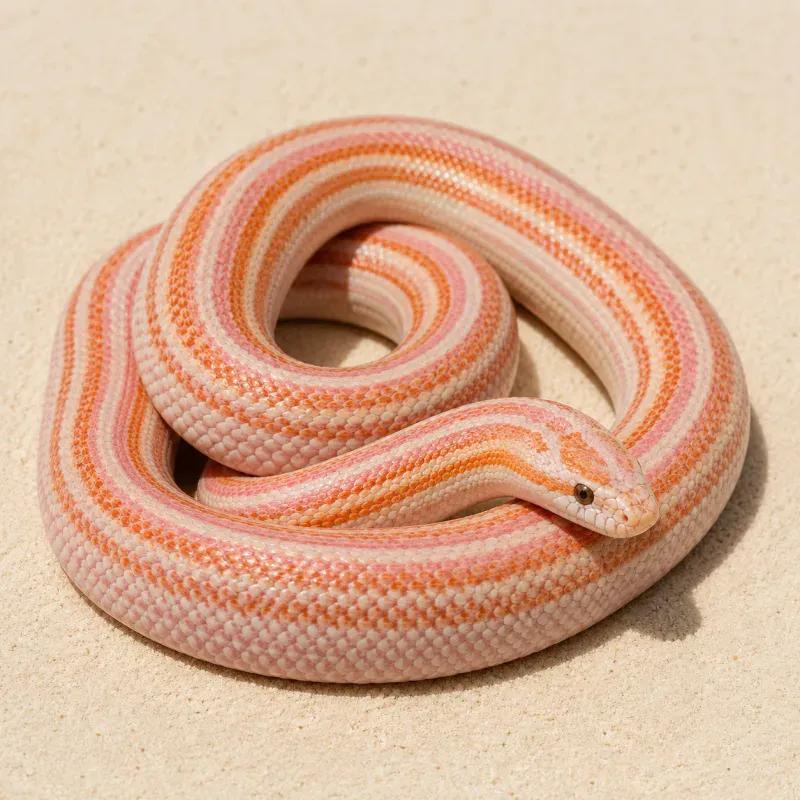
The rosy boa (Lichanura trivirgata) is arguably the most gentle constrictor in the pet trade. Native to the arid deserts of the southwestern United States and northwestern Mexico, these slow-moving, thick-bodied snakes are named for the rosy or salmon-colored stripes running along their flanks. They are one of only two boa species native to the United States.
Rosy boas are crepuscular and spend most of their time under rocks, in crevices, or buried in loose substrate. They are not escape artists like corn snakes, and they are far less likely to bite than many colubrids. For keepers looking for a truly docile snake that stays manageable in size, the rosy boa is arguably the best choice in the entire hobby.
The Bottom Line: Rosy boas are the "lap dog" of the snake world. Slow, deliberate, and almost never defensive — but they are escape-prone if given the opportunity.
Physical Characteristics
Rosy boas are relatively small constrictors, with adults typically reaching 2–4 feet in length. Females are generally larger and heavier-bodied than males. Their coloration varies by locality, ranging from light tan to dark brown, with three distinct stripes — one dorsal and two lateral — that can be rosy, orange, or cream. Their scales are smooth and glossy, giving them a polished appearance.
Unlike many other boas, rosy boas have a relatively short, blunt tail that they use as a defensive mechanism — they may curl into a ball and hide their head, similar to a ball python. This behavior, combined with their calm demeanor, makes them a favorite among keepers who want a snake that is easy to handle and rarely stressed.
Natural History and Behavior
In the wild, rosy boas inhabit rocky desert canyons, scrublands, and arid grasslands. They are most active during the cooler hours of dawn and dusk, which is why they are described as crepuscular. During the heat of the day, they seek refuge in rock crevices, rodent burrows, or under loose soil. They are also known to brumate during the winter months, a period of reduced activity that can be replicated in captivity for breeding purposes.
These snakes are solitary in nature and do not require social interaction. They are not aggressive, but they will defend themselves if threatened — usually by musking or striking, though bites are rare and typically only occur if the snake is startled or in pain.
Enclosure Setup
Providing the correct enclosure size is crucial for the health and well-being of your rosy boa. While they are not active climbers, they do appreciate space to explore and burrow. The table below outlines the minimum recommended enclosure sizes based on life stage.
| Life Stage | Minimum Enclosure |
|---|---|
| Hatchling | 10-gallon or 6 qt tub |
| Adult male | 20-gallon long (30"×12") |
| Adult female | 30–40 gallon (36"×18") |
Rosy boas are terrestrial and do not need vertical space. A secure, locking lid is non-negotiable — while they're not aggressive escape artists, they will push against lids. Provide at least two hides (warm and cool), a water dish, and a rough rock or branch for shedding aid.
Choosing the Right Enclosure Type
You have several options for housing your rosy boa, each with its pros and cons:
- Glass aquarium with screen lid: Classic and easy to clean, but screen lids can be flimsy — use locking clips. Glass retains heat well but loses humidity, which is fine for this species.
- Plastic tub or rack system: Excellent for maintaining temperature and humidity, and they are escape-proof if properly ventilated. However, they offer less visibility.
- Front-opening PVC enclosure: The best of both worlds — great insulation, easy access, and secure locking doors. More expensive but worth it for a permanent home.
Substrate and Decor
The substrate you choose affects humidity, burrowing opportunities, and cleanliness. Here are the best options:
- Aspen shavings: The classic choice — they hold burrows, are inexpensive, and don't mold at low humidity. They are safe if ingested accidentally.
- Sand/soil mix: A 70% topsoil + 30% play sand mixture provides a naturalistic look and allows burrowing. Ensure the sand is not pure play sand, which can cause impaction if ingested.
- Paper towels: Only for quarantine or medical observation — they offer no enrichment.
Avoid pure sand, cypress mulch (which retains too much humidity), and pine or cedar shavings (which are toxic).
Hides and Climbing Aids
Provide at least two hides — one on the warm side and one on the cool side. They should be snug, with only one small entrance, to make the snake feel secure. You can use commercially available reptile hides, half-logs, or even overturned flower pots with a hole cut out. A rough rock or a piece of driftwood will aid in shedding — the snake will rub against it to remove old skin.
Temperature & Heating
Maintaining the correct temperature gradient is essential for your rosy boa's digestion, metabolism, and overall health. The table below shows the ideal temperatures for each zone.
| Zone | Temperature (°F) | Temperature (°C) |
|---|---|---|
| Warm side | 88–92°F | 31–33°C |
| Cool side | 75–80°F | 24–27°C |
| Night | 68–72°F | 20–22°C |
An under-tank heater (UTH) on a thermostat covering 1/3 of the floor is the standard. Rosy boas do not need a basking lamp — they get heat from the ground in nature. Overhead heat is optional and can dry out the enclosure too quickly.
Choosing a Heat Source
Under-tank heaters (UTH) are the preferred method for rosy boas because they mimic the natural ground heat of their desert habitat. Heat tape or heat mats are also effective, but they must always be connected to a thermostat to prevent overheating and burns. Overhead ceramic heat emitters (CHE) can be used as a supplement in colder rooms, but they can lower humidity if overused.
Thermostat Placement and Safety
Place the thermostat probe directly on the substrate above the heat mat, not on the glass, to get an accurate reading of the surface temperature. Set the thermostat to the desired warm-side temperature (88–92°F). Check the temperature daily with a digital thermometer with probes on both sides of the enclosure. A temperature gun is also useful for spot-checking basking areas.
Nighttime Temperature Drop
Rosy boas benefit from a natural nighttime temperature drop to 68–72°F. This is safe and even encourages natural behavior. You can achieve this by turning off the heat mat or setting the thermostat to a lower night setting. However, if your room temperature falls below 65°F, you may need a low-wattage CHE to maintain a safe minimum.
Humidity & Substrate
Humidity: 30–40% ambient. A humid hide (damp sphagnum moss) during shed is sufficient. Too much humidity causes respiratory infections and scale rot in this desert species.
Substrate: Aspen shavings are the classic choice — they hold burrows, are inexpensive, and don't mold at low humidity. A sand/soil mix (70% topsoil + 30% play sand) also works for naturalistic setups. Avoid pure sand, cypress mulch (too humid), and paper towels for long-term (no enrichment).
Monitoring Humidity
Use a digital hygrometer to monitor humidity levels. Place it in the middle of the enclosure, not near the water dish or heat source. If humidity is consistently above 50%, increase ventilation by adding more air holes or switching to a drier substrate. If it is too low (below 30%), you can mist the enclosure lightly, but be careful not to create damp conditions.
Creating a Humid Hide
During shedding, your rosy boa will appreciate a humid hide. This is a simple hide box filled with damp sphagnum moss. Place it on the warm side of the enclosure. Check the moss regularly to ensure it stays slightly moist but not soaking wet. Replace it if it begins to mold.
Signs of Humidity-Related Problems
- Too high: Respiratory infection symptoms include wheezing, open-mouth breathing, and excess mucus. Scale rot appears as discolored, blister-like lesions on the belly scales.
- Too low: Difficulty shedding, retained eye caps, and dry, flaky skin.
Feeding Guide
Rosy boas have a slow metabolism, so feeding frequency is lower than many other snakes. The table below provides a general feeding schedule based on age.
| Age | Prey | Frequency |
|---|---|---|
| Hatchling | Pinky mouse | Every 5–7 days |
| Juvenile | Fuzzy to hopper mouse | Every 7 days |
| Adult | Adult mouse | Every 10–14 days |
Frozen-thawed only. Rosy boas have a slow metabolism — overfeeding leads to obesity and fatty liver disease. Adults should be fed conservatively; a healthy rosy boa has a rounded but not bulging body shape.
Prey Size and Selection
The prey item should be roughly the same width as the snake's thickest part of its body. Hatchlings may start on pinky mice, but some may require lizard-scented pinkies if they are picky. Juveniles progress to fuzzies and hoppers, and adults take adult mice. Always offer pre-killed or frozen-thawed prey — live prey can injure your snake.
Feeding Technique
- Thaw the frozen mouse in a plastic bag in warm water (not boiling) for 15–20 minutes until it reaches body temperature (about 100°F).
- Use long feeding tongs to offer the prey to your rosy boa. Gently wiggle it in front of the snake's nose to stimulate a feeding response.
- Once the snake strikes and constricts, allow it to swallow the prey at its own pace. Do not handle the snake for at least 24–48 hours after feeding to prevent regurgitation.
Common Feeding Problems
- Refusal to eat: This is common during brumation, shedding, or if the temperature is too low. Check your temperatures and wait a week before trying again.
- Regurgitation: Usually caused by handling too soon after feeding, or prey that is too large. Wait at least 2 weeks before offering food again.
- Obesity: If your snake has a rounded back and visible fat rolls, reduce feeding frequency or prey size.
Handling & Temperament
Rosy boas are among the most handleable snakes. They are slow, deliberate, and rarely show defensive behaviors. However, they are crepuscular/nocturnal — handling during the day may result in a sleepy snake. Short sessions of 10–15 minutes, 2–3 times per week, are ideal.
How to Handle a Rosy Boa
- Wash your hands and ensure they are free of any prey scent.
- Approach the snake slowly from the side, not from above (which mimics a predator).
- Gently scoop the snake up with one hand supporting the front half and the other supporting the tail.
- Let the snake move freely between your hands; do not grip tightly.
- Keep handling sessions short — 10 to 15 minutes is plenty.
Signs of Stress
Watch for tail vibrating, hissing, or musking (releasing a foul-smelling liquid). If your snake shows these signs, return it to its enclosure and give it a few days to settle. Regular, gentle handling will usually calm a nervous rosy boa.
Health & Lifespan
With proper care, rosy boas can live 20–30 years in captivity, with some individuals reaching even older ages. The most common health issues are obesity, respiratory infections, and scale rot — all preventable with correct husbandry.
Common Health Problems
- Obesity: Caused by overfeeding; leads to fatty liver disease and shortened lifespan.
- Respiratory infection: Caused by high humidity or cold drafts; symptoms include wheezing and mucus.
- Scale rot: Caused by wet substrate; appears as discolored scales.
- Mites: External parasites; look for tiny black specks on the skin and in the water dish.
Signs of a Healthy Snake
- Clear, bright eyes (except during shed).
- Clean vent with no discharge.
- Smooth, glossy scales without lesions.
- Regular shedding — a complete shed in one piece.
- Active and alert during handling.
What Beginners Often Get Wrong
- Overfeeding: Rosy boas have extremely slow metabolisms. An obese rosy boa has visible "hips" and fat rolls — this shortens lifespan dramatically.
- Too much humidity: Desert species + high humidity = respiratory infection. Keep it dry with a humid hide only for shed.
- No thermostat on heat mat: Same as all snakes — unregulated heat mats cause burns.
- Loose lid: They may be slow, but they're strong and will push. Locking clips are essential.
- Handling too soon after feeding: This can cause regurgitation, which is stressful and dangerous for the snake.
- Using pure sand as substrate: This can cause impaction if ingested. Use a soil/sand mix or aspen.
Brumation: What You Need to Know
Brumation is a period of dormancy that rosy boas experience in the wild during the cooler winter months. While it is not necessary for pet snakes, it can be beneficial for breeding and can stimulate natural feeding behavior. If you choose to brumate your rosy boa, gradually lower temperatures over several weeks to 60–70°F, reduce daylight, and stop feeding for at least 2 weeks before starting. Provide fresh water throughout. After 2–3 months, gradually raise temperatures back to normal.
Frequently Asked Questions
How often should I feed my rosy boa?
Hatchlings should be fed a pinky mouse every 5–7 days. Juveniles need a fuzzy to hopper mouse every 7 days. Adults should be fed an adult mouse every 10–14 days. Overfeeding can lead to obesity and fatty liver disease, so stick to this schedule.
Do rosy boas need a basking lamp?
No. Rosy boas get heat from the ground in nature, so an under-tank heater (UTH) on a thermostat is the standard. Overhead heat is optional and can dry out the enclosure too quickly.
What is the ideal humidity for a rosy boa?
The ambient humidity should be 30–40%. A humid hide with damp sphagnum moss should be provided during shedding. Too much humidity can cause respiratory infections and scale rot.
How long do rosy boas live?
With proper care, rosy boas can live 20–30 years in captivity. Some individuals may live even longer. Avoid overfeeding and maintain correct temperatures to maximize lifespan.
Related Reading
- Rosy Boa Heating Guide — Desert gradient and brumation.
- Kenyan Sand Boa Care Guide — Similar small desert boa setup.
- Ball Python Care Guide — Popular constrictor comparison.
Check optimal temps, calculate feeding, and find your perfect species match.
References
- Bartlett, R.D. & Bartlett, P. (2003). Rosy, Rubber, and Sand Boas. Barron's Educational Series.
- McPeak, R. (2000). The Rosy Boa. Advanced Vivarium Systems.
- Ross, R.A. & Marzec, G. (1990). The Reproductive Husbandry of Pythons and Boas. Institute for Herpetological Research.
🐾 Join the Community
See how other keepers set up their enclosures, ask questions, and share your experience.
🛠️ Apply What You Learned
Check optimal temps, calculate feeding schedules, and get calcium dosage — all personalized for your species.
Comments
No account needed — corrections, updates and questions are all welcome. For a full question with photos, the community Q&A is the better place.