Kenyan Sand Boa Care: The Pocket Snake Guide
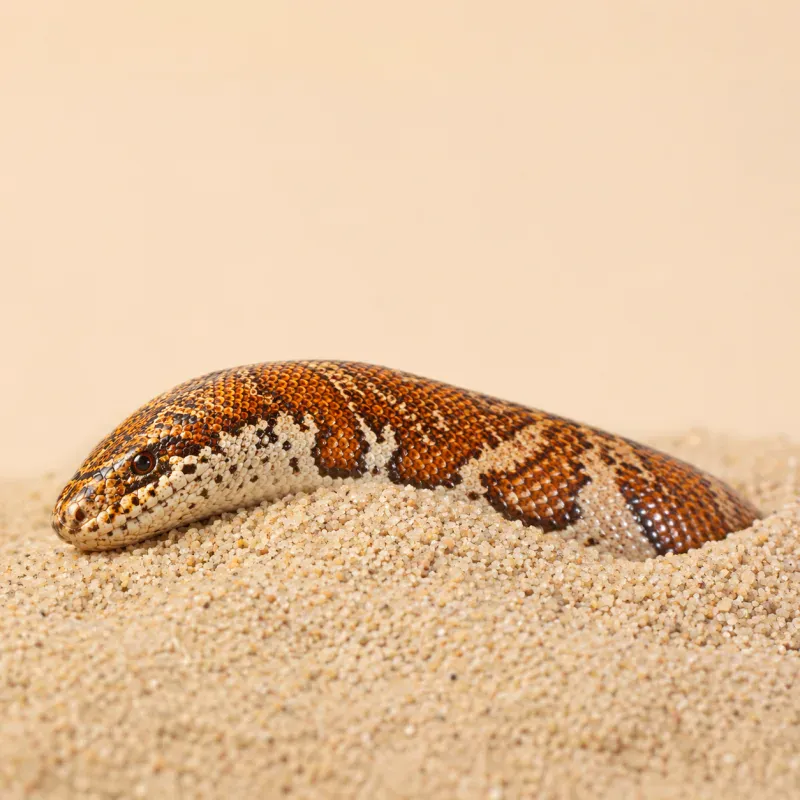
Species Overview
\\nThe Kenyan sand boa (Eryx colubrinus) is the pocket-sized snake. Males rarely exceed 2 feet; females reach 2.5–3 feet. They spend most time buried in substrate, emerging only to eat. For keepers with limited space, there is no easier snake.
\\nNative to East Africa, these snakes are fossorial, meaning they live underground. They are known for their docile nature and straightforward care, making them a top choice for first-time snake owners. Their small size and minimal space requirements are ideal for apartments or small homes.
\\n\\nEnclosure Setup
\\nMinimum: 10-gallon for male, 20-gallon long for female — genuinely does well in small enclosures. Substrate: 4–6" aspen shavings (hold tunnels well, no mold at low humidity). Water dish, flat basking rock. Minimalist setup works.
\\nWhile a 10-gallon tank is the minimum, a 20-gallon long is recommended for females to provide more horizontal space. Avoid tall enclosures; these snakes are terrestrial and prefer floor space over height. A secure lid is essential because sand boas are escape artists.
\\n\\nStep-by-Step Enclosure Setup
\\n- \\n
- Choose a glass or plastic terrarium with a secure screen lid. \\n
- Place a heat source (UTH) under one side, covering 1/3 of the floor. \\n
- Add 4–6 inches of aspen shavings, sloping them deeper on the warm side. \\n
- Place a water dish on the cool side, heavy enough to prevent tipping. \\n
- Add a flat basking rock on the warm side, partially buried for security. \\n
- Optionally, add a humid hide (a container with damp sphagnum moss) for shedding. \\n
Common Enclosure Mistakes
\\n- \\n
- Too much height: Sand boas don't climb; tall tanks waste space and make heating less efficient. \\n
- Insufficient substrate depth: Less than 4 inches prevents natural burrowing, causing stress. \\n
- Overcrowding with decor: Too many hides can block burrowing paths; keep it simple. \\n
Heating
\\n| Zone | Temperature |
|---|---|
| Warm side | 90–95°F (32–35°C) |
| Cool side | 78–82°F (26–28°C) |
| Night | 72–76°F (22–24°C) |
UTH on thermostat covering 1/3 of floor. Humidity: 30–40%. Small humid hide for shedding.
\\nUnder-tank heaters (UTH) are preferred over heat lamps because they warm the substrate from below, mimicking the snake's natural underground environment. Always use a thermostat to prevent overheating, which can be fatal. Monitor temperatures with a digital thermometer probe placed at the substrate surface.
\\n\\nTroubleshooting Heating Issues
\\n- \\n
- Hot spot too hot: If the warm side exceeds 95°F, reduce the thermostat setting or increase substrate depth. \\n
- Cool side too cold: If below 78°F, adjust the UTH placement or add a low-wattage ceramic heat emitter. \\n
- No temperature gradient: Ensure the UTH covers only one-third of the floor; a gradient is vital for thermoregulation. \\n
Substrate for Burrowing
\\nAspen is standard — holds tunnels and doesn't mold at low humidity. Avoid sand: despite the name, pure sand doesn't hold burrows and can be ingested.
\\nAspen shavings are ideal because they are absorbent, low-dust, and allow the snake to create stable burrows. Do not use cedar or pine, as their oils are toxic to reptiles. If you prefer a more natural look, a mix of organic topsoil and play sand (70/30) can be used, but aspen is the safest and easiest.
\\n\\nSubstrate Comparison
\\n| Substrate | Burrow Holding | Mold Risk | Ingestion Risk | Recommendation |
|---|---|---|---|---|
| Aspen shavings | Excellent | Low | Low | Best choice |
| Pure sand | Poor | Low | High | Avoid |
| Cypress mulch | Good | Moderate | Low | Use with caution |
| Reptile carpet | None | N/A | None | Not suitable |
Common Substrate Mistakes
\\n- \\n
- Using sand: Can cause impaction if ingested and doesn't hold burrows. \\n
- Too shallow substrate: Prevents burrowing, leading to stress and hiding issues. \\n
- Damp substrate: Aspen at high humidity can mold; keep it dry, and use a humid hide instead. \\n
Feeding
\\nFrozen-thawed mice: pinkies for hatchlings every 5–7 days, small adult mouse for adults every 7–10 days. Feeding trick: place snake + thawed mouse in a deli cup overnight. Confined space triggers feeding response in reluctant individuals.
\\nAlways offer frozen-thawed prey to avoid injury and reduce the risk of parasites. Hatchlings start with pinky mice, while adults eat small adult mice. Adjust prey size to the snake's girth — the prey should be about as wide as the snake's widest point. Feed in the evening, as sand boas are crepuscular.
\\n\\nFeeding Steps
\\n- \\n
- Thaw the frozen mouse in warm water until it reaches body temperature (about 100°F). \\n
- Use tongs to offer the mouse to the snake inside its enclosure, or use the deli cup method. \\n
- If using a deli cup, place the snake and mouse in the cup, cover it, and leave overnight in the enclosure. \\n
- After the snake strikes and constricts, leave it undisturbed for 24–48 hours to digest. \\n
Feeding Troubleshooting
\\n- \\n
- Refusal to eat: Try the deli cup method, or scent the mouse with a lizard (like anole) to trigger feeding. \\n
- Regurgitation: Usually due to handling too soon after feeding or temperatures too low. Wait 48 hours before handling. \\n
- Overfeeding: Stick to the schedule; obesity is common in captive sand boas. \\n
Handling & Temperament
\\nKenyan sand boas are known for their docile nature. They rarely bite, but they may hiss or strike defensively when startled. Handling should be brief and infrequent — 1–2 times per week for 5–10 minutes is ideal. Always support their body and avoid sudden movements.
\\nThese snakes are secretive; they prefer to be left alone. Over-handling can cause stress, leading to feeding issues or defensive behavior. When handling, allow the snake to move through your hands, but do not grip it tightly. Wash your hands before and after handling to prevent the spread of bacteria.
\\n\\nHealth & Common Issues
\\nSand boas are generally hardy, but they can suffer from a few health problems. Respiratory infections can occur if humidity is too high or temperatures are too low. Look for wheezing, open-mouth breathing, or excessive mucus. Scale rot is another issue, often caused by damp substrate. Signs include discolored or blistered scales.
\\nImpaction is a risk if the snake ingests substrate, especially sand. Symptoms include lethargy, lack of appetite, and a swollen abdomen. If you suspect impaction, consult a reptile veterinarian immediately. Regular shedding issues can be resolved with a humid hide.
\\n\\nSigns of a Healthy Snake
\\n- \\n
- Clear eyes and nostrils \\n
- No visible mites or ticks \\n
- Smooth, intact scales \\n
- Regular eating and defecation \\n
- Active and responsive when handled \\n
Breeding
\\nBreeding Kenyan sand boas is relatively straightforward for experienced keepers. Provide a cooling period of 2–3 months at 70–75°F (21–24°C) to simulate winter. After cooling, gradually raise temperatures to normal. Introduce the female to the male's enclosure, and monitor for copulation. Females give birth to live young (viviparous), typically 6–20 babies per litter. Hatchlings should be housed separately and start with pinky mice.
\\n\\nThe Most Common Problems
\\n- \\n
- Shallow substrate: They need to burrow. Less than 4" aspen = stressed snake. \\n
- Over-handling: Sand boas are secretive. Brief handling 1–2×/week. \\n
- Sand substrate: Despite the name, aspen is superior for burrowing and hygiene. \\n
- Improper temperatures: Too cold or too hot can cause health issues; always use a thermostat. \\n
- Feeding live prey: Can cause injuries; always use frozen-thawed. \\n
Frequently Asked Questions
\\nHow often should I handle my Kenyan sand boa?
\\nHandle only 1–2 times per week for 5–10 minutes. Over-handling can stress the snake and lead to feeding problems.
\\nCan I use sand as substrate?
\\nNo, avoid sand. Despite the name, pure sand doesn't hold burrows and can be ingested, causing impaction. Aspen shavings are the best choice.
\\nWhat size enclosure does a Kenyan sand boa need?
\\nA 10-gallon tank is the minimum for males, while a 20-gallon long is recommended for females. They do well in small enclosures due to their burrowing nature.
\\nWhy is my sand boa refusing to eat?
\\nTry the deli cup method: place the snake and thawed mouse in a confined container overnight. This often triggers a feeding response in reluctant individuals.
\\n\\nRelated Reading
\\n- \\n
- Kenyan Sand Boa Enclosure Setup — Substrate and heating for burrowers. \\n
- Rosy Boa Care Guide — Similar small desert boa. \\n
- Reptile Heating Guide — Heat source comparison. \\n
- Kenyan sand boa morphs — albino, snow and anery varieties with prices. \\n
- Ball Python Care Guide \\n
- Temperature & Humidity Checker \\n
Check optimal temps, calculate feeding, and find your perfect species match.
References
- Barker, D. (2013). The Complete Ball Python. VPI.
- McCurley, K. (2011). The Complete Herpetoculture of the Kenyan Sand Boa. Reptiles Magazine.
- Rossi, J. (2015). The Reptile Health Handbook. TFH Publications.
🐾 Join the Community
See how other keepers set up their enclosures, ask questions, and share your experience.
🛠️ Apply What You Learned
Check optimal temps, calculate feeding schedules, and get calcium dosage — all personalized for your species.
Comments
No account needed — corrections, updates and questions are all welcome. For a full question with photos, the community Q&A is the better place.