Leopard Gecko Care Guide: Setup, Diet & Health
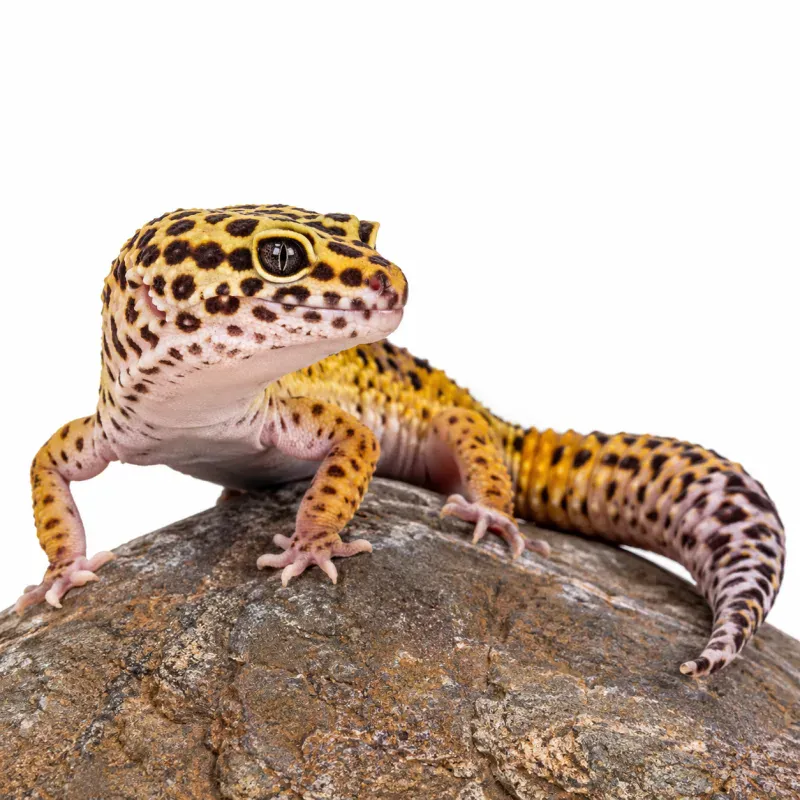
Species Overview
\\nLeopard geckos absorb heat through their belly — not by basking. If your heat mat isn't on a thermostat at 88-92°F, nothing else in this guide matters. Jump to Heating & Temperature →
\\nThe leopard gecko (Eublepharis macularius) is the most recommended starter reptile for good reason.
\\nI've kept leopard geckos for over 8 years, and I still remember my first one — a tremper albino named Ziggy. The biggest lesson I learned early: never trust a pet store thermometer. Those $3 analog dials can be off by 10°F, and for a species that relies on belly heat for digestion, that's the difference between a thriving gecko and one that stops eating. Invest in a digital probe thermometer — it's the best $15 you'll spend in this hobby.
\\nNative to the rocky, arid grasslands of Afghanistan, Pakistan, and northwestern India, these geckos are crepuscular (active at dawn and dusk), docile, and remarkably hardy when their basic needs are met.
\\nUnlike many gecko species, leopard geckos have eyelids — hence the genus name Eublepharis ("true eyelid"). They lack the adhesive toe pads of arboreal geckos, making them strictly terrestrial.
\\n\\nThe Short Version: Leopard geckos are forgiving of beginner mistakes, but they are not maintenance-free. Proper heating and supplementation are non-negotiable.\\n\\n
\\n Enclosure Setup
\\nA 20-gallon long tank (30" x 12" x 12") is the minimum for one adult leopard gecko. Larger is always better — a 40-gallon breeder (36" x 18" x 16") gives more room for a proper thermal gradient.
\\n\\nWhat You'll Need
\\n| Item | Recommendation | Estimated Cost |
|---|---|---|
| Tank | 20-gallon long (minimum) | $30–60 |
| Heat Source | Under-tank heater (UTH) on thermostat | $25–40 |
| Thermostat | Digital proportional (e.g., Herpstat) | $30–100 |
| Thermometer | Digital with probe (×2) | $10 |
| Hides | Minimum 3: warm, cool, humid | $15–30 |
| Substrate | Paper towels (quarantine) or tile/slate | $5–20 |
| Water dish | Shallow, easy to clean | $5 |
| Calcium dish | Small cap of pure calcium (no D3) | $2 |
Step-by-Step Tank Assembly
\\n- \\n
- Clean the tank: Wash with hot water and mild soap, rinse thoroughly. Avoid harsh chemicals. \\n
- Add substrate: Choose a safe substrate (paper towels for new geckos). \\n
- Place the heat mat: Attach the UTH to the underside of one side of the tank, covering about 1/3 of the floor. Never place inside the tank. \\n
- Connect the thermostat: Place the probe on the floor above the UTH, then plug the UTH into the thermostat. Set to 88–92°F. \\n
- Set up hides: Place the warm hide directly over the heat mat, the cool hide on the opposite side, and the humid hide in the middle or slightly warm side. \\n
- Add water and calcium dishes: Position water on the cool side, calcium dish nearby. \\n
- Add décor: Provide branches, rocks, or artificial plants for enrichment, but ensure they are stable. \\n
- Test temperatures: Wait 24 hours, then verify the gradient with digital probe thermometers. \\n
Common Enclosure Mistakes
\\n- \\n
- Too small: A 10-gallon tank is too small for an adult; it cannot provide a proper gradient. \\n
- No hides: Without hides, geckos become stressed and may refuse to eat. \\n
- Wrong substrate: Loose substrates like sand can cause impaction if ingested. \\n
- Heat mat over the whole tank: This prevents a cool side; only cover 1/3. \\n
Heating & Temperature
\\nLeopard geckos need belly heat for digestion — they absorb warmth through their ventral surface, not from basking overhead. The thermal gradient is critical:
\\n\\n| Zone | Temperature (°F) | Temperature (°C) |
|---|---|---|
| Warm side floor | 88–92°F | 31–33°C |
| Cool side | 75–80°F | 24–27°C |
| Night (entire tank) | 65–75°F | 18–24°C |
- \\n
- Under-tank heater (UTH): Covers 1/3 of the tank floor. Must be on a thermostat — unregulated heat mats routinely exceed 120°F and cause severe burns. \\n
- Never use heat rocks. They develop hot spots and cause deep thermal burns, often fatal. \\n
- Overhead heating: A ceramic heat emitter (CHE) or deep heat projector (DHP) can supplement ambient temps, especially in cold rooms. \\n
Troubleshooting Temperature Issues
\\n- \\n
- Warm side too hot: Adjust thermostat down, or add a dimmer if using CHE. Check with a digital probe. \\n
- Warm side too cool: Increase thermostat setting slightly, or move the UTH to a warmer room. Ensure the UTH is not blocked by a thick substrate. \\n
- Cool side too cold: In winter, you may need a small CHE on a thermostat to raise ambient temps. \\n
- Night temps drop too low: Use a CHE or DHP on a low setting, but never let the tank drop below 65°F. \\n
Lighting & UVB
\\nLeopard geckos are crepuscular and were historically kept without UVB. However, recent research strongly supports low-level UVB provision:
\\n- \\n
- Use a T5 2.5–5.0% UVB tube (e.g., Arcadia ShadeDweller 7%) over the warm side. \\n
- Provide a 12-hour day/night cycle. \\n
- No colored lights — red bulbs disrupt circadian rhythms. \\n
UVB Placement and Duration
\\n- \\n
- Mount the UVB tube over the warm side, ensuring it covers about 1/2 to 2/3 of the tank length. \\n
- Keep the tube at a distance of 12–18 inches from the basking spot, following the manufacturer's recommendations. \\n
- Run the UVB for 10–12 hours daily, matching the day/night cycle. \\n
- Replace UVB bulbs every 12 months, even if they still emit visible light, as UV output degrades. \\n
Substrate Options
\\nSafe substrates:
\\n- \\n
- Paper towels (best for quarantine/new arrivals) \\n
- Textured ceramic tile or slate (holds heat, easy to clean) \\n
- Non-adhesive shelf liner \\n
- Bioactive arid mix (70% organic topsoil + 30% play sand) — for advanced keepers only \\n
Unsafe — avoid:
\\n- \\n
- Pure calcium sand (causes impaction) \\n
- Walnut shell, crushed corn cob (sharp, indigestible) \\n
- Reptile carpet (harbors bacteria, snags teeth and claws) \\n
Substrate Comparison Table
\\n| Substrate | Pros | Cons | Best For |
|---|---|---|---|
| Paper towels | Cheap, easy to clean, safe | Not natural, needs frequent changes | Quarantine, juveniles, sick geckos |
| Ceramic tile | Holds heat, easy to clean, natural look | Hard surface, may need cutting | Adults, permanent setup |
| Shelf liner | Non-adhesive, easy to wipe | Can be slippery, not natural | Adults, minimalists |
| Bioactive mix | Naturalistic, self-cleaning with clean-up crew | Requires maintenance, advanced knowledge | Advanced keepers, planted tanks |
Feeding & Diet
\\nLeopard geckos are strict insectivores. Staple feeders should be gut-loaded (fed nutritious food for 24 hours before being offered) and dusted with supplements.
\\n\\n| Feeder | Frequency | Notes |
|---|---|---|
| Crickets | Staple | Gut-load with greens and commercial gut-load |
| Dubia roaches | Staple | Superior nutrition, can't climb smooth surfaces |
| Mealworms | 2–3×/week | High fat; not a standalone staple |
| Superworms | Treat only | Very high fat; risk of impaction in juveniles |
| Waxworms | Treat only | "Gecko candy" — addictive, low nutrition |
| Silkworms | Excellent staple | High calcium, soft-bodied; hard to source |
Feeding Schedule by Age
\\n| Age | Frequency | Amount per Feeding |
|---|---|---|
| Hatchling (0–4 months) | Daily | 6–8 small crickets or equivalent |
| Juvenile (4–12 months) | Every other day | 8–10 medium crickets or equivalent |
| Adult (12+ months) | Every 2–3 days | 10–15 large crickets or equivalent |
Supplementation schedule:
\\n- \\n
- Every feeding: Pure calcium (no D3) in a small dish — allow self-regulation. \\n
- 2×/week: Calcium with D3 dusted on feeders. \\n
- 1×/week: Multivitamin powder (e.g., Repashy Calcium Plus or Herptivite). \\n
Gut-Loading Instructions
\\n- \\n
- Place feeders in a ventilated container with a slice of potato, carrot, or commercial gut-load for 24 hours before feeding. \\n
- Ensure feeders have access to water (use water crystals or a damp sponge). \\n
- Dust feeders immediately before offering to your gecko. \\n
Troubleshooting Feeding Issues
\\n- \\n
- Gecko not eating: Check temperatures. If the warm side is below 88°F, digestion is sluggish. Also, check for stress or shedding. \\n
- Overweight gecko: Reduce feeding frequency and avoid fatty treats like waxworms. \\n
- Refusing dusted insects: Some geckos dislike the taste of supplements. Try a different brand or dust lightly. \\n
Hydration & Humidity
\\n- \\n
- Fresh water daily in a shallow dish. \\n
- Ambient humidity: 30–40%. \\n
- Humid hide: A enclosed hide with damp sphagnum moss or paper towel. Essential for shedding — keep at 70–80% humidity. Without it, geckos suffer stuck shed on toes, eyes, and tail tip (leading to necrosis). \\n
Maintaining Humidity
\\n- \\n
- Mist the humid hide daily; the moss should be damp but not dripping. \\n
- Use a digital hygrometer to monitor ambient humidity. \\n
- If ambient humidity is too high, increase ventilation or reduce misting. \\n
- If too low, add a larger water dish or mist lightly. \\n
Signs of Dehydration
\\n- \\n
- Wrinkled skin \\n
- Sunken eyes \\n
- Sticky saliva \\n
- Lethargy \\n
If you notice these signs, provide a shallow soak in lukewarm water (85°F) for 15 minutes and ensure fresh water is available.
\\n\\nHealth & Wellness
\\nCommon Health Issues
\\n| Issue | Symptoms | Prevention/Treatment |
|---|---|---|
| Metabolic bone disease (MBD) | Soft jaw, tremors, deformities | Proper calcium/D3 supplementation, UVB |
| Impaction | Lethargy, no appetite, bloating | Use safe substrate, avoid loose particles |
| Respiratory infection | Wheezing, bubbles from nose | Maintain proper temps, avoid drafts; vet visit |
| Stuck shed | Dried skin on toes, tail | Provide humid hide, soak if needed |
| Parasites | Weight loss, diarrhea | Quarantine new animals, fecal exam |
Quarantine Protocol
\\n- \\n
- Keep new geckos in a separate room for 90 days. \\n
- Use separate tools, bowls, and gloves. \\n
- Monitor for signs of illness during quarantine. \\n
- Wash hands and change clothes after handling quarantined animals. \\n
Handling & Temperament
\\nLeopard geckos are docile and can become accustomed to handling with patience.
\\n- \\n
- Start slow: Wait at least 2 weeks after bringing your gecko home before handling. \\n
- Short sessions: Begin with 5-minute sessions, gradually increasing to 15–20 minutes. \\n
- Support the body: Let the gecko walk onto your hand; never grab or squeeze. \\n
- Watch for stress signals: Tail waving, vocalization, or trying to escape indicate it's time to put the gecko back. \\n
Lessons Learned the Hard Way
\\n- \\n
- Skipping the thermostat: An unregulated heat mat is the #1 cause of burns and death in leopard geckos. \\n
- Using loose substrate with juveniles: Young geckos are clumsy hunters and ingest substrate. Paper towels until 6+ months. \\n
- Co-habitation: Leopard geckos are solitary. Housing together causes stress, fighting, and sometimes fatal injuries — even with "peaceful" pairs. \\n
- Ignoring the humid hide: Stuck shed on toes constricts blood flow and causes toe loss. This is 100% preventable. \\n
- Over-supplementing with D3: Too much D3 causes hypercalcemia, leading to organ calcification. Follow the schedule above. \\n
- No quarantine protocol: Always quarantine new animals for 90 days in a separate room. Cross-contamination kills collections. \\n
Seasonal Care Guide
\\nLeopard geckos experience natural seasonal shifts in temperature and daylight, and adjusting their care accordingly can help maintain long-term health.
\\n\\nSpring & Summer
\\n- \\n
- Daylight: Maintain a 12-hour day/night cycle with UVB on for 10–12 hours daily. \\n
- Temperature: Aim for the warm side at 88–92°F and cool side at 75–80°F. In warmer rooms, monitor to ensure the cool side doesn't exceed 80°F. \\n
- Humidity: Ambient humidity may rise naturally; keep it between 30–40% by increasing ventilation if needed. \\n
- Feeding: Appetite may increase; adjust amounts according to the age-based schedule. \\n
Autumn & Winter
\\n- \\n
- Temperature drops: Night temps can safely drop to 65–75°F. If your home gets colder, use a ceramic heat emitter (CHE) or deep heat projector (DHP) on a thermostat to maintain the minimum. \\n
- Brumation consideration: Some adults may naturally eat less or fast for a few weeks during winter. Ensure fresh water is always available and monitor weight. \\n
- Humidity: Heating can dry the air; check the humid hide daily and mist more often if needed. \\n
- UVB: Continue the same schedule; replace the bulb if it's been 12 months. \\n
Seasonal Checklist
\\n| Season | Key Actions |
|---|---|
| Spring | Check thermostat calibration; clean tank thoroughly; inspect for stuck shed after winter. |
| Summer | Monitor ambient temps; ensure cool side stays below 80°F; provide fresh water daily. |
| Autumn | Gradually adjust night temps; prepare for potential winter fasting; check heating equipment. |
| Winter | Maintain minimum night temps; offer smaller meals if appetite decreases; avoid handling during brumation. |
Complete Cost Breakdown
\\nUnderstanding the full cost of leopard gecko ownership helps you budget accurately. Here's a realistic breakdown for the first year and beyond.
\\n\\nInitial Setup Costs
\\n| Item | Estimated Cost |
|---|---|
| Tank (20-gallon long) | $30–60 |
| Heat mat + thermostat | $55–140 |
| Digital thermometers (×2) | $10 |
| Hides (warm, cool, humid) | $15–30 |
| Substrate (paper towels or tile) | $5–20 |
| Water dish and calcium dish | $7 |
| UVB fixture + bulb | $40–80 |
| Décor (branches, plants) | $10–30 |
| Total Initial Setup | $172–377 |
Ongoing Monthly Costs
\\n| Item | Estimated Monthly Cost |
|---|---|
| Feeders (crickets or roaches) | $10–20 |
| Calcium and vitamin supplements | $2–5 |
| Substrate replacement (if using paper towels) | $5 |
| Electricity (heat mat + thermostat) | $3–5 |
| Total Monthly | $20–35 |
Annual Costs
\\n- \\n
- UVB bulb replacement: $20–30 per year (replace every 12 months as UV output degrades). \\n
- Vet check-up (optional but recommended): $50–100 per year. \\n
- Emergency vet fund: Set aside $100–200 for unexpected health issues. \\n
Cost-Saving Tips
\\n- \\n
- Buy a thermostat once — it's a one-time investment that prevents costly vet bills from burns. \\n
- Breed your own dubia roaches or crickets to cut feeder costs significantly. \\n
- Use paper towels as a low-cost substrate during quarantine; switch to tile later. \\n
- Purchase hides and décor secondhand or DIY with safe materials. \\n
Quick Troubleshooting Guide
\\nUse this at-a-glance guide to solve common leopard gecko issues quickly.
\\n\\n| Problem | Likely Cause | Solution |
|---|---|---|
| Gecko not eating | Warm side below 88°F; stress; shedding | Verify temperatures with digital probe; provide hiding spots; check for stuck shed |
| Stuck shed on toes | Humid hide too dry | Mist humid hide daily; soak gecko in lukewarm water (85°F) for 15 minutes |
| Lethargy | Dehydration; illness; low temps | Check hydration signs; ensure warm side is 88–92°F; consult vet if persistent |
| Weight loss | Parasites; inadequate feeding | Fecal exam by vet; increase feeding frequency or portion size |
| Aggressive behavior | Stress; co-habitation; handling too soon | Separate if co-habited; wait 2 weeks before handling; provide more hides |
| Bubbles from nose | Respiratory infection | Check temps and drafts; consult vet immediately |
Frequently Asked Questions
\\nWhat is the minimum tank size for one adult leopard gecko?
\\nA 20-gallon long tank (30" x 12" x 12") is the minimum for one adult leopard gecko. Larger is always better, with a 40-gallon breeder (36" x 18" x 16") providing more room for a proper thermal gradient.
\\nWhy is a thermostat essential for an under-tank heater?
\\nA thermostat is essential because unregulated heat mats routinely exceed 120°F and cause severe burns. Leopard geckos absorb heat through their belly, so the warm side floor must be kept at 88–92°F, which requires a thermostat to control.
\\nWhat are the recommended safe substrates for leopard geckos?
\\nSafe substrates include paper towels (best for quarantine or new arrivals), textured ceramic tile or slate, non-adhesive shelf liner, and a bioactive arid mix of 70% organic topsoil and 30% play sand for advanced keepers only. Unsafe options include pure calcium sand, walnut shell, crushed corn cob, and reptile carpet.
\\nHow often should calcium with D3 and multivitamins be given to leopard geckos?
\\nCalcium with D3 should be dusted on feeders 2 times per week, and a multivitamin powder should be given once per week. A small dish of pure calcium without D3 should be available at every feeding for self-regulation.
\\nWhat should I do if my leopard gecko stops eating during winter?
\\nSome adults naturally eat less or fast for a few weeks during winter, especially if temperatures drop at night. Ensure fresh water is always available, monitor weight, and maintain the warm side at 88–92°F. If the gecko loses significant weight or shows other signs of illness, consult a vet.
\\nHow do I know if my leopard gecko is dehydrated?
\\nSigns of dehydration include wrinkled skin, sunken eyes, sticky saliva, and lethargy. If you notice these, provide a shallow soak in lukewarm water (85°F) for 15 minutes and ensure fresh water is available.
\\nCan I house two leopard geckos together?
\\nNo, leopard geckos are solitary. Co-habitation causes stress, fighting, and sometimes fatal injuries — even with "peaceful" pairs. Each gecko needs its own enclosure.
\\nHow long should I quarantine a new leopard gecko?
\\nQuarantine new geckos for 90 days in a separate room, using separate tools, bowls, and gloves. Monitor for signs of illness during this period, and wash hands after handling quarantined animals.
\\n\\nRelated Reading
\\n- \\n
- African Fat-Tailed Gecko Care Guide — Leopard gecko's West African relative with higher humidity needs. \\n
- Best Reptile Substrate: 10 Options Compared — Find the safest substrate for your terrestrial gecko. \\n
- Why Is My Leopard Gecko Not Eating? 7 Common Reasons — Troubleshoot appetite issues. \\n
Still deciding on a species? Take our which reptile is right for you quiz — 8 questions scored against your space, schedule and experience before you commit to a setup.
Check optimal temps, calculate feeding, and find your perfect species match.
References
- de Vosjoli, P. (2004). The Herpetoculture of Leopard Geckos. Advanced Vivarium Systems.
- Repashy, A. (2019). Leopard Gecko Nutrition and Supplementation. Repashy Ventures.
- Arcadia Reptile (2021). UVB Lighting for Crepuscular Reptiles. Arcadia Products.
🐾 Join the Community
See how other keepers set up their enclosures, ask questions, and share your experience.
🛠️ Apply What You Learned
Check optimal temps, calculate feeding schedules, and get calcium dosage — all personalized for your species.
Comments