Best Substrate for Leopard Geckos: Safe vs Unsafe
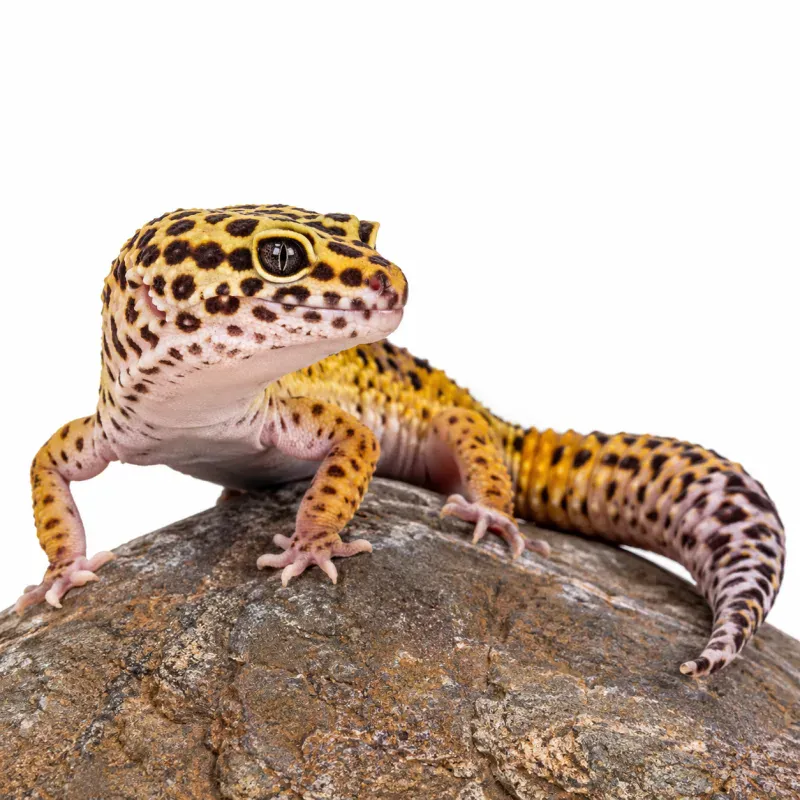
When I started keeping geckos, I wasted $200 on different substrates trying to find "the perfect natural look." Here's what I learned: for a leopard gecko, tile is king. It conducts heat perfectly from an under-tank heater, it's impossible to ingest, it files their nails naturally, and it takes 30 seconds to clean. Save the bioactive setups for species that need high humidity. For a leopard gecko, function beats aesthetics every time.
Why Substrate Matters
Substrate isn't just decoration — it affects your leopard gecko's health, hygiene, and safety. The wrong substrate can cause impaction (intestinal blockage), respiratory infections, or bacterial buildup. The right substrate makes spot-cleaning easy and provides natural enrichment.
Leopard geckos are ground-dwelling lizards that spend most of their time on the enclosure floor. They lick surfaces to explore, and during feeding, they may accidentally ingest substrate along with their prey. This is why substrate choice is a critical decision that can mean the difference between a thriving pet and a veterinary emergency.
Additionally, substrate influences temperature gradients, humidity levels, and the gecko's ability to exhibit natural behaviors like digging and burrowing. A well-chosen substrate supports thermoregulation and mental well-being, while a poor one can lead to chronic health issues.
Best Safe Substrates
Below are the safest and most recommended substrate options for leopard geckos, each with its own strengths and ideal use cases.
Textured Ceramic Tile or Slate
Rating: ★★★★★ — The gold standard for leopard gecko keepers. Tile is completely impaction-proof, holds heat from an under-tank heater beautifully, trims nails naturally, and wipes clean in seconds. Use textured (not polished) tile so your gecko has grip. Place directly on the glass above the heat mat. Cost: $2–5 per tile at any hardware store.
How to Set Up Tile Substrate
- Measure the enclosure floor and purchase enough tiles to cover it completely. You can use one large tile or several smaller ones fitted together.
- Choose tiles with a rough, textured surface (e.g., slate, quarry tile, or tumbled stone). Avoid polished or glossy tiles that are slippery.
- Clean the tiles with a reptile-safe disinfectant and rinse thoroughly before placing them in the enclosure.
- Lay the tiles directly on the glass, ensuring they fit snugly. If gaps exist, fill them with a non-toxic silicone sealant (let it cure for 48 hours).
- Place the under-tank heater beneath the glass, directly under one side of the enclosure. The tile will absorb and radiate heat evenly.
- Spot-clean daily and do a full wipe-down with a 50/50 vinegar-water solution weekly.
Pros and Cons of Tile
| Pros | Cons |
|---|---|
| Impossible to ingest | Hard and unforgiving if gecko falls |
| Excellent heat conduction | No digging or burrowing enrichment |
| Naturally files nails | Can be cold if not heated properly |
| Easy to clean and sanitize | Requires exact cutting for odd-sized enclosures |
| Durable and long-lasting | Not aesthetically natural for some keepers |
Paper Towels
Rating: ★★★★☆ — The best choice for quarantine and juveniles under 6 months. Paper towels let you monitor droppings for health issues, cost almost nothing, and pose zero impaction risk. Replace every 2–3 days. The downside: they look clinical and don't provide enrichment.
When and How to Use Paper Towels
- Use unbleached, dye-free paper towels to avoid chemical exposure.
- Layer 2–3 sheets to absorb moisture and provide a soft surface.
- Replace every 2–3 days or immediately if soiled, to prevent bacterial growth.
- For juveniles, this substrate is non-negotiable until they reach 25+ grams and are reliably eating from tongs or a dish.
Non-Adhesive Shelf Liner
Rating: ★★★★☆ — A popular budget option. Shelf liner is easy to cut to size, washable, and comes in textures that provide grip. Always choose non-adhesive — the adhesive backing off-gases when heated. Replace every 2–3 months as it degrades. Look for solid (not perforated) liners to prevent toe snags.
Installation Tips
- Measure the enclosure floor and cut the liner to fit, leaving a small margin at edges.
- Wash the liner with mild soap and water before use.
- Place it directly on the glass; do not use adhesive or double-sided tape.
- If the liner curls, place a heavy object (like a clean rock) on it for a few hours to flatten.
- Spot-clean daily; remove and hand-wash weekly with warm water and vinegar.
Excavator Clay
Rating: ★★★★☆ — Zoo Med Excavator Clay lets you sculpt a natural-looking, hard-packed substrate. Mix with water, shape into burrows and hides, and let it dry. The hardened surface is impaction-safe. The downside: it's permanent until you break it up, making deep cleaning harder. Best for display enclosures.
Step-by-Step Setup
- Purchase Zoo Med Excavator Clay (available in 10 lb and 25 lb bags).
- Empty the clay into a large container and add water gradually (about 1 part water to 3 parts clay) until it reaches a dough-like consistency.
- Mix thoroughly with your hands or a trowel until no dry powder remains.
- Press the clay into the enclosure floor to a depth of 2–3 inches. Sculpt burrows, slopes, and hides as desired.
- Allow the clay to dry completely — this can take 24–48 hours depending on humidity. It will harden into a solid, rock-like surface.
- Once dry, wipe off any loose dust and add your decorations.
Maintenance and Troubleshooting
- Spot-clean by wiping with a damp cloth; the clay surface is non-porous when dry.
- If you need to deep-clean, you must break up the clay, which destroys your scape — plan for infrequent full changes.
- Avoid adding water to the clay after it's dry, as it will soften and become muddy.
Bioactive Arid Mix
Rating: ★★★☆☆ (Advanced) — 70% organic topsoil + 30% play sand, seeded with arid springtails and isopods. A well-established bioactive enclosure self-cleans through the cleanup crew. Important: this is for experienced keepers only. The mix must be bone-dry on the surface (leos are desert animals) and the CUC must thrive at 30–40% humidity. A failed bioactive setup becomes a bacterial hazard.
How to Build a Bioactive Leopard Gecko Enclosure
- Mix 70% organic topsoil (no fertilizers or pesticides) with 30% washed play sand. Sterilize the topsoil by baking it at 200°F for 30 minutes to kill pathogens.
- Add a drainage layer (e.g., clay balls or gravel) if you plan to water plants, but for leopard geckos a simple 3-4 inch soil layer is sufficient.
- Introduce arid-adapted cleanup crew: Porcellio dilatatus isopods and arid springtails (e.g., Folsomia candida).
- Establish a moisture gradient: water the cool side where the humid hide sits, keep the warm side bone-dry.
- Let the CUC establish for 3–6 months before adding the gecko, ensuring the population is stable.
- Monitor humidity: keep surface dry, but spot-water the cool side to maintain 30–40% humidity.
Common Bioactive Pitfalls
- Overwatering: leads to mold and bacterial growth.
- Underwatering: CUC dies, and waste accumulates.
- Wrong CUC species: tropical isopods will not survive in arid conditions.
- Adding the gecko too early: the CUC cannot keep up with waste.
Substrates to Avoid — Never Use These
Some substrates are dangerous or even lethal for leopard geckos. Avoid the following at all costs:
- Calcium Sand / Vita-Sand: The #1 killer substrate. Marketed as "digestible," it actually clumps into cement-like masses in the gut when ingested. Causes fatal impaction.
- Play Sand (pure): Even "safe" sand is ingested during feeding and accumulates in the digestive tract. Never use pure sand for leopard geckos.
- Walnut Shell / Crushed Corn Cob: Sharp-edged particles cause intestinal micro-tears when ingested. Coarse texture harbors bacteria.
- Reptile Carpet: Snags teeth and claws, harbors bacteria in the fibers, and is impossible to truly sanitize. Veterinarians report "carpet mouth" — infections caused by bacteria-laden carpet fibers.
- Wood Chips / Bark: Sharp splinters cause internal injury. Large pieces are swallowed during hunting and cause impaction.
- Coco Coir / Eco Earth (alone): Too dusty when dry, too humid when wet. Leos need arid conditions.
Why These Substrates Are Dangerous
Impaction is the primary risk: when a gecko ingests loose particles, they can accumulate in the digestive tract, causing a blockage that prevents food and waste from passing. Symptoms include lethargy, loss of appetite, and a swollen abdomen. Impaction often requires veterinary surgery and can be fatal if untreated.
Additionally, sharp particles (walnut shell, wood chips) can lacerate the delicate lining of the digestive tract, leading to internal bleeding and infection. Bacterial harboring in fibrous materials (reptile carpet) can cause mouth rot and respiratory issues.
Substrate for Juveniles (Under 6 Months)
Juvenile leopard geckos are clumsy hunters and lick everything. Use only paper towels for the first 6 months. Once they're 25+ grams and reliably eating from tongs or a dish, transition to tile or shelf liner. Juvenile impaction from loose substrate is one of the most common preventable deaths in the hobby.
Why Juveniles Are at Higher Risk
Juveniles have smaller digestive tracts, making them more susceptible to blockages from even tiny particles. They also have less hunting precision and are more likely to miss prey and strike the ground, ingesting substrate. Their immune systems are still developing, so any bacterial exposure is riskier.
Transitioning to a Permanent Substrate
- Wait until your gecko is at least 25 grams and consistently eating from tongs or a dish (usually around 6 months old).
- Start by placing a small tile or shelf liner patch in one corner of the enclosure while keeping paper towels elsewhere.
- Monitor your gecko's behavior for a week — if it shows no interest in ingesting the new material, gradually replace the paper towels.
- After 2 weeks, remove all paper towels and switch entirely to the new substrate.
Going Bioactive? Read This First
Leopard geckos are the hardest common reptile to keep bioactive. They need arid conditions (30–40% humidity) but cleanup crews need moisture to survive. The solution: a moisture gradient. Water the cool side where the humid hide sits, keep the warm side bone-dry. Use arid-specific isopods (Porcellio dilatatus, Porcellionides pruinosus) and arid springtails. Expect the CUC to take 3–6 months to fully establish before adding the gecko.
Step-by-Step Bioactive Setup
- Prepare the soil mix: Combine 70% organic topsoil with 30% washed play sand. Bake the topsoil to sterilize it.
- Add a drainage layer (optional): For leopard geckos, a 1-inch layer of clay balls covered with mesh can prevent waterlogging.
- Install the moisture gradient: Place a humid hide on the cool side and water that area lightly twice a week. Keep the warm side completely dry.
- Introduce the cleanup crew: Add arid isopods and springtails. Provide them with a small piece of cork bark and leaf litter as cover and food.
- Wait 3–6 months: Allow the CUC to breed and establish a stable population. You should see isopods and springtails active in the soil.
- Add the gecko: Only after the CUC is thriving should you introduce your leopard gecko.
Maintaining a Bioactive Enclosure
- Monitor humidity daily: keep surface dry, but ensure the cool side stays around 30–40%.
- Spot-clean visible waste weekly; the CUC handles the rest.
- Provide supplemental food for the CUC (e.g., leaf litter, vegetable scraps) if needed.
- If you see mold or a foul smell, reduce watering and increase ventilation.
Substrate Comparison Table
| Substrate | Safety | Enrichment | Cost | Maintenance | Best For |
|---|---|---|---|---|---|
| Textured Tile | Excellent | Low | Low ($2–5/tile) | Very easy | Most keepers |
| Paper Towels | Excellent | None | Very low | Easy (replace often) | Juveniles, quarantine |
| Shelf Liner | Excellent | Low | Low | Easy | Budget setups |
| Excavator Clay | Good | High (digging) | Medium | Moderate | Display enclosures |
| Bioactive Mix | Good (if established) | High | High | Complex | Experienced keepers |
Common Substrate Mistakes to Avoid
- Using loose substrate with juveniles: Always use paper towels until 6 months old.
- Choosing calcium sand because it's "digestible": It's not — it causes fatal impaction.
- Skipping a moisture gradient in bioactive setups: The CUC will die without moisture.
- Using adhesive shelf liner: Off-gassing can be toxic when heated.
- Not cleaning substrate regularly: Bacteria buildup can cause respiratory infections.
- Mixing sand with soil without sterilizing: Pathogens can harm your gecko.
Frequently Asked Questions
Can I use sand for my adult leopard gecko?
No. Pure sand, even play sand, is dangerous because leopard geckos ingest it during feeding, leading to impaction. Calcium sand is even worse, as it clumps into cement-like masses in the gut. For adults, tile, shelf liner, or a well-established bioactive mix are safe alternatives.
How often should I replace paper towels for a juvenile?
Replace paper towels every 2–3 days, or immediately if soiled. This prevents bacterial growth and allows you to monitor your juvenile's droppings for health issues. Since paper towels are cheap, err on the side of frequent changes.
Is bioactive substrate safe for leopard geckos?
Bioactive substrate can be safe if set up correctly and only for experienced keepers. The key is maintaining a bone-dry surface and a moisture gradient to support the cleanup crew (arid isopods and springtails) without creating humidity that is too high for the gecko. A failed bioactive setup becomes a bacterial hazard.
What should I do if my gecko ingests substrate?
If you suspect your gecko has ingested loose substrate, monitor for symptoms of impaction: lethargy, loss of appetite, and a swollen abdomen. Remove the loose substrate immediately and switch to paper towels or tile. If symptoms persist for more than 24 hours, consult a reptile veterinarian, as impaction may require medical intervention.
Related Reading
Check optimal temps, calculate feeding, and find your perfect species match.
References
- Zoo Med Laboratories (2023). Excavator Clay Substrate Instructions. Zoo Med.
- Repashy Ventures (2022). Leopard Gecko Substrate Safety Guidelines. Repashy.
- Veterinary Partner (2021). Impaction in Reptiles: Causes and Prevention. VIN.
- The Bioactive Dude (2024). Arid Bioactive Setup Guide for Leopard Geckos.
🐾 Join the Community
See how other keepers set up their enclosures, ask questions, and share your experience.
🛠️ Apply What You Learned
Check optimal temps, calculate feeding schedules, and get calcium dosage — all personalized for your species.
Comments