Ball Python Starter Kit: What You Actually Need
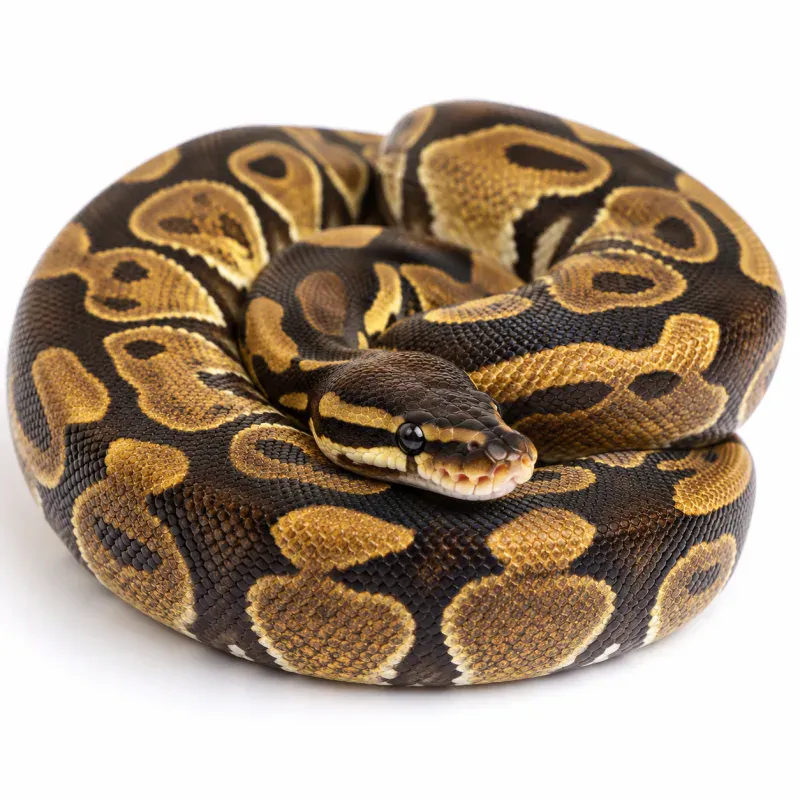
Enclosure Setup: PVC vs Glass 40-Gallon
The enclosure is the foundation of your Ball Python's home. A 40-gallon breeder tank (36" x 18" x 18") is the minimum recommended size for an adult Ball Python. However, the choice between glass and PVC significantly impacts heat and humidity retention.
Glass Tanks
Glass aquariums are widely available and inexpensive ($50–$100 for a 40-gallon). However, they are poor insulators: heat escapes quickly, and screen lids allow humidity to drop below 40% in dry climates. You'll need to cover 70–80% of the lid with HVAC tape or foil to maintain 55–65% humidity. Glass is also heavy and can crack if dropped.
PVC Enclosures
PVC (polyvinyl chloride) enclosures are purpose-built for reptiles. Brands like Animal Plastics, Boaphile, and Pro Products offer 4' x 2' x 15" enclosures (roughly 60–90 gallons) for $250–$500. PVC retains heat and humidity far better than glass: you'll use less energy and see fewer humidity spikes. They are lightweight, stackable, and often come with sliding front doors for easy access. The downside is the higher upfront cost and longer shipping times (often 8–12 weeks).
Recommendation: If you live in a humid environment or have a tight budget, a modified glass tank works. For long-term ease and stability, invest in a PVC enclosure. Ensure any enclosure has proper ventilation — cross-flow vents prevent stagnant air and mold.
Heating & Lighting: CHE vs RHP, Thermostats & UVB
Ball Pythons need a thermal gradient: a warm side of 88–92°F (31–33°C) and a cool side of 78–80°F (25–27°C). Nighttime drops to 75°F are acceptable. Use two separate heat sources controlled by a thermostat.
Overhead Heating: Ceramic Heat Emitter (CHE) vs Radiant Heat Panel (RHP)
Ceramic Heat Emitters (CHE) screw into a ceramic socket (e.g., Fluker's or Zoo Med) and emit infrared heat. They are inexpensive ($15–$30) and last 1–2 years. CHEs can dry out the air, so they must be placed over the warm side and guarded to prevent burns. They work best with a dimming thermostat.
Radiant Heat Panels (RHP) are flat, surface-mounted panels that produce gentle, even heat without light. Brands like Pro Products and Vivarium Electronics make reliable RHPs ($80–$150). They are safer than CHEs (no exposed hot surface), last 5–10 years, and do not reduce humidity. RHPs require a proportional thermostat.
Verdict: For a PVC enclosure, an RHP is ideal. For glass tanks, a CHE paired with a heat mat (regulated by thermostat) works well as a secondary heat source.
Thermostats: Herpstat vs VE
A thermostat is non-negotiable. Two top brands dominate: Spyder Robotics Herpstat and Vivarium Electronics (VE).
| Feature | Herpstat (e.g., Herpstat 2) | VE (e.g., VE-200) |
|---|---|---|
| Price | $150–$250 | $100–$180 |
| Accuracy | ±0.5°F | ±1°F |
| Dimmer/Proportional | Yes (all models) | Yes (select models) |
| Safety features | High/low alarms, night drop | High/low alarms |
| Best for | CHEs, RHPs, heat mats | Heat mats, simple setups |
Both are excellent. Herpstat offers finer control and more features; VE is slightly cheaper and easier to use. Avoid cheap on/off thermostats (e.g., Jumpstart) — they can cause temperature swings.
UVB Lighting (Optional)
Ball Pythons are nocturnal and do not require UVB. However, low-level UVB (2–5% T5 bulb) can improve skin health and vitamin D synthesis. If you choose UVB, provide a 12-hour photoperiod and ensure the snake can escape to a shaded hide. UVB is not a heat source.
Humidity & Substrate: Coconut Husk vs Cypress Mulch
Ball Pythons require 55–65% humidity, with 70–80% during shed. Low humidity causes stuck eyecaps and respiratory issues. High humidity (>80%) for extended periods can lead to scale rot.
Substrate Options
Coconut Husk (Coir) — Excellent water retention, resists mold, and is dust-free. Brands like Eco Earth or ReptiChip cost $15–$20 per brick (expands to ~8 quarts). Best for high-humidity setups.
Cypress Mulch — Holds moisture well and has a natural anti-fungal property. It's cheaper ($10–$15 per bag) but can be dusty and may contain sharp pieces. Ideal for glass tanks where humidity needs a boost.
Other Options: Orchid bark or paper towels (for quarantine). Avoid pine, cedar, or aspen — they are toxic or too dry.
Tip: Layer 2–3 inches of substrate and mist the warm side lightly daily. Use a digital hygrometer to monitor humidity.
Hides, Water Bowl & Accessories
Ball Pythons are secretive and need at least two tight-fitting hides: one on the warm side, one on the cool side. The hide should be just large enough for the snake to curl up inside — if it can stretch out, it's too big. Good materials: resin caves, cork rounds, or plastic containers with an entrance cut out. Avoid half-logs (too open).
Water Bowl: Use a heavy ceramic or stainless steel bowl large enough for the snake to soak in (but not deep enough to drown). Change water daily and clean the bowl weekly with reptile-safe disinfectant (e.g., F10SC).
Thermometer & Hygrometer: Use digital units with probes (e.g., Zoo Med or Govee). Place one probe on the warm hide floor and one on the cool hide floor. Avoid analog stick-on gauges — they are inaccurate and can fall off.
Diet & Feeding: Frozen Mice Feeder Sources
Ball Pythons eat rodents exclusively. Hatchlings start on hopper mice; adults eat small to medium rats (one appropriately sized prey item every 7–14 days). The prey should be roughly 1–1.5 times the width of the snake's widest point.
Feeder Sources:
- Big Cheese Rodent Factory — Bulk frozen mice/rats, high quality, $1–$3 per feeder
- Perfect Prey — Wide variety of sizes, fast shipping
- Local pet stores (Petco, independent) — Convenient but pricier ($3–$5 per feeder)
Always thaw frozen prey in warm water (never microwave) and offer with tongs. Never leave live rodents unattended with your snake — they can injure or kill it.
Handling & Socialization
Wait 7–10 days after bringing your snake home before handling. Then start with short (5–10 minute) sessions 2–3 times per week. Handle in a calm, quiet room, supporting the snake's body. Avoid handling after feeding (48 hours) or during shed. Signs of stress: hissing, striking, tail rattling, or musking. If stressed, return the snake to its enclosure and try again later.
Common Health Issues
- Respiratory Infection (RI) — Symptoms: wheezing, bubbles at nose, open-mouth breathing. Cause: low temps or high humidity. Treatment: vet-prescribed antibiotics and fixing husbandry.
- Stuck Shed — Cause: low humidity. Soak snake in shallow warm water for 15–20 minutes and provide a humid hide.
- Scale Rot — Blisters or discolored scales from wet substrate. Fix: dry out enclosure, clean with dilute betadine, vet if severe.
- Mites — Tiny black dots on skin; snake soaks excessively. Treat with reptile-safe mite spray (e.g., Provent-A-Mite) and replace substrate.
Common Mistakes & How to Avoid Them
- Overhandling — Leads to stress and refusal to eat. Stick to 2–3 times per week.
- Improper Temperatures — Using one heat source without a thermostat. Always use two thermostats.
- Too Large Enclosure Without Hides — A big tank with few hides stresses the snake. Fill it with clutter (fake plants, branches, multiple hides).
- Feeding Live Prey — Unnecessary risk. Transition to frozen-thawed using scenting techniques if needed.
- Ignoring Humidity — Low humidity causes shed problems; high humidity causes scale rot. Monitor daily.
Total Cost Breakdown: Budget vs Premium
| Item | Budget Setup (Glass Tank) | Premium Setup (PVC Enclosure) |
|---|---|---|
| Enclosure | $60 (40-gallon tank + lid) | $350 (4'x2' PVC from Animal Plastics) |
| Heating | $40 (CHE + dome + heat mat) | $130 (RHP + heat mat) |
| Thermostat | $35 (Jumpstart on/off) | $180 (Herpstat 2) |
| Substrate (initial) | $10 (cypress mulch) | $20 (coconut husk brick) |
| Hides (2) | $15 (plastic containers) | $40 (resin caves) |
| Water bowl | $5 (ceramic dish) | $15 (stainless steel) |
| Thermometer/hygrometer | $12 (digital probe pair) | $25 (Govee Bluetooth) |
| Feeder mice (first month) | $10 (frozen from pet store) | $8 (bulk from Big Cheese) |
| Total | $187 | $768 |
The budget setup is functional but requires more maintenance. The premium setup is nearly maintenance-free and will last a decade. Choose based on your budget and commitment level.
🛒 Recommended Starter Kit Shopping List
| Item | Recommendation | Price | |
|---|---|---|---|
| Enclosure | 4x2x2 PVC Enclosure | $200-400 | Check Price → |
| Heat Source | Ceramic Heat Emitter 100W | $15-25 | Check Price → |
| Thermostat | Herpstat 1 Proportional | $140-180 | Check Price → |
| Substrate | Coconut Husk / ReptiChip | $15-25 | Check Price → |
| Hides | 2 Tight-Fitting Hides | $15-30 | Check Price → |
| Water Bowl | Large Ceramic Water Bowl | $10-18 | Check Price → |
| Thermometer | Digital Thermometer 2-Pack | $10-15 | Check Price → |
| Frozen Mice | Online Feeder Source | $30-50/mo | Check Price → |
| Estimated Total | $150-800+ (one-time setup) | ||
💡 As an Amazon Associate, we earn from qualifying purchases. Prices are approximate and subject to change.
📚 Related ScalyPal Guides
- Ball Python Care Guide
- Ball Python Temperature Guide
- Ball Python Feeding Guide
- Ball Python Handling Guide
Frequently Asked Questions
What are the main differences between glass tanks and PVC enclosures for ball pythons?
Glass tanks are inexpensive and widely available, but they are poor insulators and require covering 70–80% of the screen lid to maintain humidity. PVC enclosures are purpose-built, retain heat and humidity far better, are lightweight and stackable, but cost $250–$500 and often have 8–12 week shipping times.
What temperature gradient do ball pythons need, and what heat sources are recommended?
Ball pythons need a warm side of 88–92°F and a cool side of 78–80°F, with nighttime drops to 75°F acceptable. Use two heat sources controlled by a thermostat, with a ceramic heat emitter (CHE) for glass tanks or a radiant heat panel (RHP) for PVC enclosures.
What humidity levels are required, and what substrates are recommended?
Ball pythons require 55–65% humidity, with 70–80% during shed. Coconut husk (coir) resists mold and is dust-free, while cypress mulch holds moisture and has anti-fungal properties, but avoid pine, cedar, or aspen as they are toxic or too dry.
What are common health issues for ball pythons and their causes?
Common issues include respiratory infections from low temps or high humidity, stuck shed from low humidity, scale rot from wet substrate, and mites. Treatment varies, but fixing husbandry and consulting a vet is often necessary for severe cases.
Related Reading
- Ball Python Care Guide: Husbandry, Feeding & Morphs — Comprehensive care overview covering habitat, feeding, and health essentials.
- Ball Python Enclosure Setup: PVC, Glass, and Tub Habitats — Compare enclosure types and learn how to set up the perfect habitat.
- Ball Python Temperature Guide: Heat Gradient & Thermostat — Master temperature gradients and thermostat use for optimal health.
- Ball Python Humidity Guide: Science-Based — Understand humidity requirements and techniques to maintain proper levels.
- Ball Python Feeding Guide: Prey Size, Schedule & Tips — Learn correct prey sizes, feeding schedules, and troubleshooting tips.
Check optimal temps, calculate feeding, and find your perfect species match.
References
- Barker, D. G., & Barker, T. M. (2016). The Ball Python Manual. Advanced Vivarium Systems.
- McCurley, K. (2011). The Complete Ball Python: A Comprehensive Guide to Care, Breeding, and Genetic Mutations. ECO Publishing.
- Rossi, J. V., & Rossi, R. (2020). What's Wrong with My Snake? Advanced Vivarium Systems.
- Spyder Robotics. (2023). Herpstat Thermostat User Manual.
- Vivarium Electronics. (2023). VE Thermostat Product Specifications.
🐾 Join the Community
See how other keepers set up their enclosures, ask questions, and share your experience.
🛠️ Apply What You Learned
Check optimal temps, calculate feeding schedules, and get calcium dosage — all personalized for your species.
Comments
No account needed — corrections, updates and questions are all welcome. For a full question with photos, the community Q&A is the better place.