Ball Python Temperature Chart: Basking & Cool Side
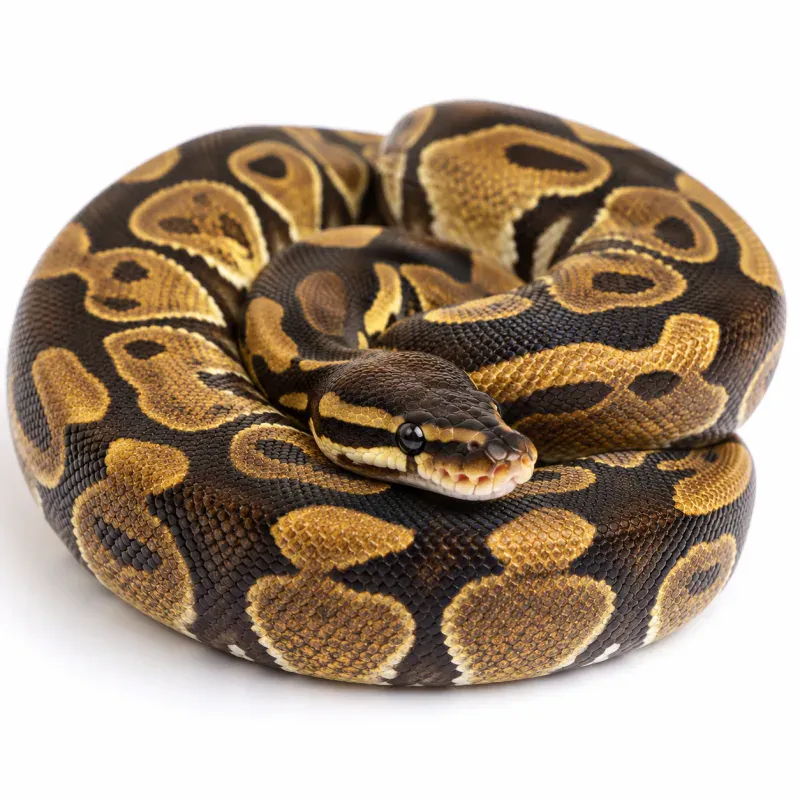
Understanding Ball Python Temperature Requirements
Ball pythons (Python regius) are ectothermic reptiles that rely on external heat sources to regulate their body temperature. In the wild, they thermoregulate by moving between sun-warmed surfaces and cooler burrows. In captivity, providing a proper thermal gradient is essential for digestion, immune function, and overall health. The ideal temperature gradient for ball pythons consists of a basking surface of 88–92°F (31–33°C), a warm-side ambient of 80–85°F (27–29°C), and a cool-side ambient of 75–80°F (24–27°C). Nighttime temperatures can drop to 72–78°F (22–26°C) without harm, as long as the snake has access to a warm hide.
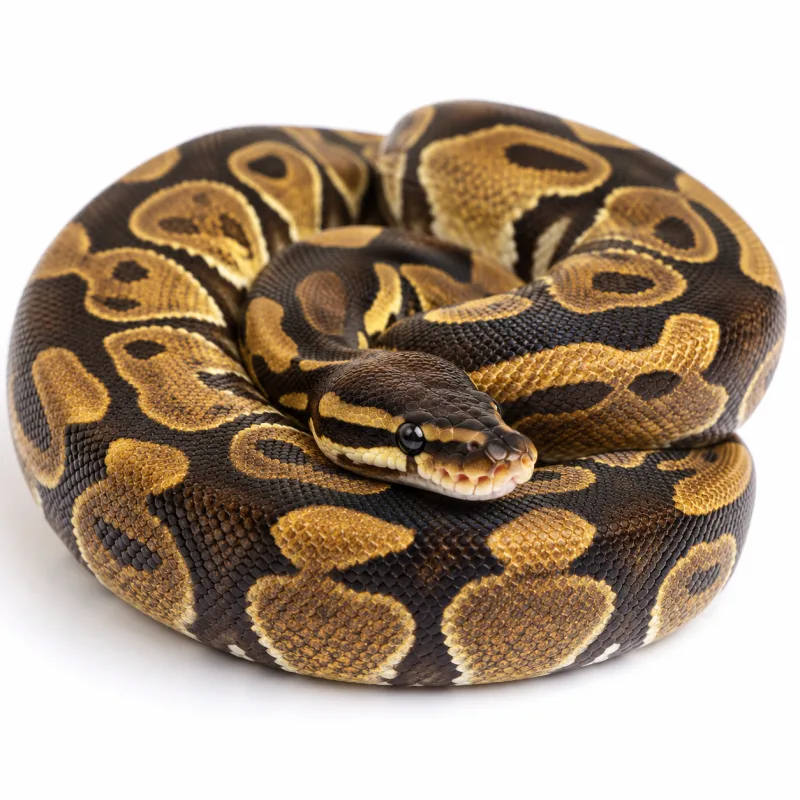
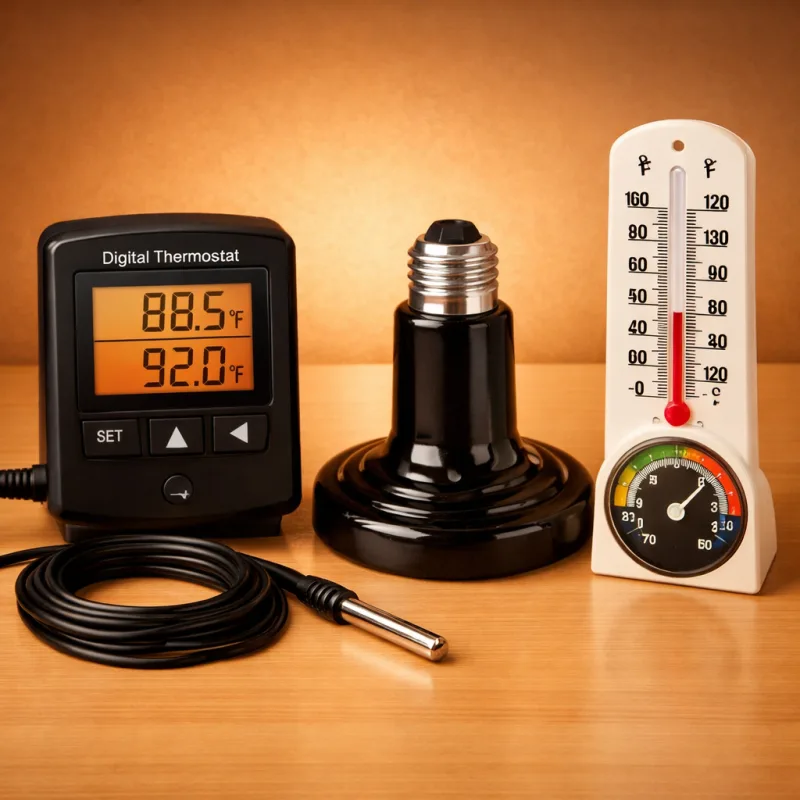
Why is this gradient so crucial? Ball pythons are ambush predators from West and Central Africa, where they spend much of their time in termite mounds and mammal burrows. These microhabitats offer stable, warm temperatures (around 85°F) with high humidity. In captivity, replicating this thermal mosaic allows your snake to self-regulate: moving to the warm side to boost digestion and immune function, then retreating to the cool side to prevent overheating. Without a gradient, your snake cannot perform these essential behaviors, leading to chronic stress and illness.
It's also important to understand that temperature affects every physiological process in your ball python. Digestion requires warmth—enzymatic activity and gut motility slow dramatically below 80°F. Immune function also suffers, making your snake more susceptible to respiratory infections and skin diseases. Even shedding is affected: improper temperatures can cause incomplete sheds or retained eye caps. By maintaining the correct gradient, you're not just keeping your snake comfortable—you're actively supporting its health and longevity.
Ball Python Temperature Chart (Basking, Warm Side, Cool Side & Night)
Three numbers answer most "ball python temperature" questions at a glance. Everything after this section explains how to achieve and hold them.
| Zone | Target | Notes |
|---|---|---|
| Basking surface (hot spot) | 88–92°F (31–33°C) | Measured directly under the heat source; 95°F+ risks burns and thermal stress |
| Warm side (hot side) ambient | ~86°F (30°C) | Highest reading on the warm side, about 2 inches above the bedding |
| Cool-side ambient | 76–80°F (24–27°C) | Gives the snake a gradient to regulate with |
| Night temperature | 75–78°F (24–26°C) | A gentle drop is fine; keep ambient at 75°F+ overnight |
| Humidity | 55–60% (65–70% in shed) | Temperature and humidity interact — warm, damp air that cannot ventilate invites respiratory infections |
Not a timer — it reads the actual humidity and stops when it hits your target. Two temperature probes, failsafes, no cloud account. We don't know yet whether it's worth making, so we're asking keepers first. Two-minute survey →
One email when there's news — including if we decide not to build it. No newsletter.
Check optimal temps, calculate feeding, and find your perfect species match.
References
- McCurley, K. (2019). The Complete Ball Python: A Comprehensive Guide to Care, Breeding, and Genetic Mutations. Eco Herpetological Publishing.
- Rossi, J. V., & Rossi, R. (2018). What's Wrong with My Snake? Advanced Vivarium Systems.
- Barker, D. G., & Barker, T. M. (2016). Ball Pythons: The History, Natural History, Care, and Breeding. VPI Library.
- Reptiles Magazine. (2020). Ball Python Care Sheet. Retrieved from https://www.reptilesmagazine.com/ball-python-care-sheet/
- Adler, K. (2018). The Herpetologist's Handbook. Academic Press.
🐾 Join the Community
See how other keepers set up their enclosures, ask questions, and share your experience.
🛠️ Apply What You Learned
Check optimal temps, calculate feeding schedules, and get calcium dosage — all personalized for your species.
Comments
No account needed — corrections, updates and questions are all welcome. For a full question with photos, the community Q&A is the better place.