30 Ball Python Morphs: Prices & Genetics (2026)
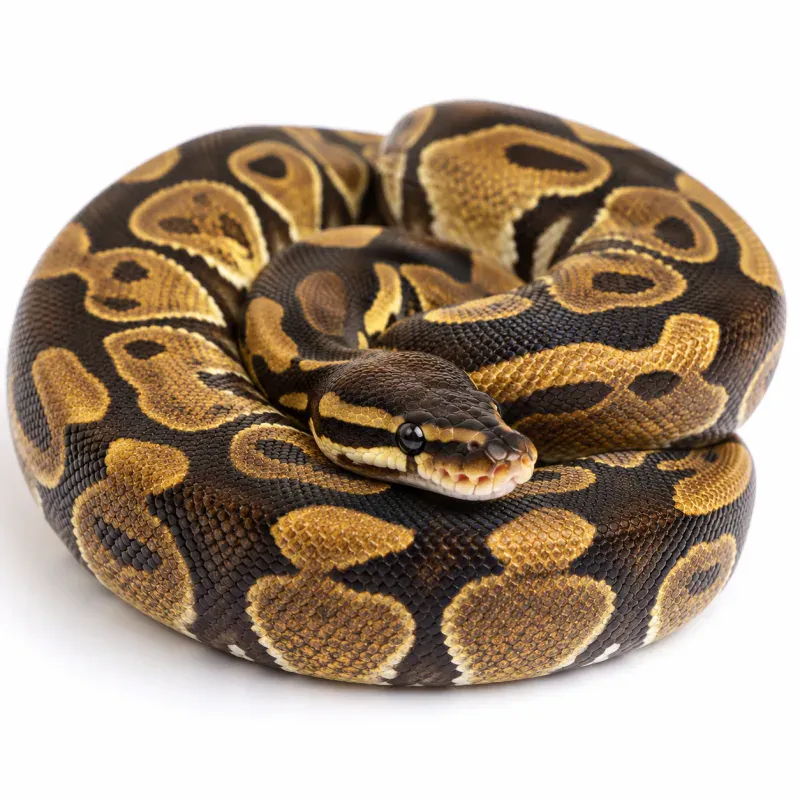
Introduction to Ball Python Morphs
Ball pythons (Python regius) are among the most popular pet snakes in the world, thanks to their docile temperament, manageable size, and stunning array of color and pattern morphs. A morph is a genetic variation that affects appearance—color, pattern, scale texture, or eye color. With over 4,000 recognized morphs and countless combinations, the ball python market offers something for every budget and aesthetic. This guide covers 30 of the most sought-after morphs, their genetics, typical price ranges, and how they can be combined to create designer morphs.
Understanding morph genetics is key to successful breeding. Most morphs are inherited as simple recessive, co-dominant (incomplete dominant), or dominant traits. Some are polygenic (influenced by multiple genes), like the Pastel. We'll break down each morph's mode of inheritance and discuss proven combinations.
Before diving into morphs, ensure your ball python's husbandry is impeccable. Poor conditions cause health issues, regardless of morph. For full care details, see our Ball Python Care Guide.
Popular Ball Python Morphs (With Pictures)
Here are some of the most sought-after morphs in their typical adult appearance. Genetics and price ranges are listed in the table below.
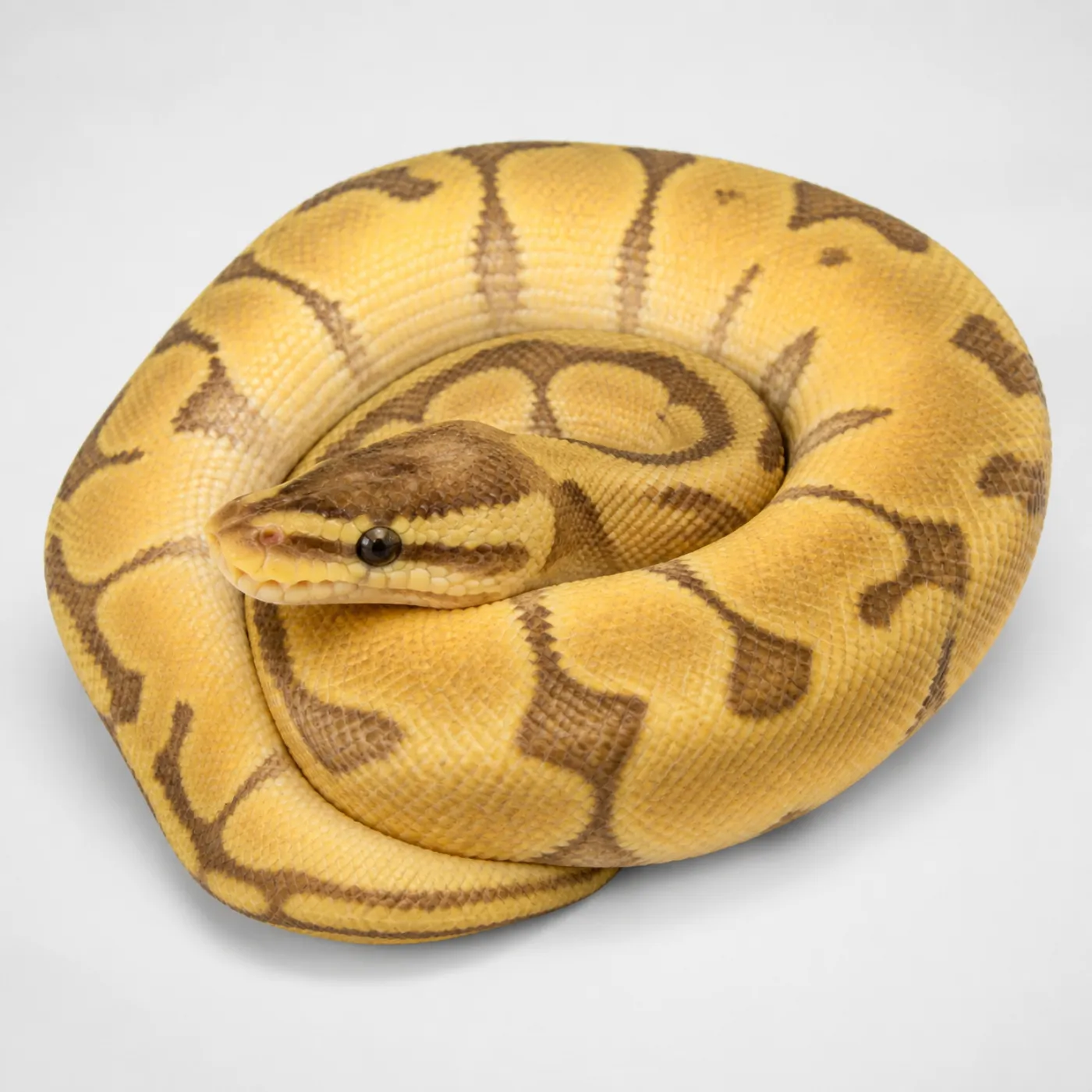 Pastel | 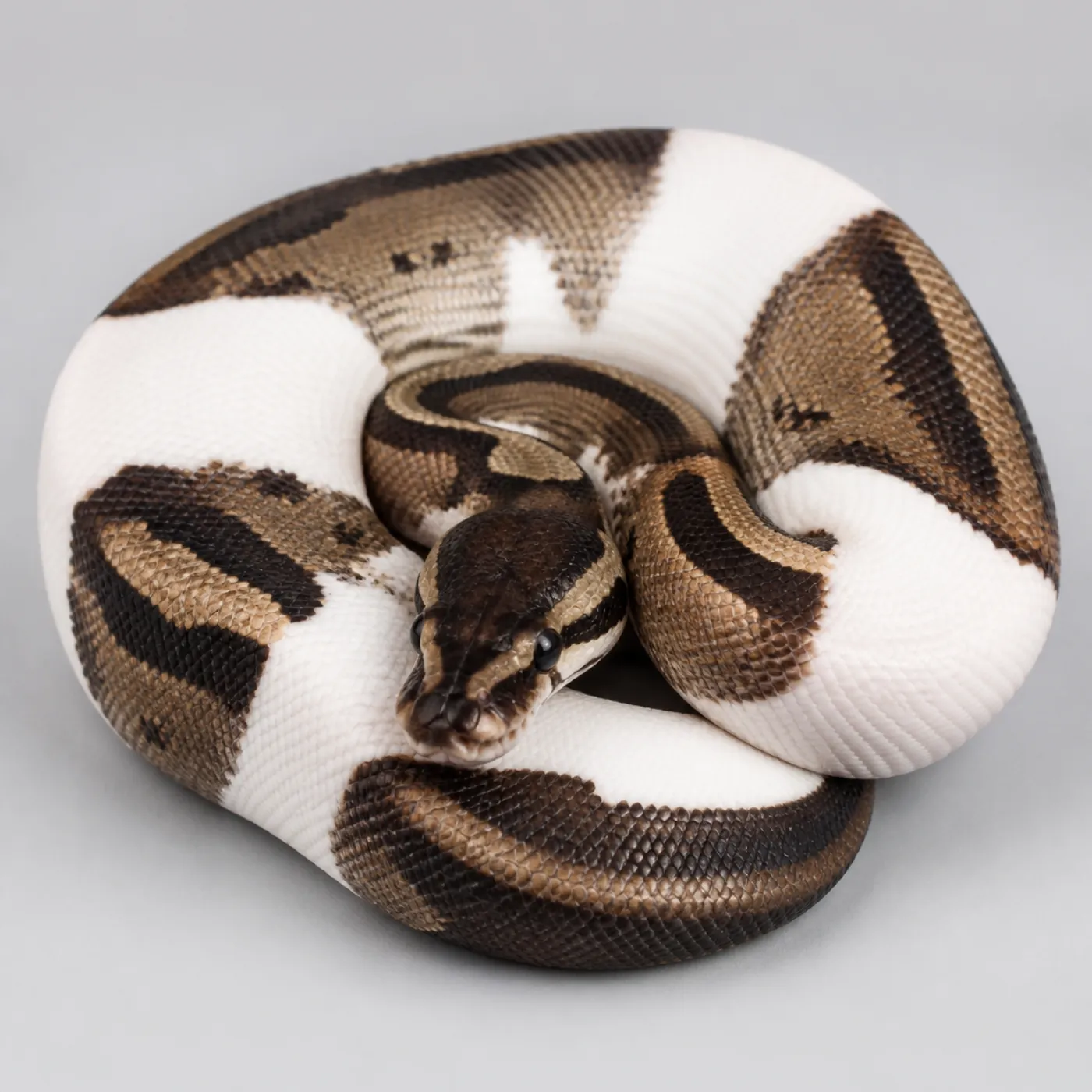 Pied |
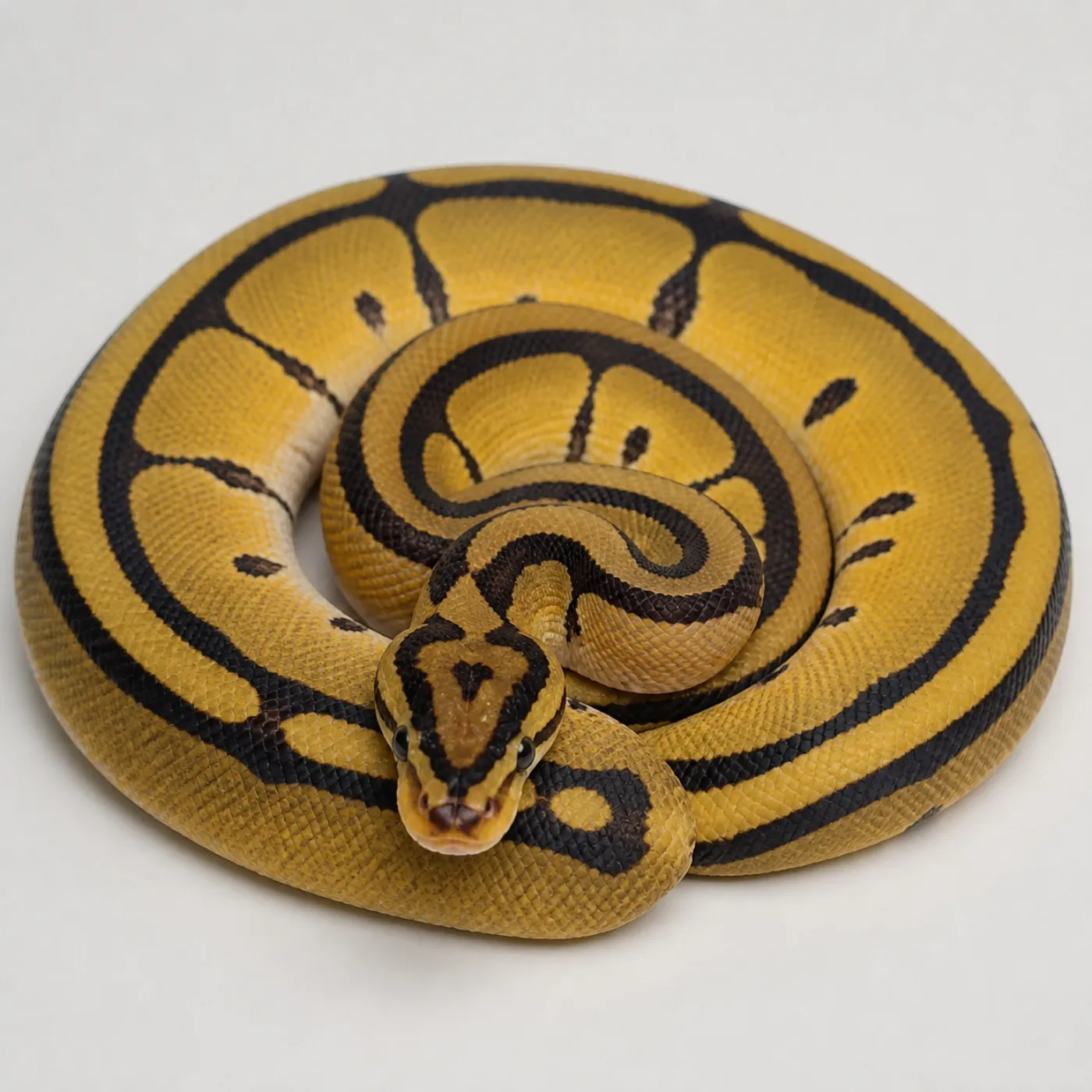 Clown | 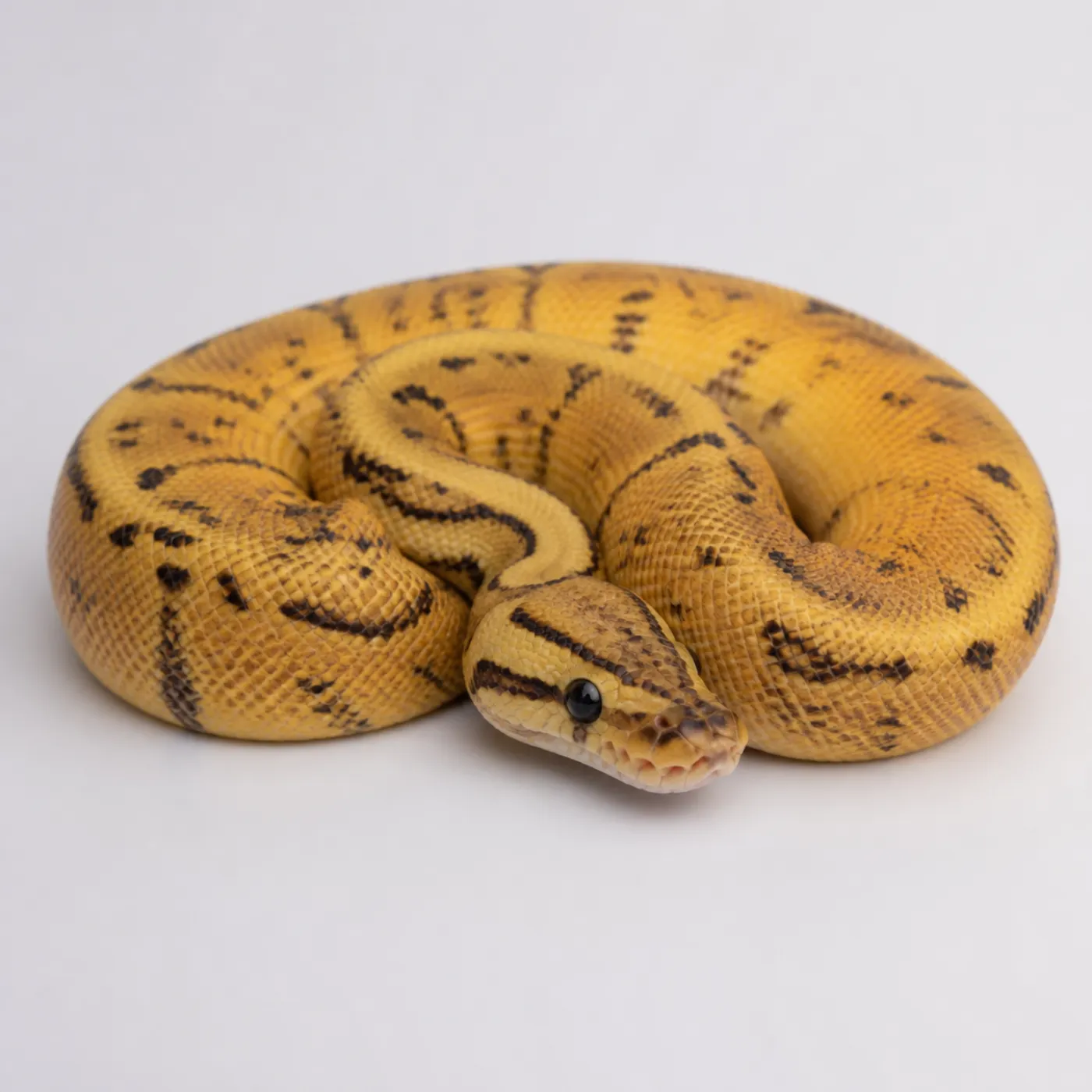 Banana |
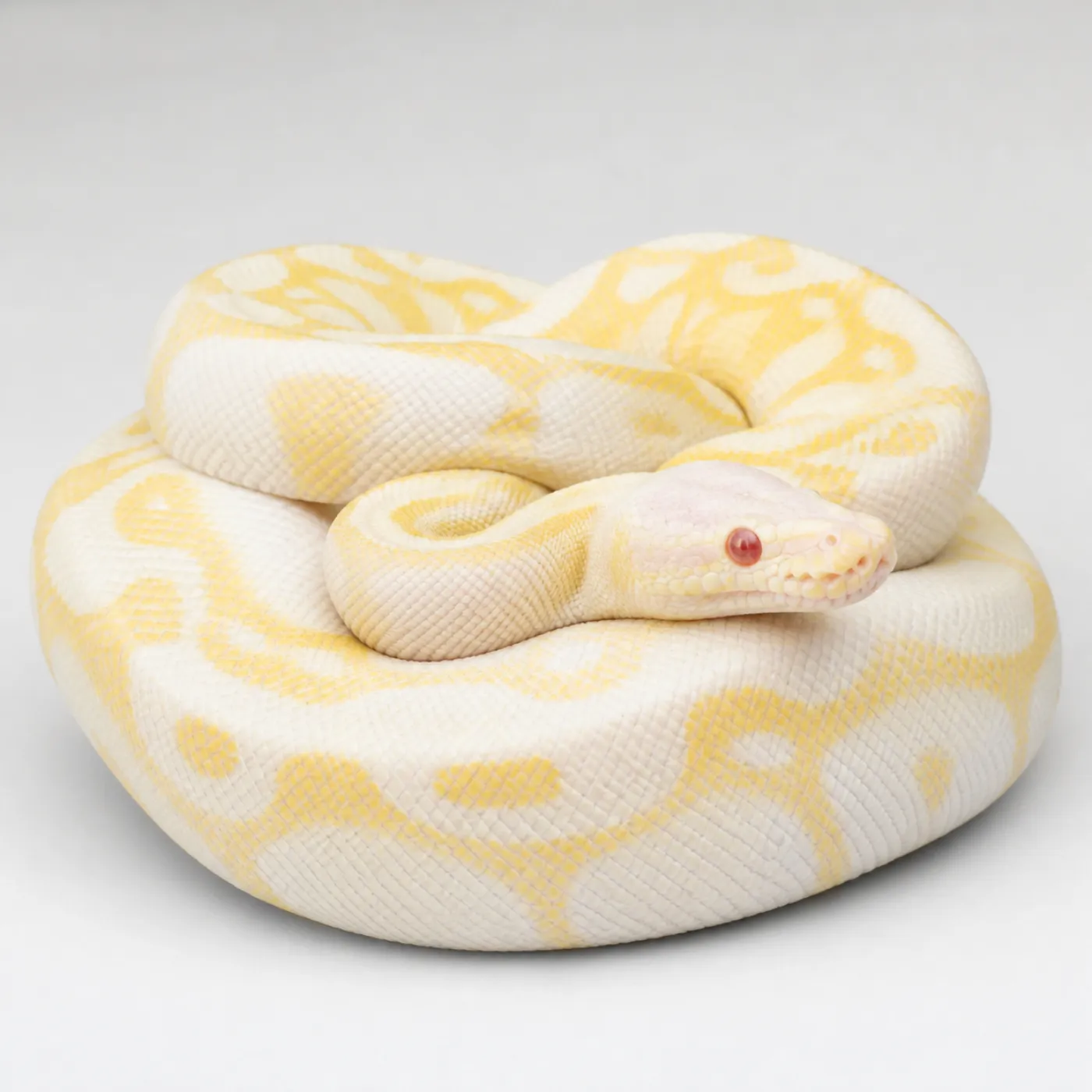 Albino | 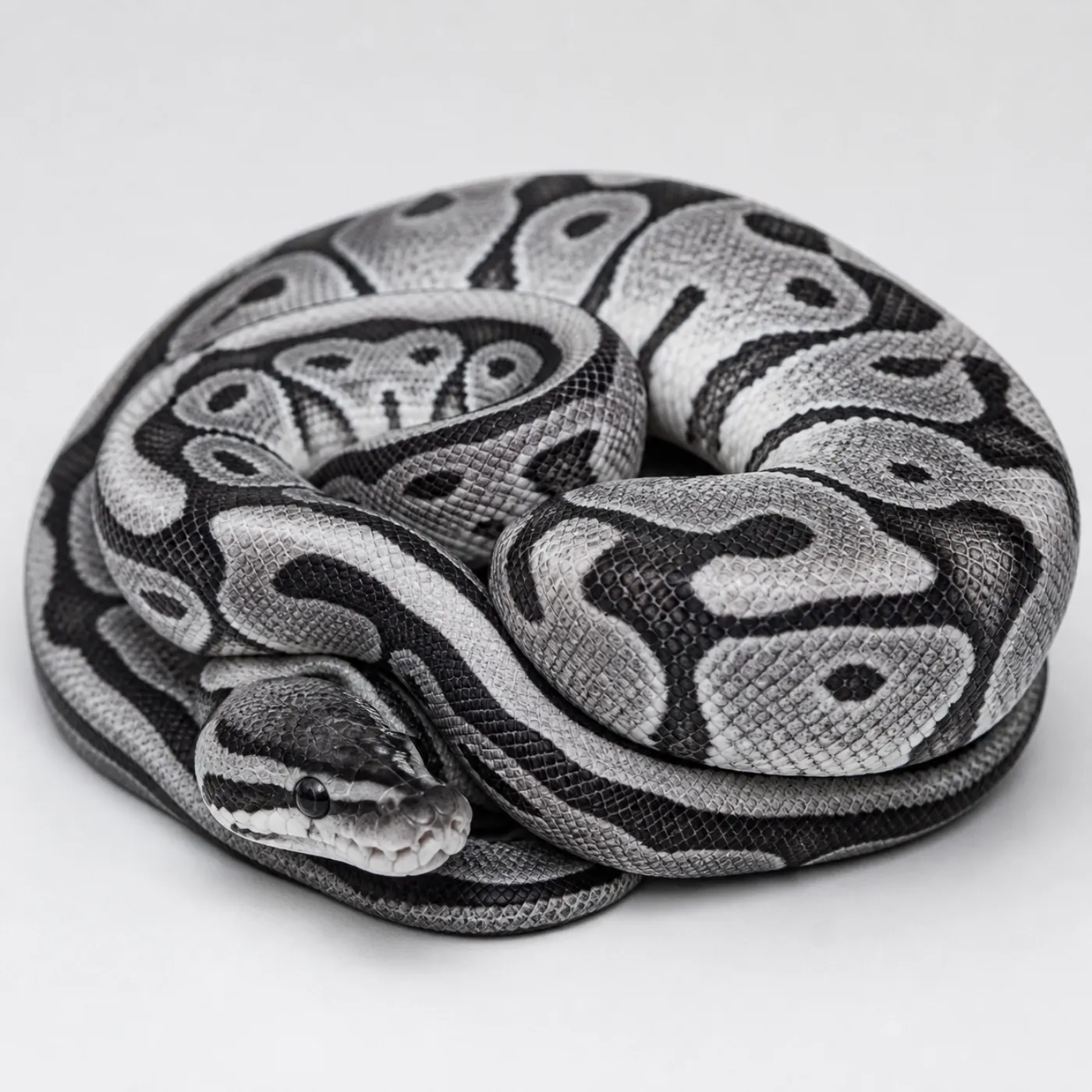 Axanthic |
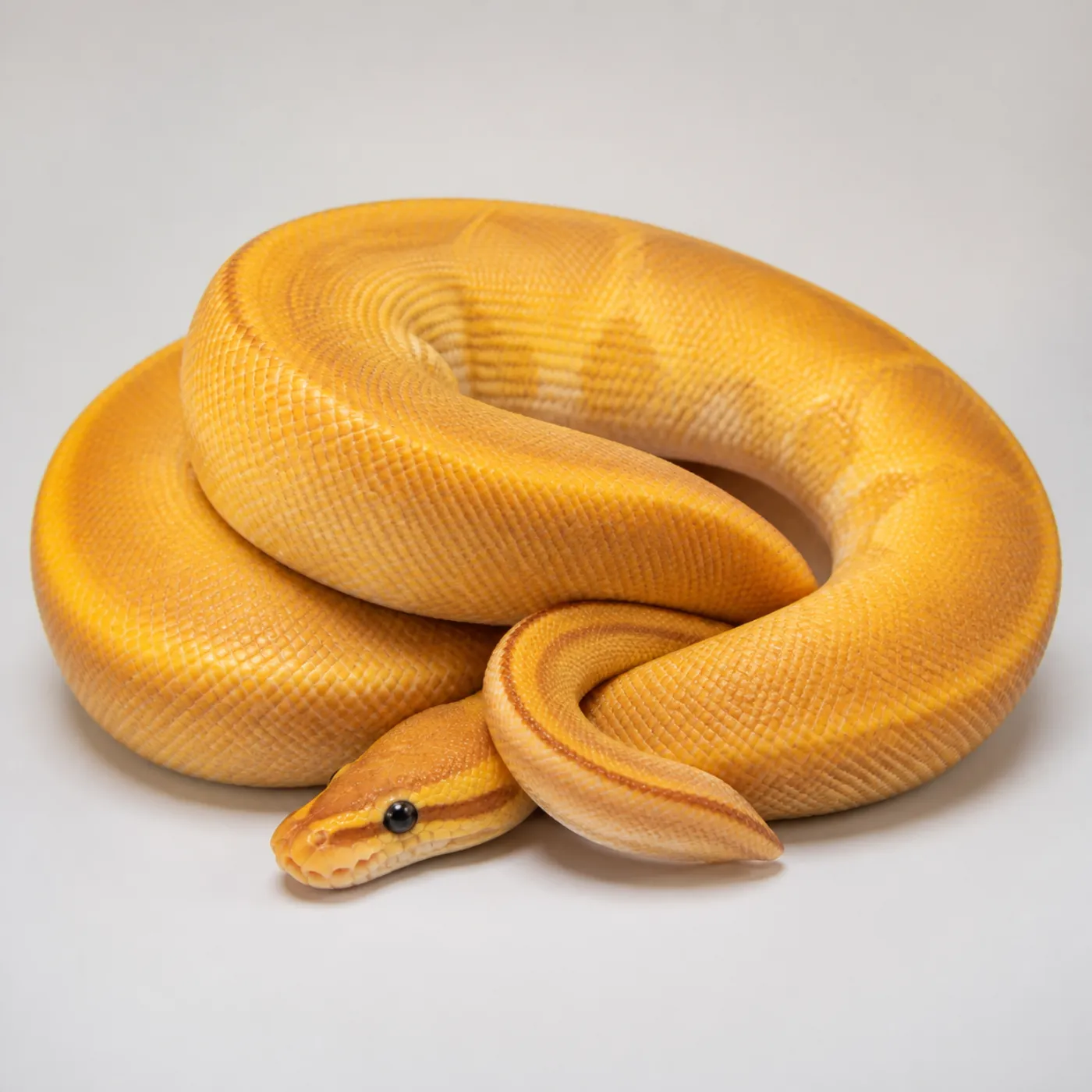 Enchi | 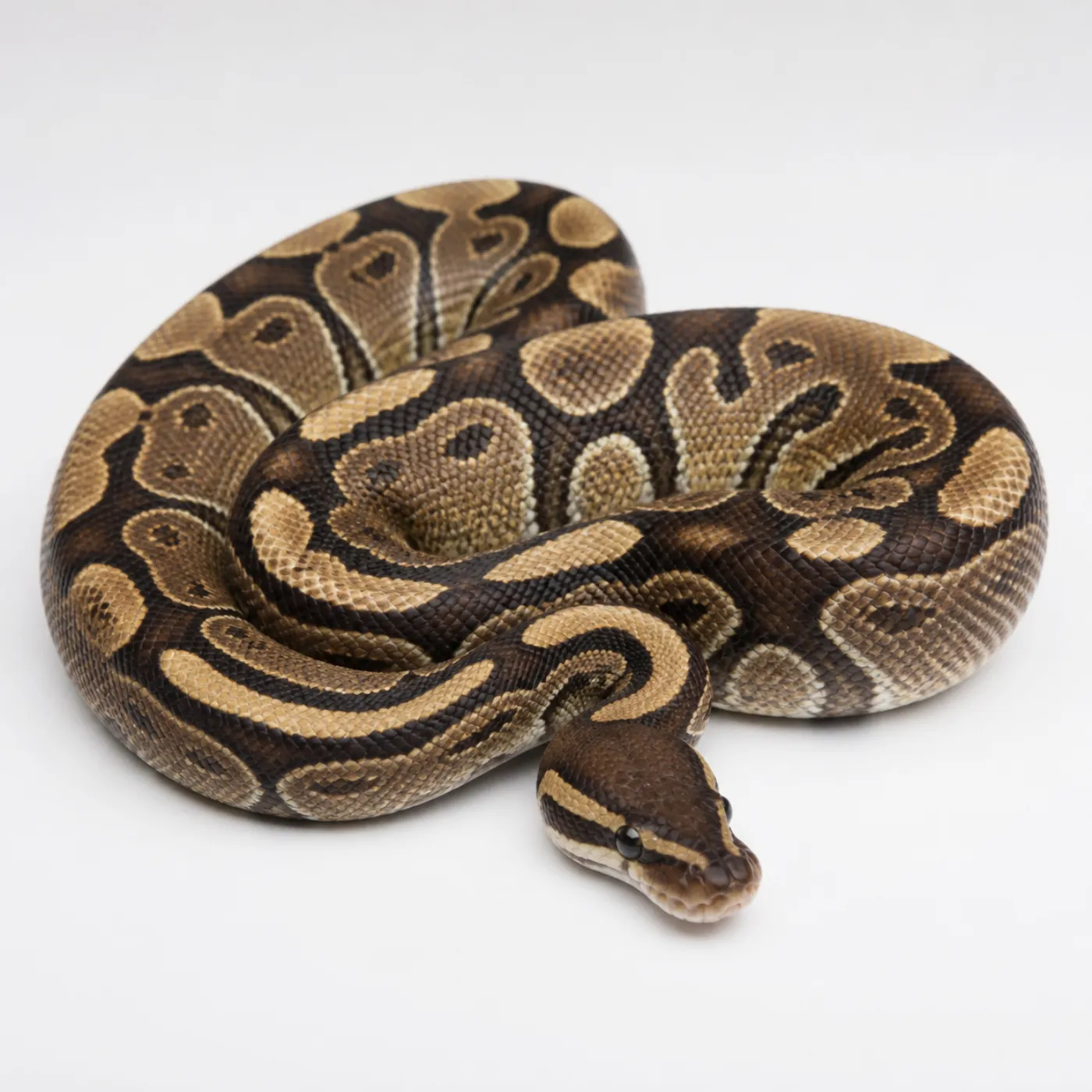 Mojave |
30 Popular Ball Python Morphs: At-a-Glance Table
The table below summarizes each morph's genetics, price range, and notable features. Prices are for hatchlings; adults and high-end combos can cost more.
| Morph | Genetic Type | Price Range (USD) | Key Features |
|---|---|---|---|
| Pastel | Co-dominant | $50–$150 | Brightens colors, reduces black; essential for Pastel Lesser, Pastel Clown |
| Mojave | Co-dominant | $75–$200 | Softens contrast; creates BEL (Blue-Eyed Leucistic) when combined with Lesser |
| Clown | Recessive | $200–$500 | Reduced pattern, bold head stamp; highly sought after |
| Pied (Piedball) | Recessive | $150–$400 | White patches with normal pigment; high white = higher price |
| Banana | Co-dominant (sex-linked) | $100–$300 | Yellow-orange with black freckles; stunning with Clown or Pastel |
| Lesser | Co-dominant | $75–$200 | Similar to Mojave; produces BEL with Mojave or Butter |
| Butter | Co-dominant | $75–$200 | Yellowish tone; also produces BEL with Mojave |
| Spider | Dominant | $100–$300 | Wobble syndrome risk; reduced pattern, thin lines |
| Champagne | Dominant | $200–$500 | Platinum-like with purple hues; can cause wobble |
| Enchi | Co-dominant | $75–$200 | Enhances orange/gold; great for combos |
| Fire | Co-dominant | $50–$150 | Brightens and reduces pattern; produces Black-Eyed Leucistic |
| Black Pastel | Co-dominant | $100–$250 | Darkens colors, high contrast; used in Black Pastel Clown |
| Cinnamon | Co-dominant | $75–$200 | Similar to Black Pastel; creates Super Cinnamon (all black) |
| Ghi (Ghi) | Co-dominant | $150–$400 | Unique pattern with dark speckling; Ghi Mojave popular |
| Mystic | Co-dominant | $100–$250 | Purple-gray tone; Mystic Potion combo |
| Phantom | Co-dominant | $100–$250 | Similar to Mystic; less common |
| Yellow Belly | Co-dominant | $50–$150 | Yellow belly, head stamp; used in Ivy and other combos |
| Spotnose | Co-dominant | $100–$250 | White spots on head; reduces pattern |
| Woma | Dominant | $150–$300 | Reduced pattern, head stamp; wobble possible |
| Axanthic | Recessive | $200–$500 | Grayscale (no yellow); stunning with Clown |
| Albino | Recessive | $150–$400 | White/yellow with red eyes; classic |
| Lavender Albino | Recessive | $300–$800 | Lavender/pink tones; high demand |
| Caramel Albino | Recessive | $200–$500 | Caramel-yellow with pink eyes |
| Ghost (Hypo) | Recessive | $100–$300 | Reduces black, faded look |
| Orange Dream | Co-dominant | $75–$200 | Orange tones; brightens combos |
| Scaleless Head | Recessive | $300–$700 | No scales on head; unique texture |
| Sunset | Recessive | $400–$1,000 | Orange/red gradient; rare |
| Desert Ghost | Recessive | $300–$800 | Pale, high contrast; expensive |
| Chocolate | Co-dominant | $100–$250 | Dark brown; used in Chocolate Clown |
| Pinstripe | Co-dominant | $75–$200 | Thin dorsal stripe; clean look |
How Many Ball Python Morphs Are There?
If you have browsed any ball python morph list with pictures, you have probably noticed the numbers keep growing. There is no single official count, but the community consensus is straightforward:
- 30–50 base morphs — the single-gene mutations that started it all (Pastel, Spider, Albino, Clown, Piebald, Mojave, and similar).
- 4,000+ named combinations — when two or more base morphs are bred together the result is a combination morph (Pastel + Lesser = Lesser Pastel, for example).
- Tens of thousands of visual outcomes — once every multi-gene stack breeders have produced is counted, the list becomes effectively endless.
In other words: when someone asks "how many ball python morphs are there," the honest answer is dozens of base morphs and thousands of combos — and new combo names appear every breeding season. The 30 profiles above cover the morphs you will actually see for sale and can reasonably plan around.
How to Read Any Ball Python Morph List
Instead of an alphabetical dump, the most useful way to work through a ball python morph list is by inheritance type: recessive morphs (Albino, Clown, Piebald, Axanthic) hide in heterozygous form and need two copies to show, while co-dominant and dominant morphs (Pastel, Spider, Mojave, Enchi) can produce visual offspring in a single generation. The genetics section below walks through every mode with Punnett-square examples, and the at-a-glance table above lists all 30 morphs with type, price, and signature look.
Genetics 101: How Morphs Are Inherited
Understanding inheritance modes helps predict offspring appearance and plan breeding projects.
Recessive Morphs
Recessive morphs (e.g., Clown, Pied, Albino) require both parents to carry the gene for visual expression. A snake that carries one copy is 'het' (heterozygous) and looks normal. Breeding two hets yields 25% visual offspring, 50% hets, 25% normal. Examples: Clown, Pied, Albino, Axanthic, Lavender Albino, Ghost, Scaleless Head, Sunset.
Co-Dominant (Incomplete Dominant) Morphs
One copy produces a visible morph; two copies (super form) create a different, often more extreme look. For example, a single Pastel is brighter than normal; Super Pastel is almost yellow. Co-dominant morphs include Pastel, Mojave, Lesser, Butter, Enchi, Fire, Black Pastel, Cinnamon, Yellow Belly, Spotnose, Orange Dream, Pinstripe, Mystic, Phantom, Ghi, Chocolate.
Dominant Morphs
One copy produces the morph; two copies look identical to one copy. Spider, Champagne, and Woma are dominant. Note: Spider and Champagne are linked to wobble syndrome—a neurological issue causing head tremors and balance problems. Ethically, many breeders avoid these morphs.
Sex-Linked Morphs
Banana is co-dominant but sex-linked (on the Z chromosome). Males can be het Banana; females cannot. This complicates breeding but produces stunning combos.
Top Combination Morphs
Combining morphs creates designer snakes with unique looks. Here are 10 popular combos and their genetic recipes.
- Pastel Lesser (Pastel + Lesser): Bright yellow with blushing; $200–$400.
- Pastel Clown (Pastel + Clown): Brightened Clown pattern; $400–$800.
- Mojave Clown (Mojave + Clown): Soft, high-contrast Clown; $500–$1,000.
- Banana Clown (Banana + Clown): Yellow-orange Clown; $600–$1,200.
- Pied Clown (Pied + Clown): White patches with Clown pattern; $800–$2,000+.
- Black Pastel Clown (Black Pastel + Clown): Dark, high-contrast Clown; $500–$1,000.
- Super Pastel Enchi (Super Pastel + Enchi): Intense orange; $300–$600.
- Ghi Mojave (Ghi + Mojave): Speckled, soft pattern; $300–$600.
- Mystic Potion (Mystic + Mojave): Purple-gray with blushing; $400–$800.
- Albino Clown (Albino + Clown): White/yellow Clown; $600–$1,200.
Factors Affecting Morph Prices
Prices vary based on rarity, demand, quality, age, and breeder reputation. High-white Pieds, extreme-pattern Clowns, and perfect combos command premiums. Always buy from reputable breeders who disclose genetics and health history. Avoid 'mystery' morphs or unproven lines.
Breeding Tips for Morphs
Breeding ball pythons requires patience and knowledge. Start with healthy, well-fed adults (minimum 1,500g for females, 800g for males). Use a cooling period (80°F day, 70°F night) for 6–8 weeks to stimulate breeding. Pair morphs strategically: for example, breeding a Pastel to a Clown het produces 50% Pastel het Clown, 50% het Clown. To get visual Clowns, both parents must carry the gene.
Keep detailed records of each snake's genetics. Use online calculators or apps to predict offspring ratios. Ethical breeders avoid morphs with known health issues (Spider, Champagne). Quarantine new snakes for 60–90 days.
Morph Buying Pitfalls
- Impulse buying: Research genetics and ensure you can provide proper care.
- Breeding without knowledge: Understand inheritance before pairing.
- Ignoring health: A beautiful morph is worthless if unhealthy.
- Overpaying for 'rare' morphs: Prices drop as morphs become common.
- Neglecting husbandry: Morphs need same care as normals.
Step-by-Step: Breeding Your First Morph Clutch
If you're ready to try breeding morphs, follow this proven sequence to maximize success and avoid common pitfalls.
- Select breeding stock: Choose healthy adults that meet minimum weights (females at least 1,500g, males at least 800g). Ensure both carry the desired genes—use the inheritance modes above to predict outcomes.
- Condition with a cooling period: For 6–8 weeks, maintain daytime temps around 80°F and nighttime temps around 70°F. This mimics seasonal changes and triggers breeding behavior.
- Introduce the male: Place the male in the female's enclosure for a few days, then remove for a day, then re-introduce. Repeat this cycle for several weeks.
- Monitor for ovulation and egg laying: Females will show a noticeable 'lump' mid-body after ovulation. Provide a nest box with moist sphagnum moss. Eggs typically appear 30–50 days after ovulation.
- Incubate eggs properly: Keep eggs at 88–90°F with 90–100% humidity. Use a suitable substrate like perlite or vermiculite. Eggs hatch in about 55–60 days.
- Record everything: Track parent genetics, egg dates, and hatchling phenotypes. Accurate records are invaluable for future breeding decisions.
Morph Comparison: Recessive vs. Co-Dominant vs. Dominant
Understanding the differences between inheritance types helps you plan purchases and breeding. The table below contrasts the three main categories.
| Aspect | Recessive | Co-Dominant | Dominant |
|---|---|---|---|
| One copy visible? | No (looks normal) | Yes | Yes |
| Two copies (super form) | Same as one copy (visual) | Different, often more extreme | Same as one copy |
| Examples | Clown, Pied, Albino | Pastel, Mojave, Enchi | Spider, Champagne, Woma |
| Breeding two hets | 25% visual, 50% hets, 25% normal | 50% visual (one copy), 25% super, 25% normal | 50% visual, 25% super (same look), 25% normal |
| Price impact | Often higher for visual | Wide range | Varies; some have health concerns |
Seasonal Care Considerations for Morphs
Ball pythons, regardless of morph, experience seasonal changes that affect feeding, breeding, and shedding. Here's how to adjust care throughout the year.
- Winter (breeding season): If breeding, implement the cooling period (80°F day, 70°F night) for 6–8 weeks. Non-breeders can stay at normal temps. Some snakes eat less during this time—don't panic unless weight loss exceeds 10%.
- Spring (post-breeding): Gradually raise temps back to normal (88–92°F basking, 78–80°F cool side). Offer food more frequently if females are recovering from egg production.
- Summer (active season): Maintain steady temps and humidity (50–60%). Ensure fresh water daily. This is a good time for health checks and weigh-ins.
- Fall (pre-breeding): Begin conditioning for breeding: increase feeding to build fat reserves in females. Check for any signs of illness before the breeding season.
Always monitor your individual snake's behavior and adjust accordingly. Morphs with wobble (Spider, Champagne) may need extra care during stressful times like shedding or breeding.
Cost Breakdown: Owning a Morph Ball Python
Beyond the initial purchase price, owning a morph involves ongoing costs. Here's a realistic budget for the first year.
- Enclosure (e.g., 40-gallon tank or PVC): $150–$400
- Heating and lighting (heat mat, thermostat, lamp): $100–$250
- Substrate (for a year): $50–$100
- Hides and decor: $50–$150
- Food (frozen rodents for a year): $100–$200 (depending on size and frequency)
- Vet check-up (initial): $50–$100
- Miscellaneous (water bowl, spray bottle, thermometer/hygrometer): $50–$100
Total first-year cost: $550–$1,300 (excluding the snake itself). Recurring annual costs (food, substrate, electricity) are typically $200–$400. Morphs with special needs (like wobble) may require additional vet visits.
Conclusion
Ball python morphs offer endless variety for enthusiasts and breeders. Start with affordable co-dominant morphs like Pastel or Enchi, then progress to recessive and combos. Always prioritize health and ethics over appearance. With proper care and genetics knowledge, you can enjoy and even breed stunning designer ball pythons.
Frequently Asked Questions
What is a ball python morph?
A morph is a genetic variation that affects a ball python's appearance, including color, pattern, scale texture, or eye color. There are over 4,000 recognized morphs and countless combinations available.
How are recessive morphs inherited?
Recessive morphs require both parents to carry the gene for visual expression. A snake with one copy is 'het' and looks normal; breeding two hets yields 25% visual offspring, 50% hets, and 25% normals. Examples include Clown, Pied, and Albino.
Which morphs are linked to wobble syndrome?
Spider, Champagne, and Woma are dominant morphs linked to wobble syndrome, a neurological issue causing head tremors and balance problems. Many ethical breeders avoid these morphs.
What is the price range for a Pastel ball python?
A Pastel ball python typically costs $50 to $150 for a hatchling. Pastel is a co-dominant morph that brightens colors and reduces black, and it's essential for combos like Pastel Lesser and Pastel Clown.
What is the difference between co-dominant and dominant morphs?
Co-dominant morphs (like Pastel) show a visible difference with one copy and a more extreme 'super' form with two copies. Dominant morphs (like Spider) look the same whether they have one or two copies.
How long does it take for ball python eggs to hatch?
After incubation at 88–90°F with high humidity, ball python eggs typically hatch in about 55–60 days. The cooling period before breeding lasts 6–8 weeks.
What is the minimum weight for breeding female ball pythons?
Females should be at least 1,500g before breeding, and males at least 800g. This ensures they have enough body reserves for egg production and overall health.
How much does it cost to own a morph ball python in the first year?
Aside from the purchase price, expect to spend $550–$1,300 in the first year on enclosure, heating, substrate, food, and vet care. Recurring annual costs are typically $200–$400.
How many ball python morphs are there?
Dozens of base morphs and thousands of combination morphs. Roughly 30–50 single-gene mutations are established, and breeding them together has produced more than 4,000 named combos — with new names appearing every season.
Related Reading
- Ball Python Care Guide — Complete husbandry manual.
- Ball Python Handling Guide — Build trust and confidence.
- Ball Python Shedding Guide — Perfect sheds every time.
- breeding ball pythons — genetics, pairing and hatchling odds.
Still choosing a species? Our reptile species match quiz scores 8 species against your space, schedule and experience.
Check optimal temps, calculate feeding, and find your perfect species match.
References
- https://www.morphmarket.com/reptile-care/ball-python-morphs/
- https://www.reptilesmagazine.com/ball-python-morphs/
- https://en.wikipedia.org/wiki/Ball_python#Genetics
🐾 Join the Community
See how other keepers set up their enclosures, ask questions, and share your experience.
🛠️ Apply What You Learned
Check optimal temps, calculate feeding schedules, and get calcium dosage — all personalized for your species.
Comments
No account needed — corrections, updates and questions are all welcome. For a full question with photos, the community Q&A is the better place.