Ball Python Breeding Guide: Pairing to Hatchlings
Introduction
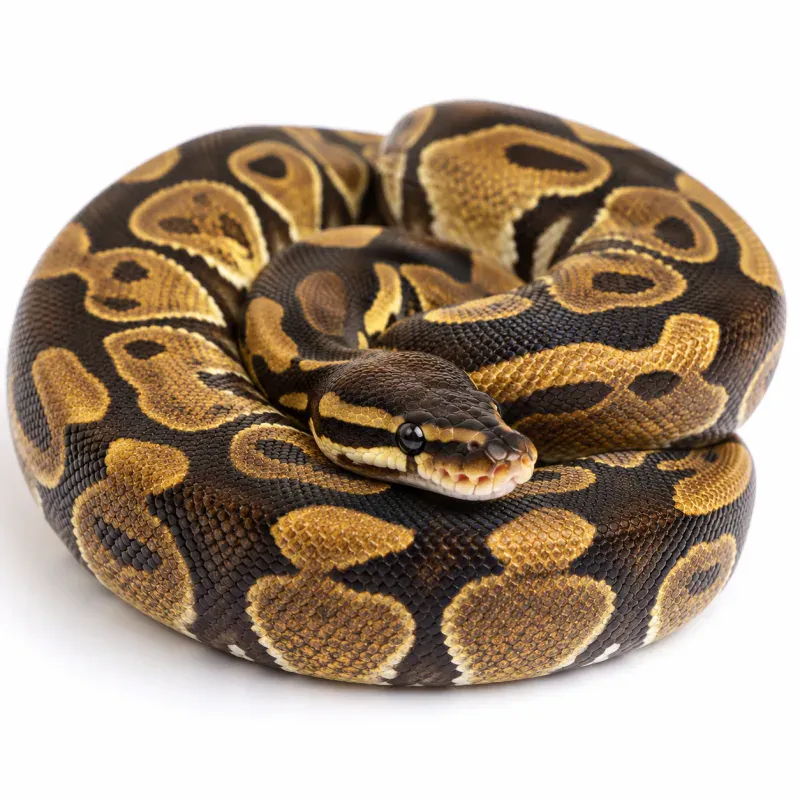
Breeding ball pythons (Python regius) can be a rewarding but challenging endeavor. This guide covers every step from selecting the right pair to raising healthy hatchlings, with emphasis on evidence-based practices that maximize success while prioritizing animal welfare. Whether you are a first-time breeder or looking to refine your techniques, the following sections provide detailed instructions, troubleshooting advice, and comparison tables to help you navigate the breeding process with confidence.
Pairing Selection & Genetics Basics
Successful breeding starts with choosing healthy, genetically compatible animals. Both male and female should be at least 3 years old, weigh a minimum of 1500g (female) and 800g (male), and have an excellent body condition score. Avoid breeding underweight or sick animals. A body condition score of 3 out of 5 (muscular, rounded, no visible spine or ribs) is ideal. Females should be slightly heavier than the minimum to ensure they have adequate fat reserves for egg production.
Selecting Breeding Stock
Beyond weight and age, evaluate the following before pairing:
- Health history: Obtain a vet check for parasites, respiratory issues, or genetic defects.
- Temperament: Choose animals that are calm and feed consistently; stress-prone snakes may not breed.
- Genetic documentation: Request lineage records to avoid inbreeding and confirm morph genotypes.
- Quarantine: Keep new animals in a separate room for at least 30 days before introducing them to your collection.
Morph Genetics Inheritance
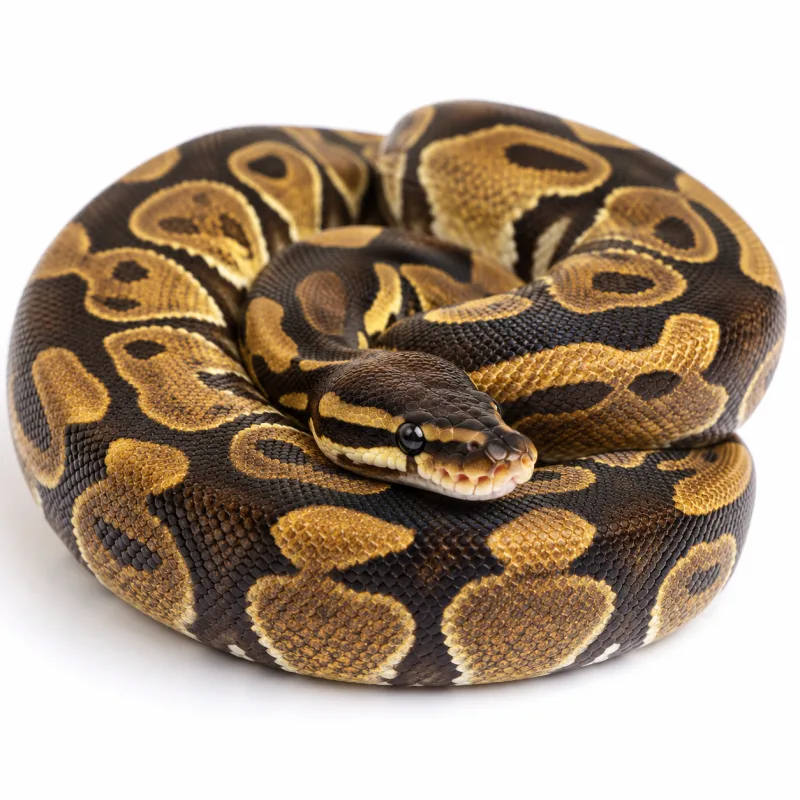
Ball python morphs follow simple Mendelian inheritance. A single-gene co-dominant morph (like Pastel or Mojave) bred to a normal produces 50% morphs. Recessive morphs (like Albino or Clown) require both parents to carry the gene. Use a Punnett square or online calculator to predict outcomes. For example:
| Parent 1 | Parent 2 | Offspring |
|---|---|---|
| Pastel (co-dom) | Normal | 50% Pastel, 50% Normal |
| Albino (recessive) | Albino | 100% Albino |
| Pastel | Mojave | 25% Pastel, 25% Mojave, 25% Pastel Mojave, 25% Normal |
Always verify genetics with breeder documentation. Breeders should aim for diverse pairings to maintain genetic health. Avoid pairing siblings or parent-offspring; this can amplify recessive health issues. If you are new to genetics, start with co-dominant morphs to see clear results, then progress to recessives.
Cooling Cycling (Brumation)
To trigger breeding, ball pythons require a simulated cooling period of 6-8 weeks starting in November. This mimics their natural dry season and stimulates reproductive behavior. Here is a step-by-step approach:
Step-by-Step Cooling Protocol
- Prepare the enclosure: Ensure the snake has a secure hide and a large water bowl. Place a thermometer and hygrometer at snake level to monitor conditions.
- Reduce temperatures gradually: Over 1–2 weeks, lower daytime temperatures from 88–92°F (31–33°C) to 75–80°F (24–27°C) and nighttime temps to 70–75°F (21–24°C). Do not drop temperatures suddenly; this can cause stress.
- Adjust photoperiod: Reduce to 10 hours light / 14 hours dark. Use a timer to maintain consistency.
- Maintain humidity: Provide a large water bowl at all times; mist lightly to maintain 60–70% humidity. This prevents dehydration during the cooling period.
- Stop feeding: Cease feeding once cooling begins. Ball pythons can go months without food, but ensure they are well-hydrated.
- Monitor health: Weigh your snakes weekly. If a snake loses more than 10% of its body weight, end cooling and consult a vet.
- Warm up gradually: After 6–8 weeks, slowly warm back to normal over 1–2 weeks. This mimics spring and triggers breeding behavior.
Troubleshooting Cooling Issues
- No breeding response: If you see no interest after warming, extend the cooling period by 2 weeks next season, or check that temperatures did not drop too low (below 70°F/21°C).
- Weight loss: If a snake loses more than 10% of body weight, abort cooling and provide food immediately.
- Respiratory issues: If you notice wheezing or mucus, warm the enclosure and consult a vet; cooling can exacerbate hidden infections.
Ovulation Signs & Pairing
After cooling, reintroduce the male to the female’s enclosure (never house them together permanently). This should be done only when the female shows signs of receptivity. Watch for these ovulation signs in the female:
- Laying flat: She lies completely flat, often with her body pressed to the substrate.
- Luminous sheen: Skin appears shiny and tight, especially along the sides.
- Mid-body swelling: A distinct bulge appears about two-thirds down the body.
- Decreased appetite: She may refuse food for 2–4 weeks before ovulation.
If the female is receptive, the male will court her by chin-rubbing and tail-wrapping. Copulation can last several hours. Remove the male after 2–3 observed copulations to reduce stress. Leaving the male in too long can cause the female to stop eating or become aggressive.
Pairing Protocol
- Introduce the male: Place the male in the female's enclosure (not vice versa) to avoid territorial stress.
- Supervise: Watch for courtship behaviors. If the female shows aggression (hissing, striking), separate them and try again in a few days.
- Monitor copulation: Copulation can last from 30 minutes to several hours. Do not disturb them during this time.
- Separate after 2–3 copulations: This is usually sufficient for fertilization. Over-pairing can stress the female and reduce egg quality.
- Reintroduce if needed: If no ovulation occurs within 2–3 weeks, you can reintroduce the male for another session.
Egg Laying & Incubation
Approximately 30–45 days after ovulation, the female will lay a clutch of 4–12 eggs. The exact timing depends on temperature and individual variation. Provide a lay box filled with damp sphagnum moss inside her enclosure. The lay box should be large enough for her to turn around in and have a small entrance hole. She will coil tightly around the eggs; do not disturb for 24–48 hours. Then, carefully remove the eggs and place them in an incubator.
Incubator Setup
- Temperature: 88–90°F (31–32°C). Use a reliable thermostat; fluctuations can kill embryos.
- Humidity: 90–100% relative humidity. Use a digital hygrometer.
- Substrate: Use vermiculite or perlite (1:1 ratio by weight with water). Squeeze the substrate until it holds its shape but does not drip water.
- Egg placement: Partially bury eggs, not touching each other, to allow air circulation.
- Ventilation: Open the incubator lid once daily for 1–2 minutes to allow fresh air exchange.
Incubation Timeline & Monitoring
Incubation lasts 55–65 days. Candle eggs at day 30 to check fertility (red veins indicate healthy embryos). Candling involves holding a bright flashlight against the egg in a dark room. Infertile eggs will appear clear or yellow. Remove any moldy or collapsed eggs immediately to prevent contamination.
| Day | Milestone | Action |
|---|---|---|
| Day 0 | Eggs laid | Place in incubator |
| Day 30 | Candling | Check for veins; remove infertile eggs |
| Day 50 | Pre-pipping | Eggs may dimple; increase humidity slightly |
| Day 55–65 | Pipping | Do not assist; wait for hatchling to emerge |
Hatchling Care
Hatchlings emerge by pipping (slitting the egg) and may take 24–48 hours to fully exit. Do not assist unless the egg dries out. If an egg collapses and the hatchling is stuck, you can carefully make a small incision, but this is rare. After hatching, move each snake to a small, secure tub (e.g., 6-quart Sterilite) with paper towel substrate, a hide, and a water bowl. Keep ambient temps 80–85°F (27–29°C) with a warm spot of 90°F (32°C). Do not handle for the first week. Offer the first meal after the first shed (which occurs 7–14 days post-hatch). Feed pinky mice or rat fuzzies (size = 1–1.5x the snake’s girth). Most hatchlings will eat without issue; if not, try braining the prey or leaving it overnight.
Step-by-Step Hatchling Setup
- Prepare tubs: Use 6-quart Sterilite containers with ventilation holes (drill 4–6 small holes on each side).
- Substrate: Use paper towels for the first few weeks to monitor feces and health.
- Hide: Provide a small plastic hide (e.g., a half-coconut or small deli cup) to reduce stress.
- Water bowl: Use a shallow dish (e.g., a bottle cap) to prevent drowning.
- Temperature gradient: Place the tub on a heat mat set to 90°F (32°C) on one side, leaving the other side cooler.
- Humidity: Maintain 50–60% by misting lightly if needed.
Feeding Troubleshooting
- Refusal to eat: If a hatchling refuses food for 2 weeks after the first shed, try offering a live pinky (never unsupervised) or braining (piercing the skull) to release scent.
- Regurgitation: If the snake regurgitates, wait 10 days before offering a smaller meal. Check that temperatures are correct.
- Dehydration: If the skin appears wrinkled, provide a humid hide (damp moss) and ensure fresh water is available.
Common Health Issues & Mistakes
Egg binding (dystocia): If a female fails to lay within 48 hours of onset, consult a vet. Cause: poor hydration or improper lay box. Infertile eggs: Often due to improper cooling or male infertility. Mites: Quarantine all new animals; treat with reptile-safe mite spray. Respiratory infections: Caused by low temps or high humidity; correct environment first. Common mistakes: Breeding underweight females (leads to egg binding), inadequate cooling (no breeding response), handling eggs too early (damages embryos), and failing to separate male after copulation (stress).
Detailed Health Issues
- Egg binding: Signs include lethargy, straining, and visible distress. Provide a larger lay box with fresh moss and increase humidity. If not resolved in 24 hours, seek veterinary help.
- Infertile eggs: Candling will show no veins. This can happen if the male is too young or the cooling period was too short. Improve next season.
- Mite infestations: Look for small black dots moving on the snake. Treat with a reptile-safe mite spray and clean the enclosure thoroughly. Repeat after 10 days to kill newly hatched mites.
- Respiratory infections: Wheezing, mucus, or open-mouth breathing. Raise temperatures to 88–92°F (31–33°C) and reduce humidity to 50%. If symptoms persist, see a vet.
Common Mistakes to Avoid
| Mistake | Consequence | Solution |
|---|---|---|
| Breeding underweight females | Egg binding, poor clutch quality | Wait until female is 1500g+ and in good body condition |
| Inadequate cooling | No breeding response | Follow the 6–8 week cooling protocol strictly |
| Handling eggs too early | Damages embryos | Wait 24–48 hours after laying before moving eggs |
| Failing to separate male after copulation | Stress, female stops eating | Remove male after 2–3 observed copulations |
Comparison Table: Breeding vs. Non-Breeding Conditions
| Parameter | Breeding Season | Non-Breeding |
|---|---|---|
| Daytime temperature | 75–80°F (24–27°C) cooling | 88–92°F (31–33°C) |
| Nighttime temperature | 70–75°F (21–24°C) | 75–80°F (24–27°C) |
| Photoperiod | 10 hrs light / 14 hrs dark | 12–14 hrs light |
| Humidity | 60–70% | 50–60% |
| Feeding | Stop during cooling | Regular (every 7–14 days) |
| Pairing | Introduce male after cooling | Separate enclosures |
Final Tips
Keep detailed records of pairing dates, cooling periods, and egg weights. Join a breeder forum for support. Always prioritize the health of your animals over profit. With patience and proper technique, you can enjoy the thrill of hatching your own ball python morphs.
Record-Keeping Template
- Pairing date: Note when the male was introduced and removed.
- Cooling start/end dates: Track temperature and humidity daily.
- Ovulation date: Observe and note the first signs.
- Egg laying date: Record clutch size and egg weights.
- Incubation parameters: Log temperature and humidity daily.
- Hatch dates: Note each hatchling's weight and shed date.
Frequently Asked Questions
How old and heavy should ball pythons be before breeding?
Both male and female should be at least 3 years old, weigh a minimum of 1500g (female) and 800g (male), and have an excellent body condition score. Breeding underweight or young animals can lead to egg binding and poor clutch quality.
How long does the cooling period last, and what temperatures should I use?
The cooling period lasts 6–8 weeks, typically starting in November. Daytime temperatures should be reduced to 75–80°F (24–27°C) and nighttime to 70–75°F (21–24°C). Humidity should be maintained at 60–70%, and feeding should stop during this period.
What are the first signs that a female is about to ovulate?
Signs include laying flat, a luminous sheen on the skin, mid-body swelling, and decreased appetite for 2–4 weeks before ovulation. These signs indicate she is receptive to the male.
How long do ball python eggs take to hatch, and what conditions do they need?
Incubation lasts 55–65 days at 88–90°F (31–32°C) with 90–100% humidity. Use vermiculite or perlite (1:1 ratio by weight with water) and candle eggs at day 30 to check fertility.
Related Reading
- Ball Python Care Guide: Husbandry, Feeding & Morphs — Covers all core care aspects to complement your breeding knowledge.
- 30 Ball Python Morphs: Types, Prices & Genetics (2026 Guide) — Learn about popular morphs and their genetics to plan breeding outcomes.
- Ball Python Enclosure Setup: PVC, Glass, and Tub Habitats — Discover ideal enclosure types and setups for breeding adults and hatchlings.
- Ball Python Temperature Guide: Heat Gradient & Thermostat — Understand proper heat gradients crucial for egg incubation and hatchling health.
- Ball Python Health: Common Diseases & Treatment — Identify health issues that can affect breeding pairs and newborns.
Check optimal temps, calculate feeding, and find your perfect species match.
References
- Barker, D. G., & Barker, T. M. (2006). Ball Pythons: The History, Natural History, Care, and Breeding. VPI Library.
- McCurley, K. (2011). The Complete Ball Python: A Comprehensive Guide to Care, Breeding, and Genetic Mutations. Eco Herpetological Publishing.
- de Vosjoli, P. (2015). The Ball Python Manual. Advanced Vivarium Systems.
🐾 Join the Community
See how other keepers set up their enclosures, ask questions, and share your experience.
🛠️ Apply What You Learned
Check optimal temps, calculate feeding schedules, and get calcium dosage — all personalized for your species.
Comments
No account needed — corrections, updates and questions are all welcome. For a full question with photos, the community Q&A is the better place.