Reptile Substrate by Species: Complete Comparison Table
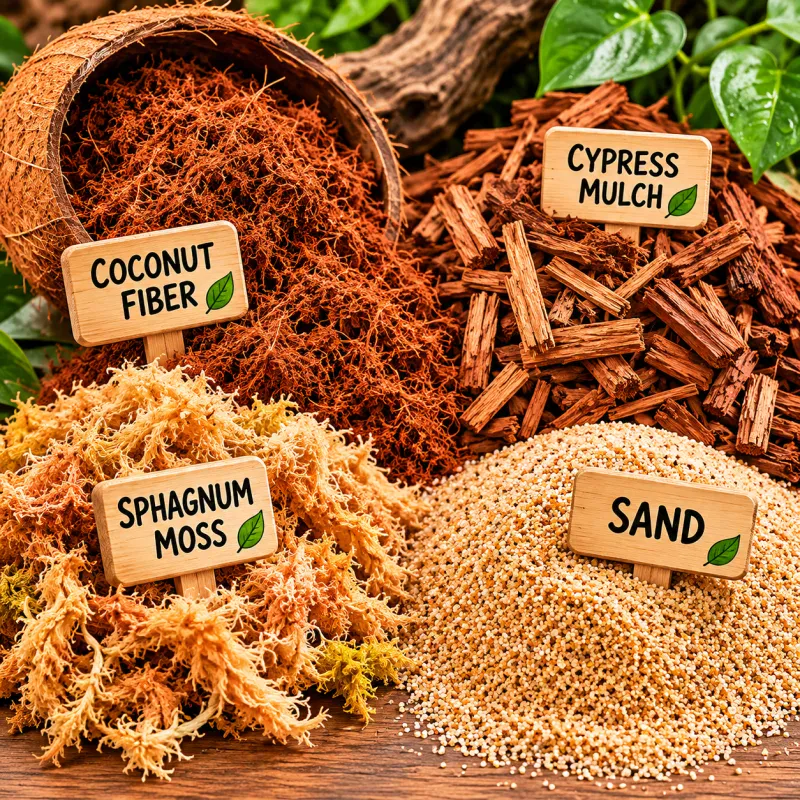
Choosing the right reptile substrate is one of the most important decisions you'll make for your pet's health and comfort. The wrong substrate can cause impaction, respiratory issues, or skin infections. This comprehensive guide compares the best substrate options for five popular reptile species: bearded dragons, leopard geckos, ball pythons, corn snakes, and tortoises. Use our comparison table and expert recommendations to create a safe, naturalistic enclosure that mimics your pet's wild habitat.
Why Substrate Matters
Substrate serves multiple critical functions in a reptile enclosure: it provides a surface for burrowing, helps maintain humidity levels, absorbs waste, and supports natural behaviors like digging and thermoregulation. An inappropriate substrate can lead to health problems such as gastrointestinal impaction (especially in species that accidentally ingest particles), respiratory infections from excessive dust or moisture, and skin issues from abrasive or bacteria-laden materials.
Always consider your species' natural environment—arid desert dwellers need dry, sandy mixes, while tropical forest species require moisture-retentive substrates like sphagnum moss or coconut coir.
Complete Substrate Comparison Table
The table below summarizes the best substrate options for each species, including key factors like particle size, humidity retention, safety, and cost. Use it as a quick reference when setting up your enclosure.
| Species | Best Substrate | Particle Size | Humidity Retention | Safety Rating | Cost (per 10 gal) | Notes |
|---|---|---|---|---|---|---|
| Bearded Dragon | Tile, paper towels, or calcium-free sand (for adults only) | Large (tile) or fine (sand) | Low | High (tile) / Medium (sand) | $5–15 | Avoid loose particles for juveniles; use solid substrate to prevent impaction |
| Leopard Gecko | Paper towels, reptile carpet, or non-adhesive shelf liner | Fine to medium | Low | High | $3–10 | Loose substrates like sand can cause impaction; avoid coconut fiber |
| Ball Python | Coconut husk, cypress mulch, or sphagnum moss | Medium to coarse | High | High | $8–20 | Needs high humidity (55–70%); avoid aspen (molds easily) |
| Corn Snake | Aspen shavings, cypress mulch, or paper towels | Fine to medium | Low to moderate | High | $5–12 | Aspen is ideal for burrowing; avoid cedar (toxic oils) |
| Tortoise (e.g., Russian, Greek) | Topsoil + play sand mix (50/50), cypress mulch, or orchard bark | Coarse | Low to moderate | High | $10–25 | Must be dust-free and allow digging; avoid calcium sand |
Species-Specific Substrate Recommendations
Bearded Dragons
Bearded dragons are native to arid Australian deserts, so their substrate must be dry and low in humidity. Safe options include: ceramic tile (easy to clean, prevents impaction), paper towels (for juveniles or quarantine), and non-adhesive shelf liner. Loose substrates like calcium sand or walnut shells are not recommended due to high impaction risk, especially for juveniles. If you use sand, choose a calcium-free, fine-grained variety and only for adults that are healthy and well-fed.
Leopard Geckos
Leopard geckos are ground-dwelling lizards from rocky, arid regions. They are prone to ingesting substrate while hunting. Best substrates: paper towels, reptile carpet, or textured tile. Avoid loose substrates like sand, crushed walnut, or coconut fiber, which can cause intestinal blockages. A moist hide with sphagnum moss can be added for shedding support without using loose substrate throughout the enclosure.
Ball Pythons
Ball pythons require moderate to high humidity (55–70%) to support healthy shedding and respiratory function. Ideal substrates: coconut husk (coir), cypress mulch, or a mix of sphagnum moss and organic topsoil. These materials retain moisture well without becoming waterlogged. Avoid aspen shavings, which mold quickly in humid conditions, and cedar or pine (toxic oils). Spot-clean regularly and replace substrate every 4–6 weeks.
Corn Snakes
Corn snakes are adaptable but prefer substrates that allow burrowing and hold moderate humidity. Recommended: aspen shavings (excellent for tunneling), cypress mulch, or paper towels for juveniles. Aspen is low-dust and absorbent, making it a top choice. Avoid cedar, pine, and sand. Provide a humid hide with damp sphagnum moss during shedding.
Tortoises (Russian, Greek, Hermann's)
Tortoises need a deep, diggable substrate to mimic their natural burrowing behavior. Best mix: 50% organic topsoil (no fertilizers) + 50% play sand. This creates a stable, dust-free base that holds slight moisture. Cypress mulch or orchid bark are also good alternatives. Avoid calcium sand (can cause impaction) and pine shavings. Provide a humid hide box with sphagnum moss for hydration.
Enclosure Setup and Substrate Depth
Proper substrate depth varies by species and activity level:
- Bearded dragons: 1–2 inches for tile; 2–3 inches for sand (adults only)
- Leopard geckos: 0.25–0.5 inches (paper towels) or 1–2 inches (tile)
- Ball pythons: 2–4 inches to allow burrowing
- Corn snakes: 2–3 inches for aspen or cypress
- Tortoises: 4–6 inches minimum for digging
Always use a solid, waterproof liner (like vinyl or pond liner) beneath the substrate to protect the enclosure floor and simplify cleaning.
Heating, Lighting, and Humidity Management
Substrate interacts directly with your heating and humidity setup. For basking species like bearded dragons, use a ceramic heat emitter or halogen bulb above a tile surface—avoid heat mats under loose substrate, which can cause burns. For ball pythons and corn snakes, a heat mat under the enclosure (regulated by a thermostat) works well with moisture-retentive substrates. Mist substrate directly to raise humidity, but avoid soaking it. Use a digital hygrometer to monitor levels daily.
Common Substrate Mistakes to Avoid
- Using sand for juveniles: High impaction risk; stick to solid substrates until adulthood.
- Choosing cedar or pine: Toxic oils cause respiratory and skin issues in all reptiles.
- Over-misting: Soggy substrate promotes bacterial and fungal growth; aim for damp, not wet.
- Ignoring particle size: Fine particles (e.g., crushed walnut) are more likely to be ingested.
- Skipping quarantine: Always use paper towels for new arrivals to monitor health and stool.
Common Health Issues Related to Substrate
Improper substrate can contribute to several health problems:
- Gastrointestinal impaction: Common in bearded dragons and leopard geckos using loose sand or calcium sand. Symptoms include lethargy, loss of appetite, and constipation.
- Respiratory infections: Caused by dusty substrates (e.g., fine sand) or excessive humidity from wet bedding. Look for wheezing, nasal discharge, and open-mouth breathing.
- Skin infections (scale rot): Occurs when reptiles sit on wet, contaminated substrate. Prevent by spot-cleaning daily and replacing substrate regularly.
- Foreign body ingestion: Snakes may accidentally swallow substrate while feeding. Use large-particle substrates or feed in a separate container.
Cleaning and Maintenance Schedule
Regular cleaning prevents bacterial buildup and keeps your reptile healthy:
- Daily: Spot-clean feces and urates; remove uneaten food.
- Weekly: Replace soiled substrate in high-traffic areas; wash and disinfect water bowls.
- Monthly: Full substrate change for bioactive or naturalistic setups; deep clean enclosure with reptile-safe disinfectant.
- Every 4–6 weeks: Replace all substrate for standard setups (e.g., aspen, cypress).
Conclusion
The best reptile substrate mimics your pet's natural habitat while prioritizing safety and ease of maintenance. For bearded dragons and leopard geckos, solid substrates like tile or paper towels are safest. Ball pythons and corn snakes thrive on moisture-retentive materials like coconut husk or aspen, while tortoises need deep, diggable soil-sand mixes. Always research your species' specific needs and avoid common pitfalls like sand for juveniles or toxic wood shavings. With the right substrate, your reptile will enjoy a comfortable, healthy, and enriching environment for years to come.
Related Reading
Check optimal temps, calculate feeding, and find your perfect species match.
References
- Boyer, T. H. (2018). Reptile Substrates: A Practical Guide. Veterinary Clinics: Exotic Animal Practice, 21(1), 1–15.
- McArthur, S., & Wilkinson, R. (2019). Medicine and Surgery of Tortoises and Turtles. Wiley-Blackwell.
- Mader, D. R. (2006). Reptile Medicine and Surgery (2nd ed.). Saunders Elsevier.
- Rossi, J. V. (2017). Substrate Selection for Captive Reptiles. Journal of Herpetological Medicine and Surgery, 27(3-4), 89–95.
🐾 Join the Community
See how other keepers set up their enclosures, ask questions, and share your experience.
🛠️ Apply What You Learned
Check optimal temps, calculate feeding schedules, and get calcium dosage — all personalized for your species.
Comments