Loose Substrate & Impaction Risk for Reptiles
Introduction
Loose substrate is a popular choice for many reptile enclosures, offering naturalistic aesthetics, burrowing opportunities, and humidity retention. However, it carries a risk of gastrointestinal impaction if ingested. This guide provides a species-specific risk assessment, safe substrate selection, and husbandry practices to minimize impaction danger. Whether you keep a desert-dwelling bearded dragon, a tropical ball python, or a terrestrial leopard gecko, understanding how substrate interacts with your pet's feeding behavior and digestive physiology is essential for long-term health.
Impaction is not just about the substrate itself—it's a complex interaction of particle size, shape, digestibility, and the individual animal's health, age, and feeding habits. This article will walk you through the science of impaction, detailed substrate comparisons, species-specific recommendations, and step-by-step prevention strategies. By the end, you'll have a clear action plan to create a safe, enriching environment for your reptile.
Understanding Impaction
Impaction occurs when a reptile ingests substrate or other indigestible material, leading to a blockage in the digestive tract. The blockage can be partial or complete, and if untreated, it can be fatal. Symptoms include lethargy, loss of appetite, straining to defecate, and a swollen abdomen. In advanced cases, you may also notice regurgitation, weight loss, and a complete cessation of fecal output.
Not all loose substrates are equal; particle size, shape, and digestibility matter. Finer, sharp-edged particles (e.g., sand) pose higher risks than larger, rounded ones (e.g., coconut coir). Here's why:
- Particle size: Very fine particles (like play sand) can pack tightly in the gut, forming a solid mass. Larger particles, if swallowed, are more likely to pass through or be regurgitated.
- Shape: Angular or sharp particles can irritate or even puncture the intestinal lining, causing inflammation and increasing the risk of blockage.
- Digestibility: Some substrates, like calcium sand, are marketed as digestible, but they clump in the presence of moisture, forming a cement-like mass in the stomach.
- Quantity ingested: Even a low-risk substrate can cause problems if a reptile consumes a large amount, especially if it's already dehydrated or has a slowed digestive system.
Reptiles ingest substrate for several reasons: accidental ingestion while striking at prey, intentional consumption due to mineral deficiencies (pica), or simply exploring their environment with their tongues. Understanding these triggers helps you mitigate risk.
Substrate Options and Risk Assessment
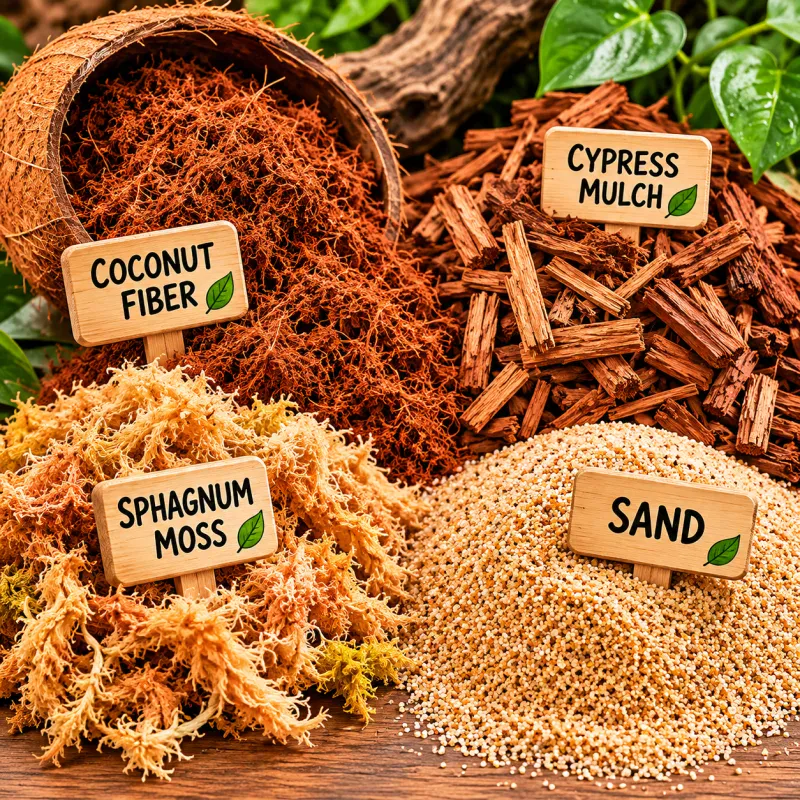
Below is a comparison of common loose substrates and their impaction risk by species group. This table is a starting point—always consider your individual pet's health and behavior.
| Substrate Type | Particle Size | Risk Level (General) | Best For | Avoid For |
|---|---|---|---|---|
| ReptiCarpet/Paper Towel | N/A (solid) | Very Low | All species, especially quarantine | Burrowing species |
| Coconut Coir | Fine to medium | Low–Moderate | Humidity-loving species (e.g., crested geckos, ball pythons) | Arboreal species with low humidity needs |
| Play Sand | Fine, angular | High | Desert species (e.g., bearded dragons) only if mixed with topsoil | Young, sick, or greedy feeders |
| Calcium Sand | Fine, dissolvable | Moderate–High | Not recommended; clumps in gut | All species |
| Orchid Bark | Large, chunky | Low | Large snakes, turtles | Small lizards (can trap limbs) |
| Topsoil (organic, no additives) | Variable | Low | Burrowing species, bioactive setups | Very humid enclosures (mold risk) |
Detailed Substrate Breakdown
Let's examine each substrate type in more detail, including pros, cons, and best-use scenarios.
ReptiCarpet and Paper Towels
These are the safest options for quarantine, sick animals, or species prone to ingestion. They are easy to clean and replace, but they offer no burrowing enrichment. Use them for the first 2 weeks of ownership or during any medical treatment.
Coconut Coir (Coco Fiber)
Coconut coir is made from coconut husks and is available in fine or medium textures. It retains humidity well and is relatively digestible if small amounts are ingested. However, fine coir can be dusty when dry, so mist it regularly. It's ideal for tropical species like crested geckos, ball pythons, and green tree pythons. For burrowing species like leopard geckos, mix it with organic topsoil for stability.
Play Sand
Play sand is a common choice for desert setups, but it's one of the riskiest substrates. Its fine, angular particles can cause irritation and impaction. If you use it, always mix with organic topsoil (70% topsoil, 30% sand) to create a more stable, less ingestible texture. Never use pure sand for juveniles, sick animals, or species that are aggressive feeders.
Calcium Sand
Despite marketing claims, calcium sand is not safe. It's designed to dissolve in water, but in the gut, it clumps into a hard mass. There are numerous reports of impaction and death linked to calcium sand. Avoid it entirely.
Orchid Bark
Orchid bark consists of large, chunky pieces of pine or fir bark. It's low-risk because pieces are too large to swallow, but small lizards can get limbs trapped between chunks. It's best for large snakes (e.g., ball pythons) and tortoises. For smaller animals, use a finer grade or mix with coconut coir.
Organic Topsoil
Organic topsoil (with no fertilizers, pesticides, or perlite) is excellent for burrowing species and bioactive setups. It holds moisture well and supports live plants. The risk is mold growth in overly humid conditions. Sterilize it by baking at 200°F for 30 minutes before use to kill pathogens.
Safe Practices by Species
Each reptile species has unique needs and risk factors. Here are detailed recommendations for common pets.
Bearded Dragons
Bearded dragons are notorious for ingesting sand, especially if they're hunting insects. Their natural habitat includes sandy soils, but captivity often leads to over-ingestion. For juveniles, use solid substrates like slate tile or paper towels. Adults can have a mix of organic topsoil and play sand (70:30) if kept spotless. Never use calcium sand. Feed insects in a separate container with no substrate to reduce ingestion. Also, provide a basking spot of 100–105°F to ensure proper digestion.
Leopard Geckos
Leopard geckos have low impaction risk if healthy and properly supplemented. Use paper towels for young geckos (under 6 months). Adults can have slate, tile, or a soil/sand mix (70% topsoil, 30% sand). Avoid pure sand. Provide a humid hide filled with moist sphagnum moss to aid shedding and digestion. Feed in a shallow dish to minimize substrate contact.
Ball Pythons
Ball pythons rarely ingest substrate, but fine particles can stick to prey, especially if you feed frozen-thawed rodents that are wet. Use cypress mulch or coconut husk (large chips). Keep humidity at 50–60% and feed in a separate tub to minimize ingestion. If you notice substrate stuck to prey, rinse the rodent before offering.
Green Iguanas
Iguanas are herbivores and may accidentally consume substrate while eating leafy greens. Use large, smooth river stones or newspaper. Avoid small particles. Provide a basking area of 95°F to aid digestion. Offer food in a heavy ceramic bowl that can't be tipped over.
Tortoises
Tortoises have high impaction risk due to slow digestion and a tendency to graze. Use large orchid bark or cypress mulch. Never use sand or gravel. Soak tortoises weekly in shallow, warm water (85°F) for 20–30 minutes to promote hydration and bowel movements. Provide a flat feeding slate to avoid substrate ingestion.
Other Species Quick Reference
| Species | Recommended Substrate | Avoid | Special Notes |
|---|---|---|---|
| Crested Gecko | Coconut coir, sphagnum moss | Sand, small bark | High humidity; mist daily |
| Corn Snake | Aspen shavings, paper towels | Sand, cedar (toxic) | Provide a humid hide during shed |
| Blue-Tongued Skink | Cypress mulch, topsoil | Calcium sand | Needs deep substrate for burrowing |
| Uromastyx | Play sand/topsoil mix (50:50) | Pure sand | High basking temp (120°F) |
Preventative Husbandry
Prevention is always better than treatment. Follow these practices to minimize impaction risk.
- Quarantine and observation: Use paper towels for the first 2 weeks to monitor stool output and overall health. This allows you to detect any issues before introducing loose substrate.
- Feeding hygiene: Feed on a flat rock, dish, or in a separate enclosure. This is especially important for insectivores that strike at moving prey.
- Temperature gradient: Proper basking (95–105°F for most diurnal species) aids digestion. A reptile that's too cold cannot digest food properly, increasing the risk of substrate accumulation.
- Hydration: Provide fresh water and misting; dehydration increases impaction risk. A well-hydrated reptile has a more efficient digestive tract.
- Regular cleaning: Spot-clean daily to remove feces and urates. Replace substrate every 1–3 months, depending on the type and the animal's messiness.
- Veterinary checkups: Annual fecal exams to check for parasites or blockages. Early detection is key.
Feeding Schedules and Substrate Interaction
Feeding frequency affects impaction risk. For example, a juvenile bearded dragon that eats 50 small crickets a day is more likely to ingest substrate than an adult eating 10 large roaches. Here's a sample feeding schedule to minimize risk:
| Species | Juvenile Feeding | Adult Feeding | Substrate-Safe Feeding Practice |
|---|---|---|---|
| Bearded Dragon | 3x/day insects | 1x/day insects + greens | Feed insects in a separate tub |
| Leopard Gecko | Daily insects | Every 2–3 days | Use feeding tongs to offer prey |
| Ball Python | Every 5–7 days | Every 10–14 days | Feed in a separate container |
| Tortoise | Daily greens | Daily greens | Use a flat slate feeding tray |
Common Health Issues and First Aid
Despite best efforts, impaction can still occur. Recognizing the signs early and acting quickly can save your reptile's life.
Symptoms of Impaction
- Lethargy and decreased activity
- Loss of appetite (anorexia)
- Straining to defecate with no output
- Swollen or distended abdomen
- Regurgitation of food
- Weight loss over time
First Aid Steps
If you suspect impaction, follow these steps:
- Increase temperature slightly (by 5°F) to boost metabolism and digestive motility.
- Provide a shallow warm soak (85–90°F) for 15–20 minutes. This helps hydrate the animal and stimulate bowel movements.
- Gently massage the abdomen in a downward motion toward the vent, using light pressure.
- Offer a small amount of pureed pumpkin or squash (for herbivores) to add fiber and bulk to the stool. For carnivores, a drop of olive oil can act as a lubricant—but never force-feed mineral oil.
- Monitor closely for 24 hours. If there's no improvement, seek veterinary care immediately.
In severe cases, surgery may be required to remove the blockage. This is why prevention is critical.
Avoid These Errors
Many impaction cases are caused by avoidable mistakes. Here are the top errors to avoid:
- Using calcium sand or walnut shell (sharp and clumping).
- Overfeeding insects that are too large or hard-shelled (e.g., adult superworms to small geckos).
- Inadequate basking temperatures slowing digestion.
- Not providing a water dish large enough for soaking.
- Mixing multiple substrate types that create dust or clumps.
- Ignoring early signs of impaction, hoping they'll resolve on their own.
- Using substrate that's too deep for a young animal, increasing ingestion risk.
Troubleshooting Substrate Issues
Even with the best intentions, you may encounter problems. Here are common issues and solutions.
Mold Growth
Mold can appear in humid substrates like coconut coir or topsoil. To prevent it, ensure proper ventilation, spot-clean daily, and replace substrate regularly. If mold appears, remove the affected area and reduce humidity temporarily.
Dustiness
Dry substrates can become dusty, causing respiratory irritation. Mist the substrate lightly to reduce dust, or choose a less dusty option like cypress mulch.
Substrate Ingestion
If you notice substrate in your reptile's feces, it's a sign that ingestion is occurring. Switch to a solid substrate or feed in a separate container immediately.
Burrowing Enrichment
Some reptiles need to burrow for mental and physical health. If you're using a solid substrate for safety, provide a digging box filled with a safe loose substrate (like organic topsoil) for supervised enrichment sessions.
Conclusion
Loose substrate can be safe and enriching when chosen carefully for your reptile species. Assess your pet's size, feeding behavior, and digestive health. Prioritize solid substrates for high-risk animals, and always monitor stool output. With proper husbandry, impaction is largely preventable. Remember, the goal is to create an environment that mimics nature while minimizing risk. When in doubt, consult a reptile veterinarian—they can offer species-specific advice and help you design the perfect setup.
Frequently Asked Questions
Q1: Can I use sand for my bearded dragon if I mix it with topsoil?
Yes, but only for healthy adults. The recommended mix is 70% organic topsoil to 30% play sand. This creates a more stable texture that's less likely to be ingested. Juveniles, sick animals, or those with a history of impaction should use solid substrates like slate tile or paper towels.
Q2: What are the first signs of impaction in a leopard gecko?
Early signs include a decrease in appetite, lethargy, and a visibly swollen abdomen. You may also notice your gecko straining to defecate with little or no output. If you observe these symptoms, start first aid measures (warm soak, gentle massage) and consult a vet if no improvement within 24 hours.
Q3: Is coconut coir safe for all reptiles?
Coconut coir is safe for most species, especially those needing high humidity like crested geckos and ball pythons. However, it can be dusty when dry, so mist it regularly. For desert species like uromastyx, it's not appropriate. Always match substrate to the species' natural habitat.
Q4: How often should I replace loose substrate?
Spot-clean daily to remove feces and urates. Replace the entire substrate every 1–3 months, depending on the type. For bioactive setups, you may only need to replace a portion annually, but monitor for mold and odor.
Related Reading
Check optimal temps, calculate feeding, and find your perfect species match.
References
- https://www.reptifiles.com/
- https://www.merckvetmanual.com/exotic-and-laboratory-animals/reptiles/
- https://www.avma.org/resources-tools/animal-health-and-welfare/reptiles
🐾 Join the Community
See how other keepers set up their enclosures, ask questions, and share your experience.
🛠️ Apply What You Learned
Check optimal temps, calculate feeding schedules, and get calcium dosage — all personalized for your species.
Comments