Reptile Biosecurity: Disease Prevention Guide
Introduction
Biosecurity is the cornerstone of responsible reptile keeping. Whether you have a single leopard gecko or a multi-species collection, preventing disease transmission is critical. Reptiles can carry pathogens—including bacteria, viruses, fungi, and parasites—without showing symptoms. This guide provides actionable protocols to minimize cross-contamination, implement effective sanitization, and manage your collection safely. By following these evidence-based practices, you protect your animals and contribute to the broader herpetoculture community.
In this expanded guide, you'll find detailed step-by-step protocols, troubleshooting advice, and practical schedules to integrate biosecurity into your daily routine. From setting up a quarantine room to choosing the right disinfectant, every aspect is covered to help you build a robust disease prevention system.
Understanding Cross-Contamination
Cross-contamination occurs when pathogens transfer between enclosures, equipment, or animals. Common vectors include hands, tools, substrate, water, and even airborne particles. For example, Cryptosporidium oocysts can survive on surfaces for months, while Salmonella bacteria persist in dried feces. Key routes include:
- Fomite transmission: shared tongs, bowls, or decor.
- Fecal-oral route: ingestion of contaminated substrate or water.
- Aerosolization: dust from dried feces or shed skin.
- Animal-to-animal: direct contact during cohabitation or breeding.
To break these chains, implement a strict “one room, one enclosure” mindset. Never move animals between rooms without quarantine. Use color-coded tools (e.g., red for quarantine, blue for main collection).
How Pathogens Spread: A Deeper Look
Understanding the survival and transmission dynamics of common pathogens helps you target your disinfection efforts. Here’s a quick reference:
| Pathogen | Survival on Surfaces | Primary Transmission | Key Disinfectant |
|---|---|---|---|
| Salmonella | Weeks to months in dried feces | Fecal-oral, fomites | 10% bleach, F10SC |
| Cryptosporidium oocysts | Months, resistant to many disinfectants | Fecal-oral, contaminated water | Ammonia-based, heat (160°F for 20 min) |
| Inclusion body disease (IBD) virus | Days to weeks, depends on environment | Blood, saliva, mites | F10SC, chlorhexidine |
| Fungal spores (e.g., Nannizziopsis) | Months in soil/substrate | Contact with contaminated substrate | Heat, F10SC |
Note that Cryptosporidium is notoriously resistant to bleach; for outbreaks, use ammonia-based cleaners or heat sterilization. Always follow label instructions for contact times.
Practical Steps to Break the Chain
- Designate a “dirty” area for cleaning and a “clean” area for storage. Never mix tools between these zones.
- Use disposable shoe covers or dedicated shoes for each room.
- Install foot baths (with F10SC solution) at entry points to high-risk areas.
- Wash hands with soap and water for at least 20 seconds—hand sanitizer is not effective against all reptile pathogens.
Sanitization Protocols
Effective sanitization requires three steps: cleaning, disinfection, and sterilization. Cleaning removes organic matter; disinfection kills most pathogens; sterilization eliminates all life forms. Follow this protocol:
| Step | Agent | Contact Time | Notes |
|---|---|---|---|
| 1. Clean | Dish soap + water | N/A | Scrub all surfaces; rinse thoroughly |
| 2. Disinfect | 10% bleach solution (1:9) | 10–15 min | Rinse with water; air dry |
| 3. Sterilize | F10SC (1:250) or chlorhexidine (2%) | 30 min | Use for high-risk items |
Important: Bleach is corrosive; use on non-porous surfaces only. For porous items (e.g., wood), replace with new or use heat sterilization (180°F for 30 min). Always rinse disinfected items with water to remove chemical residues. For routine maintenance, use a reptile-safe disinfectant like F10SC or diluted chlorhexidine.
Step-by-Step Cleaning Routine
- Remove animal and decor from the enclosure. Place the reptile in a temporary, clean container with a secure lid and ventilation.
- Scrub all surfaces with dish soap and warm water. Pay special attention to corners, seams, and under ledges where organic matter accumulates.
- Rinse thoroughly with clean water to remove soap residue.
- Apply disinfectant (e.g., 10% bleach) and ensure it remains wet for the required contact time (10–15 minutes). Use a spray bottle or cloth.
- Rinse again with water to remove disinfectant residue. This step is crucial for reptile safety.
- Air dry completely before returning the animal. Damp environments promote bacterial growth.
Choosing the Right Disinfectant
Not all disinfectants are equal. Here’s a breakdown of common options:
| Disinfectant | Pros | Cons | Best Use |
|---|---|---|---|
| Bleach (sodium hypochlorite) | Inexpensive, broad-spectrum | Corrosive, harmful if not rinsed, inactivated by organic matter | Non-porous surfaces, enclosures after cleaning |
| F10SC (quaternary ammonium + biguanide) | Reptile-safe when diluted, effective against many pathogens, low toxicity | More expensive, requires correct dilution | Routine disinfection, high-risk items |
| Chlorhexidine (2%) | Safe for skin, good for instruments | Not effective against all viruses, can be inactivated by organic matter | Veterinary instruments, wound care |
| Accelerated hydrogen peroxide (e.g., Rescue) | Effective, breaks down into water and oxygen, safe for most surfaces | Cost, may discolor some materials | Enclosures, equipment |
Pro tip: Always clean before disinfecting. Organic matter (feces, soil) can neutralize disinfectants, making them ineffective.
Heat Sterilization for Porous Items
For wood branches, cork bark, and other porous decor that cannot be bleached, heat sterilization is an option:
- Bake in an oven at 200°F (93°C) for 30 minutes. Monitor carefully to avoid fire risk.
- Alternatively, soak in boiling water for 15 minutes.
- For plastic items, use a dishwasher cycle with high heat (if safe for the material).
Remember to allow items to cool completely before returning them to the enclosure.
Quarantine Procedures
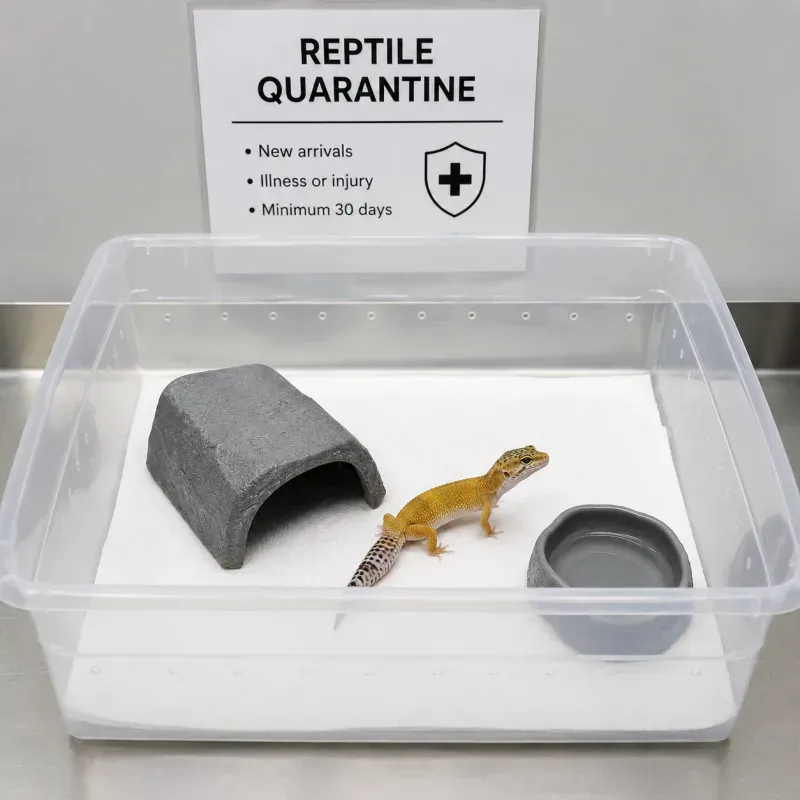
Quarantine is the single most effective disease prevention tool. New arrivals, sick animals, and those returning from shows must be isolated. Minimum quarantine duration is 30–90 days depending on species and risk. For high-risk species (e.g., green iguanas, wild-caught animals), extend to 90 days. Set up a quarantine room with:
- Separate ventilation (no shared HVAC).
- Dedicated tools (tongs, bowls, thermometers).
- Paper towel substrate (easy to monitor feces).
- Minimal decor (easier to clean).
During quarantine, perform daily health checks: observe appetite, activity, stool consistency, and respiratory sounds. Collect fecal samples for parasitology and bacterial culture. Only move animals to the main collection after two negative fecal tests (two weeks apart) and no clinical signs.
Setting Up a Quarantine Room
- Choose a separate room if possible. If not, use a dedicated corner with a plastic barrier (e.g., shower curtain) to separate from the main collection.
- Place the enclosure on a non-porous surface (e.g., tile, plastic sheeting) for easy cleaning.
- Equip with essentials: heat source, thermostat, UVB (if needed), hides, water bowl, and paper towels.
- Dedicate tools: use color-coded red for quarantine. Never use these tools in the main collection without disinfection.
- Post a sign reminding household members that this is a quarantine area.
Quarantine Duration by Risk Level
| Risk Level | Examples | Minimum Duration | Testing Required |
|---|---|---|---|
| Low (captive-bred, healthy, from trusted source) | Leopard gecko, corn snake | 30 days | Fecal exam at start and end |
| Medium (multi-species collections, shows) | Bearded dragon, ball python | 60 days | Fecal exam, physical check |
| High (wild-caught, known disease outbreaks) | Green iguana, wild-caught geckos | 90 days | Fecal exams, blood work, PCR for specific diseases |
If any signs of illness appear during quarantine, extend the period and consult a veterinarian immediately.
Daily Health Check Protocol
- Morning: Observe the animal’s activity level and posture. Is it alert? Are eyes clear?
- Feeding: Offer food and note if it eats. Refusal may indicate stress or illness.
- Stool: Inspect for consistency, color, and presence of parasites (visible worms).
- Respiratory: Listen for wheezing, clicking, or open-mouth breathing.
- Skin: Check for lesions, blisters, or stuck shed.
Keep a quarantine log with daily notes. This data is invaluable for your vet if problems arise.
Collection Management Best Practices
Managing a multi-species collection requires strategic planning to reduce disease risk. Follow these principles:
- Species separation: Keep different species in separate rooms if possible. If not, arrange enclosures in “zones” (e.g., desert, tropical, aquatic) with dedicated tools per zone.
- Husbandry consistency: Standardize temperature, humidity, and lighting per species to reduce stress, which suppresses immunity.
- Record keeping: Maintain digital or written logs for each animal: feeding, shedding, weight, and health events. This helps detect outbreaks early.
- Visitor protocols: Limit access to your reptile room. Require hand washing and shoe covers for guests. Avoid visiting other reptile collections and returning without quarantine.
For large collections, implement a “sick bay” area—a separate room for animals under treatment. Use disposable gloves and aprons, and disinfect footwear between zones.
Zoning Strategy
Divide your reptile room into zones based on environmental needs and risk:
- Zone A: Desert species (e.g., bearded dragons, uromastyx). Low humidity, high temperature.
- Zone B: Tropical species (e.g., crested geckos, green tree pythons). High humidity, moderate temperature.
- Zone C: Aquatic/semi-aquatic (e.g., turtles, newts). High humidity, water features.
Assign specific tools (tongs, spray bottles, buckets) to each zone. Color-code them (e.g., yellow for desert, green for tropical, blue for aquatic). Never mix tools between zones without full disinfection.
Record Keeping Templates
Use a simple spreadsheet or a reptile-keeping app. Include columns for:
- Date
- Animal ID/name
- Weight (weekly)
- Feeding (what, how much, eaten?)
- Shedding (date, completeness)
- Health notes (behavior, stool, any abnormalities)
- Treatments (if any)
Review logs monthly to spot trends (e.g., weight loss in a specific species). Early detection is key.
Visitor and Biosecurity Protocol
- Post a sign on the door: “Please wash hands before entering.”
- Provide hand sanitizer and disposable shoe covers at the entrance.
- Ask visitors not to handle reptiles unless necessary.
- If you visit another reptile collection, change clothes and shower before handling your own animals.
Handling and Feeding Best Practices
Handling is a common vector for disease. Always wash hands with soap and water before and after handling any reptile. Use disposable gloves when handling sick animals or cleaning enclosures. For feeding:
- Feed pre-killed prey to avoid injuries and pathogen transmission from live prey.
- Use separate feeding tongs for each enclosure.
- Thaw frozen prey in a dedicated container (not the kitchen sink).
- Remove uneaten prey after 15–30 minutes to prevent spoilage.
If you handle multiple reptiles in one session, change gloves between animals. Alternatively, use a “one animal, one cloth” approach—place each animal on a clean, disposable surface.
Safe Handling Routine
- Prepare: Gather all necessary items (gloves, cloth, container) before opening any enclosure.
- Wash hands with soap and water (even if wearing gloves).
- Handle the animal gently, supporting its body. Avoid grabbing tails or limbs.
- After handling, place the animal back in its enclosure.
- Dispose of gloves and wash hands again.
For venomous or aggressive species, use a snake hook and never handle without proper training.
Feeding Protocols
- Pre-killed prey: Thaw in a plastic bag in warm water (not boiling). Never microwave—it can cook the prey and cause burns.
- Feeding tongs: Use a dedicated pair per enclosure. After feeding, disinfect tongs with F10SC or chlorhexidine.
- Live prey: If you must feed live (e.g., for picky eaters), supervise and remove any prey not eaten within 15 minutes to prevent injury.
- Water bowls: Change water daily. Disinfect bowls weekly with a reptile-safe cleaner.
Zoonotic Disease Awareness
Reptiles can transmit Salmonella to humans. To protect yourself and your family:
- Always wash hands after handling reptiles, their food, or enclosure items.
- Do not allow reptiles to roam in kitchens or food-preparation areas.
- Clean reptile items in a dedicated tub, not in the kitchen sink.
- Children, elderly, and immunocompromised individuals should avoid direct contact with reptiles.
Common Health Issues and Prevention
Despite best efforts, diseases can emerge. Here are common ones and how to prevent them:
- Respiratory infections: Often due to poor ventilation or incorrect temperature. Prevent by providing proper thermal gradients and clean air.
- Mouth rot (stomatitis): Caused by bacteria or trauma. Prevent by avoiding abrasive substrates and maintaining oral hygiene.
- Parasites (e.g., pinworms, coccidia): Spread via feces. Prevent by regular fecal exams and strict sanitation.
- Fungal infections: Thrive in high humidity. Prevent by ensuring proper ventilation and drying surfaces.
- Inclusion body disease (IBD) in boas and pythons: Highly contagious and fatal. Prevent by quarantining new snakes and testing for IBD.
Early detection is key. If you notice lethargy, weight loss, abnormal stools, or respiratory noise, isolate the animal immediately and consult a reptile veterinarian.
Detailed Prevention Strategies
Respiratory Infections
- Provide a temperature gradient (basking spot 88–95°F for most species, cool side 75–80°F).
- Ensure proper ventilation (screen tops, vents) to prevent stagnant air.
- Avoid sudden temperature drops.
Mouth Rot
- Use smooth substrate (paper towels, tile) to avoid abrasions.
- Provide proper humidity to prevent dry, cracked lips.
- Check the mouth regularly for discharge or swelling.
Parasites
- Schedule fecal exams every 6–12 months for all reptiles.
- Quarantine new animals and test before introducing.
- Disinfect enclosures regularly to break the parasite life cycle.
Fungal Infections
- Maintain humidity levels appropriate for the species; avoid constant soaking.
- Provide dry basking areas.
- Remove and disinfect any contaminated substrate promptly.
IBD
- Test new boas and pythons for IBD via PCR (blood or tissue).
- Quarantine for at least 90 days.
- Control mites, which can transmit IBD.
When to See a Veterinarian
- Any sudden weight loss (more than 10% over a month).
- Persistent diarrhea or abnormal stools.
- Open-mouth breathing, wheezing, or nasal discharge.
- Lethargy or refusal to eat for more than a week.
- Visible lesions, swelling, or deformities.
Find a veterinarian experienced with reptiles (exotic animal vet). Regular check-ups (annual) are recommended.
Pitfalls and How to Avoid Them
Even experienced keepers make errors. Avoid these pitfalls:
- Inadequate quarantine: Rushing to introduce new animals. Always wait at least 30 days.
- Cross-contamination via water: Using the same hose or bucket for multiple enclosures. Dedicate equipment per zone.
- Overuse of disinfectants: Using bleach on porous surfaces damages them and may harm reptiles. Stick to reptile-safe products.
- Ignoring zoonotic risks: Salmonella can infect humans. Always wash hands after handling reptiles or their environment.
- Poor record keeping: Without logs, you can’t track health trends. Use a notebook or app.
- Shared enrichment items: Never move hides, branches, or plants between enclosures without disinfection.
By avoiding these mistakes, you create a safer environment for your reptiles and yourself.
Troubleshooting Common Issues
- Disinfectant residue: If you notice a film on surfaces after cleaning, you may not be rinsing thoroughly. Increase rinse time.
- Persistent odors: This may indicate incomplete cleaning. Remove all organic matter and disinfect again.
- Mold growth: Increase ventilation and reduce humidity. Remove moldy substrate immediately.
- Animal stress during cleaning: Minimize handling time and use a temporary container with familiar items.
Emergency Outbreak Plan
If a disease outbreak occurs in your collection, follow these steps:
- Isolate: Move affected animals to the sick bay immediately.
- Disinfect: Clean and disinfect the entire room, not just the affected enclosure.
- Consult a vet: Get a definitive diagnosis and treatment plan.
- Review protocols: Identify how the outbreak happened and adjust your biosecurity measures.
- Increase monitoring: Check all animals daily for symptoms.
Conclusion
Reptile biosecurity is not optional—it is a responsibility. By understanding cross-contamination, implementing rigorous sanitization protocols, managing your collection strategically, and avoiding common errors, you significantly reduce disease risk. Remember: an ounce of prevention is worth a pound of cure. Start today by auditing your current practices and making incremental improvements. Your reptiles will thank you with vibrant health and longevity.
Take action now: review your quarantine setup, stock up on reptile-safe disinfectants, and create a record-keeping system. Every step you take strengthens your defense against disease.
Frequently Asked Questions
1. How long should I quarantine a new reptile?
The minimum is 30 days, but for high-risk species (wild-caught, from shows, or known outbreaks), extend to 60–90 days. Always perform two negative fecal tests two weeks apart before introducing to your main collection.
2. Can I use bleach to disinfect my reptile enclosure?
Yes, but only on non-porous surfaces (glass, plastic, tile). Use a 10% bleach solution (1 part bleach to 9 parts water) with a 10–15 minute contact time, then rinse thoroughly with water and air dry. Never use bleach on porous items like wood.
3. How often should I clean my reptile's enclosure?
Spot-clean daily (remove feces, uneaten food). Deep-clean and disinfect at least once a month, or more often if you have multiple animals or a sick individual. In quarantine, clean more frequently—every few days—to prevent pathogen buildup.
4. What are the signs of a sick reptile I should watch for?
Look for lethargy, weight loss, loss of appetite, abnormal stools (diarrhea, blood), respiratory noise (wheezing, clicking), discharge from eyes/nose/mouth, skin lesions, and difficulty shedding. If you notice any of these, isolate the animal and consult a reptile veterinarian.
Related Reading
Check optimal temps, calculate feeding, and find your perfect species match.
References
- Jacobson, E. R. (2007). Infectious Diseases and Pathology of Reptiles. CRC Press.
- Mader, D. R. (2006). Reptile Medicine and Surgery. Saunders.
- Divers, S. J., & Stahl, S. J. (2019). Mader's Reptile and Amphibian Medicine and Surgery. Elsevier.
- Mitchell, M. A., & Tully, T. N. (2009). Manual of Exotic Pet Practice. Saunders.
- American Veterinary Medical Association. (2021). Reptile Biosecurity Guidelines.
🐾 Join the Community
See how other keepers set up their enclosures, ask questions, and share your experience.
🛠️ Apply What You Learned
Check optimal temps, calculate feeding schedules, and get calcium dosage — all personalized for your species.
Comments