New Reptile Quarantine: Step-by-Step Protocol Guide
Why Quarantine Matters
Introducing a new reptile into an established collection without quarantine is one of the most common—and most dangerous—mistakes a keeper can make. Reptiles can carry subclinical infections (e.g., Cryptosporidium, Salmonella, mites, or adenovirus) that show no symptoms for weeks or months. A dedicated quarantine protocol protects your existing animals, prevents costly veterinary bills, and ensures the new arrival acclimates safely. This guide provides a complete, evidence-based quarantine system with a clear timeline, supplies checklist, and disease-monitoring steps.
Setting Up the Quarantine Enclosure
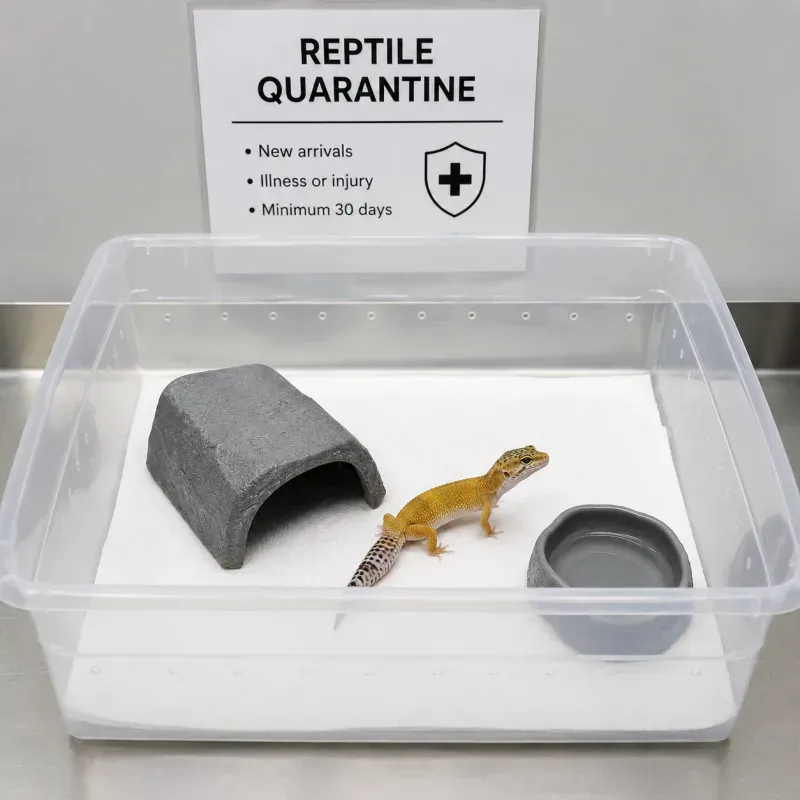
The quarantine enclosure should be in a separate room—ideally with a door that stays closed—to prevent airborne or fomite transmission. Use a simple, easy-to-sanitize setup: a plastic tub (e.g., Sterilite or Vision) with a secure, ventilated lid, or a glass tank with a screen top. Avoid porous materials like wood or cork bark, which trap pathogens.
Quarantine Enclosure Requirements
- Size: Minimum 20-gallon for most snakes and small lizards; larger for active species.
- Substrate: Paper towels or newspaper (replace daily)—allows easy visual inspection of feces and urates.
- Hides: Plastic hides (e.g., deli cups, PVC pipes) that can be washed or replaced.
- Water dish: A shallow, heavy bowl that can be disinfected daily.
- Temperature gradient: Use a digital thermometer with probe; provide a basking spot and cool end.
- Humidity: Monitor with a hygrometer; adjust with misting or a small humidifier as needed.
Supplies Checklist: Quarantine Kit
Assemble a dedicated quarantine kit that never leaves the quarantine room. This prevents cross-contamination. Use separate tools for each animal if quarantining multiple individuals.
| Category | Items |
|---|---|
| Cleaning & Disinfection | F10SC veterinary disinfectant (or diluted bleach 1:10), nitrile gloves, paper towels, scrub brush (dedicated), spray bottle |
| Feeding Tools | Separate tongs, feeding bowl, thawing container (for frozen prey) |
| Monitoring Equipment | Digital thermometer & hygrometer, scale (grams), notebook or app for daily logs, flashlight for visual checks |
| First Aid & Sampling | Sterile swabs, fecal collection tubes (e.g., from vet), antiseptic (chlorhexidine), betadine, sterile saline |
| Isolation Supplies | Extra hides, water bowls, substrate (paper towels), backup heat source (UTH or CHE) |
Quarantine Timeline: 30–90 Days
The minimum quarantine period is 30 days for healthy-looking animals from reputable breeders, but 90 days is recommended for wild-caught, rescue, or animals with unknown history. Follow this step-by-step timeline:
Days 1–7: Acclimation & Baseline Assessment
- Day 1: Place the new reptile in its quarantine enclosure. Do not handle. Offer water only. Observe breathing, posture, and activity.
- Day 2–3: Check for mites (look around eyes, vent, and under scales). Take baseline weight. Begin daily fecal inspection.
- Day 4–7: Offer a small meal (if species is feeding). Record appetite, digestion time, and fecal appearance. Collect first fecal sample for a vet check.
Days 8–30: Monitoring & Fecal Testing
- Weekly: Weigh the animal; record weight trend. Perform a thorough visual exam: check skin, eyes, mouth, vent, and limbs for lumps, discharge, or swelling.
- Fecal testing: Collect three fecal samples over 10–14 days (because parasite shedding is intermittent). Send to a reptile-savvy lab for floatation and direct smear.
- Quarantine hygiene: Change substrate daily. Disinfect water bowl and hides every other day. Wash hands before and after each interaction.
Days 31–90: Extended Observation (if needed)
- Continue weekly weighing and visual exams.
- If any symptoms appear (e.g., lethargy, diarrhea, respiratory noise, weight loss), extend quarantine and consult a veterinarian.
- Only after at least two negative fecal tests and no signs of illness for 30 days can you consider moving the animal to the main collection.
Disease Monitoring: What to Watch For
Daily observation is your best tool. Keep a log (paper or app) noting:
- Appetite: Is the animal eating normally? Refusal for more than 1–2 feedings may indicate stress or illness.
- Feces: Note color, consistency, and presence of blood, mucus, or undigested food. Normal feces are firm and formed.
- Behavior: Lethargy, excessive hiding, gaping, or stargazing (head tilted up) are red flags.
- Skin: Check for mites (tiny black/red dots), ticks, blisters, or retained shed.
- Respiratory: Listen for wheezing, clicking, or bubbles from nostrils or mouth.
If you see any of these signs, isolate the animal further (even within the quarantine room) and contact a reptile veterinarian immediately. Do not treat with over-the-counter medications—many are toxic or ineffective.
Safe Integration into the Main Collection
After completing quarantine and getting a clean bill of health from a vet, introduce the new reptile to its permanent enclosure. Follow these steps to minimize stress:
- Prepare the main enclosure ahead of time with appropriate substrate, hides, and temperature gradient.
- Transfer the animal using clean hands or a dedicated carrier. Do not use tools from the quarantine room.
- Monitor for 7–14 days after introduction for any signs of stress or aggression (if cohabitating).
- Dispose of quarantine supplies or thoroughly disinfect them (soak in F10SC for 10 minutes, rinse, and air dry) before storage.
Avoid These Problems
- Skipping quarantine entirely because the new animal looks healthy. Many pathogens have incubation periods of 2–8 weeks.
- Using the same tools (tongs, bowls, substrate scoop) for quarantine and main collection without disinfection.
- Quarantining in the same room as the main collection—airborne particles and dust can carry mites and bacteria.
- Not testing feces even if the animal appears healthy. Subclinical parasite loads are common.
- Shortening quarantine because the animal seems fine. Stick to the 30–90 day timeline based on risk level.
- Introducing multiple new animals together without separate quarantine—they can transmit diseases to each other.
When to Consult a Veterinarian
Consult a reptile veterinarian if you observe any of the following during quarantine:
- Weight loss of more than 10% body weight
- Refusal to eat for 2+ weeks (for species that should feed weekly)
- Abnormal feces (liquid, bloody, or containing worms)
- Respiratory signs (wheezing, open-mouth breathing)
- Skin lesions, mites, or retained shed that doesn't resolve with humidity
- Lethargy or unusual posture (e.g., lying on side, unable to right itself)
A vet can perform a comprehensive exam, fecal PCR testing for specific pathogens (e.g., Cryptosporidium, adenovirus), and provide treatment if needed. Always ask for a written health certificate if you plan to transport the animal across state lines.
Quarantine Duration vs. Risk Level
| Risk Level | Source | Recommended Quarantine | Fecal Tests Required | Vet Visit Required |
|---|---|---|---|---|
| Low | Captive-bred from reputable breeder with health guarantee | 30 days | 1–2 (optional but recommended) | No, unless symptoms appear |
| Medium | Pet store, reptile show, or online marketplace (unknown history) | 60 days | 2–3 | Yes, at start and end |
| High | Wild-caught, rescue, or animal with known illness history | 90 days | 3+ (including PCR) | Yes, immediately and at end |
By following this quarantine protocol, you protect your entire collection from devastating outbreaks and give your new reptile the best start. Remember: patience is the cheapest and most effective medicine in herpetoculture.
Related Reading
Check optimal temps, calculate feeding, and find your perfect species match.
References
- Mader, D. R., & Divers, S. J. (2014). Current Therapy in Reptile Medicine and Surgery. Elsevier.
- Stahl, S. J. (2015). 'Quarantine and Disease Prevention in Reptile Collections.' Journal of Exotic Pet Medicine, 24(2), 155-163.
- Mitchell, M. A., & Tully, T. N. (2016). Manual of Exotic Pet Practice. Saunders.
- Barten, S. L. (2019). 'Reptile Quarantine: A Practical Guide.' Veterinary Clinics of North America: Exotic Animal Practice, 22(1), 1-12.
🐾 Join the Community
See how other keepers set up their enclosures, ask questions, and share your experience.
🛠️ Apply What You Learned
Check optimal temps, calculate feeding schedules, and get calcium dosage — all personalized for your species.
Comments