Reptile Quarantine Protocol: How to Protect Your Collection
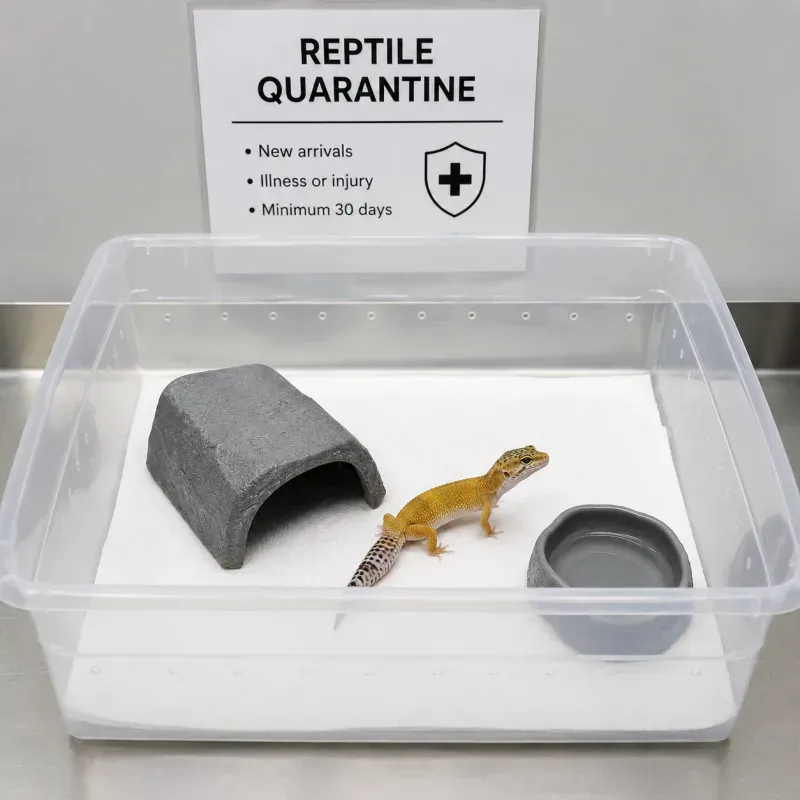
Quarantine Protocols for New Reptiles
According to established clinical standards in herpetological medicine—such as Mader’s Reptile Medicine and Surgery and the Association of Reptile and Amphibian Veterinarians (ARAV) guidelines—quarantine is the absolute gold standard for preventing the introduction of pathogens, pests, and viruses into an existing collection. Below is the complete, fact-verified protocol to implement for every new acquisition.
🔑 Summary
- Duration: Maintain quarantine for a strict minimum of 90 days. The timeline resets if disease or parasites are treated.
- Isolation: House new arrivals in a separate room with independent airflow/ventilation.
- Substrate: Use white paper towels exclusively to easily monitor for ectoparasites and abnormal discharge.
- Diagnostics: Run a minimum of two consecutive negative fecal exams spaced 2–4 weeks apart.
- Workflow: Always care for your established healthy collection first and the quarantined animals last.
1. Why Quarantine Matters
Many reptiles are asymptomatic carriers of covert pathogens (e.g., Nidovirus, inclusion body disease, Ferlavirus, or heavy endoparasite loads) that surface only under relocation stress. Skipping quarantine risks catastrophic, collection-wide cross-infection. Implementing a strict bio-secure barrier protects your investment, time, and the lives of your existing animals.
2. The 90-Day Protocol
- Minimum Duration: A strict minimum of 90 days is universally recommended by exotic animal hospitals. For wild-caught specimens, high-risk species, or known vectors of latent viral strains (like Boidae and Pythonidae), extending quarantine to 180 days is clinically preferred.
- The Reset Rule: If the animal tests positive for a disease or parasite and requires treatment during this window, the 90-day clock resets back to zero from the day the final treatment concludes and the animal is confirmed clear.
- Release Criteria: The animal must exhibit normal ecdysis (shedding), consistent weight stabilization or growth, and successful consecutive feedings (typically 3 to 4 unassisted, normal meals for snakes and consistent daily/scheduled feeding for lizards and chelonians) before being cleared.
3. Separate Room Setup
- Physical Isolation: The quarantine enclosure must be housed in a completely separate room, ideally on a different floor or building wing from your main collection. Keeping animals in the same room on opposite sides is an ineffective bio-security failure.
- Airflow Management: Close, seal, or isolate HVAC vents in the quarantine room if possible. Airborne or aerosolized transmission (such as respiratory bacteria, fungal spores, or certain herpesviruses and paramyxoviruses) can easily travel through shared ventilation systems. Utilize standalone HEPA air purifiers within the quarantine space to lower airborne pathogen loads.
- Bio-Secure Habitats: Keep the setup strictly minimalist. Use easily sanitizable plastic tubs or glass enclosures. Avoid loose substrates like cypress mulch, soil, or coconut coir; use white paper towels or unprinted newspaper exclusively to simplify visual evaluation of feces, urates, and pests.
- Husbandry Parameters: While minimalist, the enclosure must still meet the specific species-required thermal gradients, humidity percentages, and supplemental UVB lighting (using appropriate Ferguson Zone metrics) to prevent immune suppression from poor husbandry. Provide easily cleanable or disposable hides (e.g., plastic or cardboard boxes).
4. Disease Monitoring
Perform daily wellness checks. Actively monitor for overt clinical signs of illness, including:
- Wheezing, increased respiratory effort, open-mouth breathing, or bubbles around the nose and mouth (signs of Respiratory Infections).
- Lethargy, asymmetric posture, head tilting, tremors, or neurological "stargazing" (indicative of viral encephalopathy or severe toxicity).
- Regurgitation, abnormal stool consistency, or cloacal prolapse.
- Weight Tracking: Weigh the animal weekly on a digital gram scale. Unexplained weight loss is often the first measurable indicator of internal decline, metabolic issues, or heavy parasite burdens.
5. Mite Detection
The reptile mite (Ophionyssus natricis) is highly contagious, destructive, and acts as a primary mechanical vector for deadly diseases like Inclusion Body Disease (IBD).
- The Paper Towel Test: White paper towel substrates allow you to immediately spot moving black or red specks or rubbed-off mite dust/feces.
- Physical Inspection: Check the thin skin folds around the eyes, gular folds, peri-cloacal region, and under the scales. Placing the reptile in a lukewarm water bath under supervision can cause hidden mites to drown and float to the surface, confirming infestation. If found, immediate treatment with veterinary-approved acaricides or predatory mites (e.g., Hypoaspis miles) must be initiated alongside a complete sanitation routine.
6. Fecal Testing
- Frequency: Schedule at least two separate fecal examinations during the 90-day period, spaced 2 to 4 weeks apart. Single tests often yield false negatives due to intermittent shedding cycles of protozoans and helminths.
- Methodology: Fresh samples (collected within 24 hours and kept cool but not frozen) should be evaluated by an exotic animal veterinarian using both direct saline smears and centrifugal flotation techniques to screen for flagellates, amoebae, coccidia, roundworms, hookworms, and pinworms. Do not administer prophylactic or blind dewormers without a targeted diagnosis, as unnecessary medications stress the renal and hepatic systems of an already compromised animal.
7. Cross-Contamination Prevention
The One Husbandry Rule: Always feed, clean, and handle your established, healthy collection FIRST. Always handle the quarantined animal LAST to eliminate mechanical transmission routes.
- Dedicated Tools: Keep a completely separate set of feeding tongs, snake hooks, misting bottles, and temp guns inside the quarantine room. Never share tools between rooms without autoclaving or chemical sterilization.
- Personal Hygiene: Wash hands thoroughly up to the elbows with antimicrobial soap and apply an alcohol-based sanitizer after leaving the quarantine space. Keep dedicated footwear or a disinfectant footbath at the room entrance, and wear a dedicated lab coat or change clothing immediately after servicing a quarantined animal.
8. Ending Quarantine
Once the 90 days have expired with zero signs of illness, consistent weight maintenance, normal feeding patterns, and consecutive clean fecal panels, the animal may join the main facility. Following relocation, the quarantine enclosure, structural components, and all non-porous tools must undergo a deep terminal disinfection using veterinary-grade halogenated tertiary amine compounds (e.g., F10 Veterinary Disinfectant) or a properly diluted bleach solution (1:10 dilution), ensuring appropriate contact times are met to neutralize persistent pathogens.
Related Reading
- Common Reptile Health Issues — 10 conditions to watch for.
- Reptile Mite Infestation Guide — Identify and treat snake mites.
- Reptile Parasites Guide — Fecal tests and deworming.
Check optimal temps, calculate feeding, and find your perfect species match.
References
- Mader, D.R. (2006). Reptile Medicine and Surgery, 2nd Ed. Saunders Elsevier.
- ARAV. Quarantine Recommendations.
🐾 Join the Community
See how other keepers set up their enclosures, ask questions, and share your experience.
🛠️ Apply What You Learned
Check optimal temps, calculate feeding schedules, and get calcium dosage — all personalized for your species.
Comments
No account needed — corrections, updates and questions are all welcome. For a full question with photos, the community Q&A is the better place.