Rosy Boa Enclosure Setup: Size, Heat & Hides
Introduction
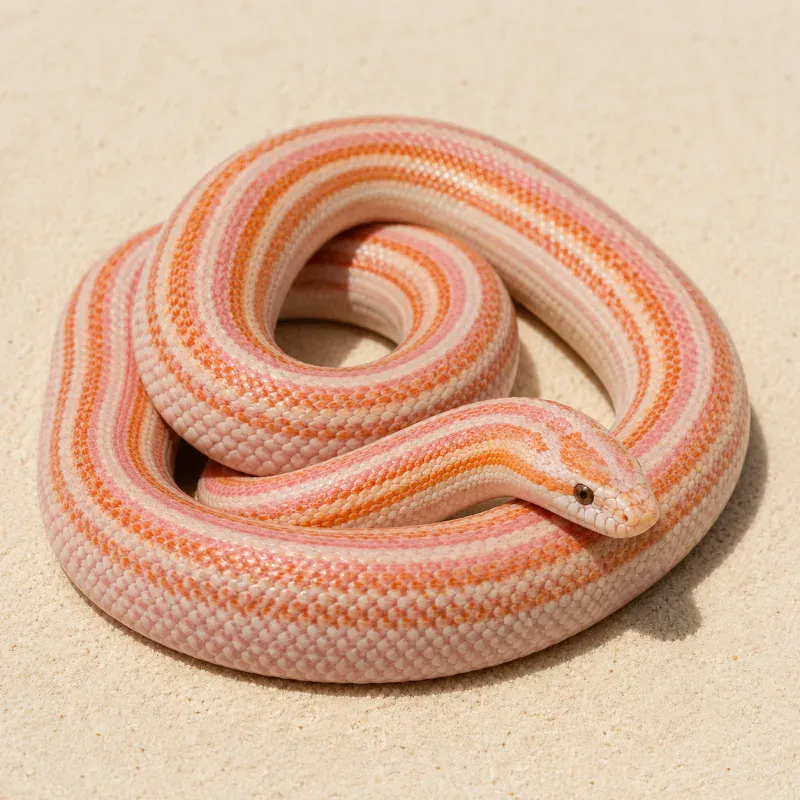
Rosy boas are small, gentle, slow-moving snakes that spend most of their lives under something. That makes their enclosure less about climbing space and more about three things: a hot spot they can press their belly against, a cool retreat, and substrate they can burrow into. Get those right and a rosy boa is one of the easiest snakes in the hobby to keep. Get them wrong and you get a snake that refuses food for months and looks "fine" the whole time.
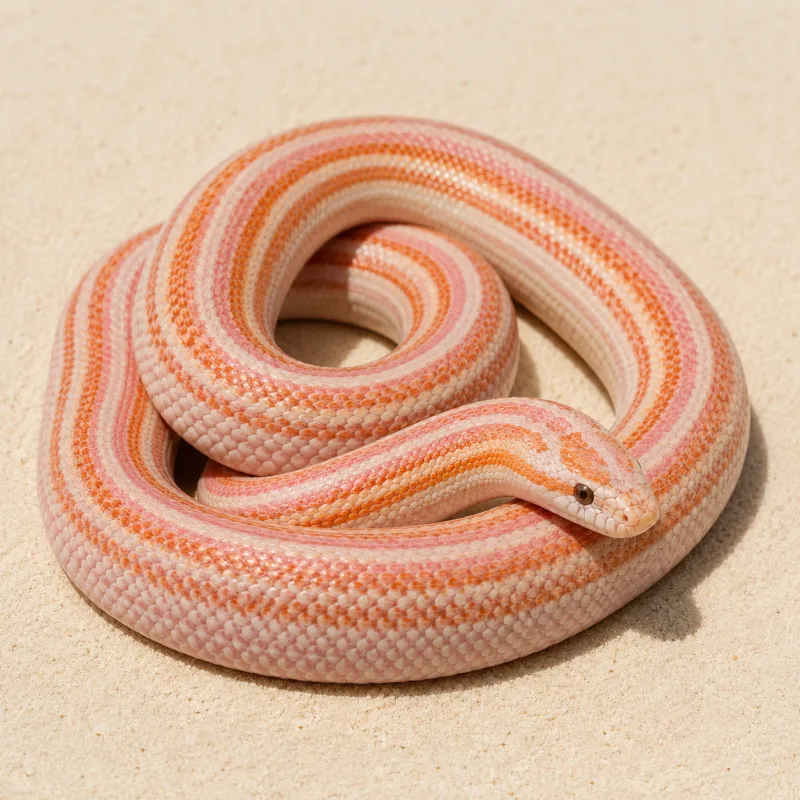
Heating theory lives in our rosy boa heating guide; this page is the physical setup — size, substrate, hides, lid and the checklist.
Tank Size: Small Snake, Real Requirements
| Age / size | Enclosure | Notes |
|---|---|---|
| Juvenile (under 18 in) | 10-gallon (20×10×12 in) | Works while small, but plan the upgrade — they grow faster than expected |
| Adult | 20-gallon long (30×12×12 in) | The practical minimum: enough floor to build a gradient |
| Large adult female | 36×18×18 in or a 4×2×2 ft | Worth it — more floor means a stable cool side and better exercise |
Floor space matters more than height. Rosy boas are terrestrial and secretive; a taller tank with the same footprint gives you nothing but a bigger temperature problem. A 20-gallon long is the standard answer, and "bigger is always better" applies as long as you can still heat it properly.
Substrate: Depth Before Material
Rosy boas burrow, and a 1 inch layer of aspen defeats the purpose. Plan on 2–3 inches minimum, deeper at the cool end if you like.
| Option | Best for | Watch out for |
|---|---|---|
| Aspen shavings | Default choice: dry, absorbent, holds burrows | Moulds fast above ~50% humidity — keep the enclosure ventilated |
| Cypress mulch | Retains a little moisture for shedding | Can push humidity too high in a closed tank; monitor daily |
| 70/30 topsoil + play sand | Naturalistic look, heavy burrows | Heavier to clean; must be organic, no fertiliser or perlite |
Spot-clean droppings as you find them and replace the substrate completely every few weeks. If the enclosure smells sour when you open it, you waited too long.
Hides: Two Are the Minimum
- Warm-side hide — over the heat source, so the snake can digest while hidden rather than choosing between safety and warmth.
- Cool-side hide — the retreat used most of the day. Small and snug beats large and airy; rosy boas want to touch the walls.
- Humid hide (optional) — a small container with damp sphagnum moss, offered during a shed cycle. Do not leave it wet year-round.
- Cover and clutter — a couple of cork flats or slate pieces bridge the open space. A rosy boa with nowhere to hide spends its time trying to escape instead of eating.
Wiring the Heat Into the Enclosure
The enclosure has to make a gradient: 88–92°F hot spot, 80–85°F warm-side air, 70–75°F cool side, 65–70°F at night.
- Under-tank heater on one end, covering roughly one third of the floor — never the whole bottom.
- Thermostat probe on the glass, under the substrate, above the mat. Set it to 90°F. This is not optional: an unregulated mat can exceed 110°F.
- Two thermometers — one on the warm side floor, one on the cool side floor. You are checking the gradient, not a single number.
- Ceramic heat emitter for cold rooms, on its own thermostat, only if the room drops below 60°F at night.
- No hot rocks, no heat cable loops. A rosy boa that cannot escape a hot surface will sit on it until it is burned.
Lid, Water and Ventilation
- Secure screen lid with clips. Rosy boas are small but surprisingly strong in a gap; a loose lid is the classic escape.
- Check the UTH cord gap. Heat mat cables create the opening snakes actually use. Route the cable through a sealed notch or under the frame.
- Shallow water dish on the cool side. Big enough to drink from, too shallow to soak in. Change the water every day or two.
- Humidity 30–40%. Above 50% in an aspen setup is a mould problem, not a feature — add ventilation rather than misting more.
- Keep the screen mostly open. Rosy boas need airflow far more than they need trapped humidity.
Setup Checklist
| Item | Target | Verified? |
|---|---|---|
| Tank | 20-gallon long minimum for an adult | ☐ |
| Substrate | Aspen, cypress or 70/30 mix, 2–3 in deep | ☐ |
| Hot spot | 88–92°F on the warm-side floor | ☐ |
| Warm-side air | 80–85°F | ☐ |
| Cool side | 70–75°F | ☐ |
| Night drop | 65–70°F | ☐ |
| Humidity | 30–40% | ☐ |
| Hides | One warm, one cool, snug | ☐ |
| Thermostat | Probe under substrate over the mat | ☐ |
| Lid | Clipped, no cord gaps | ☐ |
| Water | Shallow, cool side, changed every 1–2 days | ☐ |
Common Setup Mistakes
- Reading the thermostat, not the floor. The number on the dial is the probe's temperature, not what the snake is lying on.
- Covering the whole floor with heat. No cool side means no thermoregulation, and a snake that never cools down stops eating.
- Coarse or sharp substrate. Rosy boas burrow face-first; sharp chips cause abrasions around the nose and eyes.
- Huge, open hides. A hide the snake does not fit snugly into is a decoration.
- High humidity in a dry-species tank. Mist only during shedding, if at all.
- Forgetting the quarantine layer. New snakes go on paper towel for the first weeks so you can see mites and droppings — see the quarantine protocol.
Frequently Asked Questions
What size tank does a rosy boa need?
A 20-gallon long (30×12×12 in) is the practical minimum for an adult, with a 10-gallon for juveniles. Floor space is what matters — a 36×18×18 in or 4×2×2 ft enclosure suits large adult females better.
What is the best substrate for a rosy boa?
Aspen shavings are the default: dry, absorbent and easy to burrow in. Cypress mulch works if you monitor humidity, and a 70/30 organic topsoil and play sand mix gives a naturalistic look. Use 2–3 inches in every case.
Do rosy boas need a heat lamp?
No. An under-tank heater on a thermostat, covering about a third of the floor, gives them the 88–92°F belly heat they use. A ceramic heat emitter is only needed if the room itself drops below 60°F at night. Rosy boas do not require UVB.
What humidity does a rosy boa need?
30–40%. They come from dry habitats, so aspen plus a mostly open screen lid keeps things right. Above 50% you risk mould in the substrate — increase ventilation instead of adding moisture.
Can I keep a rosy boa in a 10-gallon tank?
While it is a juvenile, yes. It will outgrow it, and a 10-gallon cannot hold a stable warm-to-cool gradient for an adult. Plan the move to a 20-gallon long before the snake reaches full size.
Why does my rosy boa refuse food after moving enclosures?
Sudden changes in the thermal gradient and cover are the usual reasons. Confirm the hot spot is 88–92°F, add clutter and a snug hide, and leave the snake alone for a week before offering food again — that species is famous for going quiet after disruption.
Related Reading
- Rosy Boa Care Guide — full husbandry, temperament and handling.
- Rosy Boa Heating Guide — gradients, thermostats and night drops in detail.
- Rosy Boa Feeding Guide — prey size, schedule and refusal troubleshooting.
- Rosy Boa Morphs — coastal, desert and Mexican localities with prices.
- Bioactive Substrate Guide — if you want a self-cleaning naturalistic floor.
- New Reptile Quarantine Protocol — the first weeks after a new arrival.
Check optimal temps, calculate feeding, and find your perfect species match.
🐾 Join the Community
See how other keepers set up their enclosures, ask questions, and share your experience.
🛠️ Apply What You Learned
Check optimal temps, calculate feeding schedules, and get calcium dosage — all personalized for your species.
Comments
No account needed — corrections, updates and questions are all welcome. For a full question with photos, the community Q&A is the better place.