Reptile Enclosure Sizes: Minimum Tank Size Chart
Introduction
Choosing the right enclosure size is one of the most critical decisions in reptile husbandry. An undersized tank can lead to stress, stunted growth, and health issues, while an oversized enclosure for a juvenile can make feeding and thermoregulation difficult. This guide provides evidence-backed minimum tank sizes for common reptile species, explains the differences between juvenile and adult requirements, and outlines when to upgrade from a simple tub or tank to a PVC or large display enclosure. Proper sizing not only supports natural behaviors like basking, climbing, and hiding but also simplifies heating and lighting management. Always remember: bigger is generally better, provided you can maintain proper temperature gradients and humidity levels.
Enclosure Setup: Substrate, Decor, and Hides
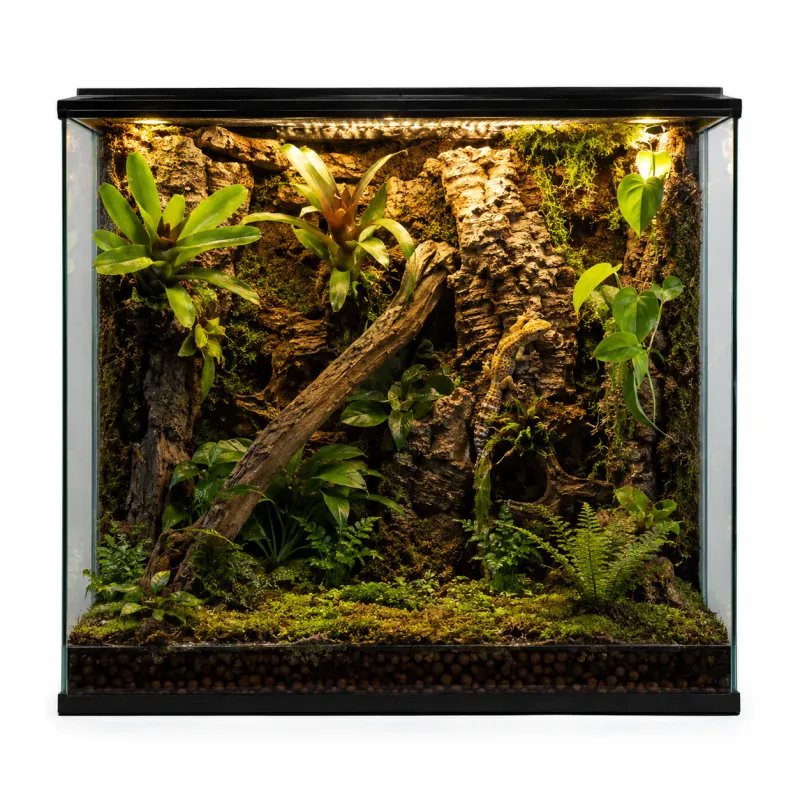
The enclosure must be more than just a glass box. Substrate choice depends on species: for arid reptiles like leopard geckos, use a mix of organic topsoil and play sand; for tropical species like crested geckos, use coconut coir or sphagnum moss. Provide at least two hides (one warm, one cool) and multiple climbing branches or rocks. Ensure the enclosure has a secure lid to prevent escapes, especially for arboreal species. For juveniles, use smaller decor to prevent accidental falls, and for adults, provide larger, stable structures. A water dish should be large enough for soaking but shallow enough to prevent drowning.
Step-by-Step Enclosure Setup
- Clean and disinfect the enclosure with a reptile-safe cleaner (e.g., chlorhexidine solution) and rinse thoroughly. Allow it to dry completely.
- Install heating and lighting equipment before adding substrate. Place basking bulbs and UVB tubes at the recommended distances (typically 6–12 inches for UVB) and secure them with heat-resistant guards.
- Add a drainage layer (for bioactive or high-humidity setups) using clay balls or gravel, then cover with a mesh barrier to prevent substrate mixing.
- Lay substrate to a depth appropriate for the species: 2–3 inches for arid species, 3–4 inches for tropical species that burrow. For egg-laying species, provide a deeper layer (e.g., 6 inches) in a designated nesting area.
- Arrange hides: place one on the warm side (near the basking spot) and one on the cool side. For arboreal species, add elevated hides using cork bark or hanging coconut shells.
- Add climbing structures: sturdy branches, rocks, or vines. Ensure they are stable and cannot fall on the reptile. For juveniles, use low, thick branches to prevent falls.
- Place the water dish on the cool side to maintain humidity and avoid evaporation near heat sources. For species that soak, use a larger dish that is easy to enter and exit.
- Run the enclosure for 48 hours before introducing the reptile to verify temperatures, humidity, and that all equipment functions correctly.
Substrate Options by Habitat Type
| Habitat | Recommended Substrates | Avoid |
|---|---|---|
| Arid (e.g., leopard gecko, bearded dragon) | Organic topsoil mixed with play sand (50/50), reptile carpet, paper towels | Calcium sand, walnut shells, pine shavings (can cause impaction or respiratory issues) |
| Tropical (e.g., crested gecko, green tree python) | Coconut coir, sphagnum moss, cypress mulch, orchid bark | Sand, aspen (does not hold humidity well) |
| Semi-aquatic (e.g., red-eared slider) | Large pebbles, river rocks, or bare-bottom with a basking platform | Small gravel (can be ingested), sand (clouds water) |
Common Mistakes in Enclosure Setup
- Using only one hide: Reptiles need a temperature gradient and a choice of secure hiding spots to thermoregulate and feel safe.
- Overcrowding with decor: While enrichment is important, too many items can reduce usable floor space. Follow the “2/3 rule”: at least 2/3 of the enclosure should be open for movement.
- Placing water dish under heat lamps: This raises humidity and can cause mold growth in arid setups. Keep water on the cool side.
- Ignoring escape-proofing: Arboreal species, especially geckos, can squeeze through small gaps. Use mesh lids with tight fit and secure any cable openings.
Heating and Lighting Requirements
Reptiles are ectothermic, meaning they rely on external heat sources. Use a basking lamp for diurnal species and a ceramic heat emitter or under-tank heater for nocturnal species. The enclosure size dictates the wattage needed: a 40-gallon tank may require a 100W basking bulb, while a 120-gallon PVC enclosure might need multiple heat sources. UVB lighting is essential for most diurnal lizards and turtles; the bulb must be placed at the correct distance from the basking spot (typically 6–12 inches). For arboreal species, provide a vertical temperature gradient. Use a thermostat or dimmer to prevent overheating. Nighttime temperature drops of 5–10°F are natural for many species.
Choosing the Right Heating Equipment
| Enclosure Size | Recommended Heat Sources | Wattage Range |
|---|---|---|
| 10–20 gallon | Basking bulb or ceramic heat emitter | 50–75W |
| 40–75 gallon | Basking bulb + under-tank heater (for belly heat) | 100–150W |
| 120 gallon+ | Multiple basking bulbs or radiant heat panels | 150–200W per heat source |
UVB Lighting Placement
UVB bulbs must be positioned at the correct distance from the basking spot to be effective without causing burns. A general rule:
- T5 high-output tubes: 12–18 inches from the basking spot.
- T8 tubes: 6–12 inches from the basking spot.
- Compact fluorescent bulbs: 6–8 inches, but these are less efficient and should be replaced every 6 months.
For arboreal species, place the UVB tube vertically or horizontally across the top of the enclosure to cover a wide area. Always replace UVB bulbs every 6–12 months, even if they still emit visible light, because UVB output declines over time.
Common Heating and Lighting Mistakes
- Using a heat rock: These can cause severe burns because they heat unevenly. Use under-tank heaters with a thermostat instead.
- Placing heat sources outside the enclosure without proper guards: Reptiles can burn themselves on exposed bulbs. Use wire cages.
- Not using a thermostat: This can lead to overheating and death. Always connect heat sources to a thermostat or dimmer.
- Ignoring nighttime drops: Some species require a temperature drop at night, but others (e.g., tropical species) need stable temperatures. Research your species’ specific needs.
Humidity Management
Humidity requirements vary widely: desert species (e.g., bearded dragons) need 30–40%, while tropical species (e.g., green tree pythons) need 70–90%. Larger enclosures are easier to humidify consistently because water evaporates more slowly. Use a hygrometer to monitor levels. For low-humidity species, provide a dry hide and avoid misting the entire enclosure. For high-humidity species, use a misting system or hand-mist twice daily, and ensure good ventilation to prevent mold. Substrate choice also affects humidity: cypress mulch retains moisture, while aspen is drier. In oversized enclosures, you may need multiple misting nozzles or a fogger.
Step-by-Step Humidity Control
- Install a digital hygrometer at the cool end of the enclosure, away from water dishes, to get an accurate reading.
- For high-humidity species: Mist the enclosure twice daily (morning and evening) with dechlorinated water. Use a spray bottle or automated misting system. You can also add a humid hide—a plastic container with damp sphagnum moss—to provide a localized high-humidity retreat.
- For low-humidity species: Provide a dry hide with a small opening and avoid misting. Use a substrate that does not retain moisture, such as paper towels or reptile carpet.
- Monitor and adjust: If humidity is too high, increase ventilation by adding more mesh or adjusting the lid. If too low, add a larger water dish, mist more frequently, or use a fogger.
Common Humidity Mistakes
- Over-misting an arid enclosure: This can lead to respiratory infections and scale rot. Always check species-specific requirements.
- Using a hygrometer that is inaccurate: Analog gauges are often unreliable. Invest in a digital hygrometer.
- Ignoring ventilation: Stagnant air promotes mold and bacterial growth. Ensure adequate airflow even in high-humidity setups.
Diet and Feeding Considerations by Enclosure Size
Feeding frequency and prey size depend on the reptile’s age and species, but enclosure size impacts feeding success. In too-large enclosures, juvenile reptiles may struggle to find food; use a feeding dish or tong-feed until they adapt. In too-small enclosures, adults may become obese due to limited exercise. For insectivores, gut-load feeders 24 hours before offering. For herbivores, provide a variety of leafy greens and vegetables in a shallow bowl. Always remove uneaten prey after 15–30 minutes to prevent bites or stress. Larger enclosures allow for enrichment like scatter-feeding, which encourages natural foraging behavior.
Feeding Strategies by Enclosure Size
| Enclosure Size | Feeding Method | Considerations |
|---|---|---|
| Small (10–20 gal) | Use a feeding dish or tong-feed | Juveniles may not find prey if scattered. Keep feeding area consistent. |
| Medium (40–75 gal) | Use a feeding dish or scatter-feed for enrichment | Monitor that the reptile is eating; adjust if prey is lost. |
| Large (120+ gal) | Scatter-feeding or use multiple feeding stations | Active species benefit from foraging; ensure prey is not left to rot. |
Common Feeding Mistakes
- Leaving live prey in the enclosure: Crickets and rodents can bite the reptile, causing injuries. Remove uneaten prey after 15–30 minutes.
- Not gut-loading insects: Feed insects a nutritious diet (e.g., fresh vegetables and commercial gut-load) 24 hours before offering them to your reptile.
- Feeding too frequently: This can lead to obesity, especially in smaller enclosures. Follow species-specific feeding schedules.
Handling and Socialization
Handling should be minimal during the first week after setup to allow acclimation. Use a calm, confident approach; never grab a reptile from above. The enclosure size influences handling ease: small tubs make it difficult to safely extract a defensive animal, while large display enclosures with front-opening doors simplify access. For skittish species, use a hide box to coax them out. Limit handling sessions to 10–15 minutes, and never handle during shedding or after feeding. A well-sized enclosure with proper hides reduces stress, making handling less traumatic for both reptile and keeper.
Step-by-Step Safe Handling
- Wait at least 48 hours after setting up the enclosure and introducing the reptile before handling.
- Approach from the side, not from above, to avoid triggering a predator response.
- Support the body fully: Use both hands, one near the front and one near the back, to prevent falls.
- Keep handling sessions short (10–15 minutes) and increase gradually as the reptile becomes accustomed.
- Wash your hands before and after handling to prevent the spread of bacteria like Salmonella.
Common Handling Mistakes
- Handling during shedding: Reptiles are more stressed and sensitive; avoid handling until the shed is complete.
- Handling after feeding: This can cause regurgitation. Wait 24–48 hours after feeding.
- Grabbing the tail: Many reptiles can drop their tails (autotomy) as a defense mechanism, so never grab by the tail.
Common Health Issues Related to Enclosure Size
Improper enclosure sizing directly contributes to several health problems. Metabolic bone disease (MBD) is common in reptiles kept in enclosures too small for proper UVB exposure—ensure the UVB bulb covers at least 1/3 of the enclosure length. Respiratory infections can occur in oversized enclosures with poor humidity control. Obesity is prevalent in adults kept in enclosures that limit movement; provide enough space for climbing and exploring. Dysecdysis (shedding issues) often results from inadequate humidity or lack of rough surfaces to rub against. Scale rot from wet substrate in too-large enclosures can be prevented by using appropriate drainage layers.
Health Issue Prevention Checklist
- MBD: Provide UVB lighting over at least 1/3 of the enclosure length, and ensure the basking spot is within the recommended distance.
- Respiratory infections: Maintain proper humidity and ventilation; avoid overly damp substrate.
- Obesity: Provide enough floor space for movement and climbing; monitor feeding portions.
- Dysecdysis: Provide a humidity hide and rough surfaces like rocks or branches to aid shedding.
- Scale rot: Use a drainage layer in high-humidity enclosures and remove wet substrate promptly.
Enclosure Sizing: What Goes Wrong
- Using a “starter” tank for too long: Many keepers keep juveniles in 10-gallon tanks until they outgrow them, but this can stunt growth. Upgrade as soon as the reptile is 2/3 of adult size.
- Overcrowding with decor: While enrichment is important, too many items can reduce usable floor space. Follow the “2/3 rule”: at least 2/3 of the enclosure should be open for movement.
- Ignoring vertical space for arboreal species: A 20-gallon tall tank is not the same as a 40-gallon breeder for a climbing species. Use height-specific enclosures.
- Jumping to a huge enclosure too early: A 6-foot PVC enclosure for a 10-inch juvenile can cause feeding stress. Use a smaller tub or partition until the reptile is 6 months old.
- Not accounting for multiple animals: Cohabitation requires significantly more space—at least 50% larger than the minimum for a single adult.
Minimum Tank Size Chart: Enclosure Sizes by Species
| Species | Juvenile (0–6 mo) | Adult Minimum | Recommended Upgrade |
|---|---|---|---|
| Leopard Gecko | 10 gal (20×10 in) | 20 gal long (30×12 in) | PVC 36×18×12 in |
| Bearded Dragon | 20 gal (30×12 in) | 75 gal (48×18 in) | 120 gal PVC (48×24×24 in) |
| Crested Gecko | 12×12×18 in | 18×18×24 in | 24×18×36 in PVC |
| Ball Python | 10 gal (20×10 in) | 40 gal breeder (36×18 in) | 4×2×2 ft PVC (120 gal) |
| Corn Snake | 20 gal (30×12 in) | 40 gal breeder (36×18 in) | 4×2×2 ft PVC |
| Red-Eared Slider (turtle) | 20 gal (30×12 in) | 75 gal (48×18 in) | 125+ gal or pond |
| Green Iguana | 40 gal breeder (36×18 in) | 6×3×6 ft custom | 8×4×6 ft or larger |
| Uromastyx | 20 gal (30×12 in) | 40 gal breeder (36×18 in) | 4×2×2 ft PVC |
| Gargoyle Gecko | 12×12×18 in | 18×18×24 in | 24×18×36 in PVC |
| Blue-Tongue Skink | 20 gal (30×12 in) | 40 gal breeder (36×18 in) | 4×2×2 ft PVC |
Note: These are minimums—larger enclosures are always better for adult reptiles, especially active species. For aquatic turtles, water volume is critical; add 10–20 gallons per additional inch of shell length.
When to Upgrade: From Tub to PVC to Large Display
Most reptiles start in a simple plastic tub or small glass tank. Upgrade to a PVC enclosure when the reptile reaches 2/3 of adult size (e.g., a ball python at 3 feet should move from a 20-gallon to a 4×2×2 ft PVC). PVC enclosures offer superior insulation, humidity retention, and front-opening access. For large species like green iguanas or monitors, move to a custom-built display enclosure (6+ feet long) by 12–18 months of age. Signs it’s time to upgrade: the reptile can touch both ends of the enclosure when stretched, refuses to eat due to stress, or shows repetitive pacing. Always quarantine new enclosures for 2 weeks before introducing the reptile, ensuring stable temperatures and humidity.
Upgrade Decision Checklist
- Measure the reptile: If it can touch both ends of the enclosure when stretched out, it’s time to upgrade.
- Monitor behavior: Refusal to eat, repetitive pacing, or excessive hiding can indicate stress from a too-small or too-large enclosure.
- Consider growth rate: Fast-growing species (e.g., bearded dragons) may need an upgrade every 6 months; slower-growing species (e.g., ball pythons) may only need a few upgrades in their lifetime.
- Plan ahead: If you know the adult size, invest in the adult enclosure from the start and use partitions to reduce space for juveniles.
Investing in the correct enclosure size from the start—and upgrading at the right time—prevents costly vet bills and ensures a long, healthy life for your reptile. Use the table above as a quick reference, but research your specific species’ natural history for optimal sizing. Remember: a happy reptile is an active reptile.
Frequently Asked Questions
Can a reptile enclosure be too big?
Yes, especially for juveniles. In too-large enclosures, juvenile reptiles may struggle to find food and may become stressed because they cannot easily locate heat sources or hides. This can lead to feeding problems and poor growth. To mitigate this, you can use a smaller tub or partition the enclosure until the reptile is at least 6 months old, as noted in the guide.
How do I know when to upgrade my reptile’s enclosure?
Upgrade when the reptile reaches 2/3 of its adult size, or when it can touch both ends of the enclosure when stretched out. Additional signs include refusal to eat due to stress, repetitive pacing, or other stress-related behaviors. The guide also recommends upgrading to a PVC enclosure when the reptile reaches this size, and for large species like green iguanas, moving to a custom display enclosure by 12–18 months of age.
What is the “2/3 rule” for enclosure decor?
The “2/3 rule” states that at least 2/3 of the enclosure should be open for movement. While enrichment like hides and branches is important, too many items can reduce usable floor space, limiting exercise and increasing stress. This rule helps ensure your reptile has enough room to move, thermoregulate, and exhibit natural behaviors.
Why is vertical space important for arboreal species?
Arboreal species, such as crested geckos and green tree pythons, spend most of their time climbing. A 20-gallon tall tank is not the same as a 40-gallon breeder for these species because they need height rather than floor space. The guide specifies enclosure dimensions like 18×18×24 inches for adult crested geckos, which provide the vertical space necessary for climbing and natural behavior.
Related Reading
- Bioactive Enclosure Setup: Step-by-Step Guide — Learn how to create a self-cleaning bioactive habitat that pairs perfectly with proper sizing.
- DIY Reptile Enclosure: Build a PVC Terrarium — Discover how to build a custom enclosure tailored to your reptile's exact space needs.
- Reptile-Safe Plants for Vivariums — Find safe plant options that thrive in properly sized vivariums and enhance your setup.
- Reptile UVB Lighting Guide: Ferguson Zones & Bulb Selection — Ensure your lighting matches enclosure size and species requirements for optimal health.
- Reptile Vitamins & Supplements: Calcium With or Without D3 — Understand supplementation essentials that complement a correctly sized enclosure.
Check optimal temps, calculate feeding, and find your perfect species match.
References
- de Vosjoli, P. (2015). The Ball Python Manual. Advanced Vivarium Systems.
- McKeown, S. (1996). A Field Guide to Reptiles and Amphibians of the Caribbean. Macmillan Education.
- Pough, F. H. (2004). Herpetology. Prentice Hall.
- Vosjoli, P. (2017). The Bearded Dragon Manual. Advanced Vivarium Systems.
🐾 Join the Community
See how other keepers set up their enclosures, ask questions, and share your experience.
🛠️ Apply What You Learned
Check optimal temps, calculate feeding schedules, and get calcium dosage — all personalized for your species.
Comments
No account needed — corrections, updates and questions are all welcome. For a full question with photos, the community Q&A is the better place.