Reptile-Safe Plants for Vivariums
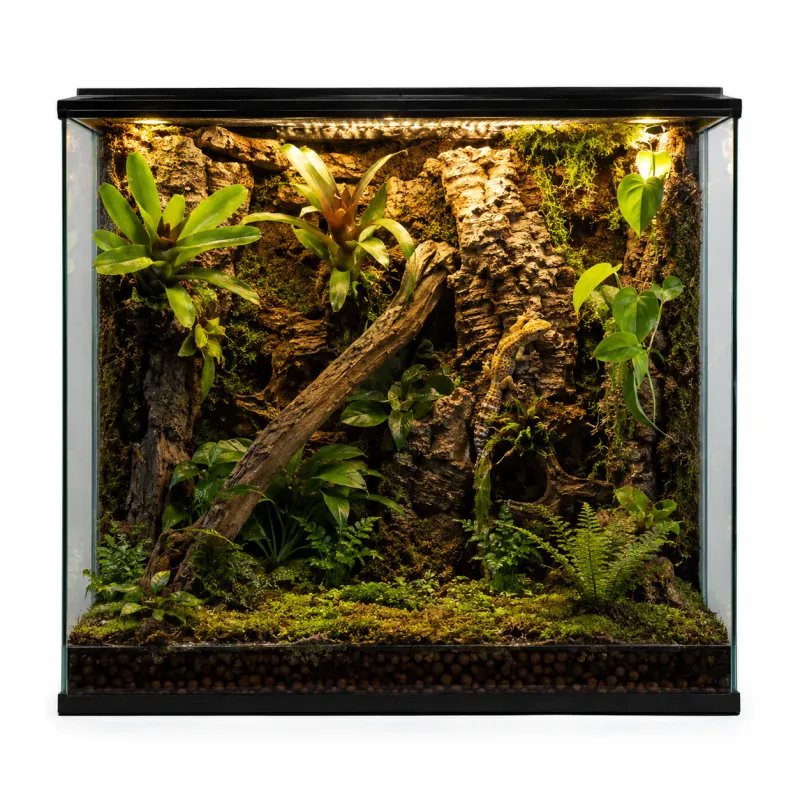
Introduction
Creating a bioactive vivarium is one of the most rewarding ways to house reptiles, amphibians, and other exotic pets. Live plants not only enhance the aesthetic appeal but also help maintain humidity, provide hiding spots, and contribute to natural waste breakdown. However, not all plants are safe for your scaly friends. This guide covers the best reptile-safe plants, species lists by humidity zone, toxic plants to avoid, and practical planting tips to help you build a thriving terrarium ecosystem.
Why Live Plants Matter in Bioactive Vivariums
Live plants are the backbone of a bioactive setup. They offer numerous benefits for both the enclosure and its inhabitants:
- Humidity regulation: Plants release moisture through transpiration, helping maintain stable humidity levels.
- Natural filtration: Roots absorb waste products like ammonia and nitrates, improving air and substrate quality.
- Behavioral enrichment: Plants provide climbing surfaces, hiding spots, and basking areas, reducing stress.
- Microclimate creation: Dense foliage creates cooler, moister microhabitats for sensitive species.
- Waste breakdown: Leaf litter and decaying plant matter support cleanup crew organisms like springtails and isopods.
When selecting plants, always prioritize non-toxic, pesticide-free species that can thrive in your pet's specific environmental conditions.
Best Reptile-Safe Plants by Humidity Zone
Different reptiles require different humidity levels. Below is a categorized list of safe plants for low, moderate, and high humidity enclosures.
Low Humidity Zones (30–50%)
Ideal for desert species like bearded dragons, leopard geckos, and uromastyx. Choose drought-tolerant plants that can handle dry conditions.
- Snake Plant (Sansevieria trifasciata): Hardy, low-light tolerant, and safe for arid setups. Leaves provide vertical structure.
- Aloe Vera (Aloe barbadensis miller): Succulent with thick leaves; safe for herbivorous reptiles in moderation.
- Haworthia (Haworthia spp.): Small, rosette-forming succulents perfect for desert vivariums.
- Ponytail Palm (Beaucarnea recurvata): Actually a succulent; handles low humidity and bright light.
- Bromeliads (Neoregalia spp.): Some tolerate dry air; choose hardy varieties like Neoregalia 'Fireball'.
Moderate Humidity Zones (50–70%)
Suited for tropical species like crested geckos, green anoles, and tree frogs. Plants need moderate moisture and indirect light.
- Pothos (Epipremnum aureum): Extremely hardy, fast-growing vine; safe for most reptiles. Can be trained on backgrounds.
- Philodendron (Philodendron spp.): Many species are safe (e.g., heartleaf philodendron). Avoid those with high oxalate content if pets are prone to nibbling.
- Ficus pumila (Creeping Fig): Excellent for covering backgrounds; needs moderate humidity and bright indirect light.
- Spider Plant (Chlorophytum comosum): Tolerates a range of conditions; produces offsets for propagation.
- Peperomia (Peperomia spp.): Small, compact plants with interesting leaf textures; safe for small enclosures.
High Humidity Zones (70–100%)
Perfect for rainforest species like dart frogs, chameleons, and Amazon tree boas. Choose moisture-loving plants that thrive in damp conditions.
- Fittonia (Fittonia albivenis): Also known as nerve plant; loves high humidity and low light.
- Calathea (Calathea spp.): Striking foliage; requires high humidity and consistent moisture.
- Mosses (Sphagnum, Java moss): Excellent for covering substrate and maintaining humidity. Java moss can be submerged in water features.
- Bromeliads (Guzmania, Vriesea): Epiphytic plants that hold water in their cups; great for tree frogs.
- Orchids (Phalaenopsis spp.): Moth orchids are safe and add vertical interest. Avoid orchids with toxic sap.
- Ferns (Nephrolepis exaltata): Boston fern thrives in high humidity and low light.
Toxic Plants to Avoid
Some common houseplants are dangerous to reptiles and should never be used in bioactive enclosures. The following list includes plants known to cause toxicity:
| Plant Name | Toxic Compound | Symptoms in Reptiles |
|---|---|---|
| Dieffenbachia (Dumb Cane) | Calcium oxalate crystals | Oral irritation, swelling, difficulty swallowing |
| Philodendron (some species) | Calcium oxalate crystals | Same as above; may cause drooling or vomiting |
| Pothos (if ingested in large amounts) | Insoluble oxalates | Mild GI upset; usually safe unless heavily eaten |
| English Ivy (Hedera helix) | Saponins, polyacetylene | Vomiting, diarrhea, depression |
| Lily (Lilium spp.) | Unknown nephrotoxin | Kidney failure in cats; avoid all lilies |
| Oleander (Nerium oleander) | Cardiac glycosides | Cardiac arrhythmias, death |
| Azalea (Rhododendron spp.) | Grayanotoxins | Vomiting, drooling, weakness |
| Sago Palm (Cycas revoluta) | Cycasin | Liver failure, seizures, death |
| Mistletoe (Phoradendron spp.) | Phoratoxin | GI upset, cardiovascular collapse |
Always research each plant species before adding it to your vivarium. When in doubt, consult a veterinarian or reliable herpetoculture source.
Planting Tips for Bioactive Setups
Successful planting requires attention to substrate, lighting, and placement. Follow these tips for a thriving vivarium:
Substrate and Drainage
- Drainage layer: Use 1–2 inches of clay balls (e.g., Hydroton) or lava rock at the bottom to prevent waterlogging.
- Substrate mix: Combine organic topsoil, coconut coir, sphagnum moss, and sand for a well-draining, nutrient-rich medium.
- Leaf litter: Add a layer of dried leaves (oak, magnolia) to mimic natural forest floors and provide food for cleanup crew.
Lighting Requirements
- Full-spectrum LED or T5 fluorescent: Provide 8–12 hours of light daily. Plants need specific wavelengths (6500K–10,000K) for photosynthesis.
- Distance from plants: Place lights 6–12 inches above foliage to avoid burning. Adjust based on plant species.
- Supplemental UVB: Not required for most plants, but beneficial for reptiles. UVB can affect plant growth; use with caution.
Placement and Maintenance
- Background plants: Use climbing plants like pothos or creeping fig attached to cork bark or mesh.
- Foreground plants: Low-growing species like peperomia or fittonia work well near the front.
- Vertical space: Add epiphytic bromeliads or orchids on branches for dimension.
- Watering: Mist daily for high-humidity setups; water deeply but infrequently for low-humidity. Avoid standing water.
- Fertilizing: Use organic, reptile-safe fertilizers (e.g., diluted fish emulsion or compost tea) once a month during growing season.
- Pruning: Trim dead or yellowing leaves to prevent mold and pest issues.
Pitfalls and How to Avoid Them
- Overcrowding: Too many plants can block airflow and light. Leave space for your pet to move.
- Using toxic plants: Always double-check plant safety. Cross-reference multiple sources.
- Poor drainage: Without a drainage layer, roots rot and humidity spikes uncontrollably.
- Incorrect lighting: Low-light plants in bright setups get scorched; high-light plants in dim setups fail to thrive.
- Neglecting cleanup crew: Springtails and isopods are essential for breaking down dead plant matter and waste.
- Introducing pests: Quarantine new plants for 2–4 weeks to prevent introducing mites, aphids, or fungus gnats.
Comparison Table: Plant Types for Different Humidity Zones
| Humidity Zone | Recommended Plants | Light Needs | Watering Frequency | Example Reptiles |
|---|---|---|---|---|
| Low (30–50%) | Snake plant, aloe, haworthia, ponytail palm | Bright indirect to direct | Every 2–3 weeks | Bearded dragon, leopard gecko |
| Moderate (50–70%) | Pothos, philodendron, spider plant, peperomia | Bright indirect | Weekly | Crested gecko, green anole |
| High (70–100%) | Fittonia, calathea, bromeliads, ferns, mosses | Low to moderate indirect | Daily misting | Dart frog, chameleon |
Final Thoughts
Building a bioactive vivarium with live plants is a rewarding journey that enhances your reptile's quality of life. By selecting appropriate, reptile-safe plants and understanding your enclosure's humidity zone, you can create a self-sustaining ecosystem that looks beautiful and functions naturally. Always prioritize research, quarantine new plants, and monitor your pet's behavior for any signs of plant-related issues. With careful planning and maintenance, your bioactive setup will thrive for years to come.
Related Reading
- Bioactive Enclosure Setup Guide — Complete step-by-step for planted vivariums.
- Best Reptile Substrate Guide — Choosing the right substrate base for planted enclosures.
- Reptile UVB Lighting Guide — Proper lighting for planted bioactive setups.
Check optimal temps, calculate feeding, and find your perfect species match.
References
- Brennan, T. (2021). The Bioactive Vivarium: A Guide to Creating Naturalistic Terrariums. Reptile Publications.
- De Vosjoli, P. (2019). The Art of Keeping Snakes. Advanced Vivarium Systems.
- Hess, L. (2020). Toxicology of Common Houseplants in Reptiles. Journal of Herpetological Medicine and Surgery, 30(2), 45–52.
- Mader, D. R. (2018). Reptile Medicine and Surgery. Elsevier.
- McLeod, L. (2022). Safe Plants for Reptile Enclosures. The Spruce Pets. Retrieved from thesprucepets.com.
🐾 Join the Community
See how other keepers set up their enclosures, ask questions, and share your experience.
🛠️ Apply What You Learned
Check optimal temps, calculate feeding schedules, and get calcium dosage — all personalized for your species.
Comments
No account needed — corrections, updates and questions are all welcome. For a full question with photos, the community Q&A is the better place.