Types of Tarantulas: 15 Best Pet Species for Beginners
Why Keep Tarantulas?
Tarantulas are among the most fascinating and misunderstood pets in the exotic pet world. For many keepers, the appeal lies in their ancient lineage—these arachnids have roamed the Earth for over 150 million years—and their surprisingly low-maintenance care requirements. Unlike dogs or cats, tarantulas don't need daily walks, grooming, or constant attention. They are quiet, compact, and can thrive in a modest-sized enclosure on a shelf or desk.
Beyond practicality, tarantulas offer a unique window into nature's diversity. With over 1,000 described species, each boasts its own colors, behaviors, and adaptations. Watching a tarantula web its enclosure, hunt crickets, or perform a dramatic molting ritual is endlessly captivating. For beginners, the hobby provides a gentle introduction to invertebrate care, teaching responsibility and observation skills without the high emotional stakes of a mammal pet.
However, tarantulas are not for everyone. They are not cuddly, and they do not bond with humans. They are display animals, best appreciated from a respectful distance. If you're looking for a pet that interacts with you, a tarantula may disappoint. But if you're drawn to the exotic, the low-maintenance, and the beautifully alien, a tarantula could be your ideal companion.
What to Know Before Buying a Tarantula
Venom Potency and Defensiveness
All tarantulas possess venom, but for most species, it's comparable to a bee sting in potency—painful but not dangerous to healthy adults. However, some species, like the Cobalt Blue (Poecilotheria metallica), have more potent venom that can cause intense muscle cramps, fever, and nausea. These are best reserved for experienced keepers. Additionally, a tarantula's temperament varies widely. New World species (from the Americas) are generally more docile and rely on urticating hairs for defense, while Old World species (from Africa, Asia, and Oceania) lack those hairs and are quicker to bite.
Urticating Hairs
New World tarantulas have a unique defense mechanism: urticating (itching) hairs on their abdomen. When threatened, they brush these barbed hairs into the air with their hind legs. These hairs can cause skin irritation, rashes, and if inhaled, respiratory discomfort. Always wash your hands after handling substrate or cleaning the enclosure, and avoid rubbing your eyes. Some people are more sensitive than others, so it's wise to handle with care, especially during rehousing or maintenance.
15 Popular Pet Tarantula Species
1. Chilean Rose (Grammostola rosea)
Scientific Name: Grammostola rosea
Leg Span: 4.5–5.5 inches (11–14 cm)
Temperament: Docile, calm, but can be moody and refuse food for months
Beginner-Friendly: Yes
Price: $30–$60
The Chilean Rose is a classic starter tarantula. Native to the Atacama Desert, it's incredibly hardy and forgiving of minor husbandry errors. Its rosy-pink carapace and earthy brown body make it a subtle beauty. While generally docile, some individuals can be skittish or defensive. They are known for long fasting periods, sometimes up to a year, which can alarm new keepers but is normal.
2. Mexican Red Knee (Brachypelma hamorii)
Scientific Name: Brachypelma hamorii (formerly B. smithi)
Leg Span: 5–6 inches (13–15 cm)
Temperament: Docile, rarely defensive
Beginner-Friendly: Yes
Price: $60–$100
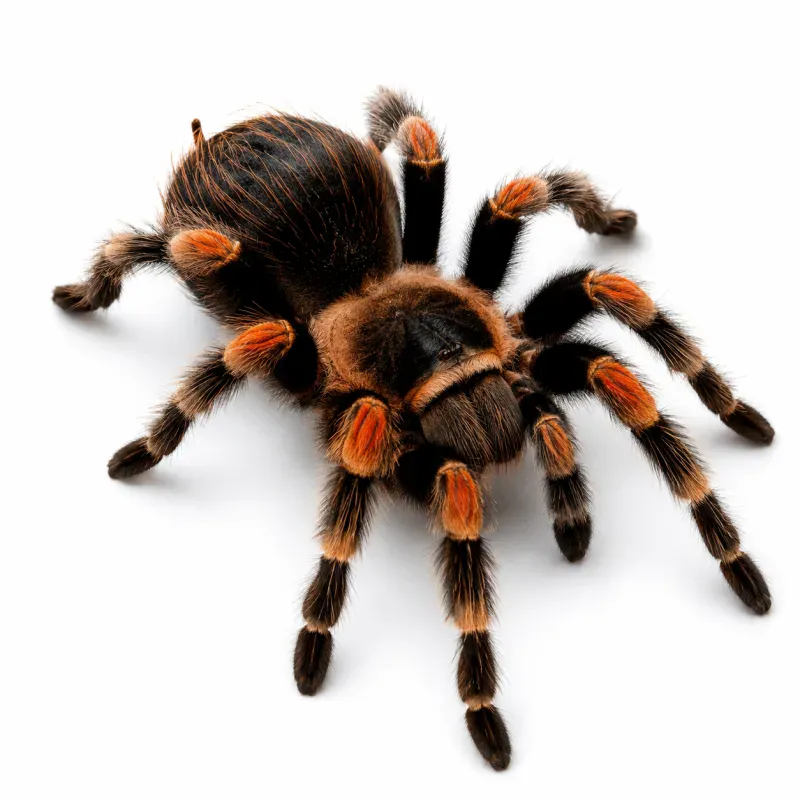
The Mexican Red Knee is arguably the most iconic tarantula in the pet trade. Its striking black body with vivid orange-red knee bands makes it a showstopper. This species is known for its calm demeanor and tolerance of gentle handling, though handling is always optional. It's a long-lived species, with females living up to 30 years. A fantastic choice for beginners who want a display-worthy spider.
3. Brazilian Black (Grammostola pulchra)
Scientific Name: Grammostola pulchra
Leg Span: 6–7 inches (15–18 cm)
Temperament: Exceptionally docile, rarely flicks hairs
Beginner-Friendly: Yes
Price: $80–$150
The Brazilian Black is often described as the 'puppy dog' of tarantulas. Its velvety jet-black coloration is stunning, and its temperament is among the calmest of any species. It's a slow grower, taking several years to reach maturity, but its longevity (females can live 20+ years) makes it a rewarding long-term pet. Ideal for beginners who want a gentle giant.
4. Curly Hair (Tliltocatl albopilosus)
Scientific Name: Tliltocatl albopilosus
Leg Span: 5–6 inches (13–15 cm)
Temperament: Docile, tolerant, but flicks hairs more readily than others
Beginner-Friendly: Yes
Price: $25–$50
The Curly Hair gets its name from the distinctive curly setae (hairs) covering its body, giving it a frosted, woolly appearance. It's a hardy, easy-to-care-for species that's perfect for first-time keepers. While generally docile, it may use urticating hairs if stressed. It's also a prolific eater, which makes feeding time entertaining.
5. Pink Toe (Avicularia avicularia)
Scientific Name: Avicularia avicularia
Leg Span: 4–5 inches (10–13 cm)
Temperament: Skittish, fast, but generally not aggressive
Beginner-Friendly: Yes (with caution)
Price: $30–$60
The Pink Toe is an arboreal species, meaning it lives in trees. Its dark body with pinkish-orange toes is eye-catching. Unlike terrestrial tarantulas, it needs a taller enclosure with vertical climbing surfaces. It's fast and can be jumpy, so handling is not recommended. However, it's relatively easy to care for if you provide proper humidity and ventilation.
6. Greenbottle Blue (Chromatopelma cyaneopubescens)
Scientific Name: Chromatopelma cyaneopubescens
Leg Span: 4–5 inches (10–13 cm)
Temperament: Skittish, may flick hairs, but not aggressive
Beginner-Friendly: Intermediate
Price: $60–$120
The Greenbottle Blue is a visual masterpiece: a metallic blue body, orange abdomen, and green carapace. Native to Venezuela, it's a webber, creating intricate silk tunnels. It's more skittish than the docile giants and may be defensive when disturbed. Best for keepers with some experience who can appreciate its beauty without frequent handling.
7. Gooty Sapphire (Poecilotheria metallica)
Scientific Name: Poecilotheria metallica
Leg Span: 6–8 inches (15–20 cm)
Temperament: Defensive, fast, potent venom
Beginner-Friendly: No (Advanced)
Price: $150–$300
The Gooty Sapphire is a stunning arboreal species with brilliant blue coloration. However, it's an Old World tarantula with stronger venom and a defensive attitude. It's extremely fast and can deliver a painful bite that may cause muscle cramps. Only experienced keepers should consider this species, and it should never be handled.
8. Mexican Redleg (Brachypelma emilia)
Scientific Name: Brachypelma emilia
Leg Span: 5–6 inches (13–15 cm)
Temperament: Docile, calm
Beginner-Friendly: Yes
Price: $50–$90
The Mexican Redleg is similar in appearance to the Red Knee but with a distinctive black triangle on its carapace and reddish-orange legs. It's a hardy, docile species that's great for beginners. It's also a slow grower, so patience is key. Like other Brachypelma, it's a long-lived species.
9. Costa Rican Zebra (Aphonopelma seemanni)
Scientific Name: Aphonopelma seemanni
Leg Span: 4–5 inches (10–13 cm)
Temperament: Skittish, may flick hairs, but not aggressive
Beginner-Friendly: Intermediate
Price: $25–$50
The Costa Rican Zebra sports striking black-and-white stripes on its legs. It's a burrowing species that needs deep substrate. While not aggressive, it can be skittish and quick to flick urticating hairs. It's a good choice for beginners who want a unique look and are willing to handle occasional hair-flicking.
10. Mexican Fireleg (Brachypelma boehmei)
Scientific Name: Brachypelma boehmei
Leg Span: 5–6 inches (13–15 cm)
Temperament: Docile but can be skittish; may flick hairs
Beginner-Friendly: Yes
Price: $50–$90
The Mexican Fireleg is a vibrant orange-and-black tarantula that's closely related to the Red Knee. It's generally docile but can be more nervous, especially when young. It's a hardy species that tolerates a range of conditions, making it a good option for beginners who want a bit more color.
11. Arizona Blonde (Aphonopelma chalcodes)
Scientific Name: Aphonopelma chalcodes
Leg Span: 4–5 inches (10–13 cm)
Temperament: Docile, slow-moving
Beginner-Friendly: Yes
Price: $30–$50
The Arizona Blonde is a desert native with a beautiful tan-and-gold coloration. It's extremely docile and often described as 'pet rock' due to its sedentary nature. It's an excellent choice for a first tarantula because it's easy to care for and rarely defensive. It does grow slowly, but that adds to its charm.
12. Antilles Pink Toe (Caribena versicolor)
Scientific Name: Caribena versicolor (formerly Avicularia versicolor)
Leg Span: 4–5 inches (10–13 cm)
Temperament: Skittish, fast, but not aggressive
Beginner-Friendly: Intermediate
Price: $60–$100
The Antilles Pink Toe is a strikingly colorful arboreal species. Adults have a metallic blue sheen with pink toes, while juveniles are bright blue with a black pattern. It requires higher humidity and good ventilation. It's more delicate than terrestrial species, so it's better for keepers with some experience.
13. Venezuelan Suntiger (Psalmopoeus irminia)
Scientific Name: Psalmopoeus irminia
Leg Span: 5–6 inches (13–15 cm)
Temperament: Defensive, fast, may bite
Beginner-Friendly: No (Advanced)
Price: $40–$80
The Venezuelan Suntiger is a gorgeous arboreal tarantula with black and orange tiger stripes. However, it's an Old World species with a feisty attitude. It's extremely fast and can be defensive, making it unsuitable for beginners. It's a display species for experienced keepers who appreciate its beauty from a distance.
14. Cobalt Blue (Cyriopagopus lividus)
Scientific Name: Cyriopagopus lividus
Leg Span: 5–6 inches (13–15 cm)
Temperament: Defensive, skittish, potent venom
Beginner-Friendly: No (Advanced)
Price: $40–$80
The Cobalt Blue is a stunning Old World tarantula with iridescent blue legs. It's a burrowing species that spends most of its time in its hide. It's known for being defensive and fast, with venom that can cause severe muscle cramps. Only experienced keepers should attempt to keep this species.
15. Brazilian Whiteknee (Acanthoscurria geniculata)
Scientific Name: Acanthoscurria geniculata
Leg Span: 7–8 inches (18–20 cm)
Temperament: Docile but can be skittish; may flick hairs
Beginner-Friendly: Intermediate
Price: $50–$90
The Brazilian Whiteknee is a massive terrestrial tarantula with striking white bands on its knees. It's a bold eater and grows quickly. While generally docile, it can be skittish and may flick urticating hairs. It's a good choice for beginners who want a larger species and are comfortable with occasional hair-flicking.
Comparison Table of 15 Pet Tarantula Species
| Common Name | Scientific Name | Leg Span | Temperament | Beginner-Friendly? | Price (USD) |
|---|---|---|---|---|---|
| Chilean Rose | Grammostola rosea | 4.5–5.5 in (11–14 cm) | Docile, moody | Yes | $30–$60 |
| Mexican Red Knee | Brachypelma hamorii | 5–6 in (13–15 cm) | Docile | Yes | $60–$100 |
| Brazilian Black | Grammostola pulchra | 6–7 in (15–18 cm) | Exceptionally docile | Yes | $80–$150 |
| Curly Hair | Tliltocatl albopilosus | 5–6 in (13–15 cm) | Docile, flicks hairs | Yes | $25–$50 |
| Pink Toe | Avicularia avicularia | 4–5 in (10–13 cm) | Skittish, fast | Yes (with caution) | $30–$60 |
| Greenbottle Blue | Chromatopelma cyaneopubescens | 4–5 in (10–13 cm) | Skittish, may flick hairs | Intermediate | $60–$120 |
| Gooty Sapphire | Poecilotheria metallica | 6–8 in (15–20 cm) | Defensive, fast, potent venom | No | $150–$300 |
| Mexican Redleg | Brachypelma emilia | 5–6 in (13–15 cm) | Docile | Yes | $50–$90 |
| Costa Rican Zebra | Aphonopelma seemanni | 4–5 in (10–13 cm) | Skittish, may flick hairs | Intermediate | $25–$50 |
| Mexican Fireleg | Brachypelma boehmei | 5–6 in (13–15 cm) | Docile but skittish | Yes | $50–$90 |
| Arizona Blonde | Aphonopelma chalcodes | 4–5 in (10–13 cm) | Docile, slow | Yes | $30–$50 |
| Antilles Pink Toe | Caribena versicolor | 4–5 in (10–13 cm) | Skittish, fast | Intermediate | $60–$100 |
| Venezuelan Suntiger | Psalmopoeus irminia | 5–6 in (13–15 cm) | Defensive, fast | No | $40–$80 |
| Cobalt Blue | Cyriopagopus lividus | 5–6 in (13–15 cm) | Defensive, skittish | No | $40–$80 |
| Brazilian Whiteknee | Acanthoscurria geniculata | 7–8 in (18–20 cm) | Docile but skittish | Intermediate | $50–$90 |
How to Choose Your First Tarantula
Selecting your first tarantula can be overwhelming given the variety. Here are key factors to consider:
- Experience Level: Beginners should start with a docile, hardy New World species like the Chilean Rose, Mexican Red Knee, or Arizona Blonde. These are forgiving and less likely to bite.
- Lifespan Commitment: Female tarantulas can live 10–30 years depending on species. If you want a long-term pet, choose a species with a long lifespan. If you're unsure, a male may be a shorter commitment (3–5 years).
- Space and Enclosure: Terrestrial species need a horizontal enclosure with floor space; arboreal species need vertical space with climbing structures. Consider your available space.
- Feeding Habits: Some species, like the Brazilian Whiteknee, are voracious eaters and grow quickly. Others, like the Chilean Rose, may fast for months. Choose based on your comfort level.
- Aesthetics: Tarantulas come in a rainbow of colors. Pick one that appeals to you visually—you'll be looking at it for years.
- Budget: Prices range from $25 for a Curly Hair to over $300 for a Gooty Sapphire. Factor in enclosure and setup costs as well.
For a first tarantula, we recommend the Mexican Red Knee or Brazilian Black due to their docile nature and striking appearance. They are forgiving of minor mistakes and provide a rewarding introduction to the hobby.
Enclosure & Husbandry Quick Reference
Enclosure Size and Type
Terrestrial tarantulas need a horizontal enclosure with more floor space than height. A 10-gallon tank (20" x 10" x 12") is suitable for most adults. Arboreal species (Pink Toe, Antilles Pink Toe, Gooty Sapphire, Venezuelan Suntiger) need a taller enclosure, like an 18" x 12" x 12" tall terrarium. Ensure the lid is secure—tarantulas are escape artists.
Substrate
Use a moisture-retaining substrate like coconut fiber, peat moss, or a mix. Depth should be at least 2–3 inches for terrestrial species, and 4–6 inches for burrowers like the Costa Rican Zebra and Cobalt Blue. Keep it slightly damp but not waterlogged.
Temperature and Humidity
Most tarantulas thrive at 75–85°F (24–29°C). Room temperature is often adequate, but you may need a heat mat on the side of the enclosure (never the bottom) in cooler climates. Humidity varies by species: desert species like the Chilean Rose need low humidity (40–50%), while tropical species like the Antilles Pink Toe need higher (70–80%). Use a hygrometer to monitor.
Lighting
Tarantulas don't require special lighting, but a low-wattage LED can help with viewing and plant growth. Avoid bright lights that may stress them. They prefer dim environments.
Feeding
Feed adult tarantulas 1–2 appropriately sized crickets or roaches once a week. Juveniles can be fed more often. Remove uneaten prey after 24 hours to prevent stress. Always provide a shallow water dish with fresh water.
Handling
Handling is generally discouraged as it can stress the tarantula and increase risk of bites or falls. If you must handle, use a catch cup or gentle coaxing onto your hand, and stay close to the ground.
Common Mistakes to Avoid
- Overthinking Humidity: Many keepers over-mist enclosures, leading to mold and respiratory issues. Research your species' specific needs.
- Handling Too Much: Tarantulas don't need handling and can be injured by falls. Keep handling minimal.
- Incorrect Enclosure Size: Too large can stress a young spider; too small restricts growth. Start small and upgrade as needed.
- Ignoring Escape-Proofing: Tarantulas are expert escape artists. Ensure the lid is secure and there are no gaps.
- Feeding Inappropriate Prey: Prey that's too large can injure a molting tarantula. Feed prey no larger than the spider's abdomen.
- Using Heat Rocks or Mats on the Floor: These can burn the spider. Use side-mounted heat mats if needed.
- Not Quarantining New Arrivals: Always quarantine new tarantulas to prevent disease spread.
- Ignoring Molting Signs: A tarantula that's lying on its back is molting, not dying. Do not disturb it.
Frequently Asked Questions
What is the best beginner tarantula species?
The best beginner species are docile, hardy, and forgiving. The Mexican Red Knee (Brachypelma hamorii) and Brazilian Black (Grammostola pulchra) are top picks. The Chilean Rose (Grammostola rosea) is also excellent but may have fasting periods.
Are tarantulas venomous?
Yes, all tarantulas have venom, but most New World species have venom comparable to a bee sting. Old World species like the Gooty Sapphire and Cobalt Blue have more potent venom that can cause severe symptoms and are not recommended for beginners.
How long do pet tarantulas live?
Lifespan varies by species and sex. Female tarantulas generally live much longer than males. For example, female Mexican Red Knees can live up to 30 years, while males may only live 3–5 years after maturity. Research your species for specifics.
Do tarantulas need special lighting?
No, tarantulas do not require UVB or special lighting. A low-wattage LED for viewing is sufficient. They prefer dim environments and bright lights can cause stress.
Can I handle my tarantula?
Handling is possible with docile species, but it's generally discouraged because it can stress the spider and increase the risk of falls, which can be fatal. If you do handle, do so infrequently and over a soft surface.
What do tarantulas eat?
Tarantulas are carnivorous and primarily eat insects. In captivity, they are typically fed crickets, roaches, and mealworms. Adult tarantulas typically eat 1–2 prey items per week, while juveniles are fed more frequently.
How often do tarantulas molt?
Juvenile tarantulas molt every 2–4 weeks, while adults may molt once or twice a year. Molting is a vulnerable time; do not disturb a molting tarantula. It may lie on its back for several hours to a day.
Are tarantulas good pets for children?
Tarantulas are not ideal for young children due to their fragility and the potential for bites or urticating hairs. They are better suited for teenagers and adults who can handle them with care and respect.
Related Reading
- Tarantula Species for Beginners: Color Guide — Explore colorful beginner-friendly species and their unique appearances.
- Tarantula Care Guide: Complete Husbandry — Learn essential husbandry practices for keeping your tarantula healthy.
- Tarantula Enclosure: Terrestrial vs Arboreal — Understand the differences between terrestrial and arboreal setups.
- Tarantula Feeding Guide: Prey Size, Schedule & Water — Get feeding tips on prey size, schedules, and water needs.
- How to Handle Tarantulas Safely: A Complete Guide — Discover safe handling techniques to minimize stress and risk.
Check optimal temps, calculate feeding, and find your perfect species match.
References
- Schultz, S. A., & Schultz, M. J. (2009). The Tarantula Keeper's Guide. Barron's Educational Series.
- Hendrixson, B. E., & Bond, J. E. (2016). A revision of the North American tarantula genus Aphonopelma. ZooKeys.
- Tomasiewicz, B. (2015). Tarantulas and Other Arachnids. TFH Publications.
🐾 Join the Community
See how other keepers set up their enclosures, ask questions, and share your experience.
🛠️ Apply What You Learned
Check optimal temps, calculate feeding schedules, and get calcium dosage — all personalized for your species.
Comments