Tarantula Feeding Guide: Prey Size, Schedule & Water
Overview of Tarantula Feeding
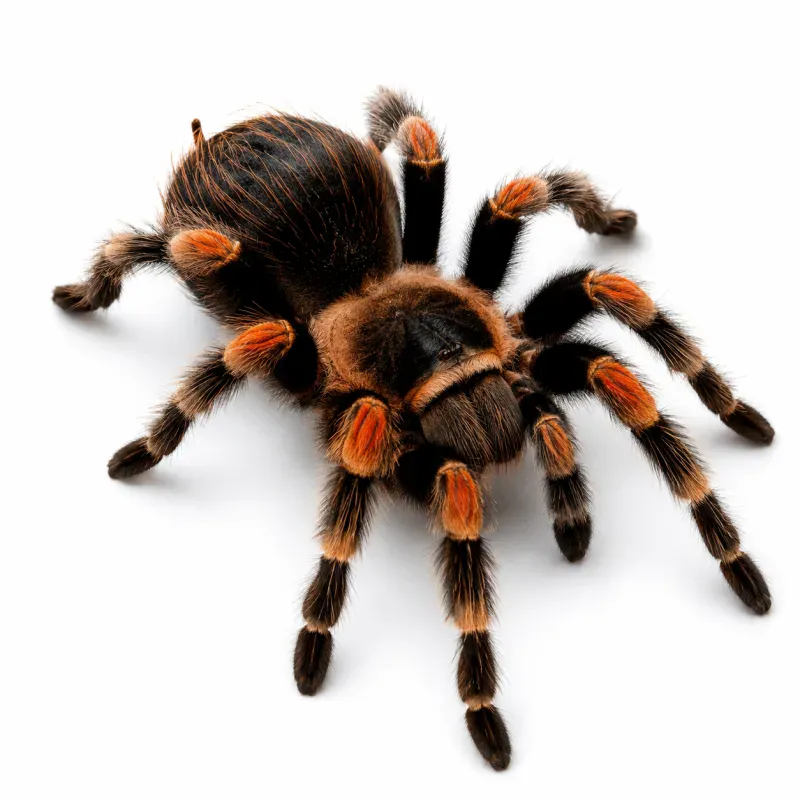
Feeding your tarantula correctly is one of the most critical aspects of captive care. As opportunistic predators, tarantulas rely on a diet of live invertebrates, but the size, frequency, and type of prey must match their species, age, and individual metabolism. This guide covers every feeding detail, from feeder insect options to hydration, ensuring your tarantula thrives.
Feeder Insect Options
Tarantulas are obligate carnivores that eat live prey. The most common and nutritious feeder insects include:
- Crickets – Gut-loaded crickets are a staple for most species. They are high in protein but can be noisy and have a lower calcium-to-phosphorus ratio unless dusted.
- Dubia Roaches – Superior to crickets: they are quieter, higher in protein, and have a better calcium profile. They are also less likely to escape.
- Mealworms – High in fat; should be offered sparingly as treats. Their hard exoskeleton can be difficult for slings to digest.
- Superworms – Larger, more nutritious than mealworms, but also high in fat. Good for larger tarantulas.
- Hornworms – Soft-bodied and high in moisture; excellent for hydration but low in protein. Use as a supplement.
- Waxworms – Very high in fat; only for occasional treats or to boost weight in underweight individuals.
- Silkworms – Highly nutritious, soft-bodied, and low in fat. A great occasional feeder.
- Locusts – A lean, active prey that stimulates natural hunting behavior. Suitable for larger species.
Always gut-load feeder insects with fresh vegetables or a commercial gut-load formula 24–48 hours before feeding. Dusting with calcium and vitamin D3 powder once every 2–4 weeks is recommended for growing slings and breeding females.
Step-by-Step Feeding Routine
Following a consistent routine reduces stress for both you and your tarantula. Here’s a reliable method:
- Check for pre-molt signs – Before offering food, look for refusal to eat, increased webbing, or a darkened abdomen. If you suspect pre-molt, skip feeding and remove any existing prey.
- Select the right prey size – Use the carapace rule: prey should be no larger than the tarantula’s carapace. If in doubt, choose a smaller item.
- Gut-load the feeder – Feed your crickets or roaches a nutritious diet (fresh vegetables or commercial gut-load) for 24–48 hours before offering them.
- Offer one prey item at a time – Drop the prey near the tarantula, not directly on it. Use long tweezers to avoid accidental bites.
- Observe the strike – Most tarantulas will grab the prey immediately. If not interested within 15 minutes, remove the prey and try again in a few days.
- Remove uneaten prey after 24 hours – Never leave live prey in the enclosure overnight, especially if the tarantula is molting.
- Clean up leftovers – Remove any prey remnants (legs, wings) to prevent mold and mites.
For slings, use a small container or feeding dish to keep prey contained and make cleanup easier.
Prey Size Guide
Prey size is crucial to prevent injury or stress. The general rule: prey should be no larger than the tarantula’s carapace (the hard upper shell of the cephalothorax) or roughly half the length of the tarantula’s body.
| Tarantula Life Stage | Body Length (approx.) | Recommended Prey Size | Examples |
|---|---|---|---|
| Slings (1st–3rd instar) | 0.25–0.5 in (6–13 mm) | Pinhead crickets, flightless fruit flies, small mealworm pieces | Pinhead crickets (1/8 in), Drosophila |
| Juveniles | 0.5–2 in (13–50 mm) | Small crickets, small roaches, mini mealworms | 1/4 in crickets, 1/4 in dubia roaches |
| Sub-adults | 2–4 in (50–100 mm) | Medium crickets, medium roaches, superworms | 1/2 in crickets, 1/2 in dubia roaches |
| Adults | 4–6+ in (100+ mm) | Large crickets, large roaches, adult locusts, occasional pinky mouse (very large species) | 1 in crickets, adult dubia roaches, locusts |
Important: Never leave uneaten prey in the enclosure for more than 24 hours, as they can stress or injure a molting tarantula.
Diet Schedule and Feeding Frequency
Feeding frequency depends on age, species, and individual appetite. Overfeeding can lead to obesity, while underfeeding can stunt growth.
- Slings (0–6 months): Feed every 2–3 days. Offer small prey items that are easy to capture.
- Juveniles (6–18 months): Feed every 4–7 days. Offer 2–3 appropriately sized prey items per feeding.
- Sub-adults (18–36 months): Feed every 7–14 days. Offer 1–2 medium prey items.
- Adults (36+ months): Feed every 10–21 days. Offer 1–2 large prey items, or one larger item.
- Breeding females: Feed more frequently (every 5–10 days) during egg production.
- Pre-molt: Tarantulas will often refuse food for 1–4 weeks before a molt. Do not force-feed; remove uneaten prey.
- Post-molt: Wait 7–10 days after a molt before offering food, as the exoskeleton is still soft.
Species-specific adjustments: Arboreal species (e.g., Avicularia) may eat less frequently than terrestrial species (e.g., Brachypelma). Always observe your tarantula’s body condition — a plump abdomen indicates good health, while a shriveled one suggests dehydration or underfeeding.
Feeding Troubleshooting
Even experienced keepers encounter feeding challenges. Here are common issues and solutions:
| Problem | Likely Cause | Solution |
|---|---|---|
| Tarantula refuses food | Pre-molt, low temperature, stress, or not hungry | Check for pre-molt signs; ensure temperature is in the species’ preferred range (usually 75–85°F); wait a few days and try again |
| Prey escapes into enclosure | Prey too small or container not secure | Use a feeding dish or offer prey with long tweezers; remove any escapees promptly |
| Tarantula regurgitates | Prey too large, or handling immediately after feeding | Offer smaller prey; wait at least 48 hours before handling |
| Slings won’t eat | Prey too large, or prey too fast | Offer pinhead crickets or fruit flies; pre-kill prey by crushing the head if needed |
| Abdomen looks shriveled | Dehydration or underfeeding | Provide a water dish, increase humidity, and offer food more frequently |
If your tarantula refuses food for more than 4–6 weeks and shows no pre-molt signs, consult a veterinarian experienced with invertebrates.
Watering and Hydration
Tarantulas obtain moisture from their prey and from drinking water. A clean water dish is essential for all tarantulas, regardless of species.
- Water dish: Use a shallow, heavy dish (e.g., bottle cap or small ceramic bowl) that cannot tip over. Place it on the substrate, not on a ledge where it could fall.
- Water quality: Use dechlorinated, bottled spring water, or filtered tap water. Avoid distilled water, as it lacks minerals.
- Cleaning: Change water daily and scrub the dish weekly to prevent bacteria and mold.
- Misting: For species requiring higher humidity (e.g., Theraphosa, Psalmopoeus), mist the substrate lightly once or twice a week. Avoid over-misting, which can lead to mold and respiratory issues.
- Humidity levels: Most terrestrial species thrive at 60–70% humidity; arboreal species prefer 70–80%. Use a hygrometer to monitor.
- Signs of dehydration: Shriveled abdomen, lethargy, and difficulty moving. Increase humidity and offer a water dish immediately.
Note: Never use a sponge in the water dish — it harbors bacteria and can trap tarantula fangs.
Common Feeding Mistakes
- Feeding prey that is too large – Can cause injury or regurgitation. Always follow the carapace rule.
- Leaving prey in the enclosure during molting – A cricket or roach can attack a soft, vulnerable tarantula. Remove all prey when you notice pre-molt signs (refusal to eat, webbing on the ground).
- Overfeeding – Leads to obesity, organ stress, and shortened lifespan. Stick to the schedule.
- Feeding wild-caught insects – May carry pesticides, parasites, or pathogens. Only use captive-bred feeders.
- Neglecting gut-loading – Feeder insects without nutritional value can lead to deficiencies. Gut-load for at least 24 hours.
- Using mealworms as a staple – Too high in fat and chitin. Use as an occasional treat only.
- Inconsistent watering – Dehydration is a common killer. Always provide fresh water.
Supplements and Variety
A varied diet is key to long-term health. Rotate between crickets, roaches, and occasional treats like hornworms or silkworms. Dust prey with a calcium + vitamin D3 supplement every 2–4 weeks for slings and breeding females. Adult tarantulas on a balanced diet of gut-loaded roaches and crickets may not need supplementation, but it never hurts.
Pinky mice: Only for the largest species (e.g., Theraphosa blondi, Lasiodora parahybana) and offered no more than once a month. They are high in fat and can cause obesity if overfed.
Seasonal Feeding Notes
Tarantulas may adjust their feeding behavior with seasonal changes, even in captivity. Here’s what to expect:
- Winter (cooler months): Many species naturally slow down. Reduce feeding frequency by 20–30% if your tarantula shows less activity. Ensure the enclosure stays within the recommended temperature range.
- Summer (warmer months): Metabolism may increase. Offer food slightly more often, but never exceed the maximum frequency in the schedule above.
- Breeding season: Females may eat more to support egg production. Males often eat less or stop entirely as they focus on mating.
- Monsoon/humidity cycles (for tropical species): Some species (e.g., Avicularia) may prefer more misting during naturally wetter periods. Adjust misting frequency accordingly.
Always prioritize your individual tarantula’s body condition over a calendar. If the abdomen appears overly large, reduce portions; if it looks small, increase frequency slightly.
Cost Breakdown of Feeding
Budgeting for feeder insects helps you plan. Here are typical monthly costs based on a single tarantula:
| Feeder Type | Typical Price (per 100) | Monthly Cost (approx.) | Notes |
|---|---|---|---|
| Crickets (small) | $10–$15 | $5–$10 | For slings and juveniles; need gut-loading |
| Crickets (large) | $15–$20 | $5–$15 | For adults; may need to buy in bulk |
| Dubia roaches (medium) | $20–$30 | $5–$15 | More expensive but nutritious and quiet |
| Mealworms (small) | $5–$10 | $2–$5 | Use sparingly as treats |
| Hornworms (each) | $1–$2 each | $2–$6 | Great for hydration but low in protein |
| Silkworms (each) | $1–$3 each | $3–$9 | Highly nutritious; can be costly |
Buying in bulk (e.g., 500 crickets) reduces per-unit cost. Store feeders in ventilated containers with proper food and moisture. Gut-loading supplies (vegetables or commercial diet) add a few dollars per month.
Conclusion
Mastering tarantula feeding is straightforward once you understand the basics: choose the right prey size, stick to a schedule, provide fresh water, and avoid common pitfalls. By following this guide, you’ll keep your eight-legged friend healthy, active, and thriving for years to come. Always observe your tarantula’s behavior — it will tell you everything you need to know.
Frequently Asked Questions
How often should I feed my tarantula?
Frequency depends on species and age: slings eat every 2–3 days, juveniles every 4–7 days, sub-adults every 7–14 days, and adults every 10–21 days. Breeding females may need food every 5–10 days.
What do tarantulas eat?
Live feeder insects — crickets, dubia roaches, mealworms, and other insects sized smaller than the spider's abdomen. Never offer wild-caught prey, which can carry pesticides.
Do tarantulas need water?
Yes — a shallow water dish is the standard. Tarantulas also get moisture from prey, and humidity needs vary by species (arid vs tropical).
How do I know if my tarantula is about to molt?
Common pre-molt signs include refusing food, increased webbing on the ground, and a darkened or shiny abdomen. Remove all prey from the enclosure when you notice these signs.
Can I feed my tarantula pinky mice?
Only for the largest species (e.g., Theraphosa blondi, Lasiodora parahybana) and no more than once a month. They are high in fat and can cause obesity if overfed.
Why is my tarantula not eating?
This could be due to pre-molt, low temperature, stress, or simply not being hungry. Check for pre-molt signs, ensure the enclosure is at the proper temperature (75–85°F), and wait a few days before offering food again.
How long should I wait after a molt before feeding?
Wait 7–10 days after a molt before offering food, as the exoskeleton is still soft and the tarantula needs time to harden.
How can I tell if my tarantula is overweight?
An overly large, shiny abdomen that appears stretched or has visible gaps between the carapace and abdomen may indicate obesity. Reduce feeding frequency and portion sizes, and ensure the enclosure temperature is within the recommended range to boost metabolism.
What should I do if my tarantula escapes during feeding?
Stay calm and gently guide it back using a soft brush or a plastic container. Avoid grabbing it. Secure the enclosure lid afterward and double-check for any gaps.
Can I feed my tarantula dead prey?
Most tarantulas prefer live prey, but some may accept freshly killed insects, especially if they are pre-killed to prevent injury to slings. If your tarantula refuses dead prey, offer live insects instead.
How do I gut-load feeder insects properly?
Feed your feeder insects fresh vegetables (e.g., carrots, leafy greens) or a commercial gut-load formula for 24–48 hours before offering them to your tarantula. This ensures they pass on essential nutrients.
What humidity level is ideal for my tarantula?
Most terrestrial species thrive at 60–70% humidity, while arboreal species prefer 70–80%. Use a hygrometer to monitor and adjust misting accordingly.
Related Reading
- Tarantula Care Guide: Beginner-Friendly Species & Setup
- Tarantula Molting Guide: Premolt Signs, Molting Proc...
- Tarantula Species and Color Guide: Beginner-Friendly...
- Tarantula Beginner Species Comparison Guide: Best Fi...
- Tarantula Enclosure Guide: Terrestrial vs Arboreal S...
Check optimal temps, calculate feeding, and find your perfect species match.
References
- Schultz, S. A., & Schultz, M. J. (2009). The Tarantula Keeper's Guide. Barron's Educational Series.
- Gurley, R. (2010). Tarantulas and Other Arachnids. T.F.H. Publications.
- Baxter, R. (2013). Tarantulas: The Ultimate Guide. CreateSpace Independent Publishing Platform.
🐾 Join the Community
See how other keepers set up their enclosures, ask questions, and share your experience.
🛠️ Apply What You Learned
Check optimal temps, calculate feeding schedules, and get calcium dosage — all personalized for your species.
Comments