Uromastyx Temperature Guide: Basking & Cool Zones
Introduction
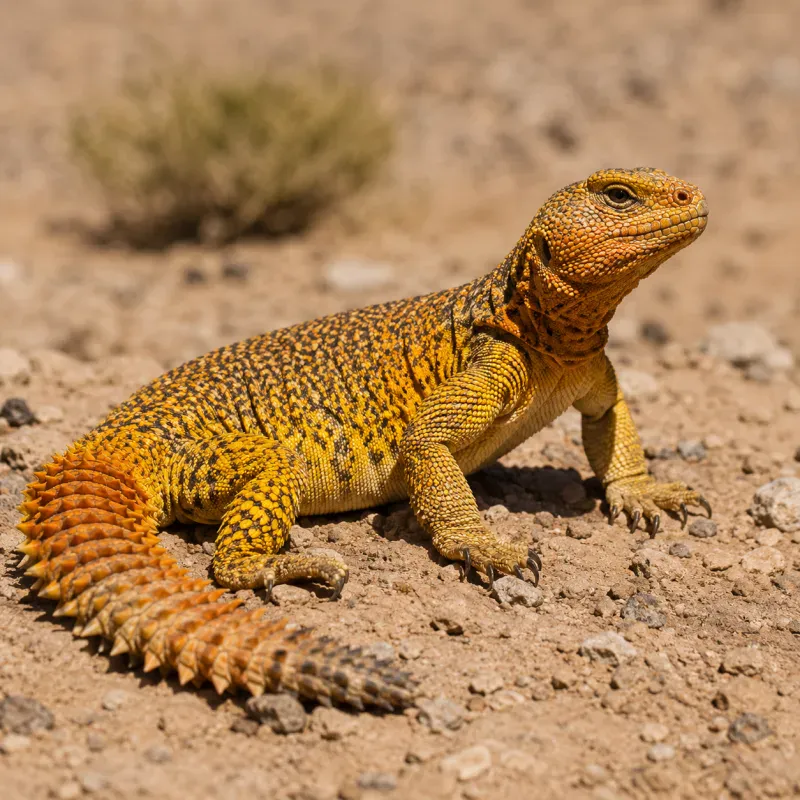
Uromastyx are the hottest-basking common pet lizard, full stop. A bearded dragon wants 100–110°F under its lamp; a Mali or ornate uromastyx wants a rock that reaches 120–130°F (49–54°C) and will spend most of the day flattened on it. Give them 105°F and they will eat, sit under the lamp, and slowly fail to digest — which looks exactly like a picky herbivore rather than a husbandry problem.
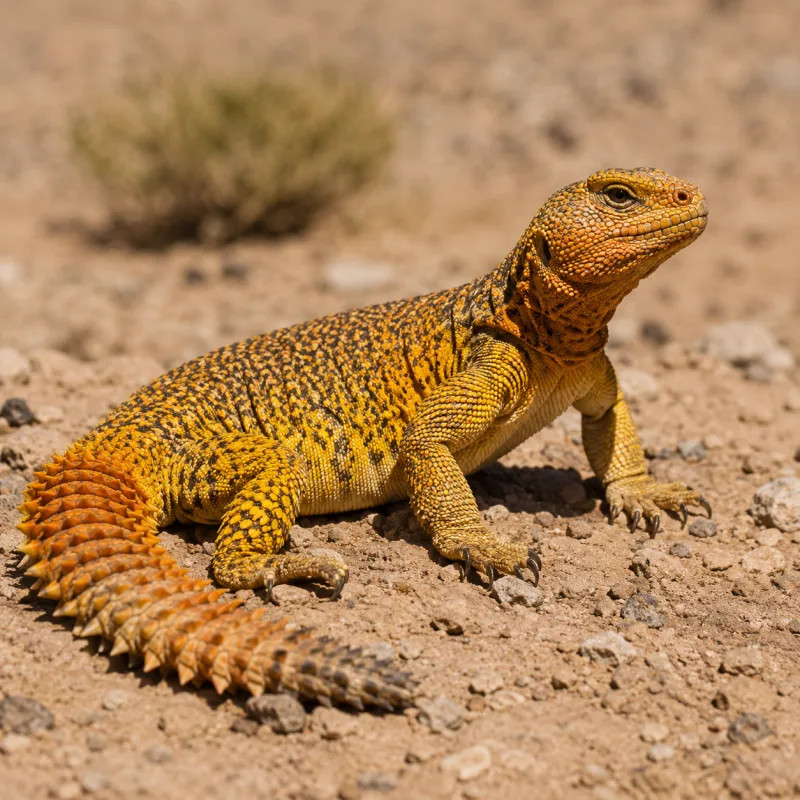
This guide is the thermal half of the setup. Sizes, substrate and decor live in our enclosure guide; diet lives in the diet guide.
The Temperature Map
| Zone | Target | Notes |
|---|---|---|
| Basking surface | 120–130°F (49–54°C) | Measured on the stone, not the air |
| Warm side air | 95–100°F (35–38°C) | The half of the tank under and around the lamp |
| Cool side | 80–85°F (27–29°C) | Still warm by reptile standards — never "room temperature" |
| Night | 65–75°F (18–24°C) | No night heat unless the room drops below 65°F |
| Humidity | 10–30% | Above 40% risks respiratory infection and scale rot |
| UVB | T5 HO 12–14%, ⅔–¾ of the tank | Ferguson Zone 3–4 species |
The gap between the basking surface and the cool side — roughly 40–50°F — is the whole point. A uromastyx that cannot cool down will overheat; one that cannot get hot enough will not digest its food.
The Surface Is the Temperature, Not the Air
This is the mistake that costs the most keepers a season. Basking bulbs heat objects, and objects re-radiate that heat to the lizard's belly. Air temperature under the lamp can read 100°F while the rock below it reads 118°F — or the reverse, if you are using a low-mass surface.
- Use a heavy, dark stone or slate tile as the basking platform. It soaks up heat and keeps radiating after a cloud passes or the thermostat cycles.
- Measure the stone with an infrared gun. Point it at the centre of the basking spot, then at the cool-side floor. Those two numbers are your setup.
- Do not trust analog dials. A dial stuck to the back glass reads the air behind the tank, not the temperature a lizard is lying on.
- Check after the lamp has run for two hours. Cold stones take time to charge; a reading taken one minute after lights-on is meaningless.
Choosing the Lamp: Wattage, Distance and Control
| Decision | What works | Why |
|---|---|---|
| Bulb type | Halogen flood (or a high-output incandescent flood) | Deep, penetrating heat with visible light; a spot bulb concentrates too much |
| Wattage | 50–100 W | Depends on room temperature and tank height — measure, do not guess |
| Distance | 12–18 in above the stone | Closer is hotter but shrinks the usable basking area |
| Control | Dimmable thermostat, probe on the stone | An on/off thermostat lets the surface swing 10°F+ every cycle |
| UVB | Separate T5 HO 12–14% tube | A mercury-vapour "all-in-one" cannot be dimmed safely |
Set a dimmable thermostat to 125°F (52°C) as a working ceiling. If the surface still overshoots, raise the lamp or drop the wattage — do not rely on the thermostat alone to fight a too-strong bulb.
Building the Gradient in a 4×2×2 Tank
The minimum adult enclosure is 4 ft × 2 ft × 2 ft, and the layout matters as much as the size:
- Lamp at one end, over the stone, not in the middle. Centring the heat halves both the hot zone and the cool zone.
- A raised stone or slate stack under the lamp gives the lizard a choice of heights — closer to the bulb is hotter.
- A hide on the cool side so the animal can retreat to 80–85°F without going underground.
- Deep substrate (4–6 in) across the whole floor — uromastyx dig to escape heat and to thermoregulate in burrows that stay cooler than the surface.
- No water bowl in the hot end. Uromastyx get most of their water from food; a bowl that evaporates under the lamp pushes humidity over 40%.
Night, Winter and the Brumation Question
- Night drop is healthy. 65–75°F is the target. Do not run a ceramic heat emitter "for comfort" unless the room falls below 65°F.
- Cold rooms need a floor, not a boost. If your house drops to 60°F in winter, add a low-wattage CHE on a thermostat set to 70°F — for the night hours only.
- Never use a heat mat. Uromastyx are burrowers; under-tank heat turns the substrate into a warming tray and can burn a lizard that digs down to escape the lamp.
- Brumation is optional. A pet uromastyx kept at normal temperatures year-round is fine. Brumation is a breeding tool used by experienced keepers — if you intend to breed, plan it deliberately with an experienced breeder or exotics vet rather than improvising a cool-down.
Troubleshooting: What the Lizard Is Telling You
| Behaviour | Likely cause | Fix |
|---|---|---|
| Spends all day under the lamp, pale and flattened | Basking surface below 120°F | Measure the stone with an IR gun; raise wattage or lower the lamp |
| Stays on the cool side, refuses food | Hot end too hot overall, or no usable gradient | Check warm-side air (95–100°F) and cool side (80–85°F); move the lamp to one end |
| Gaping constantly, glass-surfing | Tank overheating or no cool retreat | Turn the lamp down, add a cool-side hide |
| Not eating, sleeping in the substrate | Cool side or night temperature too low | Verify night floor of 65°F; add a thermostat-controlled CHE if not |
| Wheezing, mucus, peeling scales | Humidity over 40% | Remove any water bowl, dry the substrate, increase ventilation |
| Lethargic after a big meal | Digesting below the optimal range | Confirm 120–130°F basking; do not feed again until it basks |
Frequently Asked Questions
What is the correct basking temperature for a uromastyx?
120–130°F (49–54°C) measured on the basking stone, with 95–100°F warm-side air and 80–85°F on the cool side. Anything under 115°F on the stone is usually too cool for consistent digestion.
Is 130°F too hot for a uromastyx?
No — that is the range they evolved for. What is dangerous is a tank with no escape from it. As long as there is a real cool side at 80–85°F and deep substrate to dig into, a 120–130°F surface is appropriate.
Do uromastyx need heat at night?
No, and a nightly drop is beneficial. 65–75°F is ideal. Only add a thermostat-controlled ceramic heat emitter if the room itself drops below 65°F.
Can I use a heat mat or heat rock instead of a lamp?
No. Heat rocks cause burns, and under-tank mats warm the substrate that these lizards burrow into. Uromastyx need overhead heat that creates a bright, hot surface with a thermal gradient — that is what a halogen flood over a stone delivers.
Why is my uromastyx not eating?
Check the basking surface first. If the stone is under 120°F, digestion slows and appetite drops, even when the lizard looks healthy. Then check the cool side is not also hot, and that the night temperature is not too low. Diet and food variety are covered in the uromastyx diet guide.
Should I brumate my uromastyx?
Not unless you are deliberately breeding. Pet uromastyx do well with normal seasonal temperature variation and no cool-down. Brumation is a breeder's tool — plan it with someone experienced rather than improvising.
Related Reading
- Uromastyx Care Guide — the complete husbandry overview.
- Uromastyx Enclosure Guide — sizes, sand mix, hides and UVB mounting.
- Uromastyx Diet Guide — the herbivore feeding plan.
- Uromastyx Species Guide — Mali, ornate, Egyptian and their size differences.
- Uromastyx Morphs — colour forms and prices.
- Ferguson Zones Explained — how much UVB each zone actually needs.
Not a timer — it reads the actual humidity and stops when it hits your target. Two temperature probes, failsafes, no cloud account. We don't know yet whether it's worth making, so we're asking keepers first. Two-minute survey →
One email when there's news — including if we decide not to build it. No newsletter.
Check optimal temps, calculate feeding, and find your perfect species match.
🐾 Join the Community
See how other keepers set up their enclosures, ask questions, and share your experience.
🛠️ Apply What You Learned
Check optimal temps, calculate feeding schedules, and get calcium dosage — all personalized for your species.
Comments
No account needed — corrections, updates and questions are all welcome. For a full question with photos, the community Q&A is the better place.