Uromastyx Enclosure Setup: Basking 120-130F & UVB
Introduction
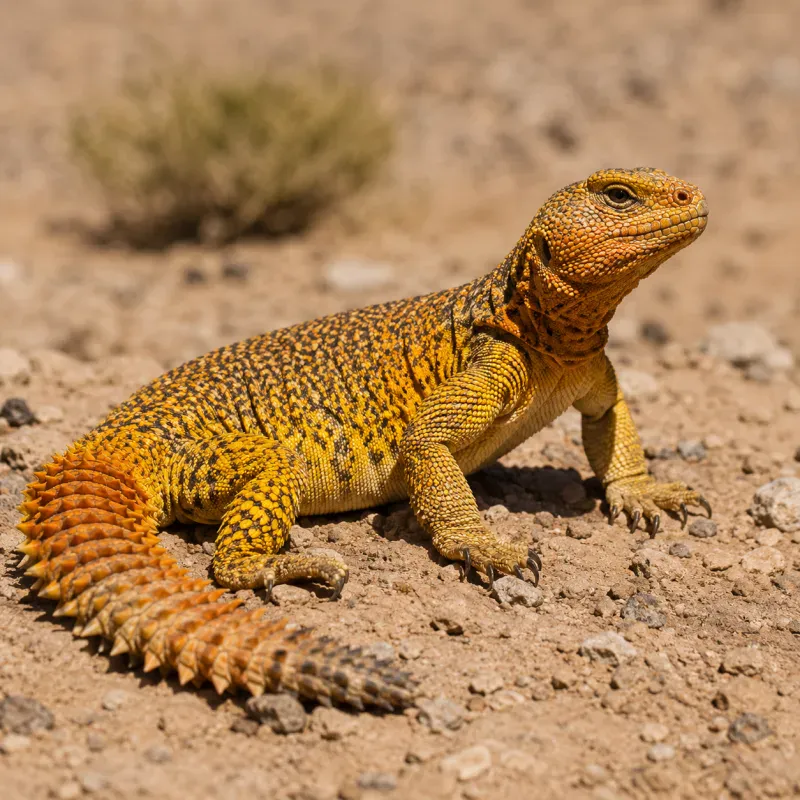
Uromastyx (genus Uromastyx spp.) are diurnal, herbivorous lizards native to arid regions of North Africa, the Middle East, and South Asia. Their enclosure setup must replicate a hot, dry desert environment with intense basking, UVB lighting, and a spacious, well-ventilated terrarium. This guide covers everything you need to build a proper desert terrarium for ornate (U. ornata) and Mali (U. maliensis) uromastyx, including substrate choices, basking spot temperatures, UVB requirements, and bioactive options.
Enclosure Size and Type
Uromastyx need horizontal floor space to roam, burrow, and thermoregulate. Minimum tank sizes vary by species:
| Species | Minimum Enclosure Size (one adult) | Recommended Size |
|---|---|---|
| Ornate Uromastyx (U. ornata) | 4′ x 2′ x 2′ (120 x 60 x 60 cm) | 5′ x 2.5′ x 2.5′ (150 x 75 x 75 cm) |
| Mali Uromastyx (U. maliensis) | 5′ x 2.5′ x 2.5′ (150 x 75 x 75 cm) | 6′ x 3′ x 3′ (180 x 90 x 90 cm) |
Larger enclosures are always better. Ornate uromastyx are slightly smaller (10–14 inches) while Mali uromastyx can reach 14–18 inches. Use a front-opening PVC or glass vivarium with a screen top for ventilation. Avoid tall tanks; uromastyx are terrestrial.
Substrate: Sand vs. Tile
Substrate choice is critical for burrowing and health. Two main options:
Sand (Arid Mix)
A mixture of 70% washed play sand and 30% organic topsoil (no fertilizers or perlite) creates a natural, burrowable substrate. Add excavator clay for stability. Depth: 4–6 inches. Pros: Allows natural burrowing, supports bioactive setups. Cons: Risk of impaction if ingested — but healthy uromastyx rarely eat sand. Avoid pure calcium sand or walnut shells.
Tile (Slate or Ceramic)
Slate tiles or ceramic tiles provide a hard, easy-to-clean surface. Pros: Zero impaction risk, retains heat well. Cons: Cannot burrow; must provide a separate dig box with sand. Best for quarantine or medical situations.
Recommendation: Use sand mix for bioactive or naturalistic setups; tile with a dig box for sterile enclosures.
Heating and Lighting
Uromastyx require intense heat and UVB to thrive.
Basking Spot: 120–130°F (49–54°C)
Use a halogen flood bulb (50–100W) on a dimmable thermostat. Measure surface temperature with an infrared gun. The basking rock should reach 120–130°F. Cool side: 80–85°F. Night temperature can drop to 70–75°F.
UVB: High-Output T5 (10.0 or 12%)
Use a T5 HO UVB bulb (e.g., Arcadia Desert 12% or Zoo Med Reptisun 10.0) spanning ⅔–¾ of the enclosure. Mount 8–12 inches above the basking area (depending on mesh). Replace every 12 months. UVB is essential for vitamin D3 synthesis and calcium metabolism.
Photoperiod
12–14 hours of light daily. Use a timer for consistency. No colored lights at night.
Hide Design and Climbing Rocks
Uromastyx need secure hides and basking platforms.
Hide Design
Provide two hides: one on the hot side, one on the cool side. Use flat slate or flagstone stacked to create crevices. Alternatively, use half-buried PVC pipes or cork bark. The hide should be low, dark, and snug — uromastyx feel safe in tight spaces.
Climbing Rocks
Stack natural rocks (slate, flagstone, or basalt) to create elevated basking platforms. Ensure stability to prevent collapse. Rocks absorb heat and provide a rough surface for nail wear. Place the basking rock directly under the heat lamp.
Arid Bioactive Setup
A bioactive desert terrarium uses live plants and clean-up crew invertebrates to maintain a self-cleaning ecosystem.
- Substrate: 70% sand + 30% topsoil, with a drainage layer (e.g., clay balls).
- Clean-up crew: Desert-dwelling isopods (Porcellionides pruinosus) and arid springtails (Folsomia candida). They consume waste and mold.
- Plants: Drought-tolerant species like aloe vera, jade plant, snake plant, and prickly pear cactus. Use pots to protect roots from digging.
- Lighting: Full-spectrum LED grow lights for plants (12 hours/day).
- Watering: Mist plants lightly once a week; avoid wetting the substrate.
Bioactive reduces cleaning frequency and provides enrichment. Monitor humidity — keep below 30%.
Humidity and Ventilation
Uromastyx require low humidity (10–30%). High humidity (>40%) causes respiratory infections and scale rot. Use a hygrometer on the cool side. Increase ventilation with a screen top or side vents. Never use a fogger or humidifier. Provide a shallow water dish for drinking, but change daily.
Diet and Feeding
Uromastyx are strict herbivores. Feed daily:
- Staples (80%): Dark leafy greens (collard, mustard, turnip, dandelion greens), endive, escarole.
- Vegetables (15%): Butternut squash, bell peppers, grated carrots, okra.
- Treats (5%): Lentils, millet, hibiscus flowers, occasional berries.
- Supplements: Calcium powder without D3 (if UVB is adequate) 2–3x/week; multivitamin once a week.
Avoid protein-rich foods, insects, fruits (high sugar), and spinach (oxalates). Provide a shallow water dish; they get most hydration from food.
Handling and Temperament
Uromastyx can be shy and stress easily. Handle only when necessary for health checks. To handle:
- Approach slowly from the side, not above (predator instinct).
- Support the full body; never grab the tail (can drop it).
- Keep sessions under 5 minutes initially; gradually increase.
Signs of stress: tail whipping, hissing, darkening color, hiding. Respect their space.
Common Health Issues
- Metabolic Bone Disease (MBD): Caused by inadequate UVB or calcium. Symptoms: soft jaw, tremors, lethargy. Prevention: proper UVB and supplementation.
- Respiratory Infection: High humidity or drafts. Symptoms: wheezing, nasal discharge, open-mouth breathing. Treat with vet-prescribed antibiotics and raise temperature.
- Impaction: Often from loose substrate or large food pieces. Prevent with proper substrate and finely chopped greens.
- Parasites: Fecal exams annually. Treat with vet-prescribed dewormers.
- Tail/Toe Rot: From retained shed or injury. Soak in warm water; vet may need to amputate.
Common Mistakes
- Too small enclosure: Uromastyx need floor space; 40-gallon breeder is minimum for ornate, 75-gallon for Mali.
- Incorrect basking temperature: 120–130°F is essential; lower temps cause poor digestion and lethargy.
- No UVB or wrong bulb: Coiled bulbs are insufficient. Use T5 HO 10.0/12%.
- High humidity: Avoid misting the whole enclosure; use a dry substrate.
- Feeding insects or fruit: Uromastyx cannot digest animal protein or high sugar; causes kidney failure.
- Handling too much: Causes chronic stress and refusal to eat.
Conclusion
A successful uromastyx enclosure mimics the harsh Sahara — hot, dry, with ample space to burrow and bask. Prioritize a large horizontal tank, 120–130°F basking spot, T5 UVB, and a sand-based substrate. With proper setup, these fascinating lizards can live 15–20+ years in captivity. Always source from ethical breeders and provide a vet check within the first month.
Related Reading
- Uromastyx Care Guide
- Uromastyx Species Guide
- Uromastyx Diet Guide
- Temperature Checker
- Uromastyx Temperature Guide — how to build and measure the gradient inside a 4×2×2 ft tank.
Check optimal temps, calculate feeding, and find your perfect species match.
References
- Healey, M. (2024). Uromastyx Care Sheet. ReptiFiles. https://reptifiles.com/uromastyx-care-sheet/
- Arcadia Reptile. (2023). Desert Lighting Guide. Arcadia Products.
- McLeod, L. (2022). How to Set Up a Uromastyx Enclosure. The Spruce Pets.
- Veterinary Partner. (2021). Uromastyx Lizard Care. VIN.com.
🐾 Join the Community
See how other keepers set up their enclosures, ask questions, and share your experience.
🛠️ Apply What You Learned
Check optimal temps, calculate feeding schedules, and get calcium dosage — all personalized for your species.
Comments
No account needed — corrections, updates and questions are all welcome. For a full question with photos, the community Q&A is the better place.