Uromastyx Care Guide: The 100% Vegetarian Agamid
Species Overview
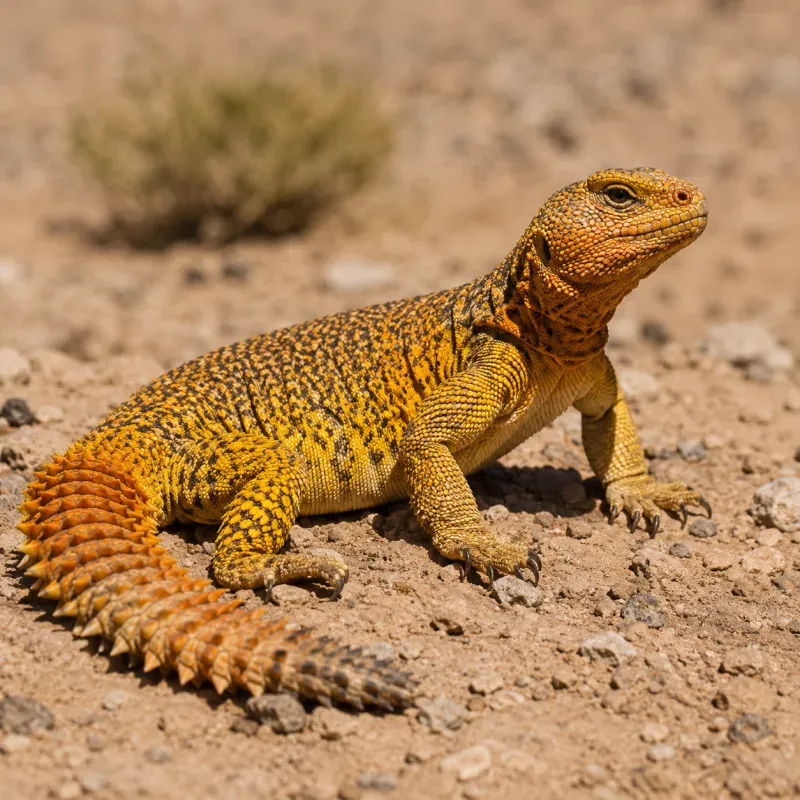
Uromastyx (spiny-tailed lizards) are the rare 100% herbivorous reptile — no insects, ever. Native to North Africa and the Middle East, they need some of the highest basking temperatures in the hobby. In exchange: striking colors, manageable size, decades-long lifespan.
These ground-dwelling lizards are also known as spiny-tailed agamas or dabb lizards. They belong to the genus Uromastyx, which includes several uromastyx species such as U. geyri (Nigerian uromastyx), U. ornata (ornate uromastyx), and U. aegyptia (Egyptian uromastyx). Their unique appearance — a robust body, a thick tail adorned with spiny whorls, and a blunt head — makes them unmistakable. They are diurnal, spending their days basking on rocks and foraging for vegetation in arid landscapes.
In the wild, uromastyx inhabit rocky deserts, scrublands, and semi-arid regions where temperatures can soar. They are excellent burrowers, creating extensive tunnels to escape the midday heat. Their natural history explains why they demand such extreme basking temperatures and a diet devoid of animal protein.
Enclosure Setup
Minimum: 4'×2'×2' (120×60×60 cm) for a single adult. Larger is always better — uromastyx are active foragers that roam miles daily in the wild. For a pair or small group, provide at least 6'×2'×2' (180×60×60 cm).
Substrate Options
- Washed play sand + excavator clay mix: A 70/30 blend creates a burrowable substrate that holds tunnels. Use a deep layer (at least 6 inches) to encourage natural digging behavior.
- Slate tiles: Easy to clean and provides a flat basking surface, but lacks enrichment. If used, provide a separate dig box filled with the sand-clay mix.
- Avoid: Calcium sand, walnut shells, and pine or cedar shavings — these can cause impaction or respiratory issues.
Furniture and Decor
- Rock stacks: Multiple rock piles (cemented together to prevent collapse) create climbing opportunities and basking platforms. Uromastyx love to rearrange loose rocks, so cementing is essential for safety.
- Hides: Provide at least two hides — one on the warm side and one on the cool side. Use flat rocks, half-logs, or commercial reptile hides.
- Flat basking rock: A large, flat rock (like flagstone or slate) placed directly under the heat lamp absorbs heat and provides a stable basking surface.
- Water dish: A shallow, heavy dish with fresh water daily. Though they get most hydration from food, they will drink occasionally.
Ventilation and Security
Ensure the enclosure has good ventilation to prevent stagnant air and mold. A screen top or side vents work well. Uromastyx are escape artists — secure all openings with locks or clips.
Heating (Very Hot!)
| Zone | Temperature |
|---|---|
| Basking surface | 120–130°F (49–54°C) |
| Warm side | 95–100°F (35–38°C) |
| Cool side | 80–85°F (27–29°C) |
| Night | 65–75°F (18–24°C) |
These temperatures are not a typo. Uromastyx require extreme basking heat to properly digest their fibrous plant diet. Multiple halogen floods on a dimming thermostat are ideal. Use a thermostat to prevent overheating and extend bulb life.
How to Achieve and Measure Temperatures
- Choose the right bulb: Use halogen flood lights (50–100W depending on enclosure size) to create a focused basking spot. Avoid red or blue bulbs — they disrupt the day/night cycle.
- Position the bulb: Place the basking bulb about 12–18 inches above the basking rock. Adjust distance to achieve the target surface temperature.
- Use a dimming thermostat: Connect the bulb to a dimming thermostat with the probe placed on the basking rock. Set it to 125°F (52°C) as a safety margin.
- Measure with an IR temp gun: Point the laser at the basking surface to confirm 120–130°F. Also check the warm and cool sides with a digital thermometer.
- Night drop: Turn off all heat sources at night. If room temperature drops below 65°F (18°C), use a ceramic heat emitter on a thermostat set to 70°F (21°C).
Troubleshooting Heating Issues
- Basking surface too cool: Move the bulb closer, increase wattage, or add a second bulb.
- Basking surface too hot: Raise the bulb, reduce wattage, or use a dimmer.
- Uneven heat: Use multiple bulbs to create a broader gradient.
- Thermostat fails: Always have a backup thermometer to monitor temperatures manually.
UVB Lighting
Extremely important: T5 HO 12% or 14% tube (Arcadia Dragon 14%) covering full enclosure. UVB gradient must overlap heat gradient. Replace every 12 months.
UVB is essential for vitamin D3 synthesis, which enables calcium absorption. Without adequate UVB, uromastyx develop metabolic bone disease (MBD), leading to deformities and organ failure.
Setting Up UVB
- Choose a T5 HO tube: A 12% or 14% UVB tube is ideal. The 14% (like Arcadia Dragon 14%) is recommended for high-basking species like uromastyx.
- Mount the fixture: Place the tube inside the enclosure (not through mesh, which blocks up to 30% of UVB). Mount it on the ceiling, covering 2/3 to full length.
- Overlap with heat: Position the basking rock directly under the UVB tube so the lizard can bask in both heat and UVB simultaneously.
- Distance: Follow the manufacturer's recommended distance (usually 12–18 inches) from the basking surface.
- Replace annually: Even if the bulb still emits visible light, UVB output diminishes over time. Replace every 12 months.
Common UVB Mistakes
- Using a coil bulb: Coil bulbs provide inconsistent UVB and are less effective. Always use a tube.
- Placing UVB outside the mesh: Mesh filters out UVB. Inside mounting is better.
- Forgetting to replace: Set a calendar reminder to replace the tube every 12 months.
- No UVB gradient: The UVB should cover the basking zone and extend to the warm side, but the cool side can have lower UVB to allow self-regulation.
100% Plant Diet
Daily: Dandelion greens, endive, escarole, collard, cactus pads. 2–3×/week: butternut squash, bell pepper. 1–2×/week: lentils (cooked), millet. Treats: hibiscus flowers, nasturtium. Never insects — animal protein damages kidneys. Calcium (no D3) 3–4×/week.
Uromastyx are obligate herbivores, meaning they cannot digest animal protein. Their kidneys are not adapted to process uric acid from insects, leading to gout and kidney failure. A strictly plant-based diet is non-negotiable.
Building a Balanced Diet
- Leafy greens (80% of diet): Dandelion greens, endive, escarole, collard greens, mustard greens, turnip greens, and arugula. Rotate these for variety.
- Vegetables (15%): Butternut squash, bell peppers, zucchini, carrots (shredded), and sweet potato (cooked).
- Legumes and grains (5%): Cooked lentils, millet, quinoa, and oats. These provide plant-based protein and fiber.
- Fruits and flowers (treats): Hibiscus flowers, nasturtium, dandelion flowers, and occasional berries (once a week). Fruits are high in sugar — keep them rare.
Supplementation
- Calcium (without D3): Dust food 3–4×/week. Since uromastyx get D3 from UVB, avoid D3 supplements to prevent overdose.
- Multivitamin: Once a week, use a reptile multivitamin to cover trace minerals.
- How to dust: Place greens in a bag, add a pinch of calcium powder, shake gently, and serve.
Feeding Schedule
| Food Type | Frequency | Examples |
|---|---|---|
| Leafy greens | Daily | Dandelion, endive, escarole, collard |
| Vegetables | 2–3×/week | Butternut squash, bell pepper |
| Legumes/grains | 1–2×/week | Cooked lentils, millet |
| Treats | 1×/week | Hibiscus flowers, nasturtium |
| Calcium supplement | 3–4×/week | Calcium powder (no D3) |
Foods to Avoid
- Insects: Crickets, mealworms, roaches — never feed.
- High-oxalate greens: Spinach, parsley, and beet greens can bind calcium. Avoid or limit.
- Iceberg lettuce: No nutritional value.
- Dog/cat food: Contains animal protein.
- Pesticide-treated plants: Always wash produce thoroughly.
Troubleshooting Feeding
- Lizard not eating: Check basking temperature — if below 110°F, they can't digest. Also check for stress, new environment, or illness.
- Weight loss: Increase portion size and variety. Offer more legumes for protein.
- Impaction: Ensure proper basking temps and avoid large, hard food pieces. Provide hydration.
Handling and Temperament
Uromastyx are generally docile but can be skittish when young. They are not naturally cuddly — they prefer to bask and explore. With regular, gentle handling, they can become accustomed to humans.
How to Handle
- Start slow: Let the lizard settle in for 1–2 weeks before handling.
- Approach from the side: Avoid reaching from above (predator-like). Scoop from below with both hands.
- Support the body: Let the lizard rest on your palm, supporting the belly and tail.
- Keep sessions short: 5–10 minutes daily, gradually increasing.
- Watch for stress signs: Tail whipping, hissing, or trying to burrow indicate stress. Return the lizard to its enclosure.
Common Handling Mistakes
- Handling too soon: Wait until the lizard is eating regularly.
- Grabbing the tail: The tail is fragile — never pull or grasp it.
- Handling during shedding: They may be more irritable.
- Overhandling: Too much stress can lead to illness.
Health and Common Issues
Uromastyx are hardy when kept correctly, but they can suffer from several health problems, mostly due to improper husbandry.
Metabolic Bone Disease (MBD)
Cause: insufficient UVB or calcium. Symptoms: soft jaw, swollen limbs, tremors, lethargy. Treatment: correct UVB and calcium supplementation, veterinary care.
Gout and Kidney Failure
Cause: feeding insects or high-protein foods. Symptoms: swollen joints, reduced appetite, lethargy. Prevention: strict vegetarian diet. Treatment: veterinary intervention, but often fatal if advanced.
Respiratory Infections
Cause: cold, damp conditions. Symptoms: wheezing, open-mouth breathing, nasal discharge. Treatment: increase temperature, veterinary antibiotics.
Parasites
Cause: wild-caught specimens or contaminated food. Symptoms: weight loss, diarrhea, bloating. Treatment: fecal exam and antiparasitic medication from a vet.
Impaction
Cause: ingesting substrate or undigestible material. Symptoms: constipation, swelling, lack of appetite. Prevention: proper substrate, adequate temperatures, and appropriate food size.
The Most Common Problems
- Insufficient basking: 120°F is critical for digestion. Below 110°F, they can't digest food.
- Feeding insects: Uromastyx are obligate herbivores. Insects cause gout and kidney failure.
- Too-small enclosure: They roam miles daily in the wild. Give them space.
- Inadequate UVB: Without proper UVB, they develop MBD.
- Incorrect substrate: Loose substrates like calcium sand can cause impaction.
- Skipping water: Even though they get hydration from food, always provide fresh water.
Related Reading
- Uromastyx Diet Guide — 100% vegetarian feeding.
- Reptile Heating Guide — Ultra-hot basking setup.
- Bearded Dragon Care Guide — Compare with another popular agamid.
Frequently Asked Questions
Can uromastyx eat insects?
No, uromastyx are obligate herbivores. Feeding insects causes kidney damage, gout, and kidney failure. Their digestive system is not adapted to process animal protein.
What temperature should the basking spot be?
The basking surface must be 120–130°F (49–54°C). Below 110°F, they cannot digest food properly. Use an IR temp gun to measure the surface temperature.
How often should I replace the UVB bulb?
Replace the T5 HO UVB tube every 12 months, even if it still emits visible light. UVB output diminishes over time, and inadequate UVB leads to metabolic bone disease.
What is the minimum enclosure size for an adult uromastyx?
The minimum is 4'×2'×2' (120×60×60 cm) for a single adult. Larger enclosures are always better because these lizards roam miles daily in the wild.
\nCheck optimal temps, calculate feeding, and find your perfect species match.
References
- Vosjoli, P. (2004). The Herpetoculture of Uromastyx. Advanced Vivarium Systems.
- Kaplan, M. (2016). Uromastyx: Spiny-tailed Agamas. Reptile Apartment.
- Arcadia Reptile (2020). UVB Lighting for Desert Reptiles. Arcadia Products.
🐾 Join the Community
See how other keepers set up their enclosures, ask questions, and share your experience.
🛠️ Apply What You Learned
Check optimal temps, calculate feeding schedules, and get calcium dosage — all personalized for your species.
Comments