Red-Eared Slider Diet: Best Pellets & Greens
Introduction
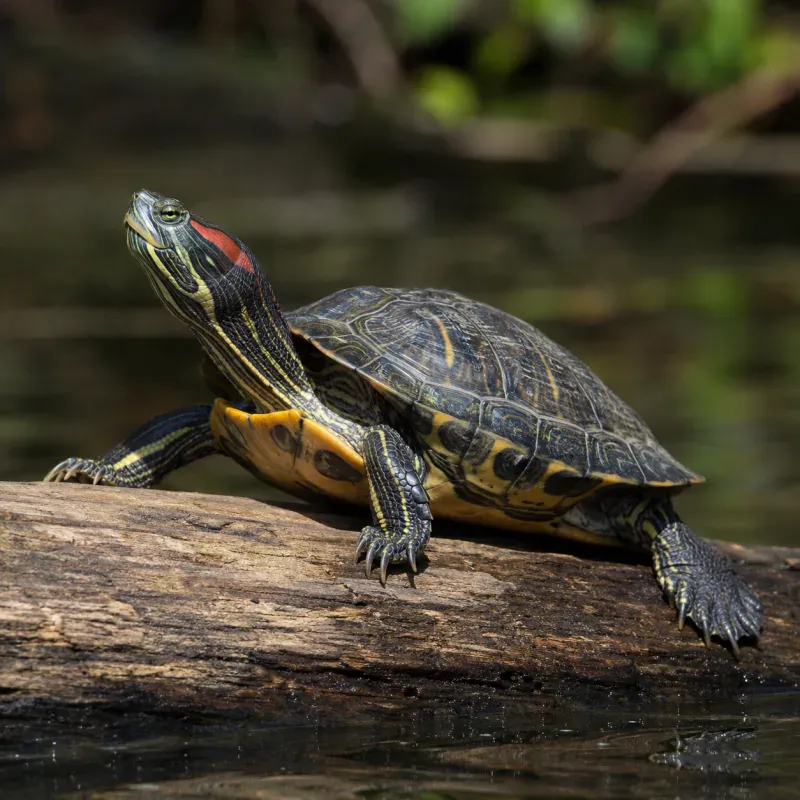
Red-Eared Sliders (Trachemys scripta elegans) are one of the most popular pet turtles worldwide, thanks to their hardy nature and engaging personalities. However, their dietary needs are often misunderstood, leading to common health issues like obesity, metabolic bone disease, and shell deformities. This guide covers everything you need to know about feeding your slider a balanced, species-appropriate diet — from commercial pellets to fresh vegetables, protein sources, feeding schedules by age, and proper calcium supplementation.
In the wild, red-eared sliders are omnivorous, eating a mix of aquatic plants, insects, small fish, and carrion. In captivity, we must replicate this variety while avoiding the pitfalls of overfeeding and nutrient imbalance. This expanded guide provides step-by-step instructions, troubleshooting tips, and in-depth tables to help you become a confident slider keeper.
1. Commercial Pellets: The Foundation
High-quality commercial turtle pellets should form the base of your slider's diet. Look for pellets specifically formulated for aquatic turtles, with at least 35–40% protein for juveniles and 25–30% for adults. Reputable brands include Zoo Med, Rep-Cal, and Mazuri. Pellets should be sunk in water (not floating) to encourage natural foraging behavior. Feed pellets once daily for juveniles and every other day for adults, offering only as much as the turtle can consume in 5–10 minutes.
How to Choose the Right Pellet
- Check the protein content: Juveniles need 35–40% protein; adults need 25–30%. Look for a guaranteed analysis on the label.
- Avoid fillers: The first ingredient should be a named protein source (e.g., fish meal, shrimp meal), not corn or wheat.
- Pellet size: Choose a size appropriate for your turtle's mouth. Hatchlings need tiny pellets; adults can handle larger sticks.
- Variety: Rotate between two or three high-quality brands to provide a broader nutrient profile.
Step-by-Step: Feeding Pellets Correctly
- Measure the amount: For adults, offer a pellet portion roughly the size of the turtle's head (if it were hollow). For juveniles, use the 5-minute rule.
- Drop pellets into the water — they should sink. If they float, soak them for a few seconds before feeding.
- Observe feeding: Watch your turtle eat. Remove any uneaten pellets after 10 minutes to prevent water fouling.
- Clean up: Remove leftover food promptly. Feeding in a separate container (like a plastic tub with tank water) can keep the main tank cleaner.
Troubleshooting Pellet Refusal
- New turtles: May refuse pellets initially. Try soaking them in tuna water (from canned tuna in water, no salt) for a few minutes to entice.
- Transitioning: Mix new pellets with old ones, gradually increasing the proportion over a week.
- Water temperature: Ensure water is 75–80°F for adults, 78–82°F for juveniles. Cold water slows digestion and appetite.
2. Vegetables: Essential for Adults
As sliders mature, their diet should shift toward more plant matter. Offer a variety of dark, leafy greens such as romaine lettuce, red leaf lettuce, kale, collard greens, and dandelion greens. Avoid iceberg lettuce (low nutritional value) and spinach or beet greens (high oxalates can bind calcium). Chop vegetables into bite-sized pieces and offer them daily. A good rule of thumb: vegetables should make up about 50–60% of an adult slider's diet.
Best Vegetables for Red-Eared Sliders
| Vegetable | Nutritional Value | Frequency |
|---|---|---|
| Romaine lettuce | High in vitamin A, low oxalates | Daily staple |
| Red leaf lettuce | Good fiber, vitamin A | Daily staple |
| Kale | High in calcium, vitamin C | 2–3 times per week |
| Collard greens | Excellent calcium source | 2–3 times per week |
| Dandelion greens | Rich in vitamins A, C, K | 2–3 times per week |
| Carrots (cooked) | Vitamin A (beta-carotene) | Once a week |
| Butternut squash | Vitamin A, fiber | Once a week |
| Green beans | Fiber, vitamin C | Occasional |
Vegetables to Avoid
- Iceberg lettuce: Contains little nutritional value — mostly water.
- Spinach and beet greens: High oxalates bind calcium, leading to deficiency.
- Rhubarb: Toxic — contains oxalates and anthraquinones.
- Avocado: Toxic to turtles.
- Onions, garlic, chives: Can cause digestive issues.
How to Prepare Vegetables
- Wash all vegetables thoroughly to remove pesticides.
- Chop into pieces small enough for your turtle to swallow comfortably (about the size of the turtle's eye).
- For hard vegetables like carrots or squash, steam or boil until soft before chopping.
- Mix several greens together to create a varied salad. You can also add a small amount of fruit (e.g., berries, melon) as an occasional treat — no more than 5% of the diet.
3. Protein Sources: Variety and Moderation
Juvenile sliders require more protein for growth. Offer live or frozen-thawed protein sources 2–3 times per week: earthworms, bloodworms, feeder fish (e.g., guppies), crickets, and mealworms. For adults, reduce protein to once a week. Avoid fatty feeder fish like goldfish and never feed raw meat or chicken — these lack essential nutrients and can cause digestive issues.
Safe Protein Options
| Protein Source | How to Offer | Frequency (Juvenile) | Frequency (Adult) |
|---|---|---|---|
| Earthworms | Live or chopped | 2–3 times/week | Once a week |
| Bloodworms (frozen) | Thawed, in water | 2–3 times/week | Once a week |
| Feeder guppies | Live, in tank | 2–3 times/week | Once a week |
| Crickets (gut-loaded) | Live, dusted with calcium | 2–3 times/week | Once a week |
| Mealworms | Live or dried (in moderation) | 2 times/week | Every other week |
Protein Sources to Avoid
- Goldfish: High in fat and contain thiaminase, which breaks down vitamin B1.
- Raw meat or chicken: Lacks calcium and essential nutrients; can cause bacterial infections.
- Dairy products: Turtles are lactose intolerant.
- Processed human food: High in salt, fat, and preservatives.
How to Feed Live Protein
- Place live prey in the tank or a separate feeding container.
- For worms, you can drop them directly into the water — sliders will hunt them.
- For crickets, ensure they are gut-loaded (fed nutritious food) for 24 hours before offering.
- Dust protein with calcium supplement before feeding (see Section 5).
- Remove any uneaten live prey after 15 minutes to prevent them from escaping or dying in the tank.
4. Feeding Frequency by Age
| Age | Frequency | Pellets per Feeding | Vegetables | Protein |
|---|---|---|---|---|
| Hatchling (0–6 months) | Daily | As much as eaten in 5 min | Finely chopped, daily | 2–3 times/week |
| Juvenile (6 months–2 years) | Daily | As much as eaten in 5 min | Daily | 2–3 times/week |
| Adult (2+ years) | Every other day | Amount to fill head-sized portion | Daily | Once a week |
Adjusting Feeding as Your Turtle Ages
As your slider grows, its dietary needs shift. Hatchlings and juveniles require daily feeding to support rapid growth. Once your turtle reaches about 2 years old (or a shell length of 4–6 inches), you can reduce pellet frequency to every other day and increase vegetable proportion. Monitor your turtle's body condition: a healthy slider has a flat, firm shell and no fat bulges around the legs. If you notice pyramiding (raised scutes), reduce protein and pellet portions.
Signs of Overfeeding vs. Underfeeding
- Overfeeding: Rapid shell growth, fat deposits around legs, inability to retract head, excessive skin shedding.
- Underfeeding: Lethargy, sunken eyes, soft shell, poor appetite.
If you're unsure, consult a reptile vet. A good rule: your turtle should be able to retract its head and legs fully into its shell without strain.
5. Calcium Supplementation: Preventing MBD
Metabolic bone disease (MBD) is a leading killer of captive turtles. Prevent it by dusting all protein and vegetable items with a calcium + vitamin D3 supplement 2–3 times per week for juveniles and 1–2 times per week for adults. Use a phosphorus-free calcium powder (e.g., Rep-Cal). Provide a cuttlebone or calcium block in the enclosure for self-regulation. UVB lighting is also essential for calcium metabolism — ensure a 5.0 or 10.0 UVB bulb is on for 10–12 hours daily.
Why Calcium Matters
Calcium is crucial for shell development, bone strength, and nerve function. Without adequate calcium and UVB (which enables vitamin D3 synthesis), turtles develop MBD, characterized by soft shells, swollen limbs, and lethargy. In severe cases, MBD can be fatal.
How to Supplement Correctly
- Choose a phosphorus-free calcium powder with vitamin D3 (e.g., Rep-Cal).
- Place a small amount (about a pinch) in a plastic bag or container.
- Add the food item (e.g., a piece of fish or a leafy green) and shake gently to coat.
- Offer the dusted food immediately.
- For juveniles, dust 2–3 times per week; for adults, 1–2 times per week.
Additional Calcium Sources
- Cuttlebone: Place a whole cuttlebone in the tank. Sliders will nibble on it as needed.
- Calcium blocks: Available at pet stores; provide a long-lasting source.
- UVB lighting: Use a 5.0 or 10.0 UVB bulb, positioned within 12 inches of the basking spot, and replace it every 6 months (even if it still emits light).
Troubleshooting Calcium Issues
- Soft shell: Increase calcium supplementation and check UVB bulb.
- Swollen limbs: Could be MBD or infection — consult a vet.
- Refusal to eat dusted food: Try dusting with a small amount of tuna juice or a commercial reptile appetite stimulant.
6. Pitfalls to Avoid
- Overfeeding pellets: Leads to obesity and shell pyramiding. Stick to portion control.
- Feeding only pellets: A monotonous diet causes malnutrition. Always include vegetables and occasional protein.
- Skipping calcium: Without supplementation, MBD develops rapidly.
- Feeding toxic foods: Never give avocado, chocolate, dairy, or processed human food.
- Feeding in dirty water: Always feed in a separate container or clean the main tank immediately after feeding to prevent bacterial growth.
Additional Mistakes to Avoid
- Feeding too much fruit: Fruits are high in sugar; limit to occasional treats.
- Ignoring water temperature: Cold water slows digestion, leading to food rotting in the stomach.
- Not providing a basking area: Turtles need to dry off and bask to regulate temperature and metabolism.
- Feeding wild-caught insects: May contain pesticides or parasites.
- Using supplements with phosphorus: Phosphorus inhibits calcium absorption.
7. Handling and Stress
Minimize handling after feeding to avoid regurgitation. Sliders are not cuddly pets — they may bite or become stressed. Always wash hands before and after handling. If your turtle refuses food, check water temperature (should be 75–80°F for adults, 78–82°F for juveniles) and ensure UVB bulb is functioning. Stress from poor water quality, overcrowding, or lack of basking area can suppress appetite.
Stress-Related Feeding Issues
- New environment: Give your turtle 1–2 weeks to acclimate before expecting normal eating.
- Overcrowding: Turtles need space; a general rule is 10 gallons of water per inch of shell length.
- Poor water quality: Ammonia and nitrite buildup can stress turtles and cause appetite loss. Use a good filter and change 25% of the water weekly.
- Lack of basking: Turtles need a dry basking spot with a heat lamp to thermoregulate. If they can't bask, they may stop eating.
How to Reduce Stress During Feeding
- Feed at the same time each day to establish a routine.
- Use a separate feeding container to minimize tank disturbance.
- Keep the feeding area quiet and free from loud noises.
- If your turtle is skittish, feed in a dimly lit area.
8. Common Health Issues Linked to Diet
- Metabolic Bone Disease: Soft shell, lethargy, swollen limbs. Caused by calcium deficiency and inadequate UVB.
- Shell Rot: Soft, smelly spots on shell — often from poor water quality and diet low in vitamin A.
- Obesity: Fat deposits around legs, inability to retract head. Reduce pellet portions and increase exercise.
- Vitamin A Deficiency: Swollen eyes, respiratory infections. Feed dark leafy greens and occasionally carrots (cooked).
Detailed Health Issue Management
Metabolic Bone Disease (MBD)
MBD is caused by a lack of calcium and/or vitamin D3. Symptoms include a soft or rubbery shell, difficulty walking, and swollen limbs. Treatment involves immediate calcium supplementation, UVB correction, and a vet visit. Prevention is key: always dust food and provide UVB lighting.
Shell Rot
Shell rot appears as soft, pitted, or smelly areas on the shell. It's often caused by poor water quality and a diet lacking vitamin A. To treat, clean the shell with a diluted betadine solution and improve water quality. Increase vitamin A-rich foods like carrots and dark leafy greens. In severe cases, see a vet.
Obesity
Obesity is common in overfed adult sliders. Symptoms include fat bulges around the legs and an inability to retract the head. Reduce pellet portions, increase vegetables, and encourage exercise by providing a larger tank and basking area.
Vitamin A Deficiency
Vitamin A deficiency leads to swollen eyes, respiratory infections, and skin issues. Feed foods rich in beta-carotene (carrots, squash, dark leafy greens) and consider a vitamin A supplement if advised by a vet.
9. Sample Feeding Plan
Here's a sample weekly feeding plan for an adult red-eared slider (2+ years old):
| Day | Morning | Evening |
|---|---|---|
| Monday | Pellets (head-sized portion) | Vegetables (mixed greens) |
| Tuesday | Vegetables | Vegetables |
| Wednesday | Pellets | Vegetables |
| Thursday | Vegetables | Vegetables |
| Friday | Pellets | Vegetables |
| Saturday | Vegetables + protein (e.g., earthworms) | Vegetables |
| Sunday | Vegetables | Vegetables |
Adjust portions based on your turtle's appetite and body condition. Always remove uneaten food after 10–15 minutes.
Frequently Asked Questions
Can red-eared sliders eat fruits?
Yes, but only as occasional treats. Fruits are high in sugar and should make up no more than 5% of the diet. Offer small pieces of berries, melon, or apple once a week. Avoid citrus fruits and avocado, which are toxic.
How often should I feed my adult red-eared slider?
Adult sliders (2+ years) should be fed every other day with pellets, and vegetables daily. Protein should be offered once a week. Overfeeding can lead to obesity and shell deformities.
What are the best vegetables for red-eared sliders?
The best vegetables are dark, leafy greens like romaine lettuce, red leaf lettuce, kale, collard greens, and dandelion greens. Avoid iceberg lettuce (low nutritional value) and spinach or beet greens (high oxalates).
Why is my red-eared slider not eating?
Common reasons include water temperature being too cold (below 75°F for adults), UVB bulb not working, stress from poor water quality or overcrowding, or illness. Check water temperature (75–80°F for adults, 78–82°F for juveniles), ensure UVB is on 10–12 hours daily, and consult a vet if the problem persists.
Related Reading
- Red-Eared Slider Feeding Guide: Nutrition & Schedule — Get a detailed feeding schedule and nutritional tips to complement the diet guide.
- Red-Eared Slider Care: Complete Aquatic Turtle Guide — Learn overall care essentials including habitat, handling, and maintenance for your slider.
- Red-Eared Slider Tank Setup: Filtration & Dock — Discover how to set up the perfect tank with proper filtration and basking areas.
- Red-Eared Slider Health: Shell Rot & Respiratory Infection — Identify common health issues and how diet impacts shell and respiratory health.
- Red-Eared Slider Basking & Lighting Guide — Understand basking requirements and lighting needs that affect appetite and digestion.
Check optimal temps, calculate feeding, and find your perfect species match.
References
- Zoo Med Laboratories. (2023). Aquatic Turtle Pellets Product Guide.
- Rep-Cal Research Labs. (2022). Calcium Supplementation for Reptiles.
- Mazuri Exotic Animal Nutrition. (2021). Red-Eared Slider Diet Recommendations.
- Boyer, T. H., & Innis, C. J. (2019). Reptile Medicine and Surgery. Elsevier.
🐾 Join the Community
See how other keepers set up their enclosures, ask questions, and share your experience.
🛠️ Apply What You Learned
Check optimal temps, calculate feeding schedules, and get calcium dosage — all personalized for your species.
Comments
No account needed — corrections, updates and questions are all welcome. For a full question with photos, the community Q&A is the better place.