Red-Eared Slider Tank Setup: Filtration & Dock
Introduction
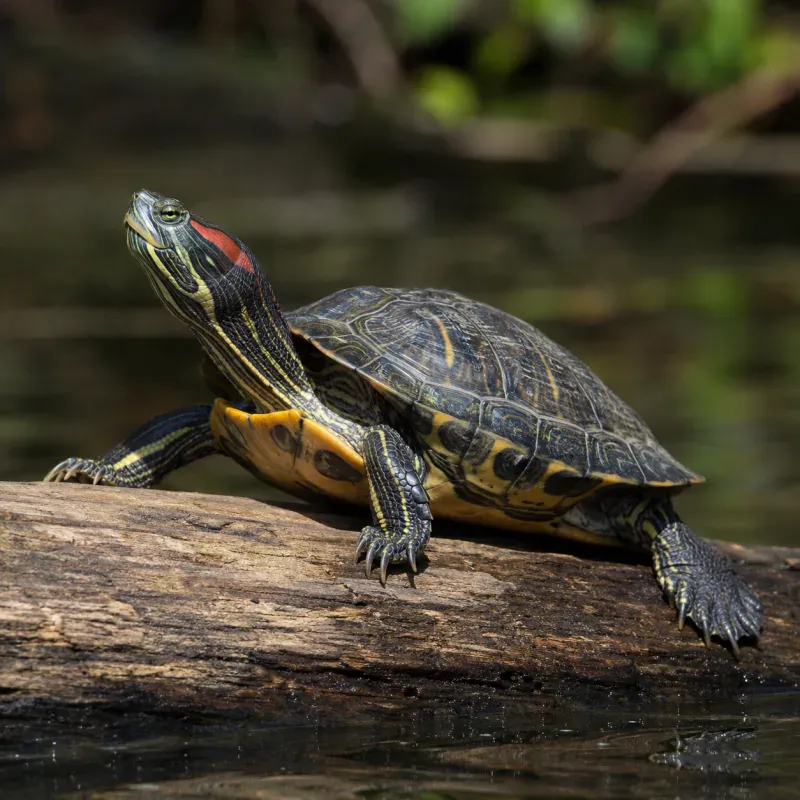
Red-eared sliders (Trachemys scripta elegans) are one of the most popular pet turtles worldwide, but their care requirements are often underestimated. A proper tank setup is crucial for their health, longevity, and happiness. This comprehensive guide covers everything from filtration and basking docks to UVB placement and water changes, helping you avoid common beginner mistakes.
Enclosure Setup
Tank Size and Shape
Red-eared sliders grow up to 12 inches (30 cm) in shell length, so they need ample swimming space. The general rule is 10 gallons of water per inch of shell length. For a single adult slider, a 75–120 gallon aquarium is recommended. A longer tank (e.g., 4 feet) is better than a tall one because it provides more surface area for swimming and basking.
When selecting a tank, consider the following:
- Minimum for juvenile: 20–40 gallons (grow quickly, so start large if possible).
- Minimum for adult: 75 gallons, but 120 gallons is ideal for a single adult.
- Shape: A rectangular tank with length > width is best. Avoid tall, narrow tanks.
- Lid: Use a secure mesh or screen lid to prevent escape and allow UVB penetration.
If you have multiple sliders, increase tank size by 50% per additional turtle. Never house two males together—they are territorial and may fight.
Substrate
Use large, smooth river rocks or bare-bottom tanks for easy cleaning. Avoid small gravel, sand, or pebbles that can be ingested and cause impaction. A bare-bottom tank simplifies water changes and reduces bacterial buildup.
If you prefer a natural look, consider these options:
- Large river rocks: At least 2 inches (5 cm) across, smooth and rounded. Rinse thoroughly before use.
- Play sand: Not recommended—ingestion risk is high, and sand can clog filters.
- Bare-bottom: Easiest to clean; use a glass or acrylic tank bottom.
To clean substrate, use a gravel vacuum during water changes. For bare-bottom tanks, simply siphon debris from the bottom.
Water Depth and Volume
Water depth should be at least 1.5 times the turtle's shell length, with a minimum of 6–8 inches for juveniles. Ensure the water volume is sufficient to dilute waste and maintain stable parameters. A 75-gallon tank holds about 60–65 gallons of water after accounting for decorations and basking area.
For an adult slider with a 10-inch shell, water depth should be at least 15 inches (38 cm). This allows for swimming and prevents drowning if the turtle flips over. Always provide a ramp or platform to help the turtle right itself.
Filtration and Water Quality
Red-eared sliders are messy eaters and produce high ammonia loads. A robust filtration system is non-negotiable.
Filter Type
Use a canister filter rated for 2–3 times your tank's volume. For example, a 75-gallon tank needs a filter rated for 150–225 gallons per hour (GPH). Options include the Fluval FX6, Eheim Classic 600, or SunSun HW-304B. Avoid internal or hang-on-back filters—they lack the biological capacity for turtles.
Here's a quick comparison of popular canister filters:
| Model | Rated for Tank Size | GPH | Pros | Cons |
|---|---|---|---|---|
| Fluval FX6 | Up to 400 gallons | 925 GPH | High capacity, self-priming | Expensive, bulky |
| Eheim Classic 600 | Up to 160 gallons | 264 GPH | Reliable, energy-efficient | Lower flow, no self-priming |
| SunSun HW-304B | Up to 150 gallons | 525 GPH | Budget-friendly, UV sterilizer included | Less durable, may leak |
When setting up the canister filter:
- Place the filter below the tank level for proper siphoning.
- Use the intake tube with a pre-filter sponge to prevent debris from clogging the impeller.
- Position the outflow near the surface to create water movement and gas exchange.
- Prime the filter according to manufacturer instructions.
Filter Media
Use mechanical media (e.g., foam pads, filter floss) to trap solids, and biological media (e.g., ceramic rings, bio-balls) for nitrifying bacteria. Replace mechanical media monthly, but rinse biological media in dechlorinated water to preserve bacteria.
Here's a suggested media arrangement:
- Bottom layer: Coarse sponge (mechanical) to trap large debris.
- Middle layer: Fine filter floss (mechanical) for smaller particles.
- Top layer: Ceramic rings or bio-balls (biological) for bacteria colonization.
Never wash biological media in tap water—use dechlorinated water or old tank water to avoid killing beneficial bacteria.
Water Changes
Perform 25–50% water changes weekly. Use a gravel vacuum to remove debris from the bottom. Treat tap water with a dechlorinator (e.g., Seachem Prime) to neutralize chlorine, chloramines, and heavy metals. Test water parameters weekly with a liquid test kit: ammonia and nitrite should be 0 ppm, nitrate below 40 ppm, pH 6.5–7.5.
Step-by-step water change procedure:
- Turn off the filter and heater.
- Use a gravel vacuum to siphon out 25–50% of the water, focusing on debris.
- Prepare fresh water in a bucket—add dechlorinator according to label.
- Match the temperature of the new water to the tank (within 2°F).
- Slowly add the water back to the tank.
- Turn the equipment back on and check for leaks.
If you miss a water change, do not double the next one—just resume the regular schedule. Sudden large water changes can stress the turtle.
Heating and Lighting
Basking Dock
A basking dock is essential for thermoregulation and UVB exposure. Choose a floating or ramp-style dock that allows the turtle to climb out completely. The dock should be large enough to hold the entire turtle, with a rough surface for grip. DIY options include PVC pipes and egg crate, but commercial docks like the Penn-Plax Turtle Dock or Zoomed Turtle Dock are reliable.
When choosing a basking dock, consider:
- Size: Must accommodate the turtle's full body when fully grown.
- Stability: Should not tip over when the turtle climbs on.
- Accessibility: Ramp should be at a gentle angle, not vertical.
- Material: Non-toxic, easy to clean, and rough enough for grip.
DIY basking dock instructions:
- Use PVC pipes and a plastic egg crate (light diffuser) to create a platform.
- Attach suction cups to the sides for stability.
- Add a ramp made of the same egg crate, angled at 30 degrees.
- Ensure the platform is above the water line and secure.
Basking Area Temperature
The basking spot should be 90–95°F (32–35°C), measured with a digital thermometer with probe. Use a heat lamp (e.g., 75–100W incandescent or halogen bulb) placed 6–12 inches above the dock. Never use hot rocks—they can cause burns.
To measure the basking temperature accurately:
- Place the thermometer probe directly on the basking surface.
- Wait 5 minutes for the reading to stabilize.
- Adjust the lamp height or wattage to achieve the target range.
If the basking spot is too hot, raise the lamp or use a lower wattage bulb. If too cool, lower the lamp or increase wattage.
Water Temperature
Maintain water temperature at 75–80°F (24–27°C) using a submersible heater. For a 75-gallon tank, use a 200–300W heater. Place the heater near the filter outflow for even heat distribution.
Heater selection and placement tips:
- Wattage: 5 watts per gallon of water. For 65 gallons of water, use a 300W heater.
- Placement: Horizontal near the filter outflow, fully submerged.
- Thermostat: Use a heater with a built-in thermostat or a separate controller.
- Check regularly: Use a separate thermometer to verify water temperature.
UVB Lighting
UVB is critical for vitamin D3 synthesis and calcium metabolism. Use a linear fluorescent UVB bulb (e.g., Zoo Med Reptisun 10.0 T5 HO or Arcadia Desert 12%) spanning 50–75% of the tank length. Place the bulb 6–8 inches above the basking dock, with no glass or plastic blocking the UVB. Replace bulbs every 6–12 months, as UVB output degrades over time. Provide a 12-hour photoperiod with a timer.
UVB bulb comparison:
| Bulb Type | UVB Output | Recommended Distance | Replacement Interval |
|---|---|---|---|
| Zoo Med Reptisun 10.0 T5 HO | High | 6–8 inches | 12 months |
| Arcadia Desert 12% | High | 6–8 inches | 12 months |
| Compact fluorescent (coil) | Low | Not recommended | 6 months |
Set up a timer to turn UVB and heat lamps on for 12 hours a day, off at night. This mimics natural day-night cycles.
Diet and Feeding
Red-eared sliders are omnivores. Juveniles need more protein, adults more plants.
Staple Foods
- Commercial turtle pellets (e.g., Zoo Med, Hikari, Mazuri) – 25% of diet for adults, 50% for juveniles
- Leafy greens (collard, mustard, dandelion, romaine) – 50% of adult diet
- Protein sources (earthworms, feeder fish, crickets, shrimp) – 25% for adults
For juveniles, increase protein to 50% and reduce greens to 25%. Offer a variety to prevent nutritional deficiencies.
Supplements
Dust food with calcium powder (without D3) 2–3 times per week, and a multivitamin once a week. Avoid over-supplementing.
Calcium supplement tips:
- Use a calcium powder without vitamin D3 if UVB is provided.
- Dust pellets or greens lightly—shake off excess.
- For adults, reduce calcium to 1–2 times per week.
Feeding Schedule
Feed juveniles daily, adults every other day. Offer only what they can eat in 15–20 minutes to prevent water fouling. Remove uneaten food immediately.
Sample feeding schedule:
| Age | Frequency | Portion Size |
|---|---|---|
| Juvenile (under 2 years) | Daily | Amount that fits in the head size |
| Adult (over 2 years) | Every other day | Amount that fits in the head size |
Feed in a separate container if you want to keep the tank clean, but this is optional.
Handling and Socialization
Red-eared sliders are generally not handleable and can become stressed. Limit handling to essential tasks like tank cleaning or health checks. Always wash hands before and after handling to prevent salmonella transmission. Never handle by the tail or limbs—support the shell gently. Young turtles may tolerate brief handling, but adults often become reclusive.
To minimize stress during handling:
- Approach from the front, not from above (turtles perceive overhead movement as a predator).
- Use two hands to support the shell.
- Keep handling sessions under 5 minutes.
- Return the turtle to the tank immediately after.
Common Health Issues
Metabolic Bone Disease (MBD)
Caused by inadequate UVB or calcium. Symptoms include soft shell, lethargy, and deformed limbs. Prevent with proper UVB lighting and calcium supplementation.
If you notice signs of MBD, consult a vet immediately. Early treatment can reverse some effects.
Shell Rot
Bacterial or fungal infection from poor water quality. Signs: soft spots, foul odor, pitting. Treat with dry docking and veterinary antibiotics. Maintain clean water to prevent recurrence.
To treat shell rot at home (mild cases):
- Dry dock the turtle for 2–4 hours daily.
- Clean the affected area with a diluted betadine solution.
- Apply an antifungal ointment as directed by a vet.
- Improve water quality immediately.
Respiratory Infections
Caused by cold temperatures or drafts. Symptoms: wheezing, nasal discharge, open-mouth breathing. Increase basking temperature and consult a vet for antibiotics.
Preventive measures:
- Maintain water temperature at 75–80°F.
- Avoid placing the tank in drafts.
- Ensure basking area is warm enough.
Parasites
Internal parasites (e.g., roundworms) are common in wild-caught turtles. Fecal exams by a vet are recommended annually.
If your turtle shows signs of parasites (weight loss, diarrhea), take a fresh fecal sample to the vet.
Common Beginner Mistakes
| Mistake | Consequence | Solution |
|---|---|---|
| Too small tank | Stunted growth, stress, poor water quality | Use at least 75 gallons for an adult |
| Inadequate filtration | Ammonia spikes, shell rot, algae blooms | Use canister filter rated 2–3x tank volume |
| No UVB or wrong placement | MBD, soft shell, lethargy | Linear UVB bulb 6–8 inches above basking dock |
| Skipping water changes | Ammonia toxicity, infections | Weekly 25–50% water changes |
| Overfeeding | Obesity, fatty liver disease, water fouling | Feed appropriate portions, remove leftovers |
| Using small gravel | Impaction, intestinal blockage | Use large river rocks or bare bottom |
Frequently Asked Questions
How often should I change the water in my red-eared slider tank?
Perform 25–50% water changes weekly. Use a gravel vacuum to remove debris, and treat tap water with a dechlorinator like Seachem Prime. Test water parameters weekly to ensure ammonia and nitrite are 0 ppm, nitrate below 40 ppm, and pH between 6.5–7.5.
What size tank does an adult red-eared slider need?
An adult red-eared slider (up to 12 inches shell length) needs at least a 75-gallon tank, but 120 gallons is ideal. Follow the rule of 10 gallons per inch of shell length. A longer tank (4 feet or more) is better than a tall one.
How far should the UVB bulb be from the basking dock?
Place a linear fluorescent UVB bulb (e.g., Zoo Med Reptisun 10.0 T5 HO or Arcadia Desert 12%) 6–8 inches above the basking dock. Do not place glass or plastic between the bulb and the dock, as it blocks UVB. Replace the bulb every 6–12 months.
What should I feed my red-eared slider and how often?
Feed juveniles daily and adults every other day. Offer a mix of commercial pellets (25% for adults, 50% for juveniles), leafy greens (50% for adults), and protein sources like earthworms or feeder fish (25% for adults). Dust with calcium powder 2–3 times per week and a multivitamin once a week.
Related Reading
- Red-Eared Slider Basking & Lighting Guide — Learn how to set up proper basking areas and lighting for your slider.
- Red-Eared Slider Diet: Pellets, Vegetables & Feeding — Discover the right foods and feeding schedule to keep your slider healthy.
- Red-Eared Slider Health: Shell Rot & Respiratory Infection — Identify common health issues and how to prevent or treat them.
- Red-Eared Slider Care: Complete Aquatic Turtle Guide — Get a full overview of daily care, habitat, and maintenance essentials.
- Reptile UVB Lighting Guide: Ferguson Zones & Bulb Selection — Understand UVB requirements and choose the right bulbs for your turtle.
Comments