Red-Eared Slider Feeding: Schedule & Food List
Introduction
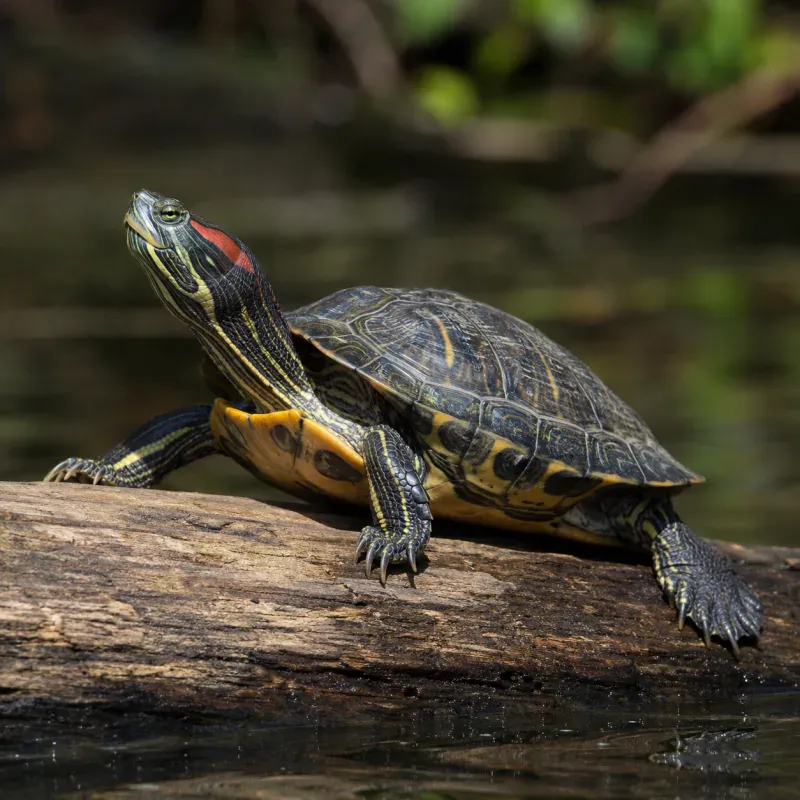
The red-eared slider (Trachemys scripta elegans) is one of the most popular pet turtles worldwide, but its dietary needs are often misunderstood. A balanced feeding regimen is critical to prevent metabolic bone disease, obesity, and shell deformities. This comprehensive guide covers everything from pellet selection to vegetable staples, protein sources, calcium supplementation, and feeding frequency by age. Whether you’re raising a juvenile or maintaining an adult, following these evidence-backed recommendations will keep your slider thriving for decades.
Species Quick Facts
| Attribute | Detail |
|---|---|
| Scientific Name | Trachemys scripta elegans |
| Lifespan | 20–30 years (captivity) |
| Adult Size | 10–12 inches (25–30 cm) shell length |
| Difficulty | Intermediate |
| Price Range (Initial Setup) | $300–600 |
| Read Time | 10 minutes |
1. The Foundation: High-Quality Commercial Pellets
Pellets should form the base of your red-eared slider’s diet, but not all pellets are equal. Look for brands with 30–40% protein for juveniles (under 6 months) and 25–30% for adults. The first three ingredients should be whole fish meal, shrimp meal, or soybean meal—avoid fillers like corn or wheat. Top choices include Mazuri Aquatic Turtle Diet, Zoo Med Natural Aquatic Turtle Food, and Hikari Turtle Sticks.
How to Choose the Right Pellet
- Check the protein content: Juveniles need 30–40% protein, adults 25–30%.
- Read the ingredient list: The first three ingredients should be whole fish meal, shrimp meal, or soybean meal. Avoid pellets with corn, wheat, or unspecified “animal by-products” as primary fillers.
- Consider pellet size: Small pellets for juveniles, larger sticks for adults to prevent choking.
- Rotate brands: Offer 2–3 different quality brands to ensure a broader nutrient profile.
Feeding Method for Pellets
Feed pellets in a separate container to keep the tank clean. Fill the container with tank water (so the turtle is accustomed to the temperature) and offer an amount equal to the size of your turtle’s head per feeding. For juveniles, feed once daily; for adults, every 2–3 days. Remove uneaten pellets after 15–30 minutes to prevent water fouling.
Troubleshooting Pellet Refusal
- Soak pellets: If your turtle refuses dry pellets, soak them in tank water for 5 minutes to soften and release aroma.
- Mix with favorites: Toss pellets with a small piece of shrimp or bloodworm to entice picky eaters.
- Gradual transition: If switching brands, mix old and new pellets over 1–2 weeks.
2. Vegetable Staples: The Green Foundation
Vegetables should make up about 50% of an adult slider’s diet. Dark leafy greens are best: romaine lettuce, red leaf lettuce, collard greens, mustard greens, dandelion greens, and turnip greens. Avoid iceberg lettuce—it offers zero nutrition. Chop greens into bite-sized pieces and offer them in a floating feeding dish. Some turtles reject greens at first; persist by mixing with a favorite treat like a small piece of shrimp. Other acceptable veggies include shredded carrots, zucchini slices, and bell pepper strips. Feed vegetables daily for adults; for juveniles, offer a small portion after pellets.
Best Vegetables for Red-Eared Sliders
| Vegetable | Nutritional Benefit | Preparation |
|---|---|---|
| Romaine lettuce | High in vitamin A, low oxalates | Chopped into bite-sized pieces |
| Red leaf lettuce | Rich in fiber and vitamins | Chopped or shredded |
| Collard greens | Excellent calcium source | Steamed briefly to soften |
| Mustard greens | High in vitamin K and calcium | Chopped |
| Dandelion greens | High in calcium and antioxidants | Washed and chopped |
| Turnip greens | Good calcium-to-phosphorus ratio | Chopped |
| Shredded carrots | Beta-carotene (vitamin A) | Shredded or thinly sliced |
| Zucchini slices | Hydration and fiber | Sliced thin |
| Bell pepper strips | Vitamin C | Thin strips |
How to Introduce Vegetables
If your turtle refuses greens, try the “shrimp trick”: chop a small piece of shrimp and mix it with the greens. Gradually reduce the shrimp amount over 2–3 weeks until the turtle eats greens alone. You can also try floating the greens in a feeding dish; some turtles prefer to eat from the water surface.
Vegetables to Avoid (or Limit)
- Iceberg lettuce – no nutritional value (as noted).
- Spinach and kale (in excess) – oxalates bind calcium, so offer occasionally, not daily.
- Fruit – high sugar; offer only as an occasional treat (e.g., a small strawberry slice once a month).
3. Protein Sources & Feeding Schedule by Age
Juveniles (Under 6 Months)
Juveniles are primarily carnivorous. Offer 50% pellets and 50% protein daily. Protein options: earthworms, bloodworms (live or frozen), small feeder fish (guppies, minnows), and chopped cooked shrimp. Feed once daily, offering as much as they can consume in 15 minutes. Remove uneaten food after 15 minutes.
Subadults (6 Months to 2 Years)
Transition to 70% vegetables, 20% pellets, and 10% protein. Feed protein 2–3 times per week. Good choices: mealworms, crickets (gut-loaded), and small pieces of cooked chicken or lean beef (no seasoning). Feed vegetables daily, pellets every other day.
Adults (Over 2 Years)
Adults are omnivorous with a strong plant bias. Aim for 80% vegetables, 15% pellets, and 5% protein. Protein once per week is sufficient. Offer vegetables daily, pellets every 2–3 days. Always remove uneaten food after 30 minutes to prevent water fouling.
Protein Source Comparison Table
| Protein Source | Frequency | Notes |
|---|---|---|
| Earthworms | Juveniles daily, adults weekly | High in protein; gut-load before feeding |
| Bloodworms (frozen) | Juveniles daily, adults weekly | Rich in iron; thaw before feeding |
| Feeder fish (guppies, minnows) | Occasional (not as staple) | Risk of parasites; avoid goldfish (thiaminase) |
| Cooked shrimp (chopped) | Juveniles daily, adults weekly | Good treat; remove shells |
| Mealworms | Subadults 2–3x/week | High fat; limit to avoid obesity |
| Crickets (gut-loaded) | Subadults 2–3x/week | Gut-load with calcium-rich feed |
| Cooked chicken/lean beef | Subadults 2–3x/week | No seasoning; chop into small pieces |
Step-by-Step Feeding Schedule Example
For an adult slider (over 2 years):
- Monday: Vegetables (e.g., romaine + carrots) in a floating dish.
- Tuesday: Pellets (head-sized portion) in a separate container.
- Wednesday: Vegetables (e.g., collard greens + zucchini).
- Thursday: Pellets (head-sized portion).
- Friday: Vegetables (e.g., dandelion greens + bell pepper).
- Saturday: Protein (e.g., one earthworm or a few bloodworms) + vegetables.
- Sunday: Skip feeding (fasting day).
4. Calcium & Vitamin D3 Supplementation
Red-eared sliders require calcium for healthy shell and bone growth. Dust pellets or vegetables with a calcium powder (without phosphorus) 2–3 times per week. A multivitamin supplement (containing D3) can be used once weekly. If your turtle has UVB lighting (essential for D3 synthesis), you can reduce D3 supplementation. Natural sources: cuttlebone (scrape into food) or a calcium block in the tank. Never use calcium with added phosphorus—it inhibits absorption. Signs of deficiency include soft shell, pyramiding, and lethargy.
Supplementation Schedule
| Supplement | Frequency | Application |
|---|---|---|
| Calcium powder (no phosphorus) | 2–3 times per week | Dust pellets or vegetables |
| Multivitamin (with D3) | Once weekly | Dust food; reduce if UVB is provided |
| Cuttlebone | Always available | Scrape into food or leave in tank |
| Calcium block | Always available | Place in tank for nibbling |
UVB Lighting and Calcium Metabolism
UVB lighting is essential for vitamin D3 synthesis, which enables calcium absorption. Even with supplements, UVB is critical. Provide a UVB bulb (5.0 or 10.0) over the basking area, and replace it every 6–12 months as output diminishes. If you use UVB, you can reduce D3 supplementation to avoid hypervitaminosis D.
Signs of Calcium Deficiency
- Soft or pliable shell
- Pyramiding (raised scutes)
- Lethargy
- Swollen jaw (in advanced cases)
5. Foods to Avoid: Toxic & Dangerous Items
- Iceberg lettuce – no nutritional value
- Spinach and kale (in excess) – oxalates bind calcium
- Avocado – toxic to turtles
- Rhubarb – contains oxalic acid
- Dairy products – turtles cannot digest lactose
- Processed human food – bread, chips, sweets
- Raw meat from grocery store – may contain bacteria and lacks taurine
- Goldfish (as regular feeder fish) – high in thiaminase, which destroys vitamin B1
Why These Foods Are Dangerous
Oxalates in spinach and kale bind calcium, preventing absorption and contributing to metabolic bone disease. Avocado contains persin, which is toxic to many reptiles. Dairy products cause digestive distress because turtles lack lactase. Raw meat from grocery stores may harbor Salmonella and other bacteria, and lacks taurine, an amino acid essential for turtles. Goldfish contain thiaminase, an enzyme that breaks down vitamin B1, leading to neurological issues if fed regularly.
6. Overfeeding Risks & Portion Control
Overfeeding is the most common mistake in red-eared slider care. Obesity leads to fatty liver disease, shell deformities, and reduced lifespan. Signs of overfeeding: rapid weight gain, fat bulging around legs, inability to retract fully into shell, and floating abnormally. Portion control: for juveniles, feed only what they can eat in 10–15 minutes. For adults, a portion the size of their head is sufficient. Skip one feeding day per week to mimic natural fasting periods. If your turtle is overweight, reduce protein and pellet portions by 25% and increase vegetable ratio.
How to Assess Body Condition
- Ideal: Turtle can retract fully into shell; no fat bulges around legs.
- Overweight: Fat bulges at the leg openings; shell appears tight.
- Underweight: Skin is loose; shell may appear prominent.
Steps to Correct Overfeeding
- Reduce pellet and protein portions by 25%.
- Increase vegetable proportion to 85% of the diet.
- Add an extra fasting day per week.
- Monitor weight monthly (use a kitchen scale).
7. Hydration & Water Quality
While sliders get most hydration from food, they also drink through their cloaca. Ensure fresh, dechlorinated water is always available. Water depth should be at least twice the turtle’s shell length. Use a powerful filter (rated for 2–3 times the tank volume) and change 25–50% water weekly. Poor water quality leads to shell rot and ear abscesses. Add a basking area (90–95°F) to allow drying and prevent fungal issues.
Water Quality Checklist
- Dechlorinate all tap water before adding to the tank.
- Water depth: At least 2x shell length for adults.
- Filter capacity: Rated for 2–3 times the tank volume (e.g., 2x for a 50-gallon tank).
- Water changes: 25–50% weekly, more often if feeding in the main tank.
- Temperature: 75–80°F (24–27°C) for digestion.
Feeding in a Separate Container
To minimize water fouling, feed pellets and protein in a separate container filled with tank water. This prevents uneaten food from decomposing and reduces the load on your filter. After feeding, return the turtle to the main tank. This also allows you to monitor exactly how much your turtle eats.
8. Common Health Issues Related to Diet
| Issue | Cause | Symptom | Solution |
|---|---|---|---|
| Metabolic Bone Disease | Calcium deficiency + lack of UVB | Soft shell, jaw swelling | Add UVB light, calcium supplement |
| Shell Rot | Poor water quality, overfeeding | Pitted, mushy shell areas | Improve filtration, dry dock, vet care |
| Obesity | Overfeeding, too much protein | Fat pads, inability to retract | Reduce portions, increase veggies |
| Vitamin A Deficiency | Lack of dark leafy greens | Swollen eyes, respiratory issues | Add carrots, collard greens, supplement |
Preventive Measures
- Provide UVB lighting and replace bulbs every 6–12 months.
- Maintain water temperature at 75–80°F.
- Offer dark leafy greens daily to prevent vitamin A deficiency.
- Monitor weight and body condition monthly.
9. Common Mistakes to Avoid
- Feeding only pellets – leads to nutritional imbalance
- Over-reliance on feeder fish – risk of parasites and thiaminase
- Skipping UVB lighting – even with supplements, UVB is essential for calcium metabolism
- Feeding in main tank – pollutes water; use a separate container
- Ignoring water temperature – turtles need 75–80°F water to digest properly
- Offering too much fruit – high sugar causes diarrhea and obesity
Additional Mistakes
- Feeding raw meat – risk of bacterial infection and nutritional deficiencies.
- Using calcium with phosphorus – inhibits absorption.
- Not adjusting diet as turtle ages – juveniles need more protein, adults more vegetables.
Conclusion
A well-fed red-eared slider is a healthy, active companion for decades. Prioritize variety: quality pellets, daily greens, and occasional protein. Supplement calcium and provide UVB lighting without fail. Avoid overfeeding and toxic foods. With this guide, you’ll avoid common pitfalls and give your slider the best possible nutrition. For more species-specific advice, consult a reptile veterinarian or reputable herpetological society.
Frequently Asked Questions
How often should I feed my red-eared slider?
Juveniles (under 6 months) should be fed once daily with a mix of pellets and protein, offering as much as they can consume in 15 minutes. Subadults (6 months to 2 years) should receive vegetables daily, pellets every other day, and protein 2–3 times per week. Adults (over 2 years) should get vegetables daily, pellets every 2–3 days, and protein once per week. Always remove uneaten food after 30 minutes to prevent water fouling.
What vegetables are safe for red-eared sliders?
Safe vegetables include dark leafy greens such as romaine lettuce, red leaf lettuce, collard greens, mustard greens, dandelion greens, and turnip greens. Other acceptable options are shredded carrots, zucchini slices, and bell pepper strips. Avoid iceberg lettuce, which has no nutritional value, and limit spinach and kale due to oxalates that bind calcium.
Can red-eared sliders eat goldfish?
Goldfish should not be used as a regular feeder fish because they contain thiaminase, an enzyme that destroys vitamin B1, leading to neurological issues. If you use feeder fish, opt for guppies or minnows, and only offer them occasionally. Always source feeder fish from reputable suppliers to minimize parasite risk.
Do red-eared sliders need calcium supplements?
Yes, calcium supplementation is essential. Dust pellets or vegetables with a calcium powder (without phosphorus) 2–3 times per week. A multivitamin with D3 can be used once weekly, but if you provide UVB lighting, you can reduce D3 supplementation. Natural sources like cuttlebone or a calcium block in the tank are also beneficial. Never use calcium with added phosphorus, as it inhibits absorption.
Related Reading
- Red-Eared Slider Care Guide
- Red-Eared Slider Health Guide
- Red-Eared Slider Tank Setup
- Feeding Calculator
Check optimal temps, calculate feeding, and find your perfect species match.
References
- Mader, D. R. (2006). Reptile Medicine and Surgery. Saunders Elsevier.
- Highfield, A. C. (2011). Practical Encyclopedia of Keeping and Breeding Tortoises and Freshwater Turtles. Carapace Press.
- Boylan, S. (2014). Red-Eared Slider Care: The Complete Guide. CreateSpace.
🐾 Join the Community
See how other keepers set up their enclosures, ask questions, and share your experience.
🛠️ Apply What You Learned
Check optimal temps, calculate feeding schedules, and get calcium dosage — all personalized for your species.
Comments