Milk Snake Handling: Taming Tips & Temperament
Introduction
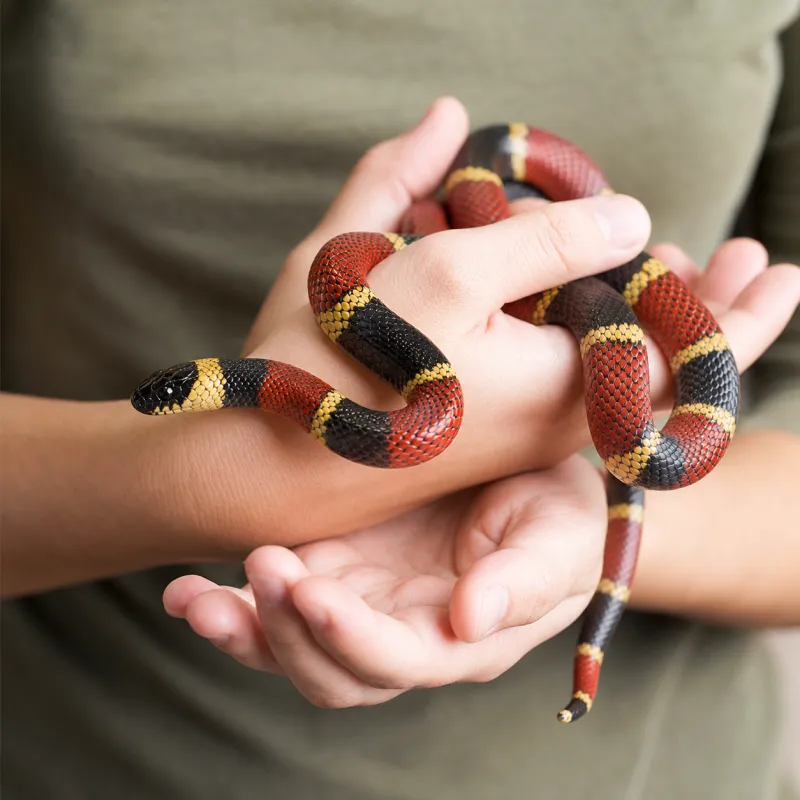
Milk snakes (Lampropeltis triangulum) are among the most popular pet snakes for beginners and experienced keepers alike. Their vibrant patterns, manageable size, and generally docile nature make them excellent companions. However, like all reptiles, they require proper handling techniques to ensure they remain calm and trusting. This guide provides evidence-based advice on taming your milk snake, understanding its temperament, and developing a positive handling routine.
Milk snakes are naturally curious but can be defensive when young. With patience and consistent, gentle handling, most milk snakes become relaxed and even enjoy being held. This guide covers everything from the first days at home to long-term bonding, including how to read your snake's body language and avoid common mistakes.
Understanding Milk Snake Temperament
Milk snakes are not venomous and rarely bite, but they may musk (release a foul-smelling secretion) when frightened. Their temperament varies by individual and age. Hatchlings are often more nervous and may rattle their tails or strike defensively, but these behaviors usually subside with regular, gentle handling.
Natural Defensive Behaviors
- Tail rattling: Mimics rattlesnakes; a warning sign, not aggression.
- Musking: Emitting a smelly odor from the cloaca; a stress response.
- Striking: Usually a bluff; milk snakes rarely bite unless severely threatened.
- Flattening: Pressing the body to appear larger.
Understanding these behaviors helps you respond appropriately. Never punish your snake for defensive actions; instead, give it space and try again later.
Preparation Before Handling
Before you pick up your milk snake, ensure you have the right environment and mindset. A calm, prepared handler reduces stress for both you and the snake.
Essential Supplies
- Snake hook (optional, for nervous snakes)
- Clean, dry hands (no scent of prey)
- Quiet, distraction-free room
- Soft cloth or towel for support
When to Handle
Do not handle your milk snake for at least 48 hours after bringing it home to allow it to acclimate. Avoid handling for 24–48 hours after feeding to prevent regurgitation. Also, skip handling during shedding (when eyes are clouded) and after a stressful event (e.g., vet visit).
First Handling Sessions
The first few interactions set the tone for your relationship. Start slow and short.
Step-by-Step First Encounter
- Approach calmly: Open the enclosure slowly; avoid sudden movements.
- Let the snake see you: Place your hand inside but do not reach for it; let it become aware of your presence.
- Gentle lift: Using a hook or your hand, scoop the snake from the middle of its body, supporting its weight.
- Keep it low: Hold it over a soft surface (bed, carpet) to prevent injury if it falls.
- Short duration: Limit the session to 5–10 minutes for the first week.
- Return calmly: Place it back in its enclosure without sudden drops.
If the snake is extremely defensive, use a snake hook to gently lift it and place it into a separate handling tub. This avoids associating your hand with fear.
Reading Body Language
Milk snakes communicate through posture and movement. Learn to recognize signs of stress versus relaxation.
| Behavior | Meaning | Action |
|---|---|---|
| Slow, smooth tongue flicks | Curious, exploring | Continue handling |
| Rapid tongue flicks | Anxious or hungry | Check environment, end session if nervous |
| Tail rattling | Defensive, scared | Slow down, give space |
| Musking | Extreme stress | Return to enclosure immediately |
| Coiling tightly around your hand | Seeking security | Support the body, avoid gripping |
| Loose, flowing movement | Relaxed | Enjoy the session |
Always watch for these cues. If your snake shows signs of stress, end the session and try again later. Consistency builds trust.
Taming Techniques
Taming is a gradual process. The goal is to desensitize your snake to handling and associate you with safety, not fear.
Short, Frequent Sessions
Handle your milk snake for 5–10 minutes, 3–4 times per week. Regularity is more important than duration. After a few weeks, gradually increase to 15–20 minutes.
Use a Familiar Object
Place a piece of your clothing (e.g., an old T-shirt) in the enclosure for a few days. This allows the snake to become accustomed to your scent in a safe context. Do not leave it for too long, as it may harbor mites; replace it after 2–3 days.
Feeding Responsibly
Always feed your milk snake using tongs, never your bare hands. This prevents the snake from associating your hand with food. Feed in a separate container (if needed) to avoid substrate ingestion, but be consistent with the location to reduce stress.
Positive Reinforcement
While snakes do not respond to treats like mammals, you can reinforce calm behavior by ending sessions on a positive note (e.g., when the snake is relaxed). Avoid handling when the snake is defensive, as this may reinforce fear.
Common Handling Mistakes to Avoid
- Handling after feeding: Wait 48 hours to prevent regurgitation.
- Grabbing the head: Always support the body; never restrain the head.
- Too tight grip: Let the snake move through your hands; do not squeeze.
- Handling during shed: Eyes are blue and skin is sensitive; skip sessions.
- Sudden movements: Move slowly and deliberately.
- Handling when hungry: A hungry snake may mistake your hand for prey; feed first.
Building Long-Term Trust
Trust is built over months of consistent, positive interactions. Here are strategies to deepen your bond.
Consistency is Key
Stick to a regular handling schedule. Milk snakes thrive on routine; predictable handling reduces stress.
Let the Snake Explore
Once your snake is comfortable, allow it to explore your arms, shoulders, or a safe, supervised area. This mental stimulation is enriching. Always keep it away from other pets and small spaces where it could escape.
Observe and Adapt
Keep a journal of your snake's behavior. Note which times of day it is most active and calm. Some milk snakes are more relaxed in the evening; adapt your schedule accordingly.
Handling Around Children
If children will handle the snake, supervise closely. Teach them to sit still and let the snake move freely. Never allow a child to grab the snake or handle it without an adult.
Handling Special Situations
Bites and Musking
If your milk snake bites, remain calm. Milk snake bites are harmless (no venom) and rarely break the skin. Do not pull away forcefully; gently run cool water over the snake's head to release the bite. Wash the area with soap and water. Musk, though smelly, is harmless; wash your hands and the snake's enclosure if needed.
Handling a Nervous Hatchling
Hatchlings are often more defensive. Use a snake hook to transfer them to a small handling tub. Let them explore your hand inside the tub. Gradually increase direct contact as they calm down. This method reduces the chance of a fearful strike.
Handling During Brumation
Some keepers brumate (simulate winter cooling) milk snakes. During brumation, avoid handling entirely. After brumation, resume handling gradually, starting with short sessions.
Health and Safety Considerations
Handling is not just about bonding; it is also a health check. Use handling time to inspect your snake.
- Skin: Look for retained shed, lesions, or mites.
- Eyes: Should be clear (except during shed).
- Mouth: Check for redness or discharge (signs of mouth rot).
- Body condition: Feel for a firm, rounded body; no kinks or lumps.
- Vent: Should be clean and dry.
If you notice anything unusual, consult a reptile veterinarian. Early detection is vital.
Frequently Asked Questions
How often should I handle my milk snake?
Start with 3–4 times per week for 5–10 minutes. After a few weeks, you can increase to 15–20 minutes, but always watch for stress signs. Consistency is more important than length.
Why does my milk snake rattle its tail?
Tail rattling is a defensive behavior, mimicking rattlesnakes. It indicates fear or stress. Give your snake space, move slowly, and try again later. With regular gentle handling, this behavior usually diminishes.
What should I do if my milk snake bites me?
Stay calm. Milk snake bites are harmless and rarely break the skin. Gently run cool water over the snake's head to release its jaws. Wash the area with soap and water. Do not pull away forcefully, as this can injure the snake.
Can I handle my milk snake after it eats?
Wait at least 48 hours after feeding before handling. Handling too soon can cause regurgitation, which is stressful and harmful to the snake. Also, avoid handling during shedding.
Related Reading
- Milk Snake Care Guide: Complete Husbandry for Lampropeltis — Covers overall husbandry to complement handling and taming routines.
- Milk Snake Enclosure: Tank, Heating & Humidity — Learn how proper enclosure setup reduces stress and improves temperament.
- Milk Snake Diet & Feeding Guide: Schedule & Mouse Sizes — Understand feeding schedules that keep your milk snake calm and healthy.
- Milk Snake Morphs: Pueblan & Honduran Varieties — Explore different morphs and their typical temperaments for better handling.
- Corn Snake Feeding Guide: Schedule, Mouse Sizes & Tips — Compare feeding tips from a similar colubrid to refine your handling routine.
Check optimal temps, calculate feeding, and find your perfect species match.
References
- Bartlett, R. D., & Bartlett, P. (2006). Milk Snakes. Barron's Educational Series.
- De Vosjoli, P. (2004). The Herpetoculture of the Milk Snake. Advanced Vivarium Systems.
- Rossi, J. V. (2013). The Reptile Health and Care Handbook. CRC Press.
🐾 Join the Community
See how other keepers set up their enclosures, ask questions, and share your experience.
🛠️ Apply What You Learned
Check optimal temps, calculate feeding schedules, and get calcium dosage — all personalized for your species.
Comments
No account needed — corrections, updates and questions are all welcome. For a full question with photos, the community Q&A is the better place.