Milk Snake Feeding Guide: Schedule & Prey Sizes
Introduction
Milk snakes (Lampropeltis triangulum) are among the most popular pet snakes due to their manageable size, docile temperament, and striking coloration. A proper diet is essential for their health, growth, and longevity. This guide covers every aspect of feeding your milk snake, from choosing the right prey size to establishing a feeding schedule and supplement routine. Whether you’re a new keeper or an experienced herpetoculturist, these evidence-backed practices will help your snake thrive.
Enclosure Setup for Feeding Success
A well-designed enclosure reduces stress and promotes natural feeding behavior. For a juvenile milk snake, a 20-gallon long tank (30×12×12 inches) is sufficient; adults need at least a 40-gallon breeder (36×18×16 inches). Provide multiple hides (one on the warm side, one on the cool side) and a humid hide to aid shedding. Use a substrate like aspen shavings, cypress mulch, or reptile-safe paper towels. Avoid cedar or pine, which can cause respiratory issues.
Feeding Inside the Enclosure vs. Separate Container
Feeding should always occur inside the enclosure to minimize handling stress. However, if your snake associates opening the lid with food, consider using a separate feeding container (e.g., a plastic tub with air holes) to avoid accidental bites. Always wait 24–48 hours after feeding before handling to prevent regurgitation.
Step-by-Step: Setting Up a Feeding-Friendly Enclosure
- Place a hide on the warm side and another on the cool side. Add a humid hide (plastic container with damp sphagnum moss) in the middle.
- Use a substrate that allows burrowing (aspen or cypress) or paper towels for easy cleanup.
- Install a water bowl large enough for soaking, positioned away from heat sources.
- Add a digital thermometer and hygrometer to monitor both zones.
- If using a separate feeding container, prepare it ahead of time with air holes and a paper towel bottom.
Heating and Lighting

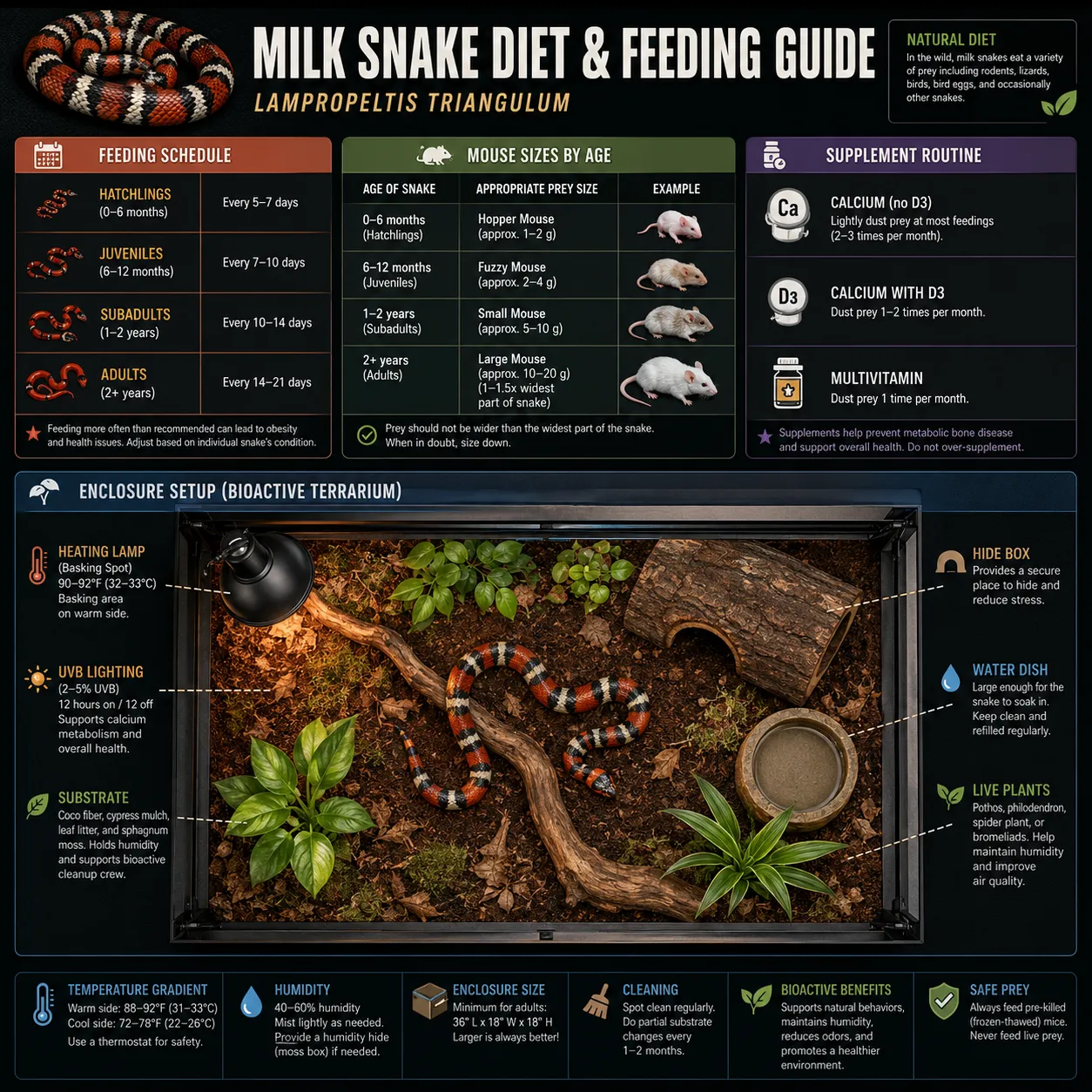
Milk snakes are ectothermic and require a thermal gradient to digest food properly. Maintain a warm side of 85–88°F (29–31°C) and a cool side of 70–75°F (21–24°C). Use an under-tank heater (UTH) or ceramic heat emitter controlled by a thermostat. Never use heat rocks, as they can cause burns.
Choosing the Right Heat Source
- Under-tank heater (UTH): Best for belly heat, which aids digestion. Place under one side of the tank.
- Ceramic heat emitter (CHE): Provides ambient heat without light; good for nighttime.
- Thermostat: Always use a thermostat to prevent overheating. Set it to the warm-side target.
Lighting: Do Milk Snakes Need UVB?
Lighting: Milk snakes are crepuscular, so UVB lighting is not strictly necessary but can be beneficial for vitamin D synthesis. If you provide UVB, use a low-output bulb (5–6% UVB) on a 12-hour cycle. Always provide a photoperiod (day/night cycle) to regulate circadian rhythms.
Humidity and Hydration
Milk snakes need moderate humidity (40–60%) with a boost to 70% during shedding. Use a hygrometer to monitor levels. Mist the enclosure lightly as needed, or provide a humid hide (a plastic container with damp sphagnum moss). Always provide a fresh, clean water bowl large enough for the snake to soak in. Change water daily.
How to Manage Humidity for Shedding
- Check the hygrometer daily; if humidity drops below 40%, mist the substrate lightly.
- When your snake enters blue phase (eyes cloudy), increase humidity to 70% by adding a humid hide or misting more frequently.
- After shedding, remove any retained shed by gently soaking the snake in lukewarm water (never hot).
Diet and Feeding: Prey Selection and Schedule
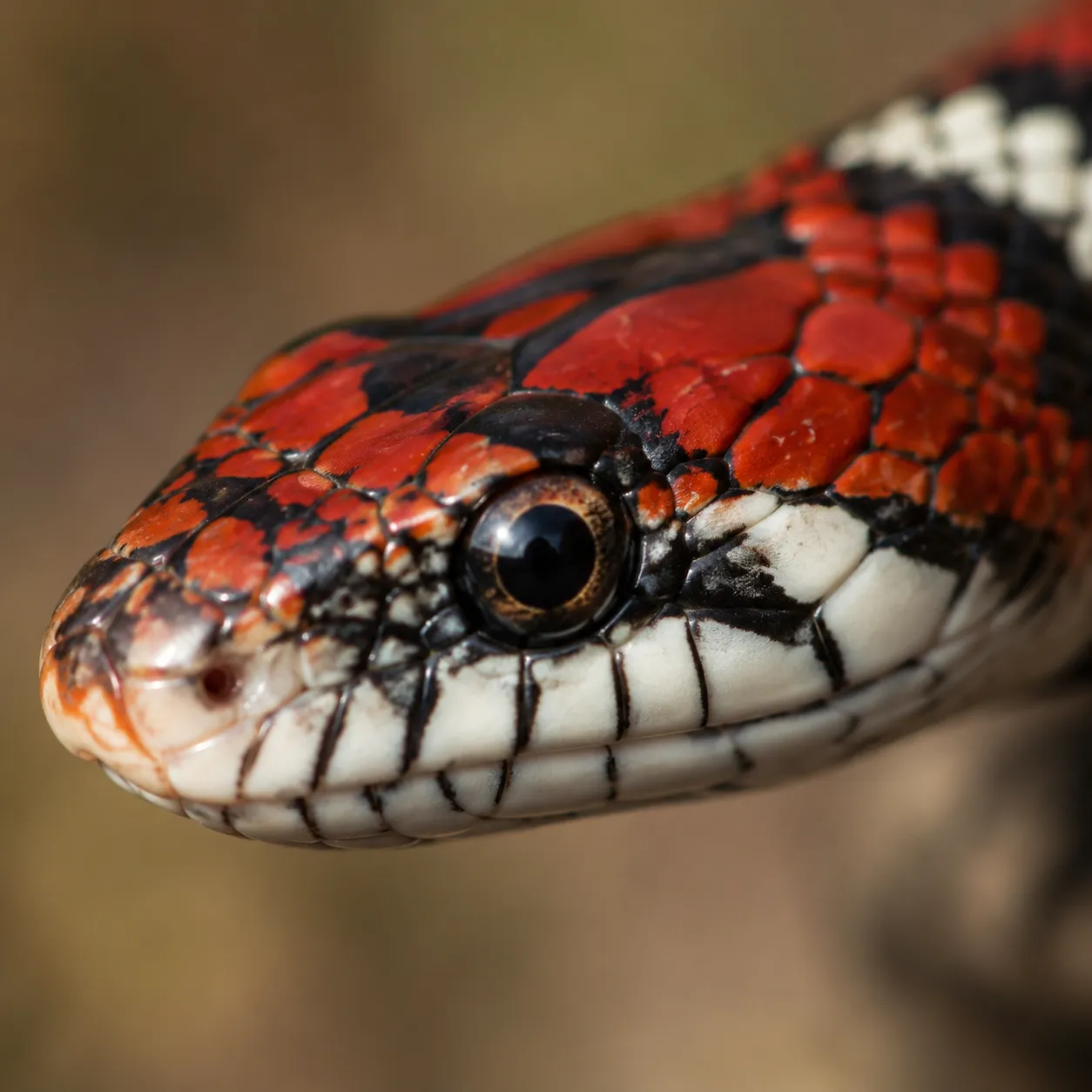
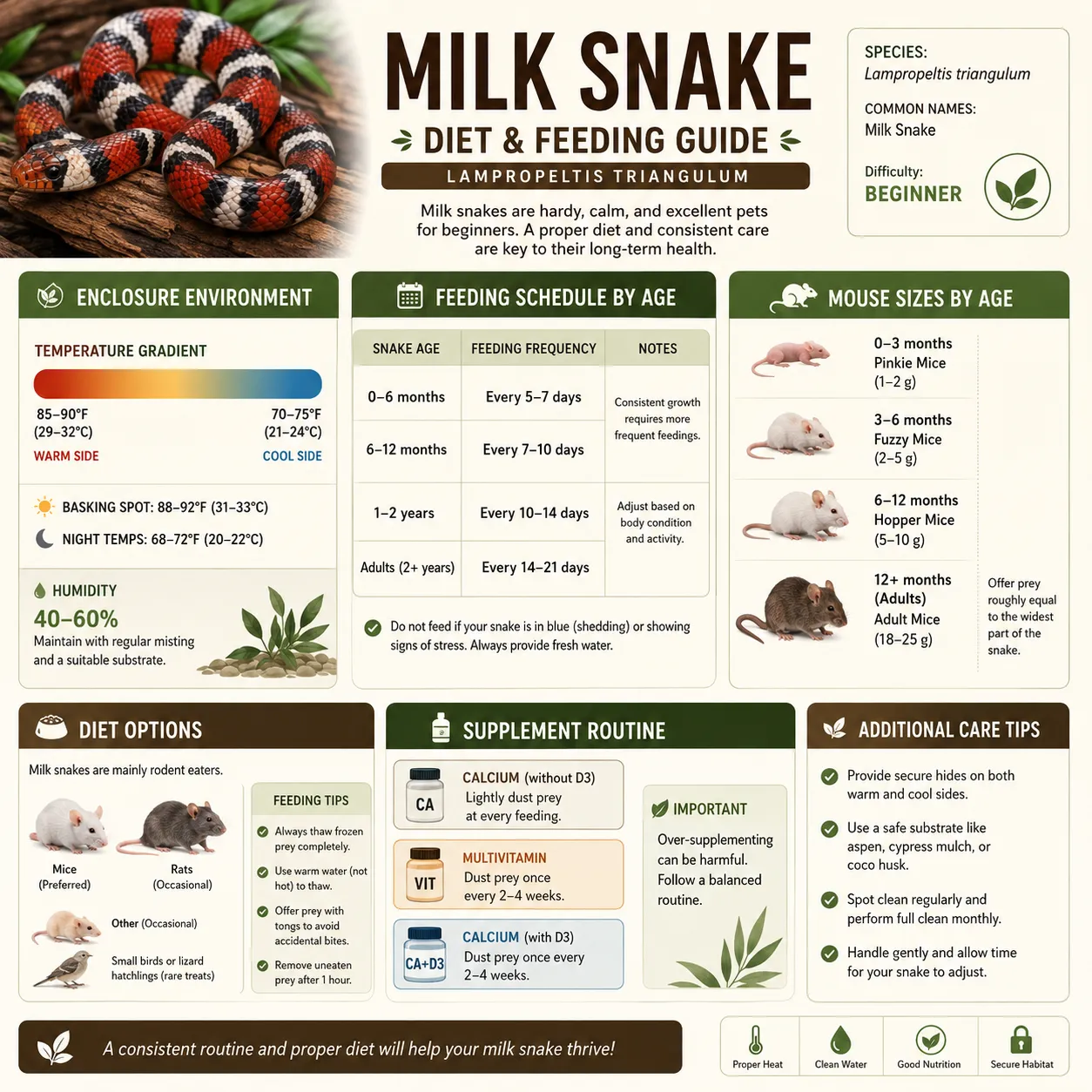
Milk snakes are obligate carnivores; in captivity, they thrive on a diet of appropriately sized rodents. Never feed live prey unless absolutely necessary (e.g., for picky eaters) due to risk of injury to the snake. Frozen-thawed rodents are safe, convenient, and humane.
Mouse Sizes by Age
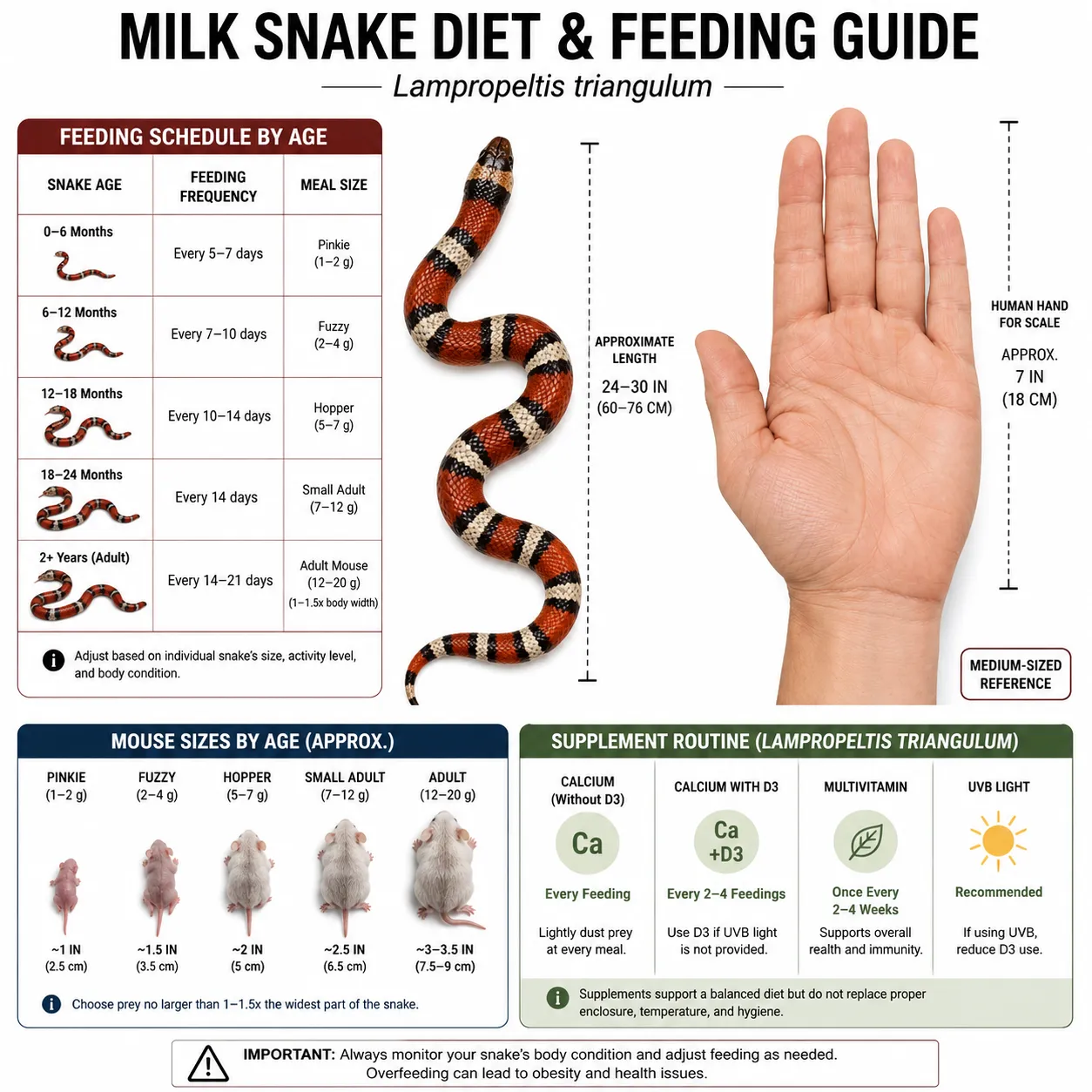
Prey size should be roughly 1–1.5 times the width of the snake’s thickest body part. Use this guide:
| Snake Age/Weight | Prey Type | Prey Size | Feeding Frequency |
|---|---|---|---|
| Hatchling (0–3 months, 10–20g) | Pinkie mice | 1–2g each | Every 5–7 days |
| Juvenile (3–12 months, 20–100g) | Fuzzy mice | 3–5g each | Every 7–10 days |
| Subadult (12–24 months, 100–200g) | Hopper mice | 7–12g each | Every 10–14 days |
| Adult (24+ months, 200–500g) | Adult mice or small rats | 15–25g each | Every 14–21 days |
How to Determine the Right Prey Size
Use the “1 to 1.5 times” rule: the prey’s widest point should be no wider than 1.5 times the snake’s thickest body section. If you’re unsure, weigh your snake and compare with the chart above. A digital kitchen scale is essential for accurate monitoring.
Step-by-Step: Thawing and Offering Frozen-Thawed Prey
- Remove the frozen rodent from the freezer and place it in a sealed plastic bag.
- Thaw in the refrigerator overnight or in a bowl of warm (not hot) water for 30–60 minutes.
- Warm the prey to about 100°F (38°C) using warm water or a hair dryer (never microwave).
- Use tongs to offer the prey, wiggling it gently to mimic live movement.
- If your snake doesn’t strike within 30 seconds, leave the prey in the enclosure overnight (only if you can monitor). Otherwise, discard and try again in a few days.
Transitioning from Live to Frozen-Thawed
Some snakes refuse frozen-thawed prey at first. To transition:
- Offer freshly killed prey first, then gradually switch to frozen-thawed.
- Scent the thawed prey with a live mouse’s bedding or a drop of tuna water (rinse first).
- Be patient; it may take several attempts over 2–3 weeks.
Supplement Routine
Milk snakes generally obtain necessary nutrients from whole prey. However, supplementation can prevent deficiencies, especially in growing juveniles or breeding females.
- Calcium with D3: Dust prey once every 2–3 feedings for juveniles, once a month for adults.
- Multivitamin: Dust prey once a month for all ages.
- How to dust: Place the thawed mouse in a plastic bag with a pinch of supplement, shake gently, then offer immediately.
Important: Over-supplementation can cause health issues. Stick to the schedule and consult a reptile veterinarian if unsure.
Feeding Schedule by Life Stage
Consistency is key. Milk snakes thrive on a regular schedule that mimics their natural feeding patterns.
Hatchlings (0–3 months)
Feed a 1–2g pinkie every 5–7 days. Hatchlings have fast metabolisms and need frequent small meals. Monitor weight gain weekly.
Juveniles (3–12 months)
Feed a 3–5g fuzzy every 7–10 days. As they grow, increase prey size gradually. Weigh monthly to adjust.
Subadults (12–24 months)
Feed a 7–12g hopper every 10–14 days. This is a growth spurt phase; ensure prey is appropriately sized.
Adults (24+ months)
Feed a 15–25g adult mouse or small rat every 14–21 days. Adults can go longer between meals; avoid overfeeding.
Adjusting for Individual Needs
Some snakes may need more or less frequent feeding based on body condition. Use this body condition score:
| Score | Description | Action |
|---|---|---|
| 1 (Underweight) | Visible spine and ribs; concave sides | Increase prey size or frequency |
| 3 (Ideal) | Smooth, rounded body; spine not visible | Maintain current schedule |
| 5 (Overweight) | Rounded body with fat rolls; spine buried | Decrease prey size or frequency |
Handling and Feeding Behavior
Milk snakes are generally docile but may musk (release a foul-smelling liquid) or vibrate their tails when stressed. Wait until your snake has eaten and digested (48 hours) before handling. Support the body fully and avoid sudden movements. Young snakes may be nippy but outgrow this with regular, gentle handling. Never handle during shedding or after a large meal.
Understanding Feeding Responses
- Striking: Normal feeding response; use tongs to avoid accidental bites.
- Tail vibration: A defensive behavior; give the snake space.
- Musk: A stress response; handle gently and frequently to reduce it.
- Refusal to eat: Common during shedding, breeding season, or stress. Wait 5–7 days before offering again.
Common Health Issues Related to Diet
- Regurgitation: Usually caused by handling too soon after feeding, improper temperatures, or oversized prey. Wait 2 weeks before offering food again.
- Obesity: Overfeeding or high-fat prey (e.g., rats for small snakes). Stick to the schedule and prey sizes above.
- Metabolic Bone Disease (MBD): Rare in milk snakes but possible with poor calcium-to-phosphorus ratios. Ensure whole prey and occasional supplementation.
- Parasites: Live prey can carry mites or worms. Use frozen-thawed rodents from reputable sources.
How to Handle Regurgitation
- Remove any remaining prey and clean the enclosure thoroughly.
- Check temperatures; ensure warm side is 85–88°F.
- Wait a full 14 days before offering food again.
- Offer a smaller prey item than usual.
- If regurgitation recurs, consult a veterinarian.
Milk Snake Feeding Pitfalls
- Feeding live prey – Avoid unless absolutely necessary; frozen-thawed is safer.
- Handling after feeding – Wait 48 hours to prevent regurgitation.
- Incorrect prey size – Too large can cause choking or regurgitation; too small leads to malnutrition.
- Inconsistent schedule – Regular feeding promotes healthy growth and reduces stress.
- Ignoring temperature gradient – Without proper heat, digestion slows or stops.
- Skipping quarantine for new snakes – Always isolate and observe feeding for 30 days.
Cost Breakdown: Feeding a Milk Snake for a Year
Understanding the financial commitment helps you plan for consistent, quality nutrition. Costs vary by region and supplier, but here’s a realistic estimate based on typical retail prices.
| Life Stage | Prey & Quantity (per year) | Estimated Annual Cost |
|---|---|---|
| Hatchling (0–3 months) | ~18–24 pinkies | $10–$15 |
| Juvenile (3–12 months) | ~36–52 fuzzies | $25–$40 |
| Subadult (12–24 months) | ~26–36 hoppers | $30–$50 |
| Adult (24+ months) | ~18–26 adult mice or small rats | $40–$70 |
Tips to save money: Buy frozen rodents in bulk from reputable online suppliers, and use a digital scale to avoid waste. Never thaw more than you need, as refreezing can compromise quality.
Seasonal Feeding Adjustments
Milk snakes in captivity may experience slight seasonal appetite changes, especially if they are not bred. Here’s how to adjust feeding throughout the year.
Spring and Summer
During warmer months, metabolism is higher. Maintain the regular feeding schedule. If your snake is more active, you may offer slightly larger prey or feed at the shorter end of the frequency range (e.g., every 14 days for adults).
Fall and Winter
Some milk snakes naturally reduce food intake in cooler months, even if temperatures are kept stable. If your snake refuses food for 2–3 weeks, don’t panic. Check that temperatures haven’t dropped. You can offer smaller meals less frequently (e.g., every 21 days for adults). Never force-feed a healthy snake that is simply fasting.
Important: If you intentionally cool your snake for breeding, do not feed during the cooling period. Always consult a breeding guide for proper protocols.
Comparison Table: Milk Snake vs. Other Common Pet Snakes
| Feature | Milk Snake | Corn Snake | Ball Python |
|---|---|---|---|
| Adult Size | 24–60 inches | 24–72 inches | 36–60 inches |
| Feeding Frequency (Adult) | Every 14–21 days | Every 10–14 days | Every 14–21 days |
| Prey Preference | Mice, occasional small rats | Mice, rats | Rats |
| Temperature Gradient | 85–88°F warm, 70–75°F cool | 85–90°F warm, 70–75°F cool | 88–92°F warm, 75–80°F cool |
| Difficulty Level | Beginner | Beginner | Intermediate |
Troubleshooting Feeding Problems
Snake Refuses to Eat
- Check temperatures; if too cold, digestion slows and appetite decreases.
- Ensure prey is warm (around 100°F) when offered.
- Reduce handling stress; some snakes need privacy.
- If in shed, wait until after shedding.
- For persistent refusal, try a different prey type (e.g., rat pinkie for mice-only snakes).
Snake Regurgitates After Eating
- Wait 2 weeks before offering food again.
- Offer a smaller prey item.
- Ensure warm side is at 85–88°F and cool side at 70–75°F.
- If it happens again, consult a vet for possible parasites or illness.
Snake Bites While Feeding
- Use tongs to avoid hand contact.
- If bitten, stay calm; milk snakes are non-venomous. Gently pry the jaws open.
- Wash the bite area with soap and water.
Conclusion
A balanced diet, correct prey sizes, and a consistent feeding schedule are the cornerstones of milk snake health. By following this guide, you’ll ensure your Lampropeltis triangulum grows strong, sheds properly, and lives a long, healthy life (15–20 years in captivity). Always source prey from reputable suppliers, monitor your snake’s body condition, and consult a reptile veterinarian for any concerns.
Frequently Asked Questions
How often should I feed my milk snake?
Hatchlings (0–3 months) eat pinkies every 5–7 days; juveniles (3–12 months) eat fuzzies every 7–10 days; subadults (12–24 months) eat hoppers every 10–14 days; adults eat an adult mouse or small rat (15–25 g) every 14–21 days. Adjust based on body condition and activity level.
What size mouse should I feed a milk snake?
Pick prey roughly the width of the snake's thickest point. Follow the age/weight chart in this guide: pinkies 1–2 g for hatchlings, fuzzies 3–5 g for juveniles, hoppers 7–12 g for subadults, and 15–25 g prey for adults. Use a digital scale to weigh your snake and prey for accuracy.
Do milk snakes need supplements?
Whole prey is nutritionally complete, so most milk snakes need no extra supplements. If you are raising problem feeders, follow the supplement routine described in this guide — don't guess at dosages. Over-supplementation can cause health issues.
Can I feed my milk snake live mice?
It is strongly discouraged. Live prey can injure your snake, and frozen-thawed rodents are safer, more humane, and just as nutritious. If your snake refuses frozen-thawed, try scenting or transitioning gradually, but always supervise any live feeding.
How much does it cost to feed a milk snake for a year?
Based on typical retail prices, expect to spend roughly $10–$15 for a hatchling, $25–$40 for a juvenile, $30–$50 for a subadult, and $40–$70 for an adult annually. Buying frozen rodents in bulk from reputable suppliers can reduce costs.
Should I adjust feeding during winter?
Some milk snakes naturally eat less in cooler months. If your snake refuses food for 2–3 weeks, check that temperatures are stable and offer smaller meals less frequently (e.g., every 21 days for adults). Never force-feed a healthy fasting snake.
What should I do if my milk snake regurgitates?
Remove any remaining prey, clean the enclosure, check that the warm side is 85–88°F, and wait a full 14 days before offering a smaller prey item. If regurgitation recurs, consult a veterinarian.
Related Reading
- Milk Snake Feeding: Schedule & Prey Size Chart — Get a quick-reference feeding schedule and prey size chart for milk snakes.
- Milk Snake Care Guide: Complete Husbandry for Lampropeltis — Learn comprehensive husbandry essentials for keeping a healthy milk snake.
- Milk Snake Enclosure: Tank, Heating & Humidity — Discover proper tank setup, heating, and humidity levels for your milk snake.
- Corn Snake Feeding Guide: Schedule, Mouse Sizes & Tips — Compare corn snake feeding practices to refine your approach with similar colubrids.
- Milk Snake Morphs: Pueblan & Honduran Varieties — Explore popular milk snake morphs and how diet needs may vary by subspecies.
Check optimal temps, calculate feeding, and find your perfect species match.
References
- Bartlett, R. D., & Bartlett, P. (2006). Milk Snakes and Tricolored Kingsnakes. Barron's Educational Series.
- de Vosjoli, P. (2004). The Herpetoculture of the Milk Snake. Advanced Vivarium Systems.
- Rossi, J. V. (2006). General Husbandry and Management of Milk Snakes. In Reptile Medicine and Surgery (2nd ed.). Saunders.
🐾 Join the Community
See how other keepers set up their enclosures, ask questions, and share your experience.
🛠️ Apply What You Learned
Check optimal temps, calculate feeding schedules, and get calcium dosage — all personalized for your species.
Comments
No account needed — corrections, updates and questions are all welcome. For a full question with photos, the community Q&A is the better place.