Milk Snake Enclosure: Tank, Heating & Humidity
Enclosure Size and Type
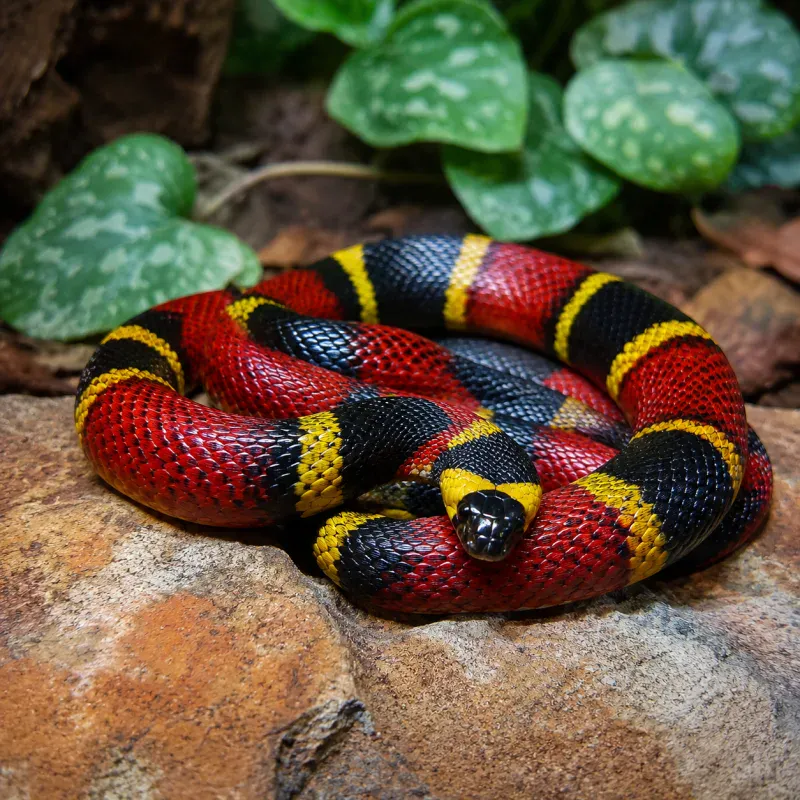
\\nMilk snakes are active, terrestrial colubrids that require a secure, appropriately sized enclosure. For hatchlings and juveniles (up to 18 inches), a 10-gallon (20x10x12 inches) tank works well. Adults (3–5 feet) need a minimum 20-gallon long (30x12x12 inches), but a 40-gallon breeder (36x18x16 inches) is ideal for larger specimens. A front-opening vivarium is easier for cleaning and handling, but a top-opening screen lid is acceptable if secured properly.
\n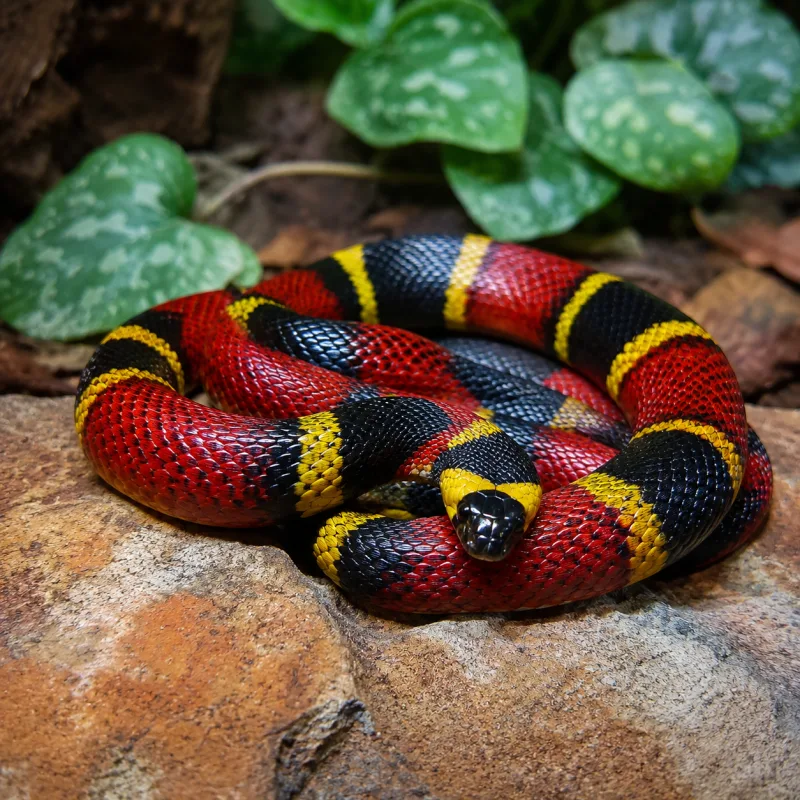
Choosing the Right Tank Size
\\nWhile the minimum sizes above are a starting point, always consider your snake's length and activity level. A general rule is that the enclosure length should be at least two-thirds of the snake's total length. For a 4-foot adult, a 36-inch long tank (40-gallon breeder) is the minimum. Larger enclosures are always better, as they allow for a more natural thermal gradient and more enrichment.
\\n\\nTank Types: Front-Opening vs. Top-Opening
\\nFront-opening vivariums (often made of PVC or glass) are recommended for adult milk snakes because they provide easy access for cleaning and handling, and they typically have locking doors that prevent escapes. Top-opening screen lids are more affordable and work well for juveniles, but they require additional clips or weights to secure. Remember, milk snakes are known escape artists—if the lid can be lifted, they will find a way out.
\\n\\nHeating and Lighting
\\nMilk snakes are ectothermic and require a thermal gradient. Use an under-tank heater (UTH) or a ceramic heat emitter (CHE) regulated by a thermostat. The warm side should be 85–90°F (29–32°C) at the basking spot, with a cool side of 70–75°F (21–24°C). Nighttime temps can drop to 65–70°F (18–21°C). A 12-hour light cycle is sufficient; UVB is not essential but can benefit overall health. Always use a thermostat to prevent burns.
\\n\\nSetting Up the Thermal Gradient
\\nPlace the heat source at one end of the enclosure only, never in the middle. This creates a warm side and a cool side, allowing your snake to thermoregulate. Use a digital thermometer with a probe on each side to monitor temperatures daily. A temperature gun is also useful for spot-checking basking surfaces.
\\n\\nUnder-Tank Heaters vs. Ceramic Heat Emitters
\\nUnder-tank heaters (UTHs) are popular for milk snakes because they provide belly heat, which aids digestion. However, they must be connected to a thermostat and placed outside the enclosure (under the glass) to prevent burns. Ceramic heat emitters (CHEs) screw into a ceramic fixture and produce heat without light, making them ideal for nighttime use. They also need a thermostat. Avoid heat rocks—they can cause severe burns.
\\n\\nLighting: Do You Need UVB?
\\nMilk snakes are nocturnal and do not require UVB lighting to survive, but some keepers use a low-level UVB (5.0) to promote natural behaviors and vitamin D synthesis. If you choose to provide UVB, use a 12-hour photoperiod and ensure the snake can hide from it. A simple LED light on a timer is sufficient for a day/night cycle.
\\n\\nHumidity and Hide Boxes
\\nMaintain humidity at 40–60%. A hygrometer is essential. Provide a humid hide (a plastic container with damp sphagnum moss) to aid shedding. Place one hide on the warm side and one on the cool side. Milk snakes are secretive and need secure retreats to feel safe.
\\n\\nMeasuring and Adjusting Humidity
\\nPlace a digital hygrometer in the middle of the enclosure, away from water dishes and heat sources, to get an accurate reading. If humidity is too low (below 40%), mist the substrate lightly or add a larger water dish. If it's too high (above 60%), increase ventilation by partially opening the screen lid or using a dehumidifying substrate like aspen.
\\n\\nCreating the Perfect Humid Hide
\\nA humid hide is critical for healthy sheds. Use a small plastic container with a hole cut in the lid, filled with damp sphagnum moss. Keep the moss moist but not dripping. Place it on the warm side to increase evaporation and humidity inside. Replace the moss weekly to prevent mold.
\\n\\nSubstrate Options for Colubrids
\\nSafe substrates include aspen shavings, cypress mulch, coconut husk, or paper towels (for quarantine). Avoid cedar and pine, which release toxic oils. Aspen is excellent for burrowing and low humidity. For higher humidity, use cypress or coconut husk. Spot-clean daily and fully replace every 4–6 weeks.
\\n\\nSubstrate Depth and Maintenance
\\nProvide 2–3 inches of substrate to allow burrowing. Spot-clean daily by removing feces and urates. Replace the entire substrate every 4–6 weeks, or sooner if it becomes soiled or moldy. Always wash your hands after handling substrate to prevent bacterial contamination.
\\n\\nDecor and Climbing Branches
\\nMilk snakes are semi-arboreal and appreciate climbing opportunities. Add sturdy branches, cork bark, or reptile-safe vines. Provide multiple hides, fake plants, and a water dish large enough for soaking. Ensure all decor is stable and cannot collapse. Avoid sharp edges that could cause injury.
\\n\\nArranging Decor for Enrichment
\\nCreate a naturalistic layout with branches that span the enclosure height. Secure branches with silicone or sturdy clips to prevent falls. Use fake plants to provide cover and reduce stress. Place the water dish on the cool side to help maintain humidity. A shallow dish with a ramp (like a reptile water dish) is safer for soaking.
\\n\\nEscape-Proof Lid
\\nMilk snakes are notorious escape artists. Use a secure, locking screen lid with clips or a sliding glass lid. Weigh down the lid if using a top-opening tank. Check for gaps around tubing or wires. A front-opening enclosure with a lock is the safest option. Test the lid by gently pushing from the inside.
\\n\\nCommon Escape Points and Solutions
\\n- \\n
- Screen lid corners: Use heavy-duty clips or weights on all four corners. \\n
- Gaps around cables: Seal any openings for thermostat probes or heater cords with aquarium-safe silicone. \\n
- Sliding glass lids: Ensure the glass fits snugly in the tracks; add a small lock if possible. \\n
Diet and Feeding
\\nFeed pre-killed frozen-thawed rodents appropriate to the snake's size: pinky mice for hatchlings, fuzzies for juveniles, and adult mice or small rats for adults. Offer food every 5–7 days for young snakes, every 10–14 days for adults. Use tongs to avoid accidental bites. Provide fresh water daily.
\\n\\nFeeding Schedule and Prey Size
\\nChoose prey that is about 1.5 times the width of the snake's thickest body part. Hatchlings eat pinky mice every 5–7 days; juveniles (up to 2 feet) eat fuzzies or hoppers every 7 days; adults (3+ feet) eat adult mice or small rats every 10–14 days. Always feed frozen-thawed prey—live prey can bite and injure your snake.
\\n\\nFeeding Technique
\\nThaw frozen rodents in the refrigerator overnight or in a sealed bag in warm water for 30 minutes. Never microwave—it can create hot spots that burn the snake. Use long feeding tongs to offer the prey. Wiggle it slightly to simulate movement. After the snake strikes and constricts, let it swallow in peace. Do not handle for at least 48 hours after feeding.
\\n\\nHandling and Temperament
\\nMilk snakes can be nervous but tame with regular, gentle handling. Start with short sessions (5–10 minutes) after the snake has eaten and digested (wait 48 hours). Support the body fully. Avoid handling during shedding or after feeding. Watch for tail rattling and musking—signs of stress.
\\n\\nBuilding Trust
\\nBegin by placing your hand inside the enclosure for a few minutes each day so the snake becomes accustomed to your scent. Then gently scoop the snake from below, supporting the middle and rear of the body. Keep handling sessions brief and positive. Over time, your milk snake will become more confident.
\\n\\nSigns of Stress
\\nTail rattling (vibrating the tail rapidly), musking (releasing a foul-smelling secretion), and hissing are signs that your snake feels threatened. If you notice these, end the handling session and give the snake time to relax. Never grab a snake from above—this mimics a predator attack.
\\n\\nCommon Health Issues
\\nRespiratory infections: Caused by low temperatures or high humidity. Symptoms include wheezing, bubbles from the nose. Increase heat and consult a vet.
\\nMites: Tiny black or red dots on skin. Treat with reptile-safe mite spray and deep-clean the enclosure.
\\nDysecdysis (bad shed): Low humidity. Provide a humid hide and soak the snake in shallow warm water.
\\nMouth rot: Swollen mouth, pus. Requires vet care.
Preventive Care
\\nMaintain proper temperatures and humidity to prevent most health issues. Quarantine new snakes for 30–60 days to prevent disease spread. Perform regular visual checks for mites, stuck shed, and respiratory signs. Weigh your snake monthly to ensure it's maintaining a healthy weight.
\\n\\nCommon Mistakes to Avoid
\\n- \\n
- Overheating: Without a thermostat, UTHs can cause fatal burns. \\n
- Using pine or cedar substrate: Toxic to reptiles. \\n
- Insufficient hides: Causes chronic stress. \\n
- Poor lid security: Escape leads to injury or death. \\n
- Feeding live prey: Can injure the snake. \\n
- Handling too soon after feeding: Causes regurgitation. \\n
Substrate Comparison Table
\\n| Substrate | \\nHumidity Retention | \\nBurrowing | \\nSafety | \\nCost | \\n
|---|---|---|---|---|
| Aspen shavings | \\nLow | \\nExcellent | \\nSafe | \\nLow | \\n
| Cypress mulch | \\nHigh | \\nGood | \\nSafe | \\nMedium | \\n
| Coconut husk | \\nHigh | \\nGood | \\nSafe | \\nMedium | \\n
| Paper towels | \\nLow | \\nPoor | \\nSafe (quarantine) | \\nVery low | \\n
| Pine/cedar | \\nMedium | \\nGood | \\nToxic | \\nLow | \\n
Frequently Asked Questions
\\nWhat is the best substrate for a milk snake?
\\nAspen shavings are the best all-around substrate for milk snakes because they support burrowing and maintain low humidity, which is ideal for this species. For higher humidity needs, cypress mulch or coconut husk are safe alternatives. Avoid pine and cedar, which are toxic.
\\n\\nHow often should I clean the enclosure?
\\nSpot-clean daily by removing feces and urates. Fully replace the substrate every 4–6 weeks, or sooner if it becomes soiled or moldy. Also, clean the water dish daily and disinfect the entire enclosure monthly with a reptile-safe cleaner.
\\n\\nCan I use a heat rock for my milk snake?
\\nNo. Heat rocks can overheat and cause severe burns. Instead, use an under-tank heater (UTH) or ceramic heat emitter (CHE) regulated by a thermostat to provide a safe thermal gradient.
\\n\\nWhy is my milk snake not eating?
\\nCommon reasons include stress, incorrect temperatures, or an approaching shed. Check that the warm side is 85–90°F and the cool side is 70–75°F. Ensure there are enough hides. If your snake is in shed, wait until it finishes. If it refuses food for more than two weeks, consult a reptile veterinarian.
\\n\\nRelated Reading
\\n- \\n
- Milk Snake Care Guide: Complete Husbandry for Lampropeltis — Covers full husbandry basics, complementing your enclosure setup with daily care essentials. \\n
- Milk Snake Diet & Feeding Guide: Schedule & Mouse Sizes — Learn proper feeding schedules and prey sizes to keep your milk snake healthy. \\n
- Milk Snake Handling Guide: Taming and Temperament — Discover taming techniques and what to expect from your milk snake's temperament. \\n
- Milk Snake Morphs: Pueblan & Honduran Varieties — Explore milk snake morphs and how different varieties may influence enclosure needs. \\n
- Reptile UVB Lighting Guide: Ferguson Zones & Bulb Selection — Understand UVB lighting basics to optimize your milk snake's habitat. \\n
Check optimal temps, calculate feeding, and find your perfect species match.
References
- Bartlett, R. D., & Bartlett, P. (2006). Milk Snakes. Barron's Educational Series.
- de Vosjoli, P. (2004). The Herpetoculture of Milk Snakes. Advanced Vivarium Systems.
- Rossi, J. V. (2006). Reptile Medicine and Surgery. Saunders Elsevier.
🐾 Join the Community
See how other keepers set up their enclosures, ask questions, and share your experience.
🛠️ Apply What You Learned
Check optimal temps, calculate feeding schedules, and get calcium dosage — all personalized for your species.
Comments