Milk Snake Feeding: Schedule & Prey Size Chart
Introduction
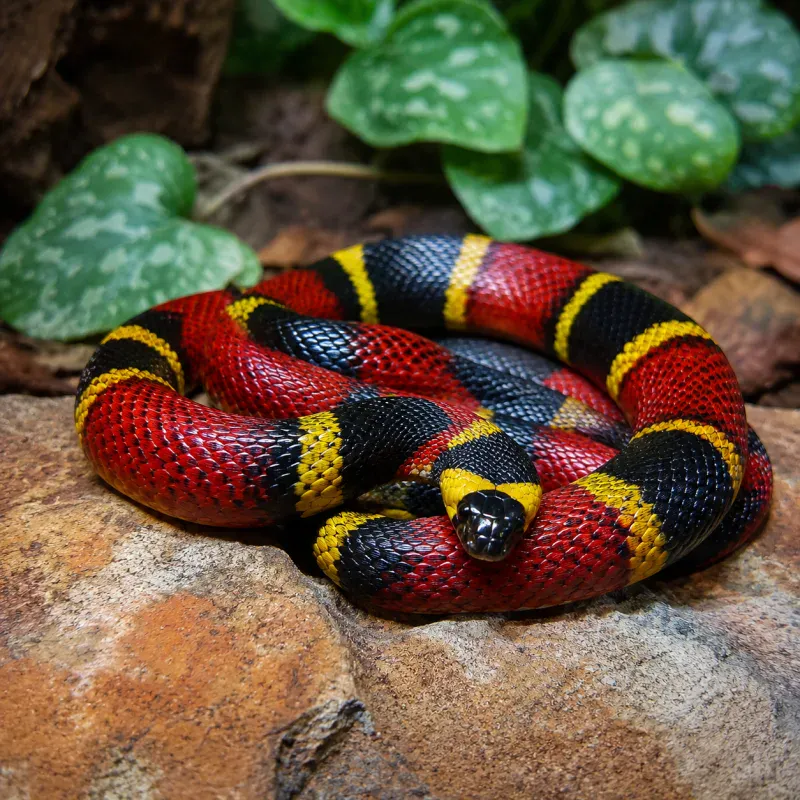
Milk Snakes (Lampropeltis triangulum) are popular beginner-to-intermediate colubrids known for their docile temperament and striking tri-color bands. A proper feeding regimen is critical to their health, growth, and longevity. This comprehensive guide covers feeding schedules from hatchling to adult, a prey size chart, frozen-thawed techniques, and troubleshooting common feeding issues. By following evidence-based practices, you can ensure your Milk Snake thrives in captivity.
Feeding Schedule by Age
Milk Snakes are carnivorous constrictors that feed primarily on rodents in captivity. Their metabolic rate and growth stage dictate feeding frequency. Overfeeding can lead to obesity and regurgitation, while underfeeding causes stunted growth. Use the schedule below as a baseline, adjusting based on your snake's body condition.
| Age Group | Feeding Frequency | Prey Type | Prey Size |
|---|---|---|---|
| Hatchling (0–6 months) | Every 5–7 days | Pinkie mice (frozen-thawed) | 1–2g, width ≈1–1.5x snake's widest point |
| Juvenile (6–18 months) | Every 7–10 days | Fuzzy or hopper mice | 3–6g, width ≈1.5x snake's widest point |
| Adult (18+ months) | Every 10–14 days | Adult mice (small to medium) | 10–20g, width ≈1–1.5x snake's widest point |
Note: Always feed frozen-thawed prey to avoid injury, parasites, and ethical concerns. Prey should be slightly warm (not hot) to mimic live prey temperature. Never feed live rodents unless medically necessary under a vet's guidance.
Adjusting Frequency Based on Body Condition
While the table provides a baseline, individual snakes may need more or less frequent feeding. A healthy Milk Snake should have a rounded, not overly plump, body shape. If you see fat rolls or a triangular cross-section, reduce prey size or frequency. Conversely, if the snake appears thin (visible spine or ribs), increase prey size slightly or move to the shorter end of the feeding interval. Weigh your snake monthly and keep a feeding log to track trends.
Prey Size Chart by Age
Selecting the correct prey size prevents regurgitation and ensures proper nutrient intake. The general rule: prey width should not exceed 1.5 times the snake's widest body diameter. Use this chart as a quick reference.
| Snake Age (months) | Snake Weight (grams) | Prey Weight (grams) | Prey Type |
|---|---|---|---|
| 0–3 | 5–10 | 1–2 | Pinkie mouse |
| 3–6 | 10–20 | 2–3 | Small pinkie |
| 6–12 | 20–45 | 3–5 | Fuzzy mouse |
| 12–18 | 45–80 | 5–10 | Hopper mouse |
| 18+ | 80–200 | 10–20 | Adult small/medium mouse |
Weigh your snake monthly and adjust prey size accordingly. A healthy Milk Snake should have a rounded, not overly plump, body shape. If you see fat rolls or a triangular cross-section, reduce prey size or frequency.
How to Measure Prey Width Correctly
To ensure the prey is not too large, compare its width to the snake's widest point (usually mid-body). The prey should be no more than 1.5 times that width. For hatchlings, a pinkie's width is often roughly equal to the snake's head width—a good visual cue. If you are unsure, err on the smaller side; a slightly smaller meal is safer than one that could cause regurgitation.
When to Move Up a Prey Size
Move up a prey size when the snake finishes its meal easily and shows no bulge after 48 hours, or if the prey leaves no visible lump after 24 hours. Typically, this happens every 2–4 months for juveniles. Always increase gradually—for example, from a 2g pinkie to a 3g small pinkie—rather than jumping to a fuzzy.
Frozen-Thawed Feeding Tips
Frozen-thawed prey is the safest and most humane option. Follow these steps to ensure acceptance and nutritional safety:
- Thawing: Place frozen rodent in a sealed plastic bag and submerge in warm (not boiling) water for 20–30 minutes. Never use a microwave—it can cook the prey unevenly and create hot spots.
- Warming: After thawing, warm the prey to 95–100°F (35–38°C) using a hair dryer or warm water bath. Snakes detect heat, so warm prey is more enticing.
- Scenting: If your snake refuses, try scenting the prey by rubbing it against a live feeder (if available) or using commercial scenting products like lizard or chicken broth (unsalted).
- Feeding Tools: Use long feeding tongs to avoid accidental bites. Hold the prey by the tail and dangle it near the snake's head. Move it gently to mimic movement.
- Storage: Keep frozen rodents in a dedicated freezer compartment (not with human food) and use within 6 months for best quality.
Step-by-Step Thawing and Warming Process
- Remove the frozen rodent from the freezer and place it in a small, sealed plastic bag. Squeeze out excess air.
- Fill a bowl with warm tap water (not boiling) and submerge the bag. Leave for 20–30 minutes, checking occasionally. The prey should be completely soft and pliable.
- Remove the prey from the bag and pat it dry with a paper towel (optional but helps maintain scent).
- Use a hair dryer on low heat to warm the prey to 95–100°F (35–38°C). Hold the dryer 6–8 inches away and move it constantly to avoid overheating.
- Offer the prey immediately using tongs. If the snake doesn't strike within 30 seconds, re-warm the prey and try again after a few minutes.
Troubleshooting Thawing Issues
- Prey too cold: If the snake shows interest but doesn't strike, the prey may be too cold. Re-warm to the target temperature.
- Prey too hot: If the prey is too hot, it can burn the snake's mouth. Always test the temperature by touching it to your wrist—it should feel warm, not hot.
- Prey breaks apart: This can happen if thawed too quickly or if the prey is old. Use a fresh rodent and thaw more gently.
Common Feeding Problems & Solutions
Even experienced keepers face feeding challenges. Here are the most common issues and how to resolve them:
- Refusal to Eat: Causes include stress (new environment, handling too soon), incorrect temperature (basking spot should be 85–88°F), or brumation (seasonal). Solution: Leave the prey in the enclosure overnight, ensure temps are correct, and avoid handling for 48 hours before feeding.
- Regurgitation: Usually from handling too soon after feeding, prey too large, or enclosure too cold. Wait at least 48–72 hours after feeding before handling. If regurgitation occurs, skip the next feeding and offer a smaller prey.
- Overfeeding/Obesity: Visible fat pads, excessive weight gain, lethargy. Reduce feeding frequency and prey size. Consult a vet if obesity persists.
- Biting Prey but Not Eating: Often a sign of stress or wrong prey temperature. Rewarm the prey and try again after 24 hours.
Detailed Troubleshooting Table
| Problem | Possible Cause | Solution |
|---|---|---|
| Refuses to eat for 1–2 weeks | Stress, wrong temps, or brumation | Check temps (basking 85–88°F, cool 70–75°F), minimize handling, offer prey overnight |
| Refuses for over 3 weeks | Possible illness or parasite | Consult a reptile veterinarian |
| Regurgitates immediately | Prey too large or snake handled too soon | Wait 48–72 hours before handling, offer smaller prey next time |
| Regurgitates after 24–48 hours | Enclosure too cold (below 70°F) | Raise ambient temperature to 75–80°F, ensure warm side is 85–88°F |
| Bites but doesn't constrict or eat | Prey not warm enough or snake stressed | Rewarm prey to 95–100°F, leave it in enclosure overnight |
| Eats but then stops eating | Seasonal brumation or shedding | Offer smaller prey, maintain temps, wait until shed completes |
Enclosure Setup for Optimal Feeding
A well-set enclosure reduces feeding stress. Key elements:
- Hides: Provide at least two hides (warm and cool sides) so the snake feels secure. A stressed snake won't eat.
- Temperature Gradient: Basking area 85–88°F, cool side 70–75°F. Use a thermostat-controlled heat mat or ceramic heat emitter. Nighttime drops to 65–70°F are acceptable.
- Lighting: 12-hour day/night cycle. UVB is not essential but can improve overall health and appetite.
- Substrate: Aspen, cypress mulch, or paper towels for hatchlings. Avoid cedar or pine (toxic).
Setting Up a Feeding-Friendly Enclosure
- Place a hide on the warm side and another on the cool side. Ensure each hide is just large enough for the snake to curl up inside—this increases security.
- Use a thermostat to regulate the heat mat or ceramic emitter. Set the thermostat probe on the warm side to 85–88°F.
- Provide a water dish large enough for the snake to soak in, but not so deep that it could drown. Change water daily.
- Add a few branches or fake plants for climbing and enrichment, but avoid sharp decor that could cause injury.
- For hatchlings, use paper towels as substrate for the first few months to monitor feces and regurgitation easily.
Feeding Outside the Enclosure: Pros and Cons
Some keepers feed in a separate container to avoid substrate ingestion. However, this can stress the snake and increase the risk of regurgitation. If you choose to feed outside, use a clean, ventilated tub with paper towel lining, and transfer the snake back gently after swallowing. For most Milk Snakes, feeding inside the enclosure is fine if you use a solid surface (like a flat rock or paper towel) under the prey to minimize substrate intake.
Handling After Feeding
Milk Snakes are generally docile, but handling too soon after a meal can cause regurgitation. Follow these guidelines:
- Wait at least 48 hours after feeding before handling.
- For large meals (adult mice), wait 72 hours.
- Never handle a snake that is in shed (blue phase) or showing signs of stress.
Why Waiting Matters
During digestion, the snake's body diverts blood flow to the stomach. Handling increases stress and physical activity, which can interrupt digestion and lead to regurgitation. Regurgitation is not only messy but also depletes the snake's electrolytes and can damage the esophagus. By waiting 48–72 hours, you give the snake ample time to begin digesting safely.
Signs Your Snake Is Ready to Be Handled
- No visible lump in the stomach area.
- The snake is active and exploring its enclosure.
- It has defecated (usually 3–5 days after a meal).
Common Health Issues Related to Feeding
Poor feeding practices can lead to health problems. Watch for:
- Mouth Rot (Infectious Stomatitis): Often from dirty feeding tools or live prey bites. Signs: swelling, discharge, redness. Treat with vet-prescribed antibiotics.
- Parasites: Live prey can introduce mites, worms, or protozoa. Frozen-thawed prey eliminates this risk.
- Metabolic Bone Disease: Rare in Milk Snakes but possible if prey is not properly supplemented. Dust prey with calcium powder (without D3) every 2–4 feedings.
Preventive Measures
- Always use clean, disinfected feeding tongs. Wash them with hot soapy water after each use.
- Quarantine new snakes for at least 30 days and have a fecal exam done by a vet to rule out parasites.
- If you feed live prey (only on vet recommendation), never leave the snake unattended with the prey—a rodent can bite and cause serious injury.
- Supplement with calcium powder (without D3) every 2–4 feedings for juveniles, and once a month for adults, to prevent bone issues.
Common Mistakes to Avoid
New keepers often make these errors:
- Feeding live prey—risks injury to snake.
- Handling snake within 24 hours of feeding.
- Using too large prey—causes regurgitation.
- Overfeeding—leads to obesity and shortened lifespan.
- Ignoring temperature gradients—cold snakes cannot digest food.
Expanded Mistake List with Solutions
| Mistake | Why It's Harmful | Correct Approach |
|---|---|---|
| Feeding live prey | Rodent can bite, causing severe injury or infection | Use frozen-thawed prey exclusively |
| Handling within 24 hours of feeding | Increases regurgitation risk | Wait 48–72 hours |
| Choosing prey too large | Can cause regurgitation, injury, or death | Follow prey size chart, width ≤1.5x snake's widest point |
| Overfeeding (too frequent or too large) | Obesity, fatty liver, shortened lifespan | Stick to schedule, monitor body condition |
| Ignoring temperature gradient | Cold snakes cannot digest, leading to regurgitation or impaction | Maintain basking 85–88°F, cool side 70–75°F |
| Feeding in a separate container that's too small | Stress and potential regurgitation | Feed in enclosure or a spacious, secure tub |
| Not warming prey enough | Snake may refuse or show no interest | Warm to 95–100°F before offering |
| Using substrate like cedar or pine | Toxic oils can cause respiratory issues | Use aspen, cypress mulch, or paper towels |
Conclusion
A consistent, age-appropriate feeding schedule with frozen-thawed prey is the cornerstone of Milk Snake care. By following the prey size chart, troubleshooting common issues, and maintaining proper husbandry, your Milk Snake will thrive for 15–20 years. Always consult a reptile veterinarian if feeding problems persist or health concerns arise.
Frequently Asked Questions
How often should I feed my hatchling Milk Snake?
Hatchlings (0–6 months) should be fed every 5–7 days, with pinkie mice weighing 1–2g. The prey width should be about 1–1.5 times the snake's widest point. Adjust frequency based on growth and body condition, and always use frozen-thawed prey.
What should I do if my Milk Snake regurgitates its meal?
If regurgitation occurs, wait at least 48–72 hours after feeding before handling, and skip the next feeding to let the snake recover. Offer a smaller prey item next time, and check that the enclosure temperature gradient is correct (basking 85–88°F, cool 70–75°F). If regurgitation happens repeatedly, consult a reptile veterinarian.
Can I feed my Milk Snake live prey?
Never feed live prey unless medically necessary under a vet's guidance. Live rodents can bite and injure your snake, and they may carry parasites. Frozen-thawed prey is safer, more humane, and eliminates parasite risk.
How do I know if I'm overfeeding my Milk Snake?
Signs of overfeeding include visible fat pads, a triangular cross-section (instead of rounded), excessive weight gain, and lethargy. If you notice these, reduce prey size or feeding frequency. A healthy Milk Snake should have a rounded, not overly plump, body shape. Weigh your snake monthly and adjust accordingly.
Related Reading
Check optimal temps, calculate feeding, and find your perfect species match.
References
- Rossi, J. (2018). The Complete Milk Snake Guide. Herpetological Publishing.
- de Vosjoli, P. (2015). The Art of Keeping Snakes. Advanced Vivarium Systems.
- Mader, D. (2014). Reptile Medicine and Surgery. Elsevier.
🐾 Join the Community
See how other keepers set up their enclosures, ask questions, and share your experience.
🛠️ Apply What You Learned
Check optimal temps, calculate feeding schedules, and get calcium dosage — all personalized for your species.
Comments