Green Anole Diet & Feeding Guide
Introduction
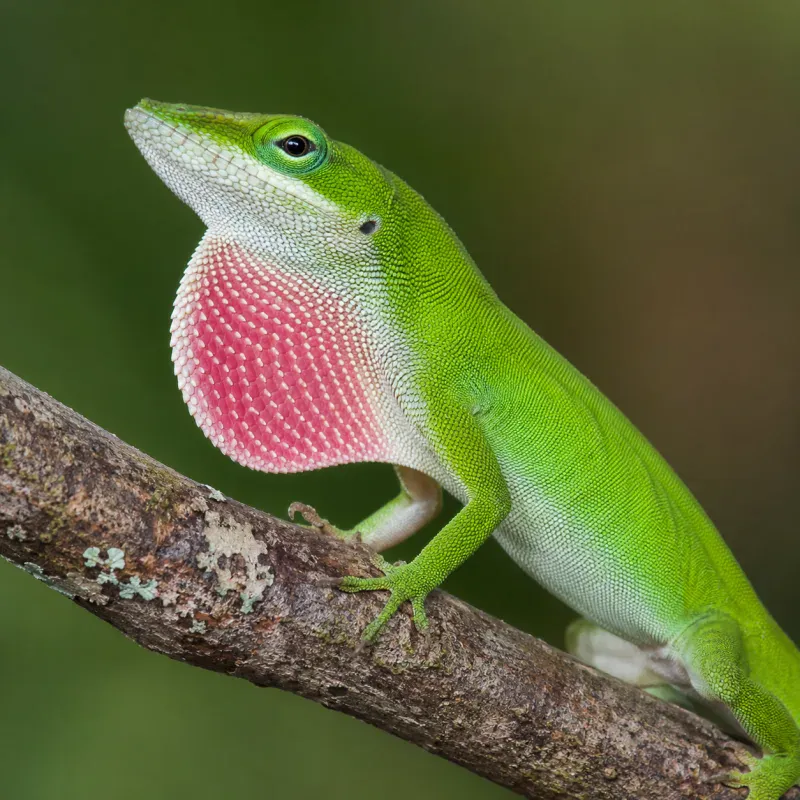
The Green Anole (Anolis carolinensis) is a popular beginner-friendly lizard known for its vibrant green coloration and active demeanor. A proper diet is the cornerstone of their health, directly impacting longevity, coloration, and immunity. This guide covers every aspect of feeding—from cricket schedules to gut-loading and calcium dusting—to ensure your anole thrives. Always consult a reptile veterinarian for personalized advice.
Enclosure Setup for Optimal Feeding
Before diving into diet, ensure your enclosure supports natural feeding behaviors. Green Anoles are arboreal, requiring vertical space with plenty of climbing branches, live or artificial plants, and hiding spots. A 20-gallon tall terrarium (24 x 12 x 16 inches) is minimum for one adult; larger is better for multiple anoles (males should never be housed together due to territorial aggression).
Key setup tips:
- Use a screen lid for ventilation and UVB penetration.
- Provide a temperature gradient: basking spot at 85–90°F (29–32°C), cool side at 70–75°F (21–24°C).
- Maintain humidity at 60–70% via daily misting and a hygrometer.
- Include a shallow water dish for drinking and soaking, though anoles primarily drink water droplets from leaves.
Step-by-Step Enclosure Setup for Feeding Success
- Choose the right enclosure: A 20-gallon tall terrarium (24x12x16 inches) is the minimum for one adult. For a pair or trio, use a 30–40 gallon tall to provide ample space and reduce stress.
- Add climbing structures: Place branches, vines, and live or artificial plants at various heights. Anoles spend most of their time above ground, so vertical space is more important than floor area.
- Install heating and lighting: Place a low-wattage basking bulb (40–60W) on one side, and a 5.0 UVB fluorescent tube (e.g., ReptiSun 5.0) 6–8 inches from the basking spot. Use a thermostat to regulate temperature.
- Set up humidity control: Use a hygrometer to monitor levels. Mist 2–3 times daily with dechlorinated water, or use an automatic mister for consistency.
- Add a water dish: Provide a shallow dish with fresh water, changed daily. Even though anoles prefer droplets, the dish adds humidity and a backup water source.
Common Enclosure Mistakes That Affect Feeding
- Using a small enclosure: Too little space causes stress, reducing appetite. Always start with at least a 20-gallon tall.
- No temperature gradient: Without a basking spot at 85–90°F, anoles cannot digest food properly, leading to regurgitation or impaction.
- Poor ventilation: Stagnant air can cause respiratory issues, which suppress appetite. Always use a screen lid.
- Incorrect substrate: Loose substrates like sand can be ingested with prey, causing impaction. Use paper towels, reptile carpet, or safe loose substrates like coconut fiber (only if feeding in a separate dish).
Heating and Lighting: Critical for Digestion and Vitamin D3 Synthesis
Green Anoles are ectothermic, meaning they rely on external heat to digest food. Without proper basking temperatures, food can rot in the gut, leading to impaction or metabolic bone disease (MBD).
Heating
Use a low-wattage basking bulb (40–60W) placed on one side of the enclosure. The basking spot should reach 85–90°F, while the ambient temperature stays 75–80°F. Use a thermostat to prevent overheating. Never use heat rocks—they can cause severe burns.
Choosing the Right Heat Source
- Basking bulbs: Ideal for creating a basking spot. Choose a wattage that achieves the target temperature without making the enclosure too hot.
- Ceramic heat emitters: Provide heat without light, useful for nighttime if temperatures drop below 65°F (18°C).
- Heat mats: Can be used under the enclosure, but they are less effective for arboreal species. If used, ensure they cover only a small area and are controlled by a thermostat.
Monitoring Temperature
Use a digital thermometer with a probe at the basking spot and another at the cool side. Check temperatures daily, especially when seasons change. A thermostat is essential to prevent overheating, which can be fatal.
Lighting
UVB lighting is non-negotiable for calcium metabolism. A 5.0 UVB fluorescent tube (e.g., ReptiSun 5.0) placed 6–8 inches from the basking spot, on for 10–12 hours daily, stimulates natural vitamin D3 production. Replace UVB bulbs every 6–12 months, as output degrades over time.
UVB Lighting Tips
- Ensure the UVB bulb is not blocked by glass or plastic; it must shine through a screen lid.
- Place the bulb over the basking area so your anole can bask and absorb UVB simultaneously.
- Use a timer to maintain a consistent 10–12 hour photoperiod.
- Replace the bulb every 6–12 months, even if it still emits visible light, because UVB output diminishes.
Humidity and Misting: Hydration Through Droplets
Green Anoles rarely drink from standing water; they lap droplets from leaves. Humidity at 60–70% is essential for shedding and respiratory health. Mist the enclosure 2–3 times daily with dechlorinated water, or use an automatic mister. A hygrometer helps monitor levels. Signs of low humidity include retained shed and lethargy.
For hydration, also offer a shallow water dish (changed daily) but prioritize leaf misting. Some keepers use a dripper system to simulate rainfall.
How to Mist Properly
- Use dechlorinated water (let tap water sit for 24 hours or use a dechlorinator).
- Mist in the morning and evening to mimic natural dew cycles.
- Mist until leaves and enclosure walls are covered with fine droplets.
- Monitor with a hygrometer; adjust frequency if humidity stays below 60% or above 70%.
Troubleshooting Humidity Issues
- Humidity too low: Increase misting frequency, add a larger water dish, or use a reptile fogger. Ensure the enclosure is not too ventilated.
- Humidity too high: Reduce misting, improve ventilation, or remove standing water sources. High humidity can cause mold and respiratory infections.
- Retained shed: This is a common sign of low humidity. Increase misting and provide a humid hide (a container with damp moss).
Diet and Feeding Schedule: Crickets and Small Insects
Green Anoles are insectivorous, requiring a varied diet of live, appropriately sized prey. Crickets are the staple, but supplement with other insects for nutritional balance.
Staple Feeder Insects
- Crickets (Acheta domesticus): Most common; gut-loaded, dusted.
- Dubia roaches: Higher protein, less chitin, easier to digest.
- Black soldier fly larvae: Rich in calcium—ideal for dusting reduction.
- Mealworms: Offer sparingly (high fat); only for variety.
- Waxworms: Treat only; very fatty.
Feeder Insect Comparison Table
| Insect | Protein % | Fat % | Calcium (mg/100g) | Phosphorus (mg/100g) | Feeding Frequency |
|---|---|---|---|---|---|
| Crickets | 18–20% | 6–8% | 20–30 | 200–300 | Staple |
| Dubia roaches | 20–23% | 8–10% | 25–35 | 250–350 | Staple |
| Black soldier fly larvae | 15–18% | 5–7% | 300–400 | 150–200 | Regular |
| Mealworms | 18–20% | 12–15% | 10–20 | 200–300 | Occasional |
| Waxworms | 15–17% | 22–25% | 5–10 | 150–200 | Treat only |
Note: Values are approximate and vary based on gut-loading. Always dust with calcium to correct the calcium-to-phosphorus ratio.
Feeding Schedule by Age
| Age | Feeding Frequency | Prey Size | Number per Feeding |
|---|---|---|---|
| Juvenile (0–6 months) | Daily | 1/8–1/4 inch | 3–5 insects |
| Subadult (6–12 months) | Every other day | 1/4–1/2 inch | 5–7 insects |
| Adult (12+ months) | Every 2–3 days | 1/2 inch max | 5–8 insects |
Feed during daylight hours (they are diurnal). Remove uneaten insects after 15 minutes to prevent stress or bites. Variety is key—rotate feeders weekly.
How to Feed: Step-by-Step
- Prepare insects: Gut-load them 24–48 hours before feeding.
- Dust insects with calcium powder (with D3) immediately before offering.
- Use feeding tongs or a feeding dish to offer insects. This prevents accidental ingestion of substrate and allows you to monitor intake.
- Offer the appropriate number of insects based on age and size.
- Observe your anole eating. If it shows no interest, remove insects after 15 minutes to avoid stress.
- Clean up any uneaten insects to prevent them from biting your anole or escaping.
Gut-Loading: The Secret to Nutrient-Dense Prey
Gut-loading means feeding nutritious foods to insects 24–48 hours before offering them to your anole. This boosts vitamins, minerals, and moisture.
Best gut-load foods:
- Commercial gut-load diets (e.g., Repashy Bug Burger, Fluker's High-Calcium Cricket Diet).
- Fresh produce: carrots, sweet potatoes, kale, apples, oranges.
- Avoid iceberg lettuce (low nutrition) and high-moisture fruits (can cause diarrhea).
How to gut-load: Place insects in a ventilated container with food and a water source (e.g., cricket quencher). Do not use standing water—insects can drown.
Gut-Loading Schedule
- 24–48 hours before feeding: Place insects in a clean container with gut-load food and a water source.
- Change food daily: Remove uneaten food and add fresh to ensure insects are nutrient-dense.
- Do not gut-load with only water: Insects need actual nutrition to pass on to your anole.
Calcium Dusting: Preventing Metabolic Bone Disease
Calcium dusting is critical because feeder insects have a poor calcium-to-phosphorus ratio. Without supplementation, anoles develop MBD—a crippling, often fatal condition.
Protocol:
- Use a calcium powder with vitamin D3 for most feedings (since UVB may not be fully utilized).
- Dust insects immediately before feeding: place insects in a bag or cup, add a pinch of powder, shake gently.
- For adults: dust every other feeding (2–3 times per week).
- For juveniles: dust every feeding (daily).
- Also use a multivitamin supplement (e.g., Repashy Calcium Plus) once a week to cover trace nutrients.
Signs of calcium deficiency: lethargy, tremors, swollen jaw, soft bones, inability to climb. If observed, consult a vet immediately.
Calcium Dusting Step-by-Step
- Place the appropriate number of insects in a clean plastic bag or cup.
- Add a small pinch of calcium powder (with D3) — just enough to lightly coat the insects.
- Gently shake the bag or cup until all insects are coated.
- Offer the dusted insects immediately. Do not let them sit, as the powder may fall off.
- For juveniles, repeat daily. For adults, dust every other feeding.
Choosing the Right Calcium Supplement
| Supplement Type | Use | Frequency |
|---|---|---|
| Calcium with D3 | Most feedings | Adults: 2–3x/week; Juveniles: daily |
| Calcium without D3 | If using strong UVB | Alternate with D3 |
| Multivitamin (e.g., Repashy Calcium Plus) | Once a week | Weekly |
Handling and Stress Management
Green Anoles are primarily display animals—they tolerate minimal handling. Overhandling causes chronic stress, leading to suppressed appetite and illness. Limit handling to 5-minute sessions, 1–2 times per week, if needed for health checks. Always support the body and tail (they can drop their tail as a defense). Signs of stress include darkening color, gaping, or frantic escape attempts.
Instead of frequent handling, focus on enrichment: rearrange branches, offer live plants, or introduce new climbing structures. A stress-free anole eats better and lives longer.
Signs of Stress to Watch For
- Darkening of color (from bright green to brown)
- Gaping or opening mouth repeatedly
- Frantic escape attempts when approached
- Reduced appetite or refusing food
- Hiding excessively
Reducing Stress During Feeding
- Feed at the same time each day to establish a routine.
- Use feeding tongs to offer insects, minimizing direct hand presence.
- Place food in a visible location, but avoid forcing interaction.
- Keep the enclosure in a quiet area away from loud noises and heavy foot traffic.
Common Health Issues Linked to Diet
Most health problems in Green Anoles stem from improper nutrition or husbandry.
Metabolic Bone Disease (MBD)
Caused by calcium deficiency, lack of UVB, or poor D3 synthesis. Symptoms: soft jaw, bowed legs, twitching. Treatment requires veterinary calcium injections and correcting lighting/diet.
Prevention and Early Detection
- Ensure UVB bulb is replaced every 6–12 months.
- Dust insects as per protocol.
- Provide a basking spot at 85–90°F for proper digestion and D3 synthesis.
- If you notice any symptoms (lethargy, tremors, swollen jaw), consult a vet immediately. Early treatment can reverse mild cases.
Impaction
From ingesting substrate or oversized prey. Prevent by using paper towels or reptile carpet as substrate and feeding appropriately sized insects.
Preventing Impaction
- Use a feeding dish or tongs to avoid substrate ingestion.
- Feed prey that is no larger than the width of your anole's head.
- Ensure proper basking temperatures (85–90°F) for digestion.
- If impaction is suspected (no bowel movements, swelling), soak in shallow warm water (85°F) and consult a vet.
Dehydration
Leads to sunken eyes, wrinkled skin, and retained shed. Increase misting and offer water droplets. Soak anole in shallow warm water (85°F) for 10 minutes if severely dehydrated.
Recognizing and Treating Dehydration
- Sunken eyes
- Wrinkled or loose skin
- Retained shed
- Lethargy
If you notice these signs, increase misting frequency, offer water droplets, and soak the anole in shallow warm water (85°F) for 10 minutes. If no improvement, see a vet.
Parasites
Wild-caught anoles often carry internal parasites. Captive-bred are safer. Regular fecal exams by a vet are recommended.
Preventing Parasites
- Choose captive-bred anoles from reputable breeders.
- Quarantine new arrivals for 30–60 days.
- Have a fecal exam done by a vet annually.
- Maintain clean enclosure and remove uneaten insects.
Green Anole Feeding Pitfalls
- Feeding only crickets without gut-loading or dusting – Leads to nutritional deficiencies.
- Using heat rocks or no UVB – Causes burns and MBD.
- Overfeeding – Obesity reduces lifespan; stick to schedule.
- Leaving live insects in enclosure – Crickets can bite and stress anoles.
- Ignoring humidity – Dehydration and shedding problems.
- Housing males together – Stress and fighting, reduces feeding.
Additional Pitfalls to Avoid
- Feeding wild-caught insects: They may carry pesticides or parasites. Always use captive-bred feeders.
- Offering food by hand: This can cause stress and accidental bites. Use tongs.
- Not removing uneaten insects: Crickets can chew on your anole, causing wounds and stress.
- Using a water bowl as the sole hydration source: Green Anoles prefer droplets, so always mist.
- Ignoring seasonal changes: In winter, anoles may eat less; adjust schedule but never stop dusting.
Troubleshooting Feeding Problems
My Anole Won't Eat
- Check temperatures: Ensure basking spot is 85–90°F. If too cold, digestion slows, and appetite decreases.
- Check humidity: Low humidity causes stress and dehydration. Maintain 60–70%.
- Check for stress: Recent handling, loud environment, or new enclosure can suppress appetite. Give it time.
- Try different insects: Some anoles are picky. Offer dubia roaches or black soldier fly larvae instead of crickets.
- Ensure prey size is appropriate: Prey larger than the width of the head can be intimidating. Offer smaller insects.
My Anole Is Overweight
- Reduce feeding frequency: For adults, extend to every 3 days.
- Reduce high-fat insects like waxworms and mealworms.
- Increase exercise by adding more climbing branches and space.
My Anole Is Underweight
- Increase feeding frequency: For adults, feed every 2 days.
- Offer more insects per feeding (up to 8 for adults).
- Check for parasites: A fecal exam is essential.
- Ensure gut-loading and dusting are adequate.
My Anole Is Regurgitating
- Check basking temperature: It may be too low (below 85°F).
- Reduce prey size: Prey may be too large.
- Handle less: Stress can cause regurgitation.
- If persistent, see a vet to rule out impaction or infection.
Conclusion
A balanced diet of gut-loaded, calcium-dusted insects, combined with proper UVB, heat, and humidity, is the foundation of Green Anole health. By following the feeding schedule and supplementation protocols outlined here, you can prevent most common illnesses and enjoy a vibrant, active pet for years. Always monitor your anole's behavior and consult a reptile veterinarian for any concerns.
Frequently Asked Questions
How often should I feed my adult Green Anole?
Adult Green Anoles (12+ months) should be fed every 2–3 days, with 5–8 appropriately sized insects (1/2 inch max) per feeding. Dust with calcium every other feeding (2–3 times per week) and provide a multivitamin once a week.
What is the best feeder insect for Green Anoles?
Crickets are the most common staple, but dubia roaches are higher in protein and easier to digest. Black soldier fly larvae are rich in calcium and can reduce the need for dusting. Offer a variety of insects weekly to ensure nutritional balance.
Do Green Anoles need UVB lighting to eat properly?
Yes, UVB lighting is non-negotiable. It enables vitamin D3 synthesis, which is essential for calcium absorption. Without UVB, your anole cannot metabolize calcium, leading to metabolic bone disease even if you dust insects. Use a 5.0 UVB tube for 10–12 hours daily.
Why is my Green Anole not eating?
Common reasons include improper basking temperature (below 85°F), low humidity (below 60%), stress from handling or environment, or prey that is too large. Check your husbandry parameters first, then try offering a different insect. If the problem persists, consult a reptile veterinarian to rule out parasites or illness.
Related Reading
- Green Anole Care Guide: The Complete Husbandry Handbook — Get a full overview of green anole care, covering all essential husbandry basics.
- Green Anole Habitat Setup: Enclosure, Lighting & Plants — Learn how to build the perfect habitat with proper lighting and live plants.
- Green Anole Enclosure: Tank, UVB & Plants — Discover the ideal tank size, UVB requirements, and plant choices for anoles.
- Green Anole Health: Common Issues & Stress Signs — Identify common health problems and stress signals to keep your anole thriving.
- Green Anole Morphs: Blue Anoles & Variations — Explore fascinating green anole color morphs and variations like blue anoles.
Check optimal temps, calculate feeding, and find your perfect species match.
References
- McLeod, L. (2021). Green Anole Care Sheet. The Spruce Pets.
- Kaplan, M. (2018). Anoles: A Complete Guide. Reptile & Amphibian Press.
- Repashy Ventures. (2020). Calcium Plus Supplement Guide.
- Fluker's. (2019). Cricket Gut-Loading Instructions.
🐾 Join the Community
See how other keepers set up their enclosures, ask questions, and share your experience.
🛠️ Apply What You Learned
Check optimal temps, calculate feeding schedules, and get calcium dosage — all personalized for your species.
Comments
No account needed — corrections, updates and questions are all welcome. For a full question with photos, the community Q&A is the better place.