Green Anole Habitat Setup: Enclosure, Lighting & Plants
Introduction
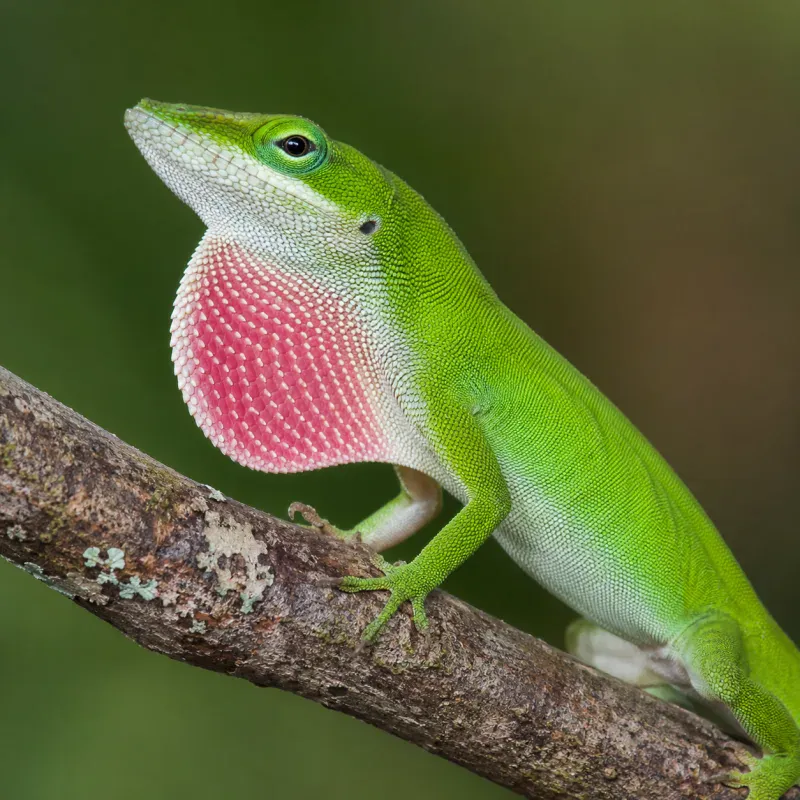
The green anole (Anolis carolinensis) is a small, arboreal lizard native to the southeastern United States. Known for its vibrant green color and dewlap displays, this species thrives in a carefully designed vivarium that mimics its natural subtropical environment. A well-planned bioactive setup not only enhances your anole's well-being but also reduces maintenance. This guide covers every aspect of green anole habitat setup, from lighting and humidity to plant selection and live substrate.
Enclosure Setup
Size and Type
A single green anole requires a minimum enclosure of 20 gallons (24" x 12" x 16"), but larger is always better. Tall enclosures (18–24 inches high) are essential because anoles are arboreal. For a pair or trio, use a 30–40 gallon tall tank. Front-opening vivariums are ideal for easy access and maintaining humidity.
Substrate
In a bioactive setup, use a drainage layer (1–2 inches of clay balls or LECA) topped with a mesh barrier, then a 2–3 inch layer of organic topsoil, coco fiber, and sphagnum moss mix. Add leaf litter (oak or magnolia) to retain moisture and support cleanup crews like springtails and isopods. Avoid potting soil with fertilizers or perlite.
Decor and Climbing Structures
Provide multiple vertical climbing surfaces: cork bark tubes, grapevine wood, bamboo sticks, and silk or live vines. Include hiding spots like cork rounds or dense foliage. A shallow water dish (changed daily) is optional, as anoles typically drink droplets from leaves.
Lighting and Heating
UVB Lighting
Green anoles are diurnal and require UVB lighting for vitamin D3 synthesis and calcium metabolism. Use a linear T5 UVB bulb (5–6% UVB) placed 6–8 inches above the basking area. Replace bulbs every 6–12 months. Without UVB, anoles develop metabolic bone disease.
Basking and Ambient Heat
Create a temperature gradient: basking spot at 85–90°F (29–32°C), ambient warm side 80–85°F (27–29°C), and cool side 70–75°F (21–24°C). Use a low-wattage ceramic heat emitter or incandescent bulb on a thermostat. Nighttime temps can drop to 65–70°F (18–21°C). Never use heat rocks; they can cause burns.
Light Cycle
Provide 12–14 hours of light daily. Use a timer for consistency. A full-spectrum LED plant light can support live plants and mimic natural daylight.
Humidity Management
Green anoles need 60–70% humidity during the day, with spikes to 80% after misting. Low humidity causes shedding problems and dehydration. Use a hygrometer to monitor levels.
Misting and Fogging
Mist the enclosure 2–3 times daily with dechlorinated water. A reptile fogger or automatic misting system (e.g., MistKing) can maintain consistent humidity. Ensure leaves stay wet for drinking—anoles rarely drink from bowls.
Humidity Tips
- Use live plants (pothos, ferns, bromeliads) to increase humidity.
- Cover part of the screen top with plastic wrap or acrylic to retain moisture.
- Add a shallow water feature or moss wall for extra humidity.
- Avoid constant saturation; allow the substrate to dry slightly between mistings to prevent mold.
Best Plants for Green Anoles
Live plants are essential for a bioactive vivarium—they provide cover, climbing surfaces, and help regulate humidity. Choose non-toxic, sturdy species that tolerate high humidity and moderate light.
| Plant Species | Benefits | Care Level |
|---|---|---|
| Pothos (Epipremnum aureum) | Fast-growing, easy, provides dense cover | Easy |
| Boston Fern (Nephrolepis exaltata) | High humidity, soft leaves for climbing | Moderate |
| Bromeliads (Neoregalia spp.) | Water reservoirs, colorful, sturdy | Moderate |
| Snake Plant (Sansevieria trifasciata) | Low light, vertical structure | Easy |
| Ficus pumila (Creeping Fig) | Ground cover, climbs walls | Moderate |
| Spider Plant (Chlorophytum comosum) | Hardy, tolerates low light | Easy |
Arrange plants to create vertical layers: tall plants in back, mid-size in middle, ground cover in front. Leave open basking areas and perches near the UVB light.
Bioactive Vivarium Tips
A bioactive vivarium uses live plants, a drainage layer, and a cleanup crew (springtails and isopods) to break down waste and mold. This creates a self-sustaining ecosystem that requires less frequent cleaning.
Setting Up a Bioactive Enclosure
- Drainage layer: 1–2 inches of clay pebbles or LECA.
- Mesh barrier: Fiberglass screen or weed cloth to separate substrate.
- Substrate mix: 60% organic topsoil, 20% coco fiber, 20% sphagnum moss.
- Leaf litter: 1–2 inches of dried oak or magnolia leaves.
- Hardscape: Cork bark, branches, and rocks for structure.
- Plants: Add live plants (see above).
- Cleanup crew: Introduce springtails and dwarf white isopods (e.g., Trichorhina tomentosa).
Maintenance
Spot clean visible waste weekly. Mist daily to keep humidity. Replace leaf litter every 2–3 months. The cleanup crew will handle most organic waste. Every 6 months, you may need to top off substrate or add more isopods.
Diet and Feeding
Green anoles are insectivores. Feed a variety of live insects dusted with calcium and vitamin supplements.
Staple Foods
- Small crickets (1/4–1/2 inch)
- Flightless fruit flies
- Small mealworms (in moderation)
- Waxworms (treats only)
Feeding Schedule
- Juveniles: Feed daily, 2–3 appropriately sized insects per feeding.
- Adults: Feed every other day, 3–5 insects per feeding.
- Dust insects with calcium (no D3) at every feeding and a multivitamin once a week.
Supplementation
Use a calcium powder without vitamin D3 if UVB is provided. If UVB is inadequate, use calcium with D3. Multivitamins prevent deficiencies.
Handling and Behavior
Green anoles are skittish and should be handled minimally. They are display animals best observed rather than handled. If necessary, use gentle, slow movements and support the body. Never grab the tail—it can detach (autotomy). Signs of stress include dark brown color, gaping mouth, or hiding constantly. Limit handling to once a week or less.
Common Health Issues
- Metabolic Bone Disease (MBD): Caused by lack of UVB or calcium. Symptoms include soft jaw, tremors, and lethargy. Prevent with proper UVB and supplementation.
- Respiratory Infections: Wheezing, open-mouth breathing, mucus. Usually due to low temperatures or high humidity. Adjust temps and consult a vet.
- Shedding Problems: Retained shed on toes or tail. Increase humidity and provide rough surfaces.
- Dehydration: Sunken eyes, wrinkled skin. Mist more frequently and ensure water droplets are available.
- Parasites: Internal (worms) or external (mites). Quarantine new animals and have fecal exams done annually.
Where Things Go Wrong
- Too small enclosure: Anoles need vertical space; 10-gallon tanks are insufficient.
- No UVB: Essential for health; compact bulbs are less effective than linear tubes.
- Overhandling: Causes chronic stress and health decline.
- Improper humidity: Too low leads to shedding issues; too high causes mold and respiratory problems.
- Feeding only crickets: Variety is key; use multiple insect types.
- Using heat rocks: Can cause severe burns; use overhead heat sources.
- Neglecting cleanup crew: In a bioactive setup, springtails and isopods are essential for waste breakdown.
Conclusion
Creating a thriving green anole habitat requires attention to detail—especially in lighting, humidity, and plant selection. A bioactive vivarium, while requiring upfront investment, offers a naturalistic and low-maintenance environment that closely mimics their wild habitat. By following this guide, you'll provide your green anole with a healthy, enriching home that promotes natural behaviors and longevity.
Frequently Asked Questions
Do green anoles need UVB?
Yes. Green anoles are diurnal and need UVB for vitamin D3 synthesis and calcium metabolism. Use a linear UVB bulb placed 6–8 inches above the basking area and replace it every 6–12 months — without UVB, anoles develop metabolic bone disease.
How big should a green anole enclosure be?
A single green anole needs a minimum-size enclosure (see the guide); taller setups are better than wider because anoles climb. Include plenty of branches, vines, and broad leaves.
How do I keep green anole humidity up?
Mist daily and monitor with a hygrometer — low humidity causes shedding problems and dehydration. Humidity spikes to around 80% right after misting, so add plants and a substrate that holds moisture between sprays.
What plants are safe for green anoles?
The guide lists the best live plants for anoles: broad-leafed, sturdy species that hold water droplets for drinking. Avoid anything with sharp edges or chemical treatments.
Related Reading
- Green Anole Care Guide — Complete guide to the American Chameleon.
- Bioactive Enclosure Setup Guide — Step-by-step for planted tropical vivariums.
- Reptile-Safe Plants Guide — Best live plants for tropical terrariums.
Check optimal temps, calculate feeding, and find your perfect species match.
References
- Barten, S. L. (2017). Green Anole Care. Reptiles Magazine.
- Rundquist, E. (2019). The Green Anole: A Complete Guide to Care and Breeding. Advanced Vivarium Systems.
- de Vosjoli, P. (2020). The Art of Keeping Snakes and Lizards. ECO Publishing.
- McLeod, L. (2021). How to Set Up a Bioactive Vivarium for Reptiles. The Spruce Pets.
🐾 Join the Community
See how other keepers set up their enclosures, ask questions, and share your experience.
🛠️ Apply What You Learned
Check optimal temps, calculate feeding schedules, and get calcium dosage — all personalized for your species.
Comments
No account needed — corrections, updates and questions are all welcome. For a full question with photos, the community Q&A is the better place.