Green Anole Care Guide: The Complete Husbandry Handbook
Species Overview
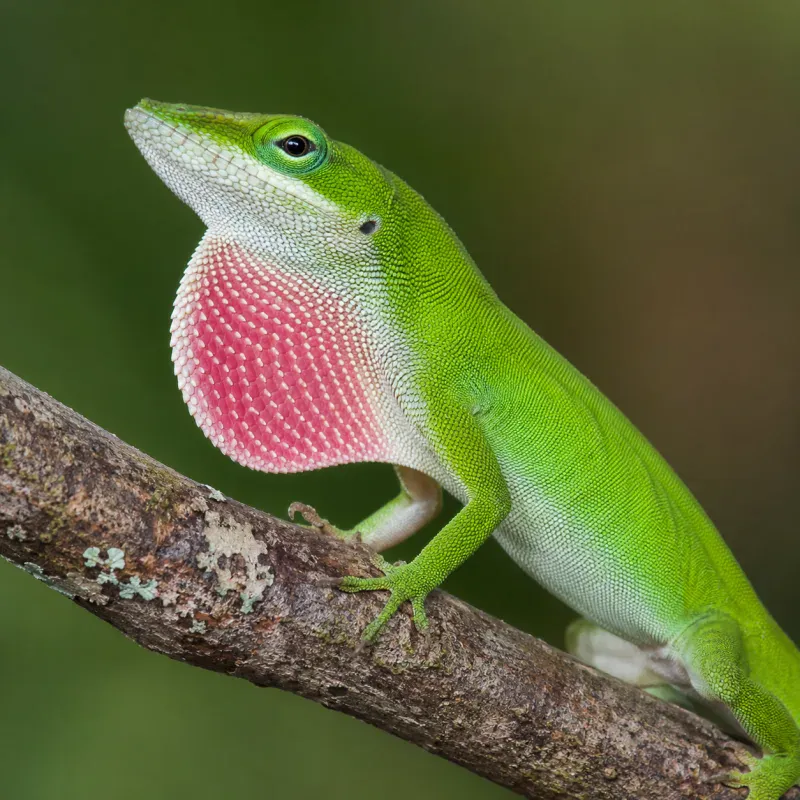
The green anole (Anolis carolinensis) is often called the "American chameleon" due to its remarkable ability to shift color from bright green to brown. Native to the southeastern United States, these small, active display lizards are a favorite among reptile enthusiasts for their lively behavior and manageable size. However, they are not handleable — they are observational animals that stress easily when handled. This guide provides everything you need to create a thriving environment for your green anole.
Natural History and Behavior
In the wild, green anoles are arboreal, spending most of their time in trees and shrubs. They are diurnal (active during the day) and territorial, especially males. Understanding their natural behaviors — basking, climbing, and dewlap displays — is key to replicating their habitat in captivity. They communicate through head bobs and extend a pink throat fan (dewlap) to assert dominance or attract mates.
Why They Are Display Pets
Unlike bearded dragons or leopard geckos, green anoles do not enjoy being held. Handling triggers a stress response that can lead to health issues, including suppressed immunity and reduced appetite. Instead, they thrive when observed in a well-planted, naturalistic enclosure. This makes them ideal for keepers who appreciate watching natural behaviors rather than interacting physically.
Enclosure Setup
A proper enclosure is the foundation of green anole health. These lizards need vertical space, dense foliage, and multiple microclimates to feel secure.
Minimum Size and Dimensions
The minimum enclosure size for 1–2 anoles is 18"×18"×24" (a 20-gallon tall or larger). This provides enough vertical climbing area. For a single anole, an 18×18×18 may work, but larger is always better. Remember: only one male per enclosure — males fight viciously and can injure or kill each other. A male-female pair or a small group of females can coexist if space permits.
Foliage and Climbing Structures
Dense foliage is non-negotiable. Aim for 70–80% cover using live or artificial plants. Live plants like pothos, bromeliads, and ficus help maintain humidity and provide natural hiding spots. Add vertical branches of varying thickness (from finger-width to 1 inch) to encourage climbing and basking. Multiple basking spots at different heights allow anoles to thermoregulate by choosing their preferred temperature.
Substrate Choices
Use a moisture-retaining substrate that supports humidity. Recommended options include:
- Eco Earth (coconut fiber) — holds moisture well and is safe if ingested.
- ABG mix — a blend of peat, bark, and charcoal, ideal for bioactive setups.
- Organic topsoil — free of fertilizers and pesticides, mixed with sand or sphagnum moss.
Avoid substrates like reptile carpet or paper towels, which dry out quickly and don't support live plants. A 2–3 inch layer is sufficient, and you can add leaf litter on top for enrichment.
Step-by-Step Enclosure Assembly
- Clean the enclosure with a reptile-safe disinfectant and rinse thoroughly.
- Add a drainage layer (e.g., clay balls) if using a bioactive setup, then cover with substrate.
- Arrange branches diagonally and horizontally to create a network of climbing routes.
- Plant live plants or place artificial plants to achieve 70–80% coverage.
- Install heating and UVB fixtures at the top, ensuring a basking spot of 90°F.
- Add a water dish (for humidity) and a misting system or spray bottle.
- Monitor temperatures and humidity with digital thermometers and hygrometers.
Common Enclosure Mistakes
- Too bare: Anoles feel insecure without cover, leading to chronic stress.
- No vertical space: Ground-dwelling setups ignore their arboreal nature.
- Overcrowding: Too many anoles in a small space causes aggression.
Heating & UVB
Green anoles are ectothermic and rely on external heat sources to regulate their body temperature. A proper temperature gradient is essential for digestion, metabolism, and immune function.
| Parameter | Value |
|---|---|
| Basking spot | 90°F (32°C) |
| Ambient daytime | 75–82°F (24–28°C) |
| Night | 65–72°F (18–22°C) |
Heating Equipment
Use a low-wattage incandescent bulb or a ceramic heat emitter to create the basking spot. Place it at one end of the enclosure to establish a gradient. Always use a thermostat to prevent overheating. Avoid hot rocks, which can cause severe burns.
UVB Lighting: Non-Negotiable
UVB is essential: Green anoles bask frequently in the wild, and without UVB, they cannot synthesize vitamin D3, leading to metabolic bone disease (MBD) — a painful and often fatal condition. Use a T5 HO 5.0 tube covering at least 2/3 of the enclosure length. Replace the bulb every 6–12 months, as UVB output diminishes over time even if visible light remains.
Position the UVB tube so that the basking spot is within 12–18 inches of the bulb. Provide a UVB gradient so anoles can choose their exposure. Turn off UVB at night to mimic natural cycles.
Photoperiod
Provide 12–14 hours of light per day, followed by complete darkness at night. Use a timer for consistency. If nighttime temperatures drop below 65°F, use a low-wattage ceramic heat emitter (no light) to maintain warmth.
Troubleshooting Heating Issues
- Basking spot too hot: Adjust wattage or raise the bulb height.
- Cool side too cold: Add a second heat source or insulate the enclosure.
- No UVB: Immediately install a T5 HO 5.0 tube and schedule a vet check.
Humidity
Green anoles require moderate to high humidity to shed properly and stay hydrated. Target 60–70% relative humidity, with spikes after misting.
Misting and Water Delivery
Mist the enclosure 2–3× daily with dechlorinated water. Anoles drink droplets from leaves, not from a dish — they rarely recognize standing water. A hand sprayer works, but an automatic mister or dripper is recommended for consistency, especially if you're away during the day. Aim for a fine mist that coats leaves and enclosure walls.
Maintaining Humidity
- Use live plants, which release moisture through transpiration.
- Cover part of the screen top to reduce evaporation.
- Add a shallow water dish to increase ambient humidity (even if they don't drink from it).
- Use a substrate that holds moisture, like Eco Earth.
Monitoring Humidity
Place a digital hygrometer at mid-height in the enclosure. Check daily and adjust misting frequency based on readings. If humidity is consistently low, increase misting or add a humidifier. If too high (above 80%), improve ventilation to prevent respiratory issues.
Common Humidity Mistakes
- Using tap water: Chlorine and chloramine can harm anoles. Always use dechlorinated or filtered water.
- No misting: Anoles will become dehydrated and may have difficulty shedding.
- Water dish only: They won't drink from it, risking dehydration.
Diet & Feeding
Green anoles are insectivores with a fast metabolism. A varied diet is crucial for balanced nutrition.
Staple Feeders
- Small crickets (1/4 inch for adults)
- Flightless fruit flies (for juveniles)
- Small dubia roaches (1/4 inch)
Offer prey that is no larger than the width of the anole's head. Feed daily — anoles have high energy needs. Offer 3–5 appropriately sized insects per feeding, or as much as they can consume in 10–15 minutes.
Supplementation Schedule
| Supplement | Frequency |
|---|---|
| Calcium with D3 | 3–4× per week |
| Multivitamin | 1× per week |
Dust feeders lightly before offering. Excess supplementation can be harmful, so stick to the schedule. Use a calcium without D3 if you provide UVB, but for simplicity, many keepers use calcium with D3 as directed.
Gut-Loading
Gut-load feeders 24 hours before offering. Feed crickets or roaches a nutritious diet (commercial gut-load or fresh fruits/vegetables like carrots, leafy greens, and sweet potatoes). This passes essential nutrients to your anole.
Feeding Tips and Troubleshooting
- Feed in the morning or early afternoon, matching their active period.
- Remove uneaten prey after 20 minutes to prevent stress or injury.
- If your anole refuses food, check temperatures and UVB — low temps reduce appetite.
- Juveniles may need smaller prey like pinhead crickets or fruit flies.
Common Diet Mistakes
- Feeding only crickets: Variety prevents nutritional deficiencies.
- Skipping supplements: Leads to MBD or vitamin deficiencies.
- Overfeeding: Obesity is possible in captivity; monitor body condition.
Where Things Go Wrong
Even with good intentions, keepers often make mistakes. Here are the top pitfalls and how to avoid them.
- Handling: Anoles are display animals, not handleable pets. Handling causes severe stress, leading to illness or refusal to eat. Observe from a distance.
- No UVB: "They don't need it" is outdated. Anoles bask — they absolutely need UVB to metabolize calcium and prevent MBD.
- No water droplets: Anoles don't drink from bowls. They need misted leaves. Without regular misting, dehydration is common.
- Males together: Males fight viciously, causing injuries or death. One male per enclosure is the rule.
- Incorrect temperatures: Too cold slows digestion; too hot causes heat stress. Use a thermostat.
- Poor ventilation: Stagnant air can lead to respiratory infections. Ensure some airflow.
Health Red Flags
- Lethargy: Could indicate temperature issues, illness, or stress.
- Bowed limbs or swollen jaw: Signs of metabolic bone disease from UVB deficiency.
- Difficulty shedding: Low humidity or dehydration.
- Loss of appetite: Check husbandry first; if persists, consult a vet.
When to See a Vet
If you notice any of the above signs or abnormal behavior, seek a reptile-experienced veterinarian. Early intervention improves outcomes.
Related Reading
- Green Anole Habitat Setup — Plants, lighting, humidity.
- Green Anole Diet Guide — Cricket feeding and supplements.
- Crested Gecko Care Guide — Another arboreal display lizard.
Frequently Asked Questions
Can I keep two male green anoles together?
No. Males are highly territorial and will fight viciously, often causing serious injury or death. Keep only one male per enclosure. A male-female pair or a group of females can coexist if the enclosure is large enough.
Why is my green anole brown instead of green?
Green anoles change color based on temperature, mood, and stress. Brown can indicate cooler temperatures, stress, or illness. Check your basking spot (should be 90°F) and ambient temps (75–82°F). If husbandry is correct, brown may be a natural resting color, but persistent brown with lethargy warrants a vet check.
Do green anoles need a water dish?
No, they drink water droplets from misted leaves, not from a dish. However, a shallow water dish can help maintain ambient humidity. Always provide fresh, dechlorinated water in a dish for humidity, but rely on misting for hydration.
How often should I replace the UVB bulb?
Replace T5 HO 5.0 UVB tubes every 6–12 months, even if they still emit visible light. UVB output decreases over time, and without adequate UVB, your anole cannot synthesize vitamin D3, leading to metabolic bone disease.
Check optimal temps, calculate feeding, and find your perfect species match.
References
- McLeod, L. (2021). Green Anole Care Sheet. The Spruce Pets.
- Reptile Magazine (2020). Green Anole (Anolis carolinensis) Care Guide.
- Kaplan, M. (2019). Anoles: Their Care and Breeding. Anapsid.org.
🐾 Join the Community
See how other keepers set up their enclosures, ask questions, and share your experience.
🛠️ Apply What You Learned
Check optimal temps, calculate feeding schedules, and get calcium dosage — all personalized for your species.
Comments