Corn Snake Temperature & Heating Guide
Introduction
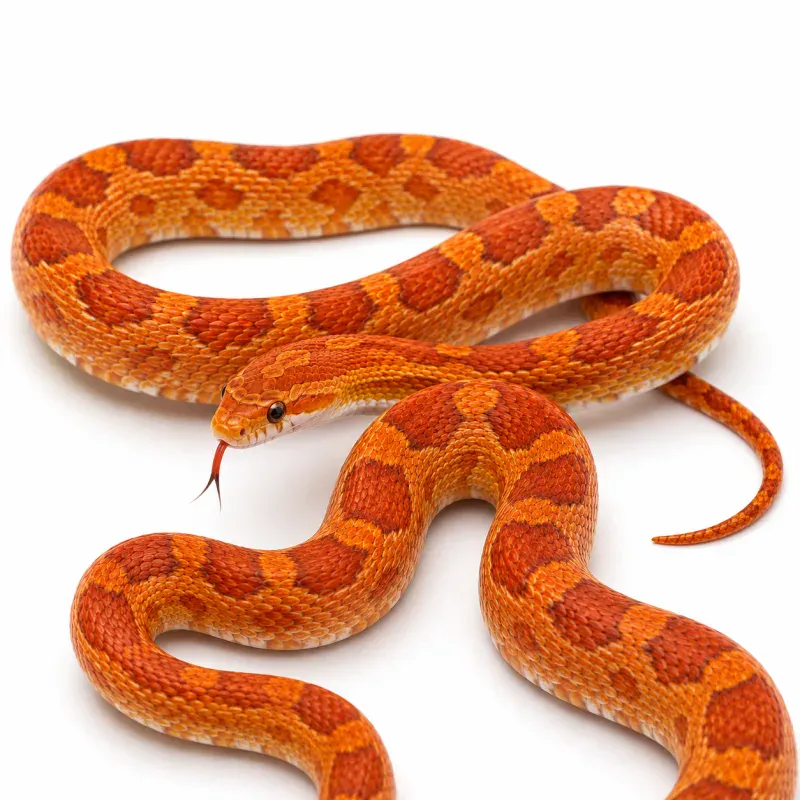
Corn snakes (Pantherophis guttatus) are among the most popular pet snakes due to their docile nature, manageable size, and relatively simple care requirements. However, providing the correct temperature gradient is critical for their digestion, immune function, and overall well-being. This guide covers everything you need to know about corn snake heating: from choosing between under-tank heaters (UTH) and overhead heating, to selecting the right thermostat, and implementing seasonal temperature cycling.
In this comprehensive guide, you'll learn how to set up a safe and effective heating system, monitor temperatures accurately, avoid common pitfalls, and keep your corn snake healthy and thriving for 15–20 years.
Enclosure Setup & Thermal Gradient
A proper thermal gradient allows your corn snake to self-regulate its body temperature by moving between warm and cool zones. For a single adult corn snake, a 40-gallon (36x18x18 inch) enclosure is the minimum recommended size. Larger is always better — a 55-gallon or 75-gallon tank provides more room for a proper gradient and enrichment.
Warm Side
The warm side should maintain a surface temperature of 88–92°F (31–33°C). This is where the snake will bask and digest food. Place a basking spot (a flat rock or piece of driftwood) directly under the heat source. The snake will rest here to raise its body temperature after eating.
Cool Side
The cool side should be 75–80°F (24–27°C). This provides a retreat for cooling down and sleeping. Ensure there is at least one hide on the cool side — a half-log, cork bark, or a commercial hide box. The snake needs to feel secure when it's not basking.
Ambient Temperature
The overall ambient temperature in the enclosure should be 78–82°F (25–28°C). Use a digital thermometer with a probe to monitor both ends. Place the probes at the surface where the snake rests, not on the glass or substrate surface (unless the snake burrows). Check temperatures twice daily — morning and evening — to ensure consistency.
| Zone | Target Temperature (°F) | Target Temperature (°C) |
|---|---|---|
| Warm side (surface) | 88–92 | 31–33 |
| Cool side (surface) | 75–80 | 24–27 |
| Ambient air | 78–82 | 25–28 |
To achieve a stable gradient, place the heat source at one end of the enclosure, never in the middle. The distance between the heat source and the basking spot should be adjusted based on wattage — start with a lower wattage and measure, then increase if needed. Always allow a temperature gradient of at least 10°F (5–6°C) between warm and cool sides.
UTH vs Overhead Heating: Pros & Cons
Both under-tank heaters (UTH) and overhead heat sources can work for corn snakes, but each has distinct advantages and drawbacks. The choice often depends on your enclosure type, room temperature, and personal preference. Many keepers use a combination for the best results.
Under-Tank Heaters (UTH)
UTH pads or heat mats attach to the underside of the enclosure. They provide belly heat, which corn snakes naturally seek for digestion. UTHs are especially useful for plastic enclosures (like tubs) and glass tanks with a solid bottom.
- Pros: Low profile, energy efficient, doesn't dry out the air, safe for plastic/glass enclosures.
- Cons: Must be used with a thermostat to prevent burns; cannot raise ambient air temperature effectively.
When using a UTH, ensure it covers about one-third of the floor area on the warm side. Never place the UTH inside the enclosure — it can cause severe burns. Always attach it to the outside bottom, and leave a small gap between the UTH and the surface it sits on (e.g., use rubber feet) to allow air circulation and prevent heat buildup.
Overhead Heating
Overhead sources include ceramic heat emitters (CHE), deep heat projectors (DHP), or incandescent bulbs. They provide radiant heat from above, mimicking the sun. Overhead heating is essential for enclosures with high ceilings or those that need a temperature boost.
- Pros: Raises ambient temperature, mimics natural sunlight (with proper bulb), can be used for day/night cycles.
- Cons: Can dry out the enclosure, requires a cage to prevent burns, may lower humidity.
For overhead heating, you'll need a ceramic socket rated for the wattage, and always use a protective cage to prevent the snake from coming into direct contact with the bulb. Place the fixture at one end, suspended above the enclosure. For a 40-gallon tank, a 50–75W CHE is usually sufficient; for larger enclosures, go up to 100W.
Recommendation: For most corn snakes, a combination of a UTH on the warm side (regulated by a thermostat) and a low-wattage CHE for ambient heat works best. Avoid colored bulbs (red/blue) as they disrupt the snake's day/night cycle. Use a white light bulb during the day for a natural photoperiod, and turn it off at night — but keep the CHE on if needed to maintain nighttime temperatures.
Thermostat Types & Selection
A thermostat is non-negotiable for any heat source. It prevents overheating and burns. Without a thermostat, a UTH can reach 120°F+ and cause fatal burns. There are three main types of thermostats, each suited to different heat sources.
On/Off Thermostats
These turn the heat source on or off based on temperature. They are affordable but cause temperature fluctuations of ±3–5°F. They are suitable for UTHs where temperature swings are less critical, but they can shorten the lifespan of overhead bulbs due to frequent on/off cycling.
Pulse Proportional Thermostats
These send rapid pulses of power to maintain a steady temperature. They are more precise than on/off types and work well with UTHs. The pulses are so quick that the heat output is effectively constant, which helps maintain a stable surface temperature. They are slightly more expensive but worth the investment.
Dimming Thermostats
These gradually reduce power to the heat source, ideal for overhead bulbs. They provide the most stable temperature and prolong bulb life. Dimming thermostats are the best choice for CHEs and incandescent bulbs because they avoid the stress of rapid on/off cycling. They are also quieter than pulse thermostats.
Recommendation: Use a pulse proportional thermostat for UTHs and a dimming thermostat for overhead heat sources. Always place the thermostat probe directly on the warm-side surface where the snake rests. Secure the probe with a small piece of silicone or tape (outside the enclosure for UTHs, inside for overhead). If you use a UTH, place the probe between the UTH and the glass bottom, but for safety, it's better to place it on the substrate surface inside the enclosure — just ensure the snake doesn't move it.
For dual heat sources, you can use a dual-thermostat controller or two separate thermostats. Calibrate your thermostat every few months by comparing the probe reading with a separate digital thermometer.
Seasonal Temperature Cycling
In the wild, corn snakes experience seasonal temperature changes. Mimicking this cycle can improve breeding success and overall health. Even if you don't breed, a gentle cooling period in winter can stimulate natural behaviors and potentially improve longevity.
Summer (Active Season)
Maintain standard warm side (88–92°F) and cool side (75–80°F). Provide 12–14 hours of light per day. This is the active growth and feeding period. Ensure the snake has plenty of food and water.
Winter (Cooling Period)
Reduce temperatures gradually over 2–3 weeks: warm side 75–80°F, cool side 65–70°F. Reduce photoperiod to 8–10 hours. Keep water available. Do not feed during this period (typically 2–3 months). The snake's metabolism slows, and it will become less active. This is natural, but only do this if your snake is healthy and at a good weight. For young snakes or those with health issues, skip the cooling period.
Spring (Return to Normal)
Slowly increase temperatures and photoperiod back to summer levels over 2 weeks. Resume feeding after the snake shows activity. Offer a small meal first to ensure the digestive system is working properly.
Always monitor your snake's weight during the cooling period. A healthy snake may lose 5–10% of its body weight, but if it loses more than 15%, consult a vet.
Humidity & Shedding
Corn snakes require moderate humidity (40–60%). During shedding, increase to 60–70% by misting the enclosure or adding a humid hide. Humidity is just as important as temperature for proper shedding and respiratory health.
- Use a digital hygrometer to monitor humidity. Place it in the middle of the enclosure, away from water bowls and heat sources.
- Avoid constant wet substrate to prevent scale rot. Use a substrate like aspen, cypress mulch, or paper towels that retains some moisture without staying soggy.
- A humid hide (plastic container with damp sphagnum moss) helps with stuck sheds. Place it on the warm side to increase humidity around the snake.
- If humidity is too low, mist the enclosure lightly in the morning and evening. If too high, increase ventilation by adding more air holes or using a screen top.
During shedding, your snake's eyes will become cloudy (blue phase), and the skin will dull. Do not handle during this time. After the shed, check that the eyecaps and tail tip shed completely. If not, provide a humid hide or a shallow warm water soak.
Diet & Feeding Schedule
Corn snakes are carnivores. Feed pre-killed frozen-thawed rodents (mice or small rats) appropriate to the snake's size. Never feed live prey — it can injure your snake. Thaw frozen rodents in warm water (not a microwave) until they reach room temperature. Use tongs to offer the prey, wiggling it to stimulate a feeding response.
| Snake Size | Prey Size | Frequency |
|---|---|---|
| Hatchling (10–20g) | Pinky mouse | Every 5–7 days |
| Juvenile (20–100g) | Fuzzy mouse | Every 7–10 days |
| Subadult (100–200g) | Hopper mouse | Every 10–14 days |
| Adult (200g+) | Adult mouse or small rat | Every 14–21 days |
Always feed in the enclosure to avoid stress. Do not handle for 48 hours after feeding to prevent regurgitation. If your snake refuses food, check temperatures — a common cause is a too-cool warm side. Also, avoid feeding during shedding, as the snake may not be interested.
Handling & Temperament
Corn snakes are generally docile and tolerate handling well. Start with short sessions (5–10 minutes) and gradually increase. Support the snake's body fully and avoid sudden movements. Never handle during shedding or after feeding.
When picking up a corn snake, approach from the side, not from above (which mimics a predator). Slide your hand under the snake's body and lift gently. Let the snake move through your hands — don't grip tightly. Always supervise children during handling.
Regular handling (2–3 times a week) can help your snake become accustomed to you, but too much can stress it. Watch for signs of stress: tail rattling, musking (a foul-smelling secretion), or defensive striking. If these occur, reduce handling frequency.
Common Health Issues
- Respiratory Infections: Caused by low temperatures or high humidity. Symptoms include wheezing, mucus, open-mouth breathing. Treat by correcting temperature and consulting a vet. Quarantine the snake and ensure the enclosure is dry and warm.
- Scale Rot: Bacterial infection from wet substrate. Symptoms include red, blistered, or peeling scales. Keep enclosure clean and dry, and treat with a reptile-safe antiseptic (e.g., diluted betadine) and veterinary care.
- Stuck Shed: Usually due to low humidity. Provide a humid hide or soak the snake in shallow warm water (85°F) for 15–20 minutes. Gently remove retained shed with a damp cloth.
- Mites: Tiny parasites visible as moving black dots. Symptoms include excessive soaking and rubbing. Use reptile-safe mite treatment and deep clean the enclosure. Replace substrate and disinfect all décor.
- Inclusion Body Disease (IBD): Rare but fatal; symptoms include neurological issues. If suspected, isolate and consult a vet immediately.
Regularly check your snake for any lumps, bumps, or changes in behavior. Weigh your snake monthly to track growth and detect weight loss early.
Pitfalls to Watch For
- Skipping the thermostat: Always use a thermostat with any heat source to prevent burns. This is the #1 cause of burns in pet snakes.
- Using heat rocks: They can cause severe burns. Never use them.
- Overfeeding: Leads to obesity. Stick to the feeding schedule and adjust prey size as your snake grows.
- Incorrect humidity: Too low causes stuck sheds; too high causes respiratory issues. Aim for 40–60%.
- Handling too soon after feeding: Can cause regurgitation. Wait at least 48 hours.
- Ignoring temperature fluctuations: Even a few degrees off can cause health problems. Check temps daily.
- Using analog thermometers: They are often inaccurate. Use digital thermometers with probes.
Conclusion
Setting up the correct temperature gradient for your corn snake is essential for its health and longevity. Whether you choose UTH, overhead heating, or a combination, always use a quality thermostat and monitor temperatures regularly. Seasonal cycling can enhance your snake's natural rhythms. With proper husbandry, your corn snake will thrive for 15–20 years.
Remember, every heat source should be regulated, every temperature should be measured, and every change should be gradual. By following this guide, you'll create a comfortable, safe environment that supports your corn snake's physical and behavioral needs.
FAQ
What is the ideal temperature for a corn snake's warm side?
The warm side surface should be 88–92°F (31–33°C). This is where the snake basks to digest food. Use a thermostat to maintain this range and avoid overheating.
Can I use a heat lamp for my corn snake at night?
Yes, but only if it doesn't emit visible light. Ceramic heat emitters (CHEs) are perfect for nighttime heating because they emit no light. Avoid red or blue bulbs, as they can disrupt the snake's circadian rhythm.
How long should I leave the heat source on?
Heat sources should be on 24/7, but use a thermostat to regulate them. If you use a light bulb for daytime heat, turn it off at night and rely on a CHE or UTH to maintain nighttime temperatures.
What should I do if my corn snake is not eating?
First, check the temperature gradient — if the warm side is below 88°F, the snake may not digest properly. Also, check for signs of illness, shedding, or stress. If your snake refuses food for more than 2–3 weeks, consult a reptile vet.
Related Reading
- Corn Snake Care Guide — Complete species manual.
- Reptile Heating Guide — Heat source comparison.
- Ball Python Temperature Guide — Similar colubrid setup.
Not a timer — it reads the actual humidity and stops when it hits your target. Two temperature probes, failsafes, no cloud account. We don't know yet whether it's worth making, so we're asking keepers first. Two-minute survey →
One email when there's news — including if we decide not to build it. No newsletter.
Check optimal temps, calculate feeding, and find your perfect species match.
References
- https://www.reptifiles.com/corn-snake-care-guide/
- https://www.thesprucepets.com/corn-snake-care-1238316
- https://www.vet.cornell.edu/animal-health/reptile-health
🐾 Join the Community
See how other keepers set up their enclosures, ask questions, and share your experience.
🛠️ Apply What You Learned
Check optimal temps, calculate feeding schedules, and get calcium dosage — all personalized for your species.
Comments
No account needed — corrections, updates and questions are all welcome. For a full question with photos, the community Q&A is the better place.