Tarantula Care Guide: Complete Husbandry
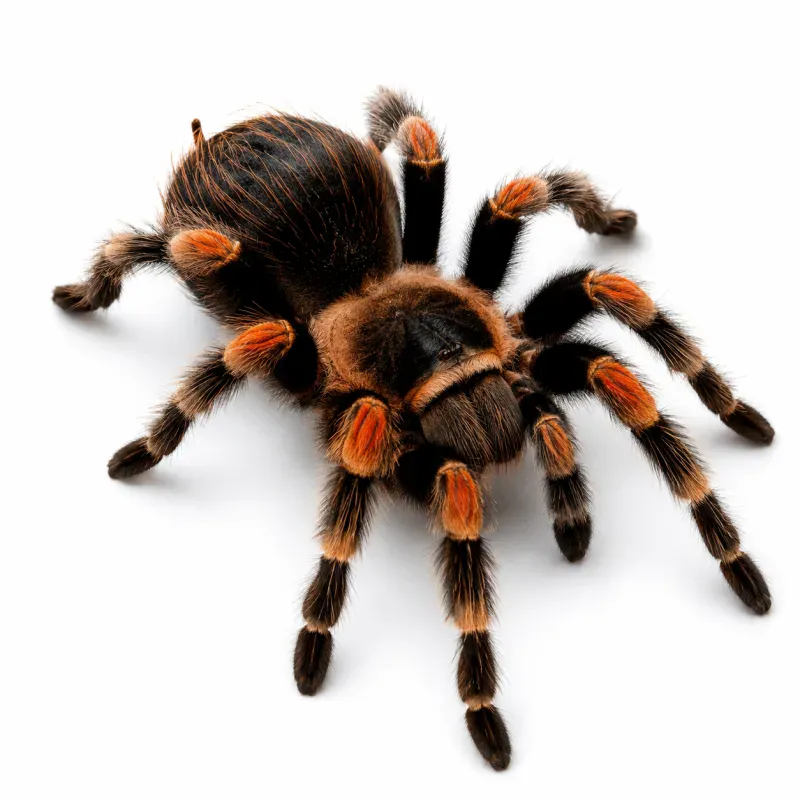
Species Overview
Tarantulas are the ultimate low-maintenance display pet. Feed once a week, provide water and substrate — that's it. Silent, near-zero waste, and many species live 15–30+ years (females). They require minimal space, no daily attention, and their fascinating behaviors — from webbing to burrowing — make them endlessly entertaining to observe. This guide covers everything you need to start keeping tarantulas successfully, whether you're a first-time owner or expanding your collection.
Why Keep Tarantulas?
Unlike dogs or cats, tarantulas don't need walks, grooming, or social interaction. They are ideal for people with busy schedules, small living spaces, or allergies to fur and feathers. Their husbandry is straightforward once you understand the basics, and the variety of colors, sizes, and behaviors across the Theraphosidae family means there's a species for every interest.
What to Expect as an Owner
- Feeding: 1–2 times per week for juveniles, 2–4 times per month for adults.
- Maintenance: Spot cleaning, water dish refills, and occasional substrate replacement.
- Lifespan: Females of many species live 15–30+ years; males often live only 3–8 years after maturity.
- Cost: Initial setup is affordable (under $100 for most), with ongoing costs of just a few dollars per month for food.
Best Beginner Species
Choosing the right first tarantula is critical for a positive experience. New World terrestrial species are generally calm, hardy, and have relatively mild venom. The following table lists the most recommended beginner species:
| Species | Type | Temperament |
|---|---|---|
| Grammostola pulchra (Brazilian Black) | Terrestrial | Docile, 6–7" |
| Brachypelma hamorii (Mexican Red Knee) | Terrestrial | Docile, colorful, 5–6" |
| Tliltocatl albopilosus (Curly Hair) | Terrestrial | Docile, fluffy, 5–6" |
| Caribena versicolor (Antilles Pinktoe) | Arboreal | Docile, stunning, 5–6" |
Why These Species?
- Grammostola pulchra: Jet-black, extremely hardy, and known for a calm demeanor. Often called the "teddy bear" of tarantulas.
- Brachypelma hamorii: Iconic orange and black coloration, slow-moving, and very forgiving of minor husbandry errors.
- Tliltocatl albopilosus: Curly hairs give it a unique look; incredibly tolerant and easy to care for.
- Caribena versicolor: A stunning arboreal species with blue, green, and red colors. Slightly more advanced due to higher humidity needs, but still docile.
Species to Avoid as a First Tarantula
Avoid Old World species (Poecilotheria, Heteroscodra) — medically significant venom and defensive temperaments. These tarantulas are from Africa, Asia, and Australia, and they lack urticating hairs, so they rely on speed and biting to defend themselves. Their venom can cause severe pain, muscle cramps, and in rare cases, hospitalization. They are best left to experienced keepers.
Enclosure Setup
Proper enclosure setup is the foundation of tarantula health. The key is to mimic their natural habitat — either terrestrial (ground-dwelling) or arboreal (tree-dwelling). Getting this wrong can lead to injury or death.
Terrestrial Enclosures
Terrestrial: low enclosure, more floor space than height. A fall from the top of a tall enclosure can be fatal. The rule of thumb: the distance from the substrate surface to the lid should be no more than 1.5× the spider's leg span. For a 6-inch tarantula, that means no more than 9 inches of vertical space above the substrate.
Recommended sizes:
- Spiderlings (1–2"): 4" × 4" × 4" deli cup or similar.
- Juveniles (2–4"): 8" × 8" × 6" enclosure.
- Adults (5"+): 12" × 12" × 8" or 18" × 12" × 10" enclosure.
Arboreal Enclosures
Arboreal: tall enclosure with vertical cork bark. These species, like the Caribena versicolor, need height to climb and web. A 12" × 12" × 18" enclosure is ideal for an adult. Place a piece of cork bark vertically against the back wall to give them a climbing surface and a place to build their web tubes.
Substrate
Substrate: coco fiber or peat moss, 3–4" deep. This depth allows burrowing species to dig and provides a moisture reservoir. Avoid substrates with fertilizers or pesticides. Coco fiber (coconut husk) is the most popular because it holds moisture well and is mold-resistant. Peat moss is also fine, but it can become dusty when dry.
How to prepare substrate:
- Mix dry coco fiber with water until it's damp but not dripping.
- Fill the enclosure to the recommended depth.
- Use your hand to press it down gently to create a firm base.
- Allow it to dry slightly before adding the tarantula.
Water Dish
Small water dish (bottle cap for spiderlings). Every tarantula should have access to fresh, clean water. A shallow dish prevents drowning. For spiderlings, a bottle cap or a small plastic lid works perfectly. For larger tarantulas, use a heavier dish that won't tip over. Clean and refill the dish weekly, or more often if it gets dirty.
Decor and Hides
Provide a hide — a piece of cork bark, a half log, or a small clay pot. This gives your tarantula a place to retreat and feel secure. For terrestrial species, a half-log hide on the substrate works well. For arboreal species, attach a piece of cork bark vertically to the enclosure wall. You can also add silk plants for visual cover, but avoid anything with sharp edges.
Temperature & Humidity
Maintaining the right temperature and humidity is essential for your tarantula's health, especially during molting. Most species are surprisingly tolerant, but extremes can be fatal.
Temperature
Most species thrive at 70–75°F (21–24°C) — room temperature is fine. This means you likely don't need any supplemental heating unless your home gets cold. Below 65°F: low-wattage heat pad on enclosure side (never underneath). Heat pads placed under the enclosure can bake the substrate and cause fatal dehydration. A heat mat on the side of the enclosure, or a heat lamp above a screen lid (with proper spacing), can be used in cooler rooms.
Tips:
- Use a digital thermometer to monitor the temperature accurately.
- Place the enclosure away from direct sunlight and drafts.
- If you use a heat pad, cover only a small portion of the side to create a temperature gradient.
Humidity
Humidity varies by species (50–80%). For example, desert species like Grammostola pulchra prefer lower humidity (50–60%), while tropical species like Caribena versicolor need higher humidity (75–80%). Use a hygrometer to measure humidity levels.
How to manage humidity:
- Mist the enclosure lightly 1–2 times per week, or as needed.
- For high-humidity species, moisten the substrate slightly, but avoid making it muddy.
- Ensure proper ventilation to prevent stagnant air.
Caution: Over-misting causes more problems than under-misting. Wet, stagnant substrate breeds mold and mites, which can harm your tarantula. If you see condensation on the glass, you're over-misting.
Feeding
Feeding is straightforward, but there are important safety considerations, especially around molting.
Food Options
Crickets, dubia roaches, and mealworms are the most common feeders. Each has its pros and cons:
| Feeder | Pros | Cons |
|---|---|---|
| Crickets | Widely available, cheap | Smelly, can bite, need gut-loading |
| Dubia roaches | Nutritious, quiet, don't climb smooth surfaces | More expensive, some people dislike roaches |
| Mealworms | Easy to store, high fat | Can burrow, not ideal as staple |
Feeding Schedule
1–2/week for juveniles, 2–4/month for adults. Juveniles are growing and need more frequent feedings. Adults can go longer between meals — some keepers feed adults once every 2–3 weeks. Always provide prey that is smaller than the tarantula's body (not leg span) to avoid injury.
Special Cases
Pre-kill for spiderlings. Spiderlings under 1 inch cannot subdue live prey easily. Kill the cricket or roach by crushing its head, then offer it with tweezers. You can also offer small pieces of pre-killed prey.
Remove uneaten prey after 24 hours — a cricket can kill a molting tarantula. Crickets are notorious for chewing on a vulnerable tarantula during or after a molt. Always check the enclosure after 24 hours and remove any uneaten prey.
Water
Always provide a water dish. Tarantulas drink regularly, and a dish also contributes to humidity. For spiderlings, a bottle cap or a small water dish is sufficient. Make sure the dish is shallow to prevent drowning.
Molting
Molting is the process where a tarantula sheds its exoskeleton to grow. It's the most vulnerable time in a tarantula's life, and understanding it is crucial.
Signs of Premolt
- Loss of appetite (refusing food for days or weeks).
- Dull, darkened skin, especially on the abdomen.
- Increased webbing (some species lay a molting mat).
- Sluggish behavior.
The Molting Process
1. The tarantula lies on its back or side. This can be alarming for new owners — do not disturb it.
2. The old exoskeleton splits, and the tarantula slowly pulls itself out. This can take hours.
3. Once out, the tarantula is soft and pale. Its fangs are white and soft.
4. It will rest and harden over the next few days.
Post-Molt Care
Do not feed for at least 5–7 days after a molt. The fangs need time to harden. Also, do not handle the tarantula. Wait until it has fully hardened and resumed normal activity.
Common Molting Problems
- Dystocia: Difficulty molting, often due to low humidity. If the tarantula gets stuck, you may need to intervene, but only as a last resort.
- Stuck molt: If a leg or part of the abdomen is stuck, you can gently mist the area with water. If it doesn't resolve, consult a vet.
For more details, see our Tarantula Molting Guide.
Safety & Handling
Tarantulas are not pets to be handled frequently. They are display animals, and handling should be kept to a minimum — or avoided altogether.
Why Handling Is Discouraged
Tarantulas should not be handled regularly. A fall from 12" can rupture their abdomen, which is often fatal. Their abdomens are fragile, and even a short fall onto a hard surface can cause lethal injury. Additionally, handling stresses the tarantula, which can lead to defensive behavior.
Urticating Hairs
New World species have urticating hairs — tiny barbed hairs on their abdomen that they kick off when threatened. These hairs irritate skin and eyes, causing itching and rashes. If you get them in your eyes, rinse thoroughly and seek medical help if symptoms persist.
If You Must Handle
If you need to move your tarantula (e.g., for rehousing), do so with a catch cup or a soft paintbrush. Never grab the spider. Gently coax it into a container with a lid.
Rehousing Tips
Rehouse in a bathtub with drain plugged to contain escapes. This is a common practice among keepers. Work over a large, open area where you can see the tarantula at all times. Use a catch cup and a piece of cardboard or plastic to guide the spider.
Bites
New World tarantulas have mild venom, comparable to a bee sting. Symptoms are local pain, swelling, and redness. Old World species have more potent venom and should be treated with caution. If bitten, wash the area with soap and water, apply a cold pack, and take an antihistamine if needed. Seek medical attention if you have an allergic reaction.
What Not to Do
Avoid these common mistakes to keep your tarantula healthy and alive.
- Tall enclosure for terrestrials: A fall from the screen top can be fatal. Keep the height low, as described earlier.
- Handling: For your enjoyment, not the spider's. A dropped tarantula is dead. Even a short fall can cause a fatal rupture.
- Over-misting: Wet, stagnant substrate breeds mold and mites. Only mist as needed to maintain the species-specific humidity.
- Old World species as first tarantula: Start with New World terrestrials. Old World species are fast, defensive, and have more potent venom.
- Leaving live prey in the enclosure: Crickets can injure or kill a molting tarantula. Always remove uneaten prey after 24 hours.
- Using heat pads under the enclosure: This can overheat the substrate and dry out your tarantula. Use side-mounted heat pads only if needed.
Health & Common Issues
Tarantulas are hardy, but they can have health issues. Knowing the signs of a healthy tarantula and common problems can help you act quickly.
Signs of a Healthy Tarantula
- Active and alert, with a normal posture.
- Plump abdomen (not shriveled).
- Clean, intact legs and pedipalps.
- Regular feeding and molting.
Common Health Problems
| Problem | Symptoms | Treatment |
|---|---|---|
| Dehydration | Shriveled abdomen, lethargy | Provide a water dish, mist lightly |
| Mites | Small moving dots on substrate or spider | Remove uneaten prey, let substrate dry, rehouse if severe |
| Mold | White or green fuzzy growth on substrate | Increase ventilation, remove mold, replace substrate |
| Injury | Limp or missing leg | Keep enclosure clean, monitor for infection |
When to See a Vet
Tarantulas rarely need a vet, but if you notice signs of infection, severe dehydration, or a stuck molt, consult an exotic pet vet experienced with invertebrates.
Conclusion
Tarantulas are fascinating, low-maintenance pets that can live for decades with proper care. By choosing a beginner-friendly species, setting up the right enclosure, and avoiding common mistakes, you'll be rewarded with a unique and captivating companion. Remember: they are display animals, not toys. Respect their space, and they'll thrive.
Related Reading
- Tarantula Molting Guide — Premolt signs and post-molt care.
- Tarantula Species Guide — Brazilian Black to Green Bottle Blue.
- Tarantula Beginner Guide — Best first tarantulas ranked.
Frequently Asked Questions
How often should I feed my tarantula?
Juveniles should be fed 1–2 times per week, while adults can be fed 2–4 times per month. Always remove uneaten prey after 24 hours to prevent injury to your tarantula, especially during molting.
Can I handle my tarantula?
It's best to avoid handling altogether. Tarantulas are display pets, and a fall from as little as 12 inches can rupture their abdomen, which is often fatal. If you must move them, use a catch cup or a soft brush.
What temperature and humidity do tarantulas need?
Most species thrive at 70–75°F (21–24°C), which is room temperature. Humidity varies by species, ranging from 50% to 80%. Use a hygrometer to monitor, and avoid over-misting, as wet substrate can cause mold and mites.
Which tarantula species is best for a beginner?
The best beginner species are New World terrestrial tarantulas like Grammostola pulchra (Brazilian Black), Brachypelma hamorii (Mexican Red Knee), and Tliltocatl albopilosus (Curly Hair). They are docile, hardy, and have mild venom. Avoid Old World species with more potent venom and defensive temperaments.
Check optimal temps, calculate feeding, and find your perfect species match.
References
- Schulz, S. (2013). Tarantula Keepers Guide. T.F.H. Publications.
- Hendrix, S. (2018). The Tarantula Whisperer: A Comprehensive Guide to Keeping Tarantulas. CreateSpace.
🐾 Join the Community
See how other keepers set up their enclosures, ask questions, and share your experience.
🛠️ Apply What You Learned
Check optimal temps, calculate feeding schedules, and get calcium dosage — all personalized for your species.
Comments