Pacman Frog Health Guide: 8 Warning Signs
Introduction
Most Pacman frog deaths are not mysteries. They follow a short list of problems — a basking spot that never gets warm enough, calcium that was never dusted, a substrate that got swallowed, water that was never dechlorinated — and each one gives you days of warning first. This guide covers the eight signs worth acting on, what to fix before you panic, and the point where a vet is the only answer.
What a Healthy Pacman Frog Actually Looks Like
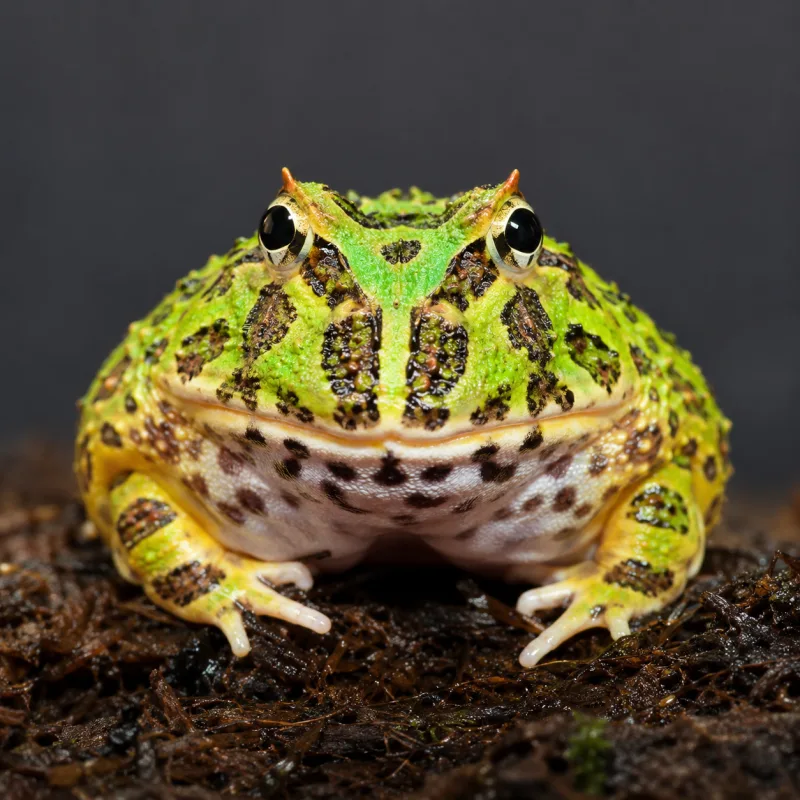
You cannot spot illness without a baseline, so measure these once a week:
- Weight and shape: round and heavy, but not taut. A healthy frog feels like a water balloon; a bloated one feels like a drum.
- Posture: sits upright with the head lifted when hunting. A frog that stays pancaked for days is not "just burrowing".
- Skin: smooth, moist, no fuzzy patches, no persistent redness on the belly or thighs.
- Appetite: juveniles eat daily, adults every 2–3 days. Refusing one meal is normal; refusing for two weeks is not.
- Droppings: firm, dark, produced every few days. No complete prey items, no blood, no visible substrate.
Write the weight down. A 10% drop that happens slowly is the single most reliable early warning you will ever get.
The Eight Warning Signs
1. Refusing food for more than two weeks
Check temperature first: below 75°F digestion stalls and appetite disappears. Then check for a shed in progress, recent handling, or a tank move. If temperature is right and the frog still refuses, treat it as a health problem rather than a mood.
2. Lethargy and no burrowing
Pacman frogs hide. A frog that sits exposed in the open, or stays half-buried with limbs splayed, is usually too cold or already weak. Confirm with a temperature gun at the substrate level — not the glass.
3. Soft jaw, trembling legs, or a curved spine
These are the classic signs of metabolic bone disease from missing calcium or vitamin D3. In juveniles it can progress in weeks. Correct the supplementation schedule immediately: every feeding for growing frogs, every second feeding for adults, with D3 unless you provide proper UVB.
4. Bloating that does not go down
Gas passes within a day. A frog that stays inflated for 48 hours, feels firm, and stops passing droppings is likely impacted — usually by swallowed substrate or an oversized meal. Mild cases respond to warm dechlorinated soaks; a frog that is firm, listless and not defecating needs a vet.
5. Reddening on the thighs or belly
Red leg syndrome is a bacterial infection that thrives in dirty, warm, stagnant water. Move the frog to a clean hospital setup, keep the water dish spotless, and get veterinary antibiotics — this does not resolve on its own.
6. Fuzzy or peeling white patches
Fungal infections start where the skin stays wet and cool. Increase ventilation, dry the enclosure surface, and treat with an amphibian-safe antifungal as directed by a vet. Do not use fish medications on amphibians without advice.
7. Prolapse after a large meal
A pink mass at the vent needs immediate veterinary attention. Keep the frog on clean, damp paper towel in a dark hospital container and do not attempt to push tissue back in yourself.
8. Wheezing, open-mouth breathing, or bubbles at the nose
Respiratory infection. Check for a lid that traps stale humid air, then raise ventilation and see a vet — amphibians do not tolerate respiratory infections for long.
Symptom → Cause → First Action
| Sign | Most likely cause | Do this first | Vet? |
|---|---|---|---|
| Refusing food, 2+ weeks | Low temperature, impaction | Verify 78–82°F, warm soak | If no droppings in 5 days |
| Soft jaw / tremors | Calcium or D3 deficiency | Fix dusting schedule today | Yes — imaging and calcium plan |
| Firm bloat, 48h+ | Impaction | Warm soak, no more feeding | Yes |
| Red thighs / belly | Red leg (bacterial) | Clean hospital setup, fresh water | Yes — antibiotics |
| White fuzz, peeling skin | Fungal infection | More ventilation, drier surface | Yes if spreading |
| Prolapse | Oversized meal, straining | Damp paper towel, dark container | Immediately |
| Wheezing, open mouth | Respiratory infection | Increase ventilation, stop misting | Yes |
Impaction: The One You Can Usually Prevent
Pacman frogs swallow everything in range, including the substrate they sit on. Risk goes up with loose particles, bowl feeding with spilled substrate, and prey that is too large.
- Feed with tongs over a clean dish or a bare tile, not on loose substrate.
- Keep substrate packed and moist so it does not stick to prey.
- Match prey to the frog's mouth — if it is wider than the frog's head, it is too big.
- Warm dechlorinated soaks (78–80°F, 15–20 minutes) help pass small amounts.
Prevention also matters in the water dish: rinse it daily. A frog that sits in fouled water is marinating in the bacteria that cause red leg.
The Prevention Checklist
| Item | Target | Why it prevents illness |
|---|---|---|
| Basking / ambient temperature | 78–82°F (75°F minimum) | Digestion stops when it is cool |
| Humidity | 70–80% | Too dry causes shedding problems, too wet causes fungal growth |
| Water | Dechlorinated, changed daily, shallow | Chlorine burns skin; dirty water spreads bacteria |
| Substrate | Moist, packed, no loose chunks | Lowers impaction risk |
| Calcium + D3 | Every feeding ( juveniles), every 2nd (adults) | Prevents MBD |
| Feeder quality | Gut-loaded, no wild-caught insects | Reduces parasites and pesticide exposure |
| Quarantine | 4–8 weeks for new arrivals | Stops cross-contamination |
Common Mistakes
- Judging temperature by feel or by an analog gauge stuck to the glass.
- Using distilled or softened water — both strip minerals the frog needs.
- Handling when the frog is bloated, which adds stress on a compromised gut.
- Feeding pinky mice weekly because the frog "looks big" — obesity causes its own set of problems.
- Waiting a month because the frog "still looks fine". Amphibians hide decline until it is advanced.
Frequently Asked Questions
How do I know if my Pacman frog is impacted?
Firm bloating that lasts more than 48 hours, no droppings, and loss of appetite together point to impaction. Warm dechlorinated soaks help mild cases; a frog that stays firm and listless needs a vet, because untreated impaction is fatal.
Can a Pacman frog recover from metabolic bone disease?
Early cases — slight softness in the jaw, minor tremors — often improve once calcium, D3 and UVB are corrected. Structural deformities that have already formed do not reverse, which is why the dusting schedule matters from the first feeding.
What temperature is too cold for a Pacman frog?
Below 75°F digestion slows and the immune system suffers. The working range is 78–82°F, with a gentle drop at night. Anything under 70°F for more than a day should be treated as an emergency.
Should I use distilled water for my frog?
No. Distilled and reverse-osmosis water lack the minerals amphibians absorb through their skin. Use dechlorinated tap water, or bottled spring water if your tap is heavily treated.
Does my Pacman frog need a vet?
For bloat that will not pass, prolapse, red leg, respiratory signs or a two-week food strike with no other explanation — yes. Find an exotics vet before you need one; the first appointment is not the time to be searching.
Related Reading
- Pacman Frog Care Guide — full husbandry: enclosure, heat, humidity and feeding.
- Pacman Frog Enclosure Guide — substrate, water dish and ventilation.
- Pacman Frog Feeding Guide — feeders, calcium schedule and portion size.
- Pacman Frog Morphs — colours, patterns and prices.
- Reptile Biosecurity Guide — quarantine and cleaning practice.
Check optimal temps, calculate feeding, and find your perfect species match.
🐾 Join the Community
See how other keepers set up their enclosures, ask questions, and share your experience.
🛠️ Apply What You Learned
Check optimal temps, calculate feeding schedules, and get calcium dosage — all personalized for your species.
Comments
No account needed — corrections, updates and questions are all welcome. For a full question with photos, the community Q&A is the better place.