Pacman Frog Care: The Ultimate Beginner Amphibian
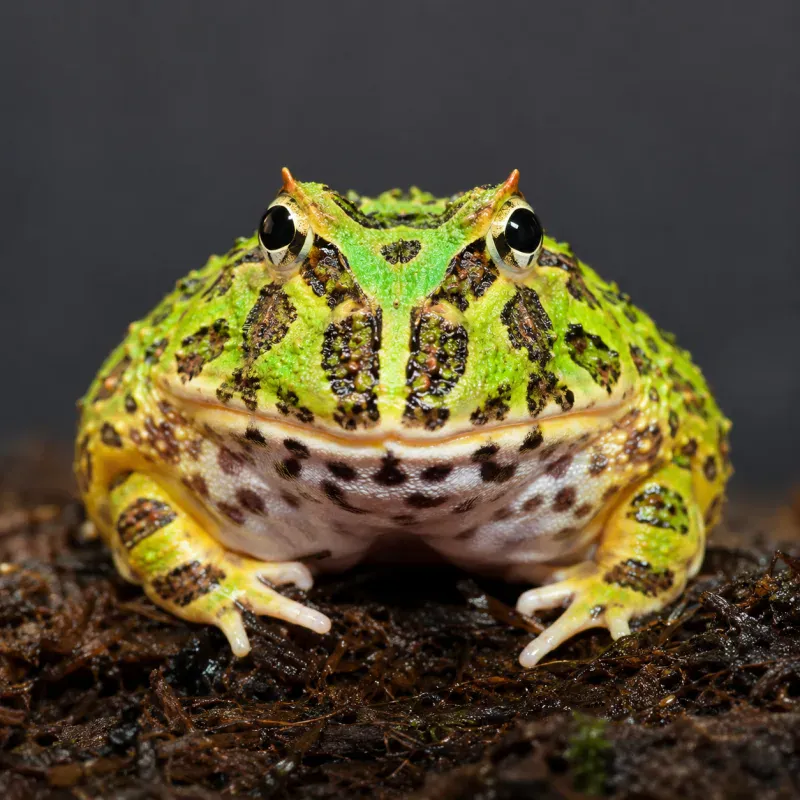
Species Overview
\\nThe Pacman frog (Ceratophrys cranwelli) is the ultimate "pet rock" — 95% of their time is spent buried in substrate with only eyes showing, waiting for food. Native to South America, they're ambush predators with enormous mouths. Their bite demands respect.
\\nThese frogs are named for their round, flat bodies and huge mouths, reminiscent of the classic video game character. They are terrestrial, nocturnal, and highly sedentary, making them a fascinating, low-maintenance pet for beginners who appreciate a "watch, don't touch" amphibian.
\\nIn the wild, Pacman frogs inhabit the humid forests and grasslands of Argentina, Uruguay, and Brazil. They are opportunistic feeders, consuming anything that moves within striking distance — insects, small rodents, even other frogs. In captivity, they thrive with a proper setup and a consistent pacman frog feeding schedule.
\\n\\nEnclosure Setup
\\nMinimum: 10-gallon tank for an adult. Floor space matters, not height. A 20-gallon long tank is even better for larger females. Substrate: 3–4" coconut fiber (Eco Earth) — deep enough to completely bury. Shallow dechlorinated water dish changed daily. Fake plants for overhead cover.
\\nStep-by-Step Enclosure Setup
\\n- \\n
- Choose the tank: A 10-gallon glass terrarium with a secure mesh lid is ideal. Ensure the lid is tight — Pacman frogs are not escape artists, but they can push up substrate. \\n
- Add substrate: Fill the bottom with 3–4 inches of Eco Earth (coconut fiber). Moisten it with dechlorinated water until it holds its shape when squeezed, but doesn't drip. \\n
- Place a water dish: Use a shallow, heavy dish that cannot be tipped over. Fill with dechlorinated water, just deep enough for the frog to soak its rear. Change daily. \\n
- Add hiding spots: Fake plants, cork bark, or a half-log provide overhead cover. Avoid sharp decorations that could injure the frog. \\n
- Install heating: Attach a low-wattage heat pad to the side of the tank, not underneath. This creates a temperature gradient. \\n
- Add a thermometer and hygrometer: Place one at each end of the tank to monitor temperature and humidity. \\n
Choosing the Right Tank Size
\\n| Frog Size | Minimum Tank Size | Recommended Tank Size |
|---|---|---|
| Juvenile (under 2 inches) | 5-gallon | 10-gallon |
| Adult (2–4 inches) | 10-gallon | 20-gallon long |
| Large female (over 4 inches) | 15-gallon | 20-gallon long |
Remember, floor space is more important than height. Pacman frogs rarely climb, so a long, low tank is preferable to a tall one.
\\n\\nTemperature & Humidity
\\n| Parameter | Value |
|---|---|
| Daytime | 75–82°F (24–28°C) |
| Night | 65–72°F (18–22°C) |
| Humidity | 60–80% |
Low-wattage heat pad on the side (not under! — they burrow to cool down). Mist daily. Keep substrate damp but not swampy.
\\nHow to Achieve the Right Temperature
\\nUse a heat pad rated for the size of your tank (e.g., 8-watt for 10-gallon). Attach it to the side of the tank, covering about one-third of the surface. This creates a warm side and a cool side, allowing the frog to thermoregulate. Always use a thermostat to prevent overheating.
\\nDuring the night, temperatures can drop to 65–72°F. If your home gets colder, use a low-wattage ceramic heat emitter (CHE) on a thermostat, but be careful — it can dry out the enclosure, so increase misting.
\\nHumidity Maintenance
\\nMist the enclosure once or twice daily with dechlorinated water. Use a spray bottle set to a fine mist. The substrate should feel like a wrung-out sponge. If it's soggy, reduce misting; if it's dry, increase misting. A hygrometer will help you monitor levels.
\\nIf humidity is consistently low, consider a reptile fogger for a few hours a day, but ensure good ventilation to prevent mold.
\\n\\nSubstrate
\\nEco Earth (coconut fiber) is standard. Change monthly. Spot-clean feces immediately. Never use: gravel, moss (impaction), or bark chips.
\\nWhy Coconut Fiber is Best
\\nCoconut fiber retains moisture well, is soft enough for burrowing, and is digestible if accidentally ingested. It also resists mold when properly maintained.
\\nSubstrate Comparison
\\n| Substrate | Pros | Cons | Safe? |
|---|---|---|---|
| Coconut Fiber (Eco Earth) | Retains moisture, soft, burrowable | Needs monthly changing | Yes |
| Sphagnum Moss | Holds humidity | Risk of impaction if swallowed | No (as sole substrate) |
| Gravel | Easy to clean | Hard, can injure, not burrowable | No |
| Bark Chips | Natural look | Sharp edges, impaction risk | No |
| Paper Towels | Easy to clean, cheap | Not burrowable, low humidity retention | Yes (temporary/quarantine) |
How to Change Substrate
\\n- \\n
- Remove the frog and place it in a temporary container with a damp paper towel. \\n
- Discard the old substrate in a trash bag. \\n
- Wash the tank with hot water and a reptile-safe disinfectant (e.g., diluted chlorhexidine). Rinse thoroughly. \\n
- Add fresh, pre-moistened Eco Earth to a depth of 3–4 inches. \\n
- Reassemble decorations and water dish, then return the frog. \\n
Feeding
\\nStaples: Nightcrawlers, dubia roaches, crickets. Frequency: juveniles daily, adults 2–3×/week. Supplement calcium with D3 2×/week. Use tongs — their bite draws blood.
\\nFeeding Schedule by Age
\\n| Age | Frequency | Prey Size | Calcium Supplement |
|---|---|---|---|
| Juvenile (under 6 months) | Daily | 1/4 inch insects | Calcium with D3 every feeding |
| Sub-adult (6–12 months) | Every other day | 1/2 inch insects | Calcium with D3 3×/week |
| Adult (over 12 months) | 2–3×/week | Full-size insects | Calcium with D3 2×/week |
How to Feed Safely with Tongs
\\n- \\n
- Use long, blunt-tip feeding tongs to avoid accidental bites. \\n
- Offer one prey item at a time, wiggling it gently in front of the frog. \\n
- Allow the frog to strike and swallow. Do not pull the prey away. \\n
- Feed until the frog loses interest (usually 3–5 items for adults). \\n
Prey Options and Nutrition
\\n- \\n
- Nightcrawlers: Excellent staple, high in moisture and protein. Cut into pieces for small frogs. \\n
- Dubia roaches: Great nutritional profile, low in fat. Gut-load before feeding. \\n
- Crickets: Readily available, but need gut-loading and dusting. Remove uneaten crickets to prevent biting the frog. \\n
- Pinky mice: Only for large adults, as a rare treat (once a month max). High in fat, can cause obesity. \\n
Common Feeding Mistakes
\\n- \\n
- Overfeeding: Obesity is a leading cause of death in captive Pacman frogs. Stick to the schedule. \\n
- Feeding prey too large: Prey should be no wider than the space between the frog's eyes. \\n
- Hand-feeding: Always use tongs to avoid bites and to prevent the frog from associating your hand with food. \\n
- Skipping supplements: Calcium with D3 is crucial for bone health. Without it, frogs develop metabolic bone disease. \\n
The Most Common Problems
\\n- \\n
- Under-tank heating: Frogs burrow to cool down. Heat mat underneath cooks them. \\n
- Dry substrate: Dehydrated frogs refuse food and develop waxy coating. \\n
- Overhandling: Amphibian skin absorbs everything. Handle with wet gloves only when necessary. \\n
- Overfeeding: Obesity kills Pacman frogs. Adults don't need daily food. \\n
Detailed Troubleshooting
\\n| Symptom | Likely Cause | Solution |
|---|---|---|
| Frog not eating | Too cold, too dry, or stress | Check temps (75–82°F), humidity (60–80%), and reduce handling |
| Waxy, pale skin | Dehydration | Increase misting, ensure substrate is damp, provide a water dish |
| Lethargy, swollen legs | Overfeeding, obesity | Reduce feeding frequency, consult a vet |
| Red legs (reddening of thighs) | Bacterial infection (red-leg disease) | Quarantine, clean enclosure, seek veterinary care |
| Mold in substrate | Too wet, poor ventilation | Reduce misting, increase airflow, change substrate |
When to See a Vet
\\nIf your frog shows signs of illness (refusing food for more than a week, lethargy, abnormal skin, difficulty breathing), consult a veterinarian experienced with amphibians. Do not attempt home treatments without professional guidance.
\\n\\nHandling and Temperament
\\nPacman frogs are not pets to be handled. They are observational animals. Their skin is highly permeable, absorbing oils, salts, and chemicals from your hands. Excessive handling causes stress, which can lead to illness.
\\nIf you must move your frog (e.g., for tank cleaning), use powder-free nitrile gloves wetted with dechlorinated water. Gently scoop the frog from underneath, never grab it. Always wash your hands before and after any necessary contact.
\\n\\nSeasonal Care
\\nPacman frogs in the wild experience distinct wet and dry seasons, and while captive frogs don't hibernate, their activity levels may shift with seasonal changes. Here's how to adapt your care throughout the year.
\\nSummer Care
\\n- \\n
- Temperature: Room temperatures may already be in the ideal range. Monitor the tank to ensure it doesn't exceed 82°F. If it does, move the tank to a cooler room or use a small fan (not aimed directly at the frog) to improve airflow. \\n
- Humidity: Summer heat can dry the enclosure faster. Mist more frequently, possibly twice daily, and check the substrate moisture regularly. \\n
- Feeding: Some owners report increased appetite during warmer months. Stick to the recommended schedule to avoid overfeeding. \\n
Winter Care
\\n- \\n
- Temperature: If your home drops below 65°F at night, use a ceramic heat emitter on a thermostat to maintain the night-time range of 65–72°F. Daytime temps should still be 75–82°F. \\n
- Humidity: Heating can dry the air. Increase misting and consider a reptile fogger for a few hours daily, but ensure good ventilation to prevent mold. \\n
- Lighting: While Pacman frogs don't need UVB, they benefit from a consistent day/night cycle. In winter, keep a regular light schedule (e.g., 12 hours on, 12 hours off) to mimic natural conditions. \\n
Cost Breakdown
\\nBefore bringing home a Pacman frog, it's helpful to understand the initial and ongoing costs. Here's a realistic budget based on the equipment and supplies mentioned in this guide.
\\n| Item | Estimated Cost | Notes |
|---|---|---|
| 10-gallon tank | $30–$50 | New; can be less second-hand |
| Heat pad (8-watt) | $10–$20 | Side-mounted, with thermostat recommended |
| Thermostat | $20–$40 | Essential for safety |
| Thermometer and hygrometer | $10–$20 | Digital combo units are affordable |
| Eco Earth (3–4 inches for 10-gallon) | $15–$25 per bag | Changed monthly |
| Water dish | $5–$15 | Shallow, heavy, non-tippable |
| Fake plants/decor | $10–$30 | Optional but recommended |
| Feeding tongs | $5–$15 | Long, blunt-tip |
| Calcium with D3 supplement | $8–$15 per jar | Lasts several months |
| Food (crickets, roaches, worms) | $10–$30 per month | Depends on frog size and quantity |
| Initial setup total | $100–$200 | Excluding the frog itself |
| Monthly maintenance | $30–$60 | Substrate, food, supplements |
These are estimates; prices vary by location and brand. Remember that a thermostat is a non-negotiable safety investment, and a vet visit for an amphibian can cost $50–$100, so it's wise to budget for emergencies.
\\n\\nRelated Reading
\\n- \\n
- Pacman Frog Feeding Guide — What, when, and how much to feed. \\n
- White Tree Frog Care Guide — Compare setups with another popular beginner frog. \\n
- Best Reptile Substrate Guide — Substrate options for high-humidity amphibian enclosures. \\n
- Pacman frog morphs — colors, patterns and typical prices.
Frequently Asked Questions
\\nHow often should I feed my adult Pacman frog?
\\nAdult Pacman frogs should be fed 2–3 times per week. Overfeeding can lead to obesity, which is a common cause of death in captivity. Juveniles, however, need daily feedings.
\\nCan I use a heat pad under the tank?
\\nNo. Heat pads should be placed on the side of the tank, not underneath. Pacman frogs burrow to cool down, and an under-tank heater can cook them. Always use a thermostat.
\\nWhat should I do if my Pacman frog refuses to eat?
\\nFirst, check the temperature and humidity. They should be 75–82°F and 60–80% respectively. If those are correct, reduce handling and ensure the frog has a quiet, dark hiding spot. If the frog still refuses food for more than a week, consult a veterinarian.
\\nIs it safe to handle my Pacman frog?
\\nHandling should be avoided unless absolutely necessary. Amphibian skin absorbs oils and chemicals from human hands, which can harm the frog. If you must handle it, use wet, powder-free nitrile gloves and keep the session brief.
\\nHow often should I change the substrate?
\\nSubstrate should be changed monthly, and feces should be spot-cleaned immediately. If you notice mold or a foul smell, change it more frequently and check your ventilation and misting routine.
\\nCan I keep two Pacman frogs together?
\\nNo. Pacman frogs are solitary and cannibalistic — they will attempt to eat anything that moves, including other frogs. Always house them individually.
\\nWhat should I do if my frog bites me?
\\nPacman frog bites can draw blood. If bitten, stay calm and gently run lukewarm water over the frog's nose to encourage it to release. Do not pull or jerk, as this can injure the frog's jaw. Wash the wound thoroughly and seek medical attention if needed.
\\nHow can I tell if my Pacman frog is stressed?
\\nSigns of stress include refusing food, spending excessive time in the water dish, pacing, and changes in skin color (e.g., becoming pale or darker). Reduce handling, ensure proper temperature and humidity, and provide plenty of hiding spots.
\\n\\nCommon Mistakes to Avoid
\\nEven experienced keepers can slip up. Here are the most frequent errors new Pacman frog owners make, and how to steer clear of them.
\\n- \\n
- Using a heat pad under the tank: This is the #1 killer. Always mount heat pads on the side of the tank, and always use a thermostat. \\n
- Choosing the wrong substrate: Gravel, moss, and bark chips can cause impaction or injury. Stick to coconut fiber. \\n
- Skipping the water dish: Even though they burrow, Pacman frogs need a shallow dish for soaking. Change the water daily. \\n
- Overfeeding: More food doesn't mean a happier frog. Obesity leads to health problems and a shortened lifespan. \\n
- Handling too often: Handling stresses the frog and can transfer harmful chemicals through the skin. Only handle when necessary. \\n
- Ignoring humidity: Low humidity leads to dehydration and skin issues. Mist regularly and monitor with a hygrometer. \\n
Quarantine and Health Checks
\\nWhen you first bring your Pacman frog home, or if you introduce any new items to the enclosure, a quarantine period is wise. This helps prevent the spread of disease and allows you to observe the frog for any signs of illness.
\\nNew Frog Quarantine
\\n- \\n
- Set up a separate, simple enclosure (e.g., a 5-gallon tank with damp paper towels and a hide) in a different room from any existing reptiles or amphibians. \\n
- Keep the frog in quarantine for at least 30 days. Monitor its appetite, activity, and droppings. \\n
- If the frog shows no signs of illness (e.g., clear eyes, healthy skin, regular eating), you can move it to its permanent enclosure. \\n
Regular Health Checks
\\nOnce a week, do a quick visual inspection of your frog (without handling unless necessary). Look for:
\\n- \\n
- Clear eyes and nostrils \\n
- Smooth, moist skin without lesions or redness \\n
- Normal body shape (not too thin or bloated) \\n
- Alertness and responsiveness to movement \\n
If you notice anything unusual, refer to the troubleshooting table above and consult a vet if needed.
\\n\\nEnrichment and Natural Behaviors
\\nWhile Pacman frogs are not active pets, they still benefit from an environment that encourages natural behaviors. Enrichment can reduce stress and promote overall well-being.
\\nEncouraging Burrowing
\\nProvide deep, loose substrate (at least 3–4 inches) so your frog can fully bury itself. This is their primary defense mechanism and a sign of comfort.
\\nHunting Enrichment
\\nInstead of always using tongs to feed, occasionally scatter prey items (like crickets) around the enclosure. This encourages natural hunting behavior and provides mental stimulation. Just be sure to remove any uneaten prey after 15–20 minutes to prevent them from bothering the frog.
\\nEnvironmental Variety
\\nRearrange decorations (plants, cork bark) during substrate changes to provide novelty. This mimics the changing environment of the wild and can stimulate exploration.
\\nRemember: enrichment should never compromise safety. Avoid sharp objects, ensure all items are clean and reptile-safe, and always prioritize the frog's comfort.
Check optimal temps, calculate feeding, and find your perfect species match.
References
- Mattison, C. (2011). Frogs and Toads of the World. Princeton University Press.
- de Vosjoli, P. (2012). Popular Tree Frogs and Pacman Frogs. Advanced Vivarium Systems.
- Devaux, B. (2015). The Pacman Frog: A Complete Guide to Ceratophrys. TFH Publications.
🐾 Join the Community
See how other keepers set up their enclosures, ask questions, and share your experience.
🛠️ Apply What You Learned
Check optimal temps, calculate feeding schedules, and get calcium dosage — all personalized for your species.
Comments