Pacman Frog Habitat Setup: Enclosure & Substrate
Introduction
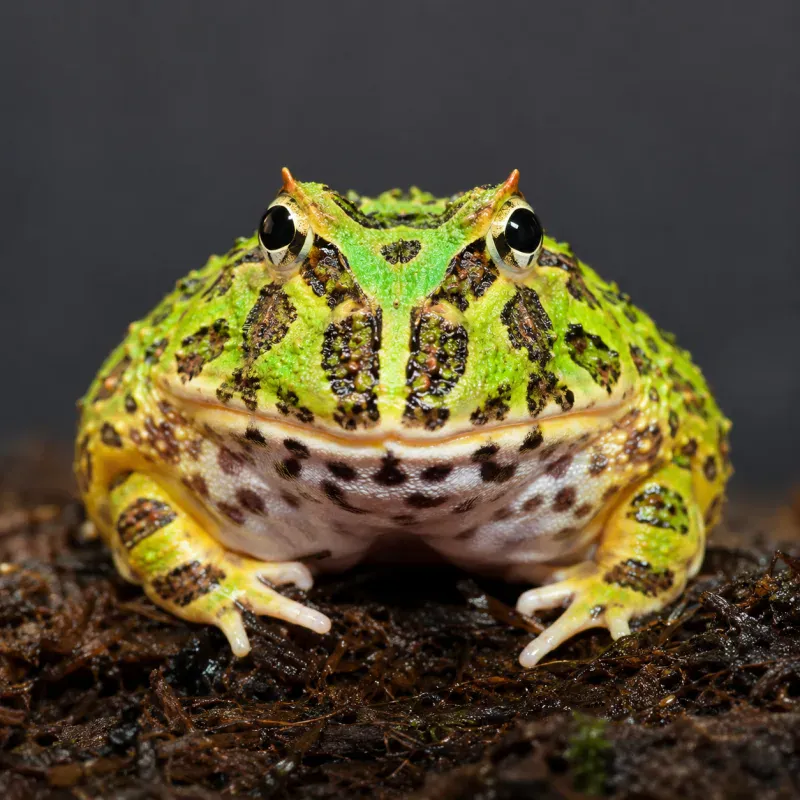
The Pacman Frog (Ceratophrys cranwelli), also known as the Argentine horned frog, is a beloved pet known for its round body, wide mouth, and voracious appetite. Native to South America, these ambush predators spend most of their time buried in leaf litter and soil, waiting for prey. To thrive in captivity, they require a carefully designed enclosure that mimics their natural habitat. This guide covers every aspect of Pacman Frog enclosure setup, from substrate depth to humidity control, so you can provide a safe, comfortable home for your frog.
Enclosure Setup and Tank Size Guide
Pacman Frogs are sedentary, but they still need enough space to thermoregulate and burrow. A 10-gallon tank is the minimum for a juvenile, but adults require a 20-gallon long tank (30×12×12 inches) or larger. A 20-gallon long is ideal because it provides a horizontal footprint for a temperature gradient. Avoid tall tanks; Pacman Frogs are not climbers.
Enclosure Checklist
- Tank: 20-gallon long for adults; 10-gallon for juveniles
- Screen lid: For ventilation and to prevent escape
- Substrate: 4–6 inches deep for burrowing (see below)
- Hiding spots: Cork bark, half-logs, or leaf litter
- Water dish: Shallow, heavy, and large enough for soaking
- Heating: Under-tank heater or low-wattage ceramic heat emitter
- Thermometer/hygrometer: Digital probe type for accuracy
Step-by-Step Tank Setup
- Clean the tank: Wash with hot water and a reptile-safe disinfectant. Rinse thoroughly and air dry.
- Install heating: Attach an under-tank heater to one side of the tank, or position a ceramic heat emitter above the screen lid on one end. Ensure it covers no more than one-third of the floor area to create a thermal gradient.
- Add substrate: Fill the tank with 4–6 inches of coconut coir or organic topsoil. Mix in sphagnum moss if desired. Moisten the substrate with dechlorinated water until it holds together when squeezed but not dripping.
- Arrange decor: Place cork bark flats or half-logs on both the warm and cool sides. Add leaf litter and plants (live or silk) for cover. Ensure nothing is sharp or small enough to be swallowed.
- Place water dish: Put a shallow, heavy dish on the cool side. Fill with dechlorinated or spring water.
- Set up monitoring: Place digital probe thermometers/hygrometers at substrate level on both ends of the tank.
- Cycle the enclosure: Let the enclosure run for 24–48 hours to stabilize temperature and humidity before introducing your frog.
Troubleshooting Tank Size Issues
- Too small: If your frog's body is longer than the tank's width, upgrade to a larger enclosure. Cramped tanks cause stress and poor thermoregulation.
- Too tall: Tall tanks waste space and make it hard to maintain a gradient. Opt for a long, low design.
- Glass vs. plastic: Glass retains heat better; plastic (e.g., Sterilite tubs) is lighter but requires more careful ventilation.
Substrate Depth for Burrowing
Pacman Frogs are obligate burrowers. They need 4–6 inches of substrate to fully bury themselves. In the wild, they hide in moist soil and leaf litter to avoid predators and regulate moisture. A shallow substrate leads to stress and poor shedding.
Recommended substrates:
- Coconut coir (Eco Earth): Holds humidity well, soft, and burrowable
- Organic topsoil (no additives): Cheap and natural, but must be free of fertilizers
- Sphagnum moss (mixed in): Boosts humidity and provides texture
Avoid: Reptile bark (too sharp), sand (can cause impaction), and wood chips (not moisture-retentive). Replace substrate every 3–4 months to prevent bacterial buildup.
How to Prepare and Maintain Substrate
- Pre-moisten: Before adding substrate, mix with dechlorinated water until evenly damp. Do not soak.
- Spot clean: Remove feces and uneaten food daily to prevent mold and bacteria.
- Replace regularly: Every 3–4 months, replace the entire substrate. Wash the tank with disinfectant before adding fresh substrate.
- Monitor moisture: Squeeze a handful of substrate—it should hold shape but not drip. Adjust misting accordingly.
Substrate Comparison Table
| Substrate | Burrowability | Humidity Retention | Safety | Cost |
|---|---|---|---|---|
| Coconut coir | Excellent | Excellent | Safe | $$ |
| Organic topsoil | Good | Good | Safe (if additive-free) | $ |
| Sphagnum moss | Fair | Excellent | Safe (mix with coir) | $$$ |
| Reptile bark | Poor | Poor | Sharp edges | $$ |
| Sand | Poor | Poor | Impaction risk | $ |
Temperature and Humidity Requirements
Pacman Frogs are tropical and require stable conditions. Use a digital thermometer and hygrometer with probes placed at substrate level.
| Parameter | Daytime | Nighttime |
|---|---|---|
| Temperature (ambient) | 75–80°F (24–27°C) | 70–75°F (21–24°C) |
| Basking spot (optional) | 82–85°F (28–29°C) | N/A |
| Humidity | 70–85% | 80–85% |
Heat the enclosure with an under-tank heater on one side (set to 80°F) or a low-wattage ceramic heat emitter (CHE) above. Never use heat rocks—they can burn. Maintain humidity by misting the substrate (not the frog) twice daily and using a water dish. If humidity drops below 70%, add a humid hide or cover part of the screen lid with plastic wrap.
Heating Options: Pros and Cons
| Heating Device | Pros | Cons |
|---|---|---|
| Under-tank heater (UTH) | Low cost, even heat, easy to set up | Can overheat if not regulated; may not heat air well |
| Ceramic heat emitter (CHE) | Radiant heat, warms air, no light | Dries air, must be guarded to prevent burns |
| Heat mat (exo terra) | Thin, adheres to glass, good for small tanks | Can cause hot spots; not suitable for deep substrate |
Humidity Control
- Misting: Use a spray bottle with dechlorinated water. Mist the substrate and decor, not the frog directly, twice daily (morning and evening).
- Water dish: A large dish increases local humidity. Place it on the warm side? No, on the cool side to reduce evaporation.
- Humid hide: Fill a small container with moist sphagnum moss and place it on the warm side. This provides a microclimate.
- Screen lid coverage: Cover 50–70% of the screen lid with plastic wrap or acrylic to reduce evaporation. Remove if humidity exceeds 90%.
- Hygrometer placement: Place the probe at substrate level, not at the top of the tank, to get accurate readings.
Troubleshooting Temperature and Humidity
- Too hot: If ambient exceeds 85°F, reduce heating, increase ventilation, or mist more. Move the frog to a cooler area temporarily.
- Too cold: If below 70°F, add a second UTH or increase wattage of CHE. Never let temps drop below 65°F.
- Humidity too high (>90%): Increase ventilation, reduce misting, or remove plastic wrap. High humidity can cause skin infections.
- Humidity too low (<60%): Mist more often, add a humid hide, or cover more of the lid.
Hiding Spots and Decor
Despite their burrowing nature, Pacman Frogs benefit from surface-level hides. Provide at least two hiding spots—one on the warm side and one on the cool side. Good options:
- Cork bark flats: Create a cave-like structure
- Half-logs (reptile-safe): Easy to clean
- Large leaf litter: Magnolia or oak leaves add natural cover
- Silk or live plants: Pothos, snake plants (in pots) provide visual barriers
Avoid sharp objects or small items that could be swallowed. Pacman Frogs have a strong bite and will eat anything that fits in their mouth.
Decor Ideas for a Naturalistic Enclosure
- Live plants: Pothos, bromeliads, and ferns thrive in high humidity. Plant them in pots to protect roots and make cleaning easier.
- Background: Use a foam or cork background to increase climbing surface (though they don't climb, it adds security).
- Leaf litter layer: Add a layer of dried magnolia leaves on top of the substrate for extra cover.
- Bogwood or driftwood: Provide structural interest, but ensure no sharp edges.
Cleaning Decor
- Weekly: Remove and rinse decor in hot water. Do not use soap.
- Monthly: Disinfect with a reptile-safe cleaner (diluted chlorhexidine) and rinse thoroughly.
- Replace: Replace soft items like moss if mold appears.
Water Dish Placement and Maintenance
Pacman Frogs need a shallow, heavy water dish that they can soak in. Use dechlorinated or spring water (tap water must be treated with a reptile-safe conditioner). The dish should be:
- Large enough for the frog to submerge its entire body
- No deeper than the frog's chin to prevent drowning
- Cleaned daily and refilled with fresh water
Place the dish on the cool side of the enclosure to avoid rapid evaporation. If the frog defecates in the water, change it immediately.
Choosing the Right Water Dish
- Material: Ceramic or heavy plastic that won't tip. Avoid metal, which can leach.
- Shape: Wide and shallow, like a terracotta saucer. Ensure the frog can easily climb in and out.
- Size: At least as wide as the frog's body length.
Water Quality and Dechlorination
- Tap water: Must be treated with a dechlorinator (e.g., ReptiSafe). Let it sit for 24 hours if no conditioner is available, but conditioner is safer.
- Spring water: Safe, but check the label for added minerals.
- Distilled water: Avoid; lacks essential minerals.
- Change frequency: Daily, or immediately after the frog soaks or defecates in it.
Diet and Feeding
Pacman Frogs are carnivorous and will eat anything that moves. Feed juveniles daily and adults every 2–3 days — the pacman frog feeding schedule breaks this into a weekly plan. Staple feeders:
- Crickets (gut-loaded and dusted with calcium + D3)
- Dubia roaches (high protein)
- Nightcrawlers (cut into pieces for small frogs)
- Hornworms (as treats)
Avoid: Pinkie mice (too fatty for regular feeding), wild-caught insects (pesticides), and mealworms (hard exoskeleton). Dust prey with a calcium supplement twice a week and a multivitamin once a week.
Feeding Schedule by Age
| Age | Frequency | Prey Size |
|---|---|---|
| Juvenile (under 1 year) | Daily | Small crickets, 1/4-inch roaches |
| Sub-adult (1–2 years) | Every 2 days | Medium crickets, small roaches |
| Adult (2+ years) | Every 2–3 days | Large crickets, adult roaches, nightcrawlers |
Feeding Tips
- Use tongs: This prevents accidental bites and avoids ingestion of substrate.
- Gut-load feeders: Feed crickets and roaches nutritious foods (carrots, leafy greens) for 24 hours before offering.
- Dust supplements: Use a calcium powder with D3 twice a week, and a multivitamin once a week. For juveniles, dust more frequently (every other feeding).
- Monitor weight: Weigh monthly. A healthy adult should not gain excessive fat. Adjust feeding if the frog looks round.
Handling and Temperament
Pacman Frogs are not handleable pets. They have a strong bite and can break skin, plus their skin absorbs oils and chemicals from human hands. Only handle when necessary (e.g., cleaning the enclosure or vet visits). Use powder-free nitrile gloves moistened with dechlorinated water. Support the frog's body fully and keep handling under 5 minutes.
Safe Handling Steps
- Wash hands and put on moistened nitrile gloves.
- Gently scoop the frog from underneath, supporting its belly and hind legs.
- Keep the frog low to the ground to prevent injury if it jumps.
- Minimize handling time; return the frog to its enclosure as soon as possible.
Common Health Issues
Watch for these problems:
- Red-leg syndrome: Bacterial infection causing reddening of the legs; requires vet treatment
- Impaction: From ingesting substrate; prevent by feeding with tongs and using proper substrate
- Obesity: Overfeeding leads to fat deposits; monitor weight
- Dehydration: Wrinkled skin; increase humidity and soak the frog in shallow water
Signs of a Healthy Frog
- Clear eyes and smooth, moist skin
- Active feeding response
- Regular burrowing and shedding
- No visible wounds or discoloration
When to See a Vet
- Redness on legs or belly
- Lethargy for more than 2 days
- Loss of appetite for over a week
- Weight loss or unusual swelling
- Difficulty shedding
Common Mistakes to Avoid
- Too shallow substrate: Causes stress and poor shedding
- Overhandling: Leads to stress and potential injury
- Incorrect temperatures: Too cold slows metabolism; too hot causes burns
- Feeding pinkies regularly: Causes fatty liver disease
- Using tap water without conditioner: Chlorine damages skin
Additional Mistakes
- Ignoring humidity: Low humidity leads to shedding problems and skin infections.
- Using heat rocks: Can cause severe burns.
- Placing water dish on warm side: Evaporates quickly, reducing humidity and wasting water.
- Not cleaning water dish daily: Bacteria can cause infections.
Comparison Table: Substrate Options
| Substrate | Burrowability | Humidity Retention | Safety | Cost |
|---|---|---|---|---|
| Coconut coir | Excellent | Excellent | Safe | $$ |
| Organic topsoil | Good | Good | Safe (if additive-free) | $ |
| Sphagnum moss | Fair | Excellent | Safe (mix with coir) | $$$ |
| Reptile bark | Poor | Poor | Sharp edges | $$ |
| Sand | Poor | Poor | Impaction risk | $ |
By following this guide, your Pacman Frog will have a naturalistic, healthy environment that encourages natural behaviors like burrowing and feeding. Remember: a well-set-up enclosure is the foundation of a long, happy life for your frog.
Related Reading
\nFrequently Asked Questions
\nWhat is the minimum tank size for an adult Pacman Frog?
\nAdult Pacman Frogs require a 20-gallon long tank (30×12×12 inches) or larger. A 10-gallon tank is the minimum for a juvenile. The 20-gallon long is ideal because it provides a horizontal footprint for a temperature gradient.
\nHow deep should the substrate be for a Pacman Frog?
\nPacman Frogs need 4–6 inches of substrate to fully bury themselves, as they are obligate burrowers. A shallow substrate leads to stress and poor shedding. Recommended substrates include coconut coir, organic topsoil (additive-free), and sphagnum moss mixed in.
\nWhat are the daytime and nighttime temperature ranges for a Pacman Frog?
\nDaytime ambient temperature should be 75–80°F (24–27°C), with an optional basking spot of 82–85°F (28–29°C). Nighttime temperature should be 70–75°F (21–24°C). Heat can be provided with an under-tank heater on one side or a low-wattage ceramic heat emitter.
\nHow should the water dish be set up for a Pacman Frog?
\nThe water dish should be shallow, heavy, and large enough for the frog to submerge its entire body, but no deeper than the frog's chin to prevent drowning. Use dechlorinated or spring water, place the dish on the cool side of the enclosure, and clean it daily, changing the water immediately if the frog defecates in it.
Check optimal temps, calculate feeding, and find your perfect species match.
References
- https://reptifiles.com/pacman-frog-care/
- https://www.thesprucepets.com/pacman-frog-care-1236911
- https://www.reptilecentre.com/blog/2023/05/pacman-frog-care-guide/
🐾 Join the Community
See how other keepers set up their enclosures, ask questions, and share your experience.
🛠️ Apply What You Learned
Check optimal temps, calculate feeding schedules, and get calcium dosage — all personalized for your species.
Comments