Garter Snake Morphs: Red-Sided, Albino & More
Introduction to Garter Snake Morphs
Garter snakes (Thamnophis spp.) are among the most popular colubrids in the pet trade, celebrated for their hardiness, active nature, and stunning color diversity. While wild-type garter snakes typically display a dark body with three light stripes, selective breeding has produced a dazzling array of morphs. This guide explores five prominent morphs—Red-sided, California Red, Eastern, Checkered, and Albino—and explains the genetics behind their patterns. Whether you’re a beginner or an advanced keeper, understanding these morphs will help you choose the right snake and provide optimal care.
Garter snakes are native to North and Central America, ranging from Canada to Costa Rica. They thrive in captivity with proper husbandry, living 6–10 years on average. Their small size (typically 18–48 inches) and manageable care requirements make them excellent choices for reptile enthusiasts.
Morph Descriptions and Genetics
Red-sided Garter Snake (Thamnophis sirtalis parietalis)
The Red-sided morph is a subspecies of the common garter snake, known for its brilliant red or orange lateral stripes that contrast with a dark olive or black body. These stripes run along the sides, often with yellow or white vertebral stripes. The red coloration is caused by a combination of erythrin (red pigment) and melanin reduction, influenced by polygenic inheritance. Breeders select for intensity and width of the red stripes. Red-sideds are often larger and more robust than other morphs, reaching up to 48 inches.
California Red-sided Garter Snake (Thamnophis sirtalis infernalis)
Often confused with the Red-sided, the California Red-sided is a distinct subspecies with a more restricted range (coastal California). It features a bright red or orange head and a red lateral stripe that may extend the full body length. The genetics are similar to the Red-sided, but the California variant often has a more vibrant head color. This morph is highly sought after for its striking appearance.
Eastern Garter Snake (Thamnophis sirtalis sirtalis)
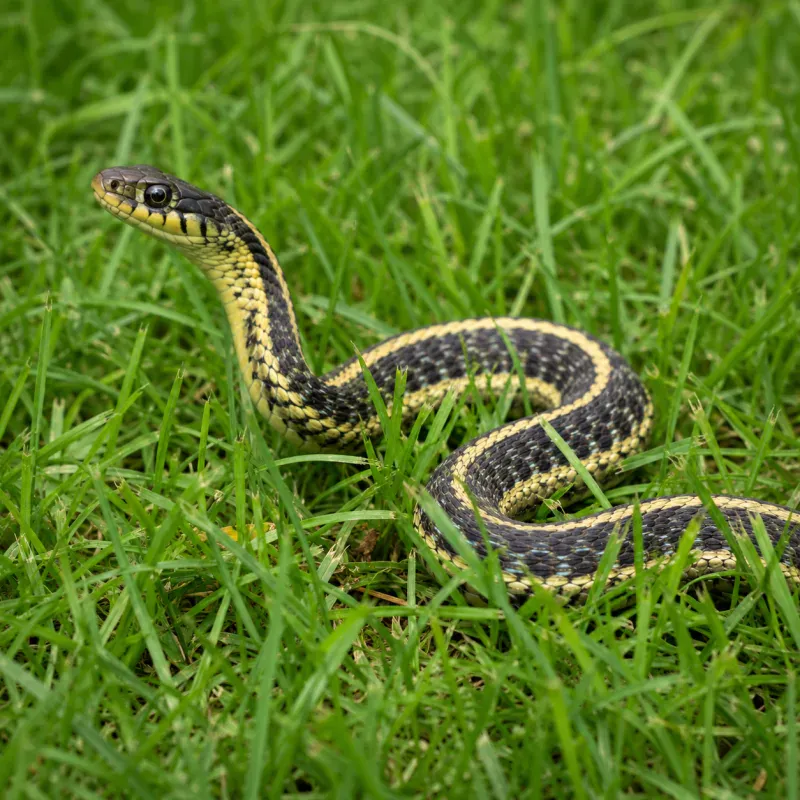
The Eastern garter snake is the nominate subspecies, typically showing three yellow or white stripes (dorsal and two lateral) on a dark green, brown, or black background. Wild types vary greatly, but selective breeding has produced “high yellow” or “hypomelanistic” lines with reduced black pigment. The Eastern morph is the most common in the pet trade and serves as the genetic baseline for many other morphs.
Checkered Garter Snake (Thamnophis marcianus)
The Checkered garter snake is a separate species, not a morph of T. sirtalis. It features a distinctive checkerboard pattern of dark squares on a lighter background, with a yellow or white vertebral stripe. The pattern is controlled by dominant and recessive alleles, with “checkered” being the wild type. Captive-bred lines may show reduced pattern or higher contrast. Checkereds are smaller (18–30 inches) and more desert-adapted than other garter snakes.
Albino Garter Snake
Albino garter snakes lack melanin entirely due to a recessive mutation (tyrosinase-negative). They have white or cream bodies with pink or red eyes. In some lines, the red pigment (erythrin) remains, producing “pink albinos” with faint pink stripes. Albinism is a simple recessive trait; breeding two albinos produces 100% albino offspring. Albinos are sensitive to bright light and require careful UVB management.
| Morph | Species | Key Features | Genetics | Size (Adult) |
|---|---|---|---|---|
| Red-sided | T. s. parietalis | Red/orange lateral stripes | Polygenic (erythrin + melanin reduction) | 36–48 in |
| California Red-sided | T. s. infernalis | Bright red head and lateral stripe | Polygenic (similar to Red-sided) | 30–42 in |
| Eastern | T. s. sirtalis | Three yellow/white stripes, variable background | Wild type; hypomelanistic lines recessive | 24–36 in |
| Checkered | T. marcianus | Checkerboard pattern, vertebral stripe | Dominant/recessive alleles for pattern | 18–30 in |
| Albino | Various Thamnophis | White body, pink/red eyes | Recessive (tyrosinase-negative) | 24–36 in |
Enclosure Setup
Garter snakes are active, terrestrial snakes that require horizontal space. A 20-gallon long tank (30x12x12 inches) is the minimum for one adult; larger is better for multiple snakes (garter snakes can be housed in same-sex groups with caution). Use a secure, ventilated lid to prevent escapes.
Substrate
Choose substrates that retain humidity without becoming waterlogged. Options include:
- Coconut coir (holds moisture, naturalistic)
- Cypress mulch (good for humidity)
- Reptile bark (avoid pine/cedar)
- Paper towels (for quarantine or easy cleaning)
When setting up substrate, aim for a depth of 2–3 inches to allow burrowing, which garter snakes enjoy. Replace soiled substrate promptly to prevent bacterial growth. For albino morphs, lighter substrates like paper towels can help you spot shed or waste more easily.
Furniture
Provide multiple hides (cork bark, half-logs, caves) on both warm and cool ends. Add climbing branches, fake plants, and a water dish large enough for soaking. Garter snakes are semi-aquatic; a shallow water area encourages drinking and thermoregulation. Ensure all furniture is stable and cannot collapse on the snake.
Group Housing
Garter snakes are one of the few colubrids that can be cohabitated, but only with same-sex individuals of similar size. Males may compete for dominance; females can be housed together if space allows. Never house different species or morphs together due to stress and potential aggression. When introducing new snakes, quarantine for 30 days and monitor for signs of illness before cohabiting.
Heating and Lighting
Temperature Gradient
Maintain a thermal gradient of 70–75°F (21–24°C) on the cool end and 80–85°F (27–29°C) on the warm end. A basking spot of 88–90°F (31–32°C) is ideal. Use a thermostat-controlled heat mat under the tank or a ceramic heat emitter overhead. Avoid heat rocks, which can cause burns. Place thermometers at both ends to monitor the gradient daily. For Checkered garter snakes, which are more desert-adapted, you can keep the warm end slightly higher (85–88°F) but never above 90°F.
Lighting
Garter snakes benefit from a 12-hour light/dark cycle. UVB is not strictly necessary if you provide dietary vitamin D3 (via supplements), but low-level UVB (5–6% T5) can improve immune function and behavior. For albino morphs, use very low UVB (2% or none) to prevent eye damage. Provide shade and multiple hides to allow light avoidance. Use a timer to maintain consistency, and replace UVB bulbs every 6–12 months as output diminishes.
Humidity and Hydration
Garter snakes require moderate humidity (50–70%). Maintain by misting the enclosure daily, especially the substrate and plants. A humidity hide (plastic container with damp sphagnum moss) aids shedding. Monitor with a hygrometer. For Checkered garter snakes, which are more arid-adapted, keep humidity around 40–50% to prevent respiratory issues. All garter snakes need fresh, dechlorinated water daily—a large bowl allows soaking, which helps with shedding and hydration.
Creating a Humidity Hide
Take a small plastic container with a lid, cut an entrance hole, and fill it with damp sphagnum moss. Place it in the warm end of the enclosure. Check the moss weekly and re-mist as needed. This is especially important during shedding cycles.
Diet and Feeding
Garter snakes are carnivores with a preference for fish, amphibians, and earthworms. In captivity, feed appropriately sized prey every 5–7 days for adults, every 3–5 days for juveniles.
Food Items
- Earthworms (red wigglers or nightcrawlers; avoid wild-caught due to parasites)
- Fish (guppies, rosy reds, smelt; avoid goldfish due to thiaminase)
- Frozen-thawed pinky mice (for larger adults; use sparingly as they are high in fat)
- Amphibian-based diets (e.g., frog legs, but ensure they are captive-bred)
Supplement with calcium and vitamin D3 powder every other feeding. Garter snakes are prone to obesity, so monitor body condition. Avoid live fish with high thiaminase (e.g., goldfish) as they can cause vitamin B1 deficiency. For red-sided morphs, which are often larger, you may need to offer larger prey items like hopper mice occasionally, but always balance with leaner options.
Feeding Schedule and Portion Sizes
For juveniles, offer food items that are about the width of the snake’s head. For adults, prey should be no larger than 1.5 times the width of the snake’s mid-body. Feed in a separate container to avoid substrate ingestion, but ensure the snake is calm before handling. After feeding, wait 48 hours before handling to prevent regurgitation.
Handling and Temperament
Garter snakes are generally docile and tolerate handling well, though they may musk (release a foul smell) when frightened. Start with short handling sessions (5–10 minutes) and increase gradually. Support the snake’s body fully; avoid grabbing the head. Wash hands before and after to prevent scent transfer and bacterial spread. Never handle during shedding or after feeding (wait 48 hours). With regular, gentle handling, most garter snakes become calm and curious.
Step-by-Step Handling Guide
- Wash your hands with unscented soap and dry thoroughly.
- Approach the snake slowly from the side, not from above (which mimics a predator).
- Gently scoop the snake from below, supporting its body with both hands.
- Keep the snake close to your body to provide security.
- Limit initial sessions to 5–10 minutes, gradually increasing as the snake becomes comfortable.
- If the snake musks, remain calm and gently place it back in its enclosure; clean up with warm water.
Common Health Issues
Respiratory Infections
Often caused by low temperatures or high humidity. Symptoms include wheezing, open-mouth breathing, and mucus. Treatment: raise temperatures to 85°F and consult a vet for antibiotics.
Mouth Rot (Infectious Stomatitis)
Visible as redness, swelling, or pus in the mouth. Caused by poor hygiene or injury. Requires veterinary cleaning and antibiotics.
Parasites
Internal parasites (nematodes, coccidia) are common in wild-caught garter snakes. Symptoms include weight loss, diarrhea, and lethargy. Fecal testing and deworming by a vet are essential.
Shedding Issues
Dysecdysis (stuck shed) occurs due to low humidity. Provide a humidity hide and soak the snake in lukewarm water if needed. Check eye caps and tail tips.
Obesity
Overfeeding leads to fat deposits along the spine. Reduce feeding frequency and increase exercise (larger enclosure, climbing opportunities).
The Most Common Problems
- Overcrowding: Housing too many snakes in a small space causes stress and competition.
- Incorrect diet: Feeding only mice leads to obesity; feeding only fish with thiaminase causes deficiencies.
- Poor temperature regulation: Inconsistent heat leads to respiratory infections and poor digestion.
- Low humidity: Causes stuck shed and dehydration.
- Handling too soon: Stresses the snake; wait at least a week after acquisition.
- Ignoring UVB for albinos: Albinos need minimal UVB to avoid eye damage.
- Using heat rocks: Risk of severe burns.
By understanding the unique needs of each garter snake morph and following these evidence-based guidelines, you can provide a thriving environment for your scaly companion. Always source your snake from a reputable breeder who can provide genetic history and health records. Happy herping!
Troubleshooting Common Issues
Snake Refusing to Eat
If your garter snake refuses food, check the following: temperatures (ensure the warm end is 80–85°F), stress (recent handling or enclosure changes), and prey type (some individuals prefer fish over worms). Try offering different food items or scenting the prey with fish to entice feeding.
Stuck Shed
Soak the snake in lukewarm water (80–85°F) for 15 minutes, then gently rub the shed off with a damp cloth. Check eye caps and tail tips. Increase humidity and provide a humidity hide.
Regurgitation
Regurgitation can result from handling too soon after feeding, too large prey, or incorrect temperatures. Wait 7 days before offering food again, and ensure the warm end is at least 85°F for digestion. If it persists, consult a vet.
Frequently Asked Questions
Visual Trait Deep-Dive: Stripes, Spots, and Scale Texture
Beyond base color, garter snake morphs differ in three key visual dimensions that are often overlooked by new keepers: stripe continuity, dorsal spotting, and scale texture. Understanding these traits will help you identify morphs and predict how they will develop as they age.
Stripe Continuity and Width
In Thamnophis sirtalis, the vertebral stripe is typically the most stable, while lateral stripes vary dramatically between morphs. Red-sided lines often show a broken or segmented lateral stripe, where red blocks alternate with black bars—this is a polygenic trait influenced by at least two loci. In contrast, the California Red-sided tends toward a solid, unbroken lateral stripe that runs from the neck to the tail tip. Eastern garter snakes can exhibit anything from a thin yellow line to a wide, cream-colored band, with selective breeding producing “high-stripe” lines where the dorsal stripe occupies up to three scale rows wide. Checkered garter snakes (T. marcianus) lack a prominent lateral stripe entirely, relying on their checkerboard pattern for visual interest.
Dorsal Spotting and Pattern Reduction
Many garter snakes show a row of dark spots between the vertebral and lateral stripes. In hypomelanistic Eastern lines, these spots are faded or absent, creating a cleaner, more uniform appearance. Conversely, some wild-type Easterns display checkerboard-like spotting that can be mistaken for T. marcianus—a common ID error. Pattern reduction is typically recessive or polygenic; breeding two reduced-pattern snakes often yields a higher percentage of clean offspring, but not all will be patternless due to incomplete penetrance.
Scale Texture and Head Shape
While not a classic morph trait, scale texture can vary subtly between subspecies. California Red-sideds often have keeled scales that are more pronounced than Easterns, giving them a slightly rougher feel—this is an adaptation to their coastal, brushy habitat. Head shape also differs: Red-sideds have a broader, more triangular head, while Easterns are more slender. These traits are not genetic morphs but are useful for subspecies identification, especially when color is ambiguous (e.g., a dull Red-sided that lacks strong red pigmentation).
Genetics & Inheritance: Beyond Simple Recessives
Most garter snake morphs do not follow simple Mendelian inheritance. Instead, they are controlled by polygenic systems and incomplete dominance, which is why breeding outcomes can be unpredictable even for experienced keepers.
Albino: The Exception
True albinism (tyrosinase-negative) is the only well-documented simple recessive morph in garter snakes. Both parents must carry the allele (het) for albino offspring to appear. Breeding two visual albinos produces 100% albino offspring. If you breed a visual albino to a het, you get 50% albino and 50% het—a useful ratio for line-breeding.
Red-Sided and Hypomelanistic: Polygenic Traits
Red stripe intensity and width are controlled by multiple additive genes. This means that breeding two intense Red-sideds will shift the offspring’s average intensity upward, but individual variation remains high. Hypomelanism (reduced black pigment) is similarly polygenic, with some lines showing a continuous spectrum from “normal” to “almost patternless.” Breeders often use selective line-breeding over 3–5 generations to stabilize these traits.
Checkered Pattern: Dominant with Modifiers
In T. marcianus, the checkered pattern is the wild type and behaves as a dominant trait over patternless. However, the size and contrast of the checkerboard are influenced by modifier genes. A “high-contrast” checkered line results from selecting for both the dominant pattern allele and positive modifiers. Breeding two high-contrast checkereds will not guarantee identical offspring due to modifier segregation.
Rarity & Price Table
| Morph | Appearance | Rarity | Typical Price Range (USD) |
|---|---|---|---|
| Eastern (wild-type) | Three yellow/white stripes on dark background | Common | $20–$50 |
| Eastern (hypo/high-yellow) | Reduced black pigment, brighter stripes | Uncommon | $50–$100 |
| Checkered | Checkerboard pattern, yellow vertebral stripe | Common | $25–$60 |
| Red-sided | Red/orange lateral stripes on dark body | Uncommon | $75–$150 |
| California Red-sided | Bright red head and solid lateral stripe | Rare | $150–$300 |
| Albino | White/cream body, pink/red eyes | Rare | $100–$200 |
Prices vary by locality, lineage, and breeder reputation. California Red-sideds are often the most expensive due to their restricted natural range and slower reproduction in captivity.
Breeding Pair Selection: Matching Morphs for Success
Choosing the right breeding pair requires more than just picking two pretty snakes. Here are evidence-based guidelines for common pairings.
Albino Projects
To produce albinos, you need two visual albinos or two hets. If you only have one visual albino, pair it with a het to maximize albino offspring (50%). Avoid pairing two hets if you want to guarantee albino output—only 25% of the clutch will be albino, and the rest will be 66% possible hets, which complicates future breeding.
Red-Sided Intensity
For maximum red stripe intensity, pair two high-intensity Red-sideds from different bloodlines to avoid inbreeding depression. Track the stripe width and color saturation of each offspring and keep back only the top 20% for future breeding. This is a multi-year project; do not expect dramatic results in the first generation.
Cross-Subspecies Caution
Breeding Eastern with California Red-sided can produce beautiful hybrids, but be aware that hybrid vigor may mask desirable traits. Hybrids are often hardier but may show intermediate coloration that disappoints breeders seeking pure lines. If you intend to sell offspring, clearly label them as hybrids—many serious collectors avoid them for genetic purity.
Health Screening Before Breeding
Always breed snakes that are at least 2 years old and weigh a minimum of 60–80 grams. Screen for common issues like mouth rot, mites, and respiratory infections before pairing. Females should be in good body condition—not too thin, not obese—to ensure successful egg development and laying.
What is the lifespan of a garter snake in captivity?
Garter snakes live 6–10 years on average in captivity with proper husbandry, though some individuals may live longer with excellent care.
Can I house different garter snake morphs together?
No, it is recommended to never house different species or morphs together due to stress and potential aggression. Garter snakes can be cohabitated only with same-sex individuals of similar size.
Are albino garter snakes more sensitive to light?
Yes, albino garter snakes lack melanin and are sensitive to bright light. Use very low UVB (2% or none) to prevent eye damage, and provide plenty of shade and hides.
What should I feed my garter snake to avoid health issues?
Provide a varied diet of earthworms, fish (avoid goldfish due to thiaminase), and occasional frozen-thawed pinky mice for larger adults. Supplement with calcium and vitamin D3 every other feeding, and avoid overfeeding to prevent obesity.
Related Reading
- Garter Snake Care Guide: The Underrated Diurnal Colubrid — Learn the fundamentals of housing, heating, and handling for your garter snake.
- Garter Snake Diet Guide: Fish, Worms & Feeding Schedule — Discover safe prey items and a proper feeding schedule for healthy garter snakes.
- Reptile UVB Lighting Guide: Ferguson Zones & Bulb Selection — Understand UVB requirements and how to choose the right bulb for your reptile.
- Bearded Dragon UVB Setup — See how UVB setups for other reptiles can inform better lighting practices.
Check optimal temps, calculate feeding, and find your perfect species match.
References
- Rossi, J. (2006). The Garter Snakes: Evolution and Ecology. University of Oklahoma Press.
- Bartlett, R.D., & Bartlett, P. (2000). Garter Snakes. Barron's Educational Series.
- Adler, K. (2007). Reptiles and Amphibians of North America. National Geographic.
🐾 Join the Community
See how other keepers set up their enclosures, ask questions, and share your experience.
🛠️ Apply What You Learned
Check optimal temps, calculate feeding schedules, and get calcium dosage — all personalized for your species.
Comments
No account needed — corrections, updates and questions are all welcome. For a full question with photos, the community Q&A is the better place.