Garter Snake Enclosure Setup: Size, Heat & Water
Introduction
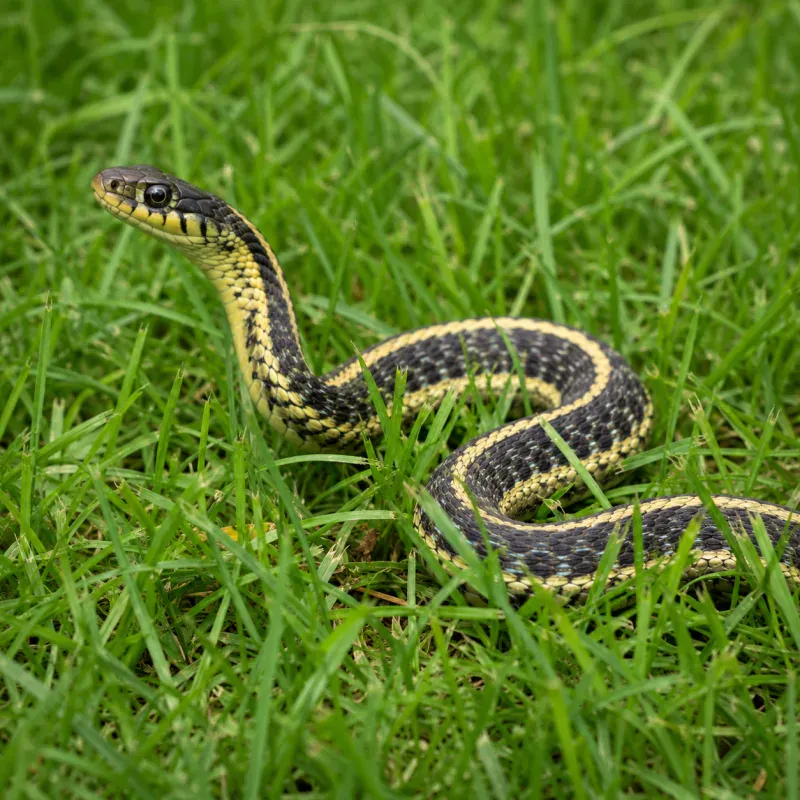
Garter snakes are the busiest colubrids in the hobby. They cruise, they climb, they swim, and they eat more often than a corn snake of the same size. That activity level is exactly why the standard "20-gallon long with a water bowl" advice fails: the snake is not stressed, it is underhoused. This guide covers the space, the heat gradient, the soaking dish and the escape-proofing that keep an active garter healthy.
Enclosure Size: Aim Larger Than the Care Sheet Says
| Setup | Minimum | Recommended | Why |
|---|---|---|---|
| Single juvenile | 10–20-gallon (20×10×12 in) | 20-gallon long | Small snakes need cover, not open space |
| Single adult (2–3 ft) | 20-gallon long | 36×18×18 in | Active species; uses every inch |
| Pair or trio (checkered, common) | 40-gallon breeder | 4×2×2 ft | Communal housing needs room and separate basking spots |
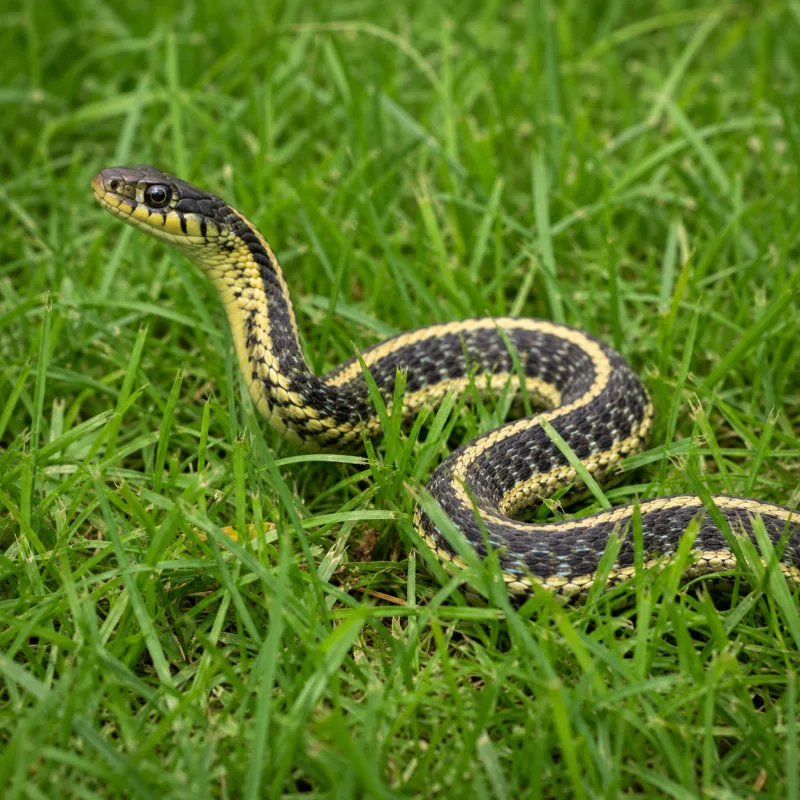
Height matters more than for most colubrids. Garters climb branches and bask on ledges, so a 36×18×18-inch enclosure outperforms a wider, shorter tank of the same volume. Front-opening enclosures also make water changes far less disruptive.
Substrate and Humidity
- Aspen: dry, clean, easy to spot-clean. Best for checkered and common garters that like a dry surface with a humid hide.
- Cypress mulch or topsoil mix: holds humidity for species from wetter habitats (ribbon and some western garters) and suits bioactive setups.
- Bioactive (topsoil + sand + leaf litter): works well because garters produce frequent, loose waste that a clean-up crew handles quickly.
Target 40–60% humidity with a humid hide at the cool end. Garters shed frequently as they grow and a dry enclosure leads to patchy sheds and retained eye caps.
The Soaking Dish: Half the Enclosure's Purpose
Garters drink, soak and often defecate in water, and many will swim if given the chance. The dish should be:
- Wide enough for the snake to coil inside completely.
- Deep enough to submerge but with an easy exit — add a flat stone or ramp.
- Heavy enough not to tip when the snake climbs in.
- Changed every day: a garter that soaks after eating will foul the water within hours.
For species that fish in the wild, a large water area with a few feeder guppies or rosy reds is legitimate enrichment — but never release leftover fish into waterways, and quarantine any live fish before offering.
Heat Gradient and Lighting
| Zone | Target | Notes |
|---|---|---|
| Basking spot | 85–90°F (29–32°C) | Halogen or incandescent on a dimmer |
| Warm side ambient | 78–82°F (26–28°C) | Measured 2 in above substrate |
| Cool side | 68–74°F (20–23°C) | Essential for digestion regulation |
| Night | 65–70°F (18–21°C) | Natural drop is beneficial |
Use a UVB tube (5% forest, roughly 12–15 in above the main basking ledge). Garters are diurnal and visibly use light; combined with a proper gradient it supports appetite and shedding. Every heat source goes on a thermostat.
Decor: Think Hedge, Not Desert
- Branches at two or three heights, plus a cork tube on the floor.
- Dense fake or live plants along the back wall so the snake can move unseen.
- Two hides minimum — one warm, one cool — plus the humid hide.
- A rough stone under the basking lamp: garters rub against it during shed.
Escape-Proofing
Garters are slender, strong and curious. A 1/4-inch gap is an exit for a juvenile.
- Screen lids need clips at both ends and the middle, plus a check that the mesh itself has no lifted corners.
- Seal all cable and probe entry points; garters wedge their heads into foam and push.
- Never leave the enclosure open while changing water — the classic escape happens in the three minutes the water bowl is out.
- Live plants in open-top setups need a lid regardless of plant height.
Communal Housing: Possible, With Rules
Many garter species tolerate company better than other colubrids, but communal setups only work when:
- All animals are the same species, sexed correctly and quarantined for 60+ days first.
- Feeding happens in separate containers so two snakes never grab the same prey.
- The enclosure is oversized: at least 4×2×2 ft for three adults.
- You can separate at the first sign of weight loss, regurgitation or skin lesions.
Mixed-species groups are a bad idea: different species carry different parasites, and dietary needs rarely match closely enough to feed them together.
Cleaning Routine
| Task | Frequency |
|---|---|
| Water change (they foul it constantly) | Daily |
| Spot-clean waste, wipe glass | Every 1–2 days |
| Refresh humid hide moss | Weekly |
| Full substrate change | Every 4–6 weeks (bioactive: quarterly refresh) |
Common Mistakes
- A water bowl too small to soak in — the most common husbandry gap for this species.
- Housing a garter in a dry desert-style setup because it is "just a colubrid".
- Skipping UVB when the snake is clearly diurnal and basks openly.
- Feeding on the substrate, which leads to ingested aspen and impaction.
- Assuming a communal setup is fine because the snakes are not fighting today.
Frequently Asked Questions
What size enclosure does a garter snake need?
A single adult needs at least a 20-gallon long, and a 36×18×18-inch enclosure is a much better fit because garters climb and cruise. For a pair or trio of checkered garters, start at a 40-gallon breeder and go larger.
Do garter snakes need a water dish big enough to swim in?
They need one big enough to soak in completely, with an easy exit. Many garters will swim if the dish allows it, and soaking supports shedding and hydration. Change the water daily — they frequently defecate in it.
Can I keep two garter snakes together?
Often yes, with rules: same species, correct sexing, full quarantine, separate feeding containers, an oversized enclosure, and a willingness to separate at the first sign of trouble. Never mix different species.
What temperature should a garter snake enclosure be?
A basking spot of 85–90°F, warm-side ambient around 78–82°F and a cool side of 68–74°F, with a natural night drop to 65–70°F. Put the heat source on a thermostat and measure at the substrate.
Are garter snakes good beginner snakes?
They are rewarding but not the easiest starter: they need frequent feeding, a large water area, and they move constantly, which makes handling less relaxed than a corn snake. Beginners often do better with a corn snake or western hognose first.
Related Reading
- Garter Snake Care Guide — full husbandry, temperament and health.
- Garter Snake Diet Guide — worms, fish, rodents and supplements.
- Garter Snake Morphs — colour varieties and pricing.
- Reptile UVB Lighting Guide — why diurnal colubrids benefit.
- Bioactive Enclosure Setup — drainage, soil and clean-up crews.
Check optimal temps, calculate feeding, and find your perfect species match.
🐾 Join the Community
See how other keepers set up their enclosures, ask questions, and share your experience.
🛠️ Apply What You Learned
Check optimal temps, calculate feeding schedules, and get calcium dosage — all personalized for your species.
Comments
No account needed — corrections, updates and questions are all welcome. For a full question with photos, the community Q&A is the better place.