Garter Snake Care Guide: Setup & Varied Diet
Species Overview
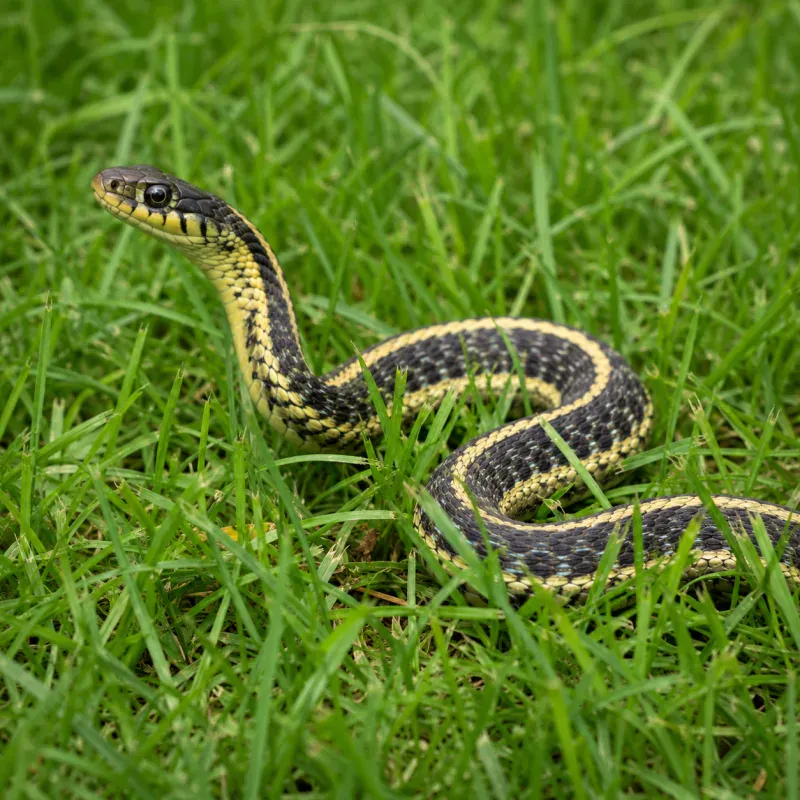
The garter snake (Thamnophis sirtalis) is one of the most underrated pet snakes. Unlike most popular pet snakes, garters are diurnal (active during the day), can be housed communally (one of the few social snake species), and eat a diet that doesn't strictly require rodents. They are active, curious, and endlessly entertaining to watch.
Native across almost all of North America, garter snakes are adaptable and hardy. They are mildly venomous (rear-fanged, not medically significant to humans) and use this venom to subdue amphibians and fish. In captivity, they thrive on a varied diet of fish, earthworms, and pinky mice.
Key difference: Garter snakes eat more frequently than most snakes due to their high metabolism. They cannot be fed only once every two weeks like a ball python.
Why Choose a Garter Snake?
Garter snakes offer a unique pet experience compared to traditional pet snakes. Their diurnal nature means they are awake and active during the day, making them perfect for observation. They are also one of the few snake species that can be housed in groups, providing a dynamic social environment. Their diet is more varied than most snakes, which can be both a challenge and a reward for keepers who enjoy preparing diverse meals.
Natural History and Behavior
In the wild, garter snakes are found near water sources, where they hunt amphibians, fish, and earthworms. They are excellent swimmers and often bask in groups on rocks or logs. This social behavior carries over into captivity, where they will often coil together in hides. Understanding their natural history helps replicate their environment and care needs accurately.
Enclosure Setup
| Housing | Recommendation |
|---|---|
| Single adult | 20-gallon long (30"×12") |
| Pair or trio | 40-gallon breeder (36"×18") |
Garter snakes are more active than most colubrids and use every inch of space. Provide multiple hides, climbing branches, a large water dish (they soak regularly), and plenty of fake or live plants for cover. They are diurnal and benefit from a natural light cycle.
Step-by-Step Enclosure Setup
- Choose the right tank: Start with a 20-gallon long for a single adult. For a pair or trio, upgrade to a 40-gallon breeder. Ensure the tank has a secure, ventilated lid.
- Add substrate: Use aspen shavings, cypress mulch, or a mix. Avoid cedar, which is toxic. Layer 2–3 inches deep for burrowing.
- Provide hides: Place at least two hides—one on the warm side and one on the cool side. Use commercial reptile hides, cork bark, or half-logs.
- Include climbing structures: Add sturdy branches, driftwood, or vines. Garters enjoy climbing and exploring vertical space.
- Add a large water dish: Choose a heavy ceramic or plastic dish that cannot be tipped over. It should be large enough for the snake to soak in.
- Decorate with plants: Use fake or live plants (e.g., pothos, snake plant) to provide cover and create a naturalistic environment.
- Set up lighting: Install a low-level UVB tube (2.5–5% T5) to support diurnal activity. Provide a day/night cycle of 12 hours on, 12 hours off.
- Monitor and adjust: Use thermometers and hygrometers to ensure temperatures and humidity are within the recommended ranges.
Substrate Comparison
| Substrate | Pros | Cons |
|---|---|---|
| Aspen shavings | Low dust, easy to spot clean, allows burrowing | Not suitable for high humidity, may mold if wet |
| Cypress mulch | Retains humidity, natural look | Can be dusty, may harbor mites if not sterilized |
| Reptile carpet | Reusable, easy to clean | Does not allow burrowing, may harbor bacteria if not washed |
| Paper towels | Cheap, easy to replace, ideal for quarantine | Not attractive, no burrowing |
Temperature & Heating
| Zone | Temperature (°F) | Temperature (°C) |
|---|---|---|
| Basking surface | 85–90°F | 29–32°C |
| Warm side | 80–85°F | 27–29°C |
| Cool side | 70–75°F | 21–24°C |
| Night | 65–70°F | 18–21°C |
UTH on thermostat or low-wattage overhead halogen. Garters bask readily during the day, so a small basking spot is appreciated. UVB is optional but beneficial — a low-level 2.5–5% T5 tube supports diurnal activity patterns.
Choosing the Right Heat Source
Under-tank heaters (UTH) are popular but must be regulated with a thermostat to prevent overheating. Overhead halogens or ceramic heat emitters can also be used, but ensure they are protected to prevent burns. A basking spot of 85–90°F is ideal, achieved with a low-wattage bulb. Never use heat rocks, as they can cause severe burns.
Thermostat Setup and Safety
Always connect heat sources to a thermostat. Place the probe on the basking surface to monitor temperature. Set the thermostat to the desired temperature and check it daily. A temperature gradient is crucial for thermoregulation, allowing the snake to move between warm and cool zones.
Troubleshooting Temperature Issues
- Too hot: Reduce wattage, use a dimmer, or move the heat source further away.
- Too cold: Increase wattage, add a secondary heat source, or insulate the tank.
- Inconsistent temperatures: Ensure the thermostat is working, check for drafts, and use a digital thermometer to verify.
Humidity & Water
Humidity: 40–55%. Garter snakes need a large, heavy water dish because they soak frequently. Change water daily — garters often defecate in their water. The water dish also serves as a humidity source. Aspen or cypress mulch both work as substrate.
Maintaining Humidity
Use a hygrometer to monitor levels. If humidity is too low, mist the enclosure lightly or place the water dish over the heat source. If too high, increase ventilation. Shedding issues can arise if humidity is consistently below 40%.
Water Dish Selection
Choose a water dish that is wide and shallow enough for the snake to soak in but heavy enough not to tip. Ceramic or stone dishes are ideal. Clean and refill daily, as garters often defecate in water.
Diet & Feeding
This is what makes garter snakes unique:
| Food | Frequency | Notes |
|---|---|---|
| Nightcrawlers (earthworms) | Staple, 2×/week | Must be free of pesticides. Never red wigglers — they're toxic. |
| Silversides / tilapia fillet | 2×/week | Thawed frozen fish. Dust with calcium. |
| Pinky mice (occasional) | 1–2×/month | High in fat. Supplement, not staple. |
| Salmon fillet (occasional) | 1–2×/month | Rich in Omega-3. Small pieces only. |
Critical: Fish-only diets cause thiamine (Vitamin B1) deficiency. Always dust fish feeders with a reptile vitamin supplement containing B1, or rotate with earthworms. Never feed goldfish or rosy red minnows — they contain thiaminase, which destroys Vitamin B1.
Feeding Schedule by Age
| Age | Frequency | Food Type |
|---|---|---|
| Juveniles (under 6 months) | Every 3–4 days | Small earthworms, fish pieces |
| Sub-adults (6–12 months) | Every 4–5 days | Nightcrawlers, silversides, small pinkies |
| Adults (over 12 months) | 2×/week | Nightcrawlers, tilapia, occasional pinkies |
Preparing Food Items
- Earthworms: Rinse off any soil, cut into manageable pieces for juveniles.
- Fish: Thaw frozen fish in warm water, cut into strips. Dust with calcium powder.
- Pinky mice: Thaw in warm water, offer with tongs.
Supplements and Vitamins
Dust fish with a calcium supplement at every feeding. Use a reptile multivitamin containing Vitamin B1 once a week. This prevents thiamine deficiency, which can cause neurological issues.
Common Feeding Mistakes
- Feeding only mice: Leads to obesity and nutritional imbalance.
- Feeding live goldfish: Thiaminase destroys B1, causing fatal deficiency.
- Overfeeding: Garters are opportunistic eaters; stick to the schedule.
- Underfeeding: Their high metabolism requires frequent meals.
Cohabitation
Garter snakes are one of the few snakes that genuinely benefit from cohabitation. They are social, bask together in groups, and show reduced stress when housed with conspecifics. However: house snakes of similar size only, feed separately to prevent food aggression, and always quarantine new arrivals for 90 days.
How to Set Up a Communal Tank
- Start with juveniles: Raising them together from a young age reduces aggression.
- Provide multiple hides: At least one more hide than the number of snakes.
- Feed separately: Use separate feeding containers or feed each snake individually to avoid competition.
- Monitor behavior: Watch for signs of stress or bullying, such as one snake constantly hiding or refusing food.
Signs of Stress in Cohabitation
- One snake consistently avoids others.
- Bites or aggressive posturing.
- Refusal to eat.
- Visible injuries.
If any of these occur, separate the snakes immediately.
What Beginners Often Get Wrong
- Rodent-only diet: Garters don't thrive on mice alone. They need fish and worms in rotation.
- Feeding live goldfish: Thiaminase in goldfish causes fatal vitamin B1 deficiency over time.
- No water dish: Garters soak regularly. A small water bowl is inadequate.
- Using red wigglers: These composting worms are toxic to garter snakes. Use nightcrawlers only.
- Expecting ball python behavior: Garters are active, diurnal, and eat frequently. They're a different experience from a pet rock.
Additional Mistakes to Avoid
- Handling too soon: Allow 3–5 days for acclimation before handling.
- Incorrect handling: Support the body fully; avoid grabbing the head.
- Skipping quarantine: Always quarantine new snakes for 90 days to prevent disease spread.
- Ignoring shedding issues: Provide a humid hide to aid shedding.
Handling and Temperament
Garter snakes are generally docile and tolerate handling well. They may musk (release a foul odor) if threatened, but this is harmless. Start handling sessions short (5 minutes) and gradually increase. Always support the snake's body and avoid sudden movements.
Health and Common Issues
Garter snakes are hardy but can suffer from:
- Thiamine deficiency: Caused by a fish-only diet with thiaminase. Symptoms include twitching, loss of coordination, and seizures.
- Respiratory infections: Caused by low temperatures or high humidity. Symptoms include wheezing, mucus, and open-mouth breathing.
- Mites: Introduce via new substrate or snakes. Look for small black dots on the skin.
- Scale rot: Caused by wet substrate. Look for blisters or discolored scales.
Regular health checks and proper husbandry prevent most issues. Consult a reptile vet for any concerns.
Frequently Asked Questions
Can garter snakes eat only mice?
No. Garter snakes require a varied diet of fish, earthworms, and occasional pinky mice. A rodent-only diet leads to nutritional imbalances and obesity. Fish and worms should be the staple, with mice as an occasional supplement.
Why can't I feed goldfish to my garter snake?
Goldfish and rosy red minnows contain thiaminase, an enzyme that destroys Vitamin B1 (thiamine). Over time, a diet of these fish causes a fatal thiamine deficiency, leading to neurological symptoms and death. Always use thiaminase-free fish like silversides or tilapia.
How often should I feed my garter snake?
Adult garter snakes should be fed 2–3 times per week due to their high metabolism. Juveniles need feeding every 3–4 days. The diet should include earthworms, fish, and occasional pinky mice, with calcium and vitamin supplements as needed.
Can I house two garter snakes together?
Yes, garter snakes are one of the few social snake species and can be housed communally. However, they must be of similar size, fed separately to avoid food aggression, and quarantined for 90 days before introduction. Always monitor for signs of stress or bullying.
Related Reading
- Garter Snake Diet Guide — Fish, worms, and vitamin B1.
- Corn Snake Care Guide — Compare with a classic beginner snake.
- Reptile Heating Guide — Heat source comparison.
Check optimal temps, calculate feeding, and find your perfect species match.
References
- Rossi, J. (2016). Garter Snakes: A Complete Guide to Thamnophis. Advanced Vivarium Systems.
- Markel, R. (2013). The Garter Snake: A Comprehensive Care Guide. Reptile Publications.
- Bartlett, R. D. (2014). Garter Snakes as Pets. Barron's Educational Series.
🐾 Join the Community
See how other keepers set up their enclosures, ask questions, and share your experience.
🛠️ Apply What You Learned
Check optimal temps, calculate feeding schedules, and get calcium dosage — all personalized for your species.
Comments