Crested Gecko Morphs: Harlequin, Dalmatian & More
Introduction
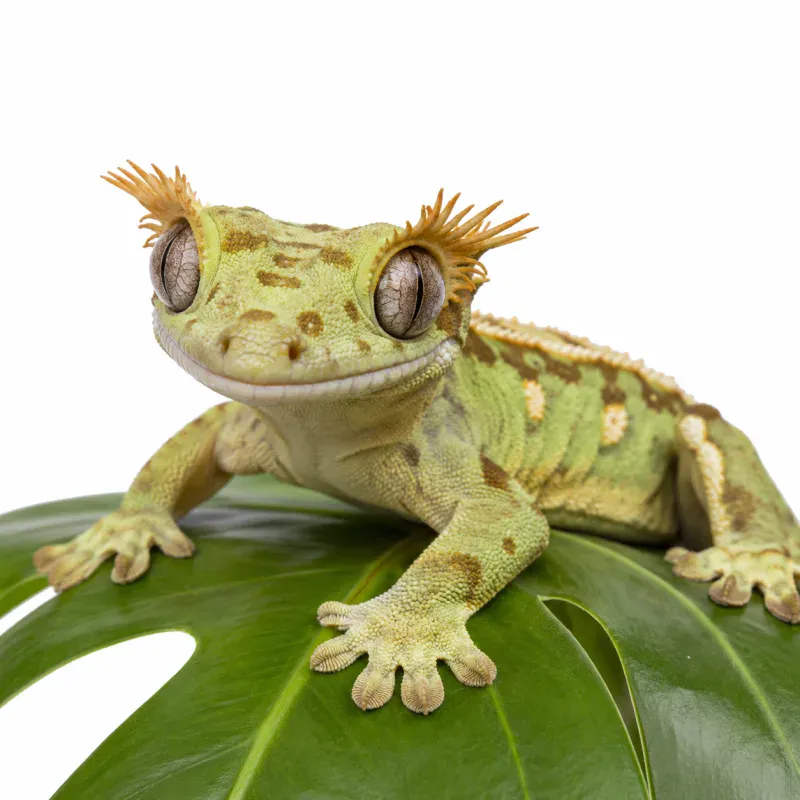
Crested geckos (Correlophus ciliatus) are among the most popular pet reptiles, prized for their docile temperament, low-maintenance care, and incredible diversity of colors and patterns—known as morphs. Whether you're a beginner or a seasoned breeder, understanding morphs like harlequin, dalmatian, flame, pinstripe, lily white, and phantom can help you select the perfect gecko and appreciate the genetics behind their beauty. This guide covers everything from morph identification and pricing to essential care requirements, so you can provide the best home for your crested gecko.
Morph Overview: Harlequin, Dalmatian, Flame, Pinstripe, Lily White, and Phantom
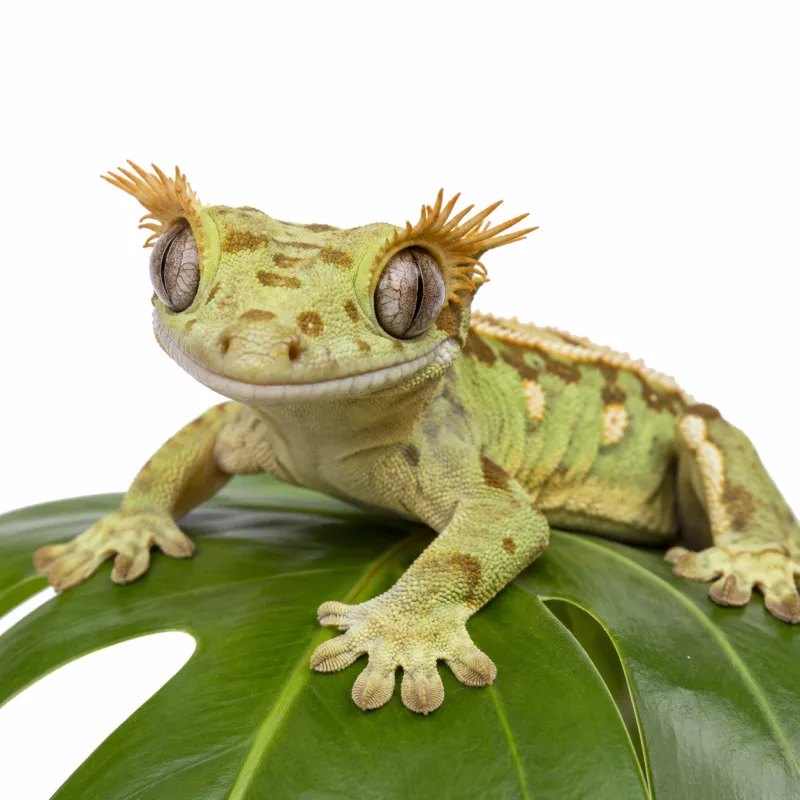
Crested gecko morphs are categorized by pattern, color, and scale structure. Below is a quick reference table summarizing key traits and average price ranges for each morph.
| Morph | Key Traits | Genetics | Average Price (USD) |
|---|---|---|---|
| Harlequin | High-contrast pattern with large patches of white/yellow on sides and legs; often has a pale dorsal stripe | Polygenic (multiple genes); linked to pattern expression | $150–$500 |
| Dalmatian | White or cream base with small black spots (like a Dalmatian dog); spot density varies | Recessive (some lines); polygenic modifiers | $100–$400 |
| Flame | Solid base color (often red, orange, or yellow) with a distinct pale or white dorsal stripe; minimal lateral pattern | Polygenic; linked to color saturation | $80–$250 |
| Pinstripe | Two raised, cream or white lines running along the spine from neck to tail; often combined with other morphs | Polygenic; scale structure trait | $200–$600 |
| Lily White | White or cream base with minimal to no pattern; often has pinkish or lavender undertones; eyes may be dark or ruby | Recessive (lw gene) | $400–$1,200 |
| Phantom | Faint, ghost-like pattern on a dark base; pattern is often blurred or washed out; may appear solid from a distance | Polygenic; pattern reduction | $100–$300 |
Note: Prices vary by age, lineage, and breeder reputation. Rare combinations (e.g., harlequin pinstripe) can exceed $1,000.
How to Identify Each Morph
- Harlequin: Look for large, irregular patches of white or cream on the sides, legs, and sometimes head. The dorsal stripe is often pale and may be broken. High contrast between base color and patches is key.
- Dalmatian: Count the spots on the body and legs. A gecko with fewer than 10 spots is often called a "low-expression" dalmatian; those with heavy spotting are "super dalmatians." Spots can be black, brown, or even red (rare).
- Flame: The base color is solid and vibrant (red, orange, yellow, or even olive). The dorsal stripe is pale and runs from the neck to the tail, but there is little or no lateral pattern.
- Pinstripe: Run your finger gently along the spine—you should feel two raised, ridge-like lines. These are often cream or white and can be continuous or broken. Pinstripes are often combined with other morphs like harlequin or flame.
- Lily White: The entire body is white or cream with minimal pattern. Look for pinkish or lavender undertones, and check the eyes—they may be dark or ruby red. The absence of pattern is a hallmark.
- Phantom: The pattern appears faded or "ghost-like" against a dark base (often brown, gray, or dark green). From a distance, the gecko may look solid, but up close you can see faint blotches.
Color Genetics and Inheritance
Crested gecko morphs are primarily polygenic, meaning multiple genes control color, pattern, and structure. However, some traits follow simple recessive or dominant inheritance.
- Polygenic traits: Most pattern morphs (harlequin, flame, phantom) and color intensity are additive—breeding two high-expression geckos increases the chance of offspring with similar traits.
- Recessive traits: Dalmatian spotting and lily white are recessive. Both parents must carry the gene for offspring to express the morph. Breeders often use test crosses to identify carriers.
- Incomplete dominance: Some pinstripe lines show incomplete dominance, where a single copy produces a weaker stripe and two copies produce a bold stripe.
- Environmental factors: Temperature, humidity, and UVB exposure can influence color vibrancy and pattern expression, but genetics remain the primary driver.
For example, breeding a lily white (lw/lw) with a normal (wild type) produces all het lily whites (carriers). Breeding two hets yields ~25% lily white offspring.
Practical Genetics for Breeders
- Punnett squares: For recessive traits like lily white, use a Punnett square to predict offspring ratios. Two het parents (lw/+ × lw/+) produce 25% lily white (lw/lw), 50% hets (lw/+), and 25% wild type (+/+).
- Test crosses: To determine if a gecko is a carrier (het) for a recessive trait, breed it to a known homozygous individual (e.g., a lily white). If any offspring show the trait, the parent is a carrier.
- Line breeding: To enhance polygenic traits like harlequin pattern, breed siblings or cousins that both show high expression. This increases the chance of offspring with even stronger traits, but beware of inbreeding depression—introduce unrelated stock every few generations.
- Keeping records: Track each gecko's lineage, morph, and expression level. Use a spreadsheet or breeding journal to plan crosses and avoid accidental inbreeding.
Enclosure Setup
Crested geckos are arboreal and require vertical space. For a single adult (20–30 grams), use a 12x12x18-inch or 18x18x24-inch glass terrarium. Juveniles (under 15 grams) can start in a 12x12x18-inch enclosure or a smaller kritter keeper.
- Substrate: Use a moisture-retaining mix like coconut coir, sphagnum moss, or a bio-active blend (e.g., ABG mix). Avoid sand or gravel, which can cause impaction.
- Decor: Provide cork bark, bamboo, and live or fake plants for climbing and hiding. Include a horizontal perch near the top for basking.
- Hides: At least two hides—one near the top and one near the bottom—to reduce stress.
- Water dish: A shallow dish for drinking; mist daily to provide droplets.
Step-by-Step Enclosure Setup
- Choose the enclosure: For adults, an 18x18x24-inch glass terrarium is ideal. For juveniles, a 12x12x18-inch works, but they will need an upgrade as they grow.
- Add substrate: Lay 1-2 inches of coconut coir or a bio-active mix. If using a bio-active setup, add a drainage layer (e.g., clay balls) and a mesh separator.
- Install climbing structures: Place cork bark tubes vertically and horizontally, and add bamboo poles at different angles. Secure them firmly to prevent falls.
- Add plants: Use live plants like pothos, snake plant, or bromeliads (safe for geckos) or high-quality fake plants. Ensure they are securely potted or anchored.
- Place hides: Put one hide near the top (e.g., a cork half-round) and one at the bottom (e.g., a small coconut hide).
- Set up water dish: Place a shallow dish on the bottom, away from heat sources. Clean and refill daily.
- Add a thermometer and hygrometer: Place them at mid-height to monitor temperature and humidity accurately.
Bio-Active vs. Simple Setup
| Feature | Bio-Active | Simple Setup |
|---|---|---|
| Substrate | ABG mix with drainage layer | Coconut coir or paper towels |
| Cleanup crew | Springtails and isopods | None |
| Maintenance | Spot clean; deep clean every 6 months | Replace substrate every 1-2 months |
| Cost | Higher initial cost | Lower initial cost |
| Benefits | Naturalistic, self-cleaning | Simple, easy to monitor |
Heating and Lighting
Crested geckos thrive at room temperature (72–78°F). Avoid temperatures above 82°F, which can be fatal. Use a low-wattage ceramic heat emitter or a heat mat on a thermostat if your home is cooler. No UVB is strictly required if you supplement with D3, but a low-output UVB (5% T5) can improve color and calcium metabolism. Provide a 12-hour day/night cycle with an LED or fluorescent bulb.
Temperature Management
- Ideal range: Keep the ambient temperature between 72°F and 78°F. Nighttime drops to 65-70°F are acceptable.
- Heating options: If your room is below 70°F, use a ceramic heat emitter (CHE) or a heat mat on the side of the enclosure, connected to a thermostat set to 75°F. Never use heat rocks—they can cause burns.
- Monitoring: Use a digital thermometer with a probe. Place the probe at the basking perch (near the top) and check daily.
- Cooling: If your home exceeds 80°F, use a small fan or air conditioning. Never place the enclosure in direct sunlight.
Lighting Options
- No UVB required: Crested geckos are nocturnal; they can synthesize D3 from supplements. However, low-level UVB (2-5%) can improve health and color.
- If using UVB: Use a 5% T5 UVB bulb and provide plenty of shade (plants and hides). Keep the bulb on for 6-8 hours per day, not the full 12 hours.
- LED lighting: For viewing, use a low-wattage LED on a 12-hour timer. This also supports live plants.
Humidity and Hydration
Maintain 60–80% humidity with daily misting. Use a digital hygrometer to monitor. Mist heavily at night, allowing the enclosure to dry to ~50% during the day. A dry-out period prevents bacterial and fungal growth. For shedding, increase humidity to 80–90% for 24–48 hours.
Misting Schedule
- Morning: Light mist to create droplets on leaves (for drinking).
- Evening: Heavy mist to raise humidity to 80% before nightfall.
- Dry-out period: Allow humidity to drop to 50-60% during the day. This mimics natural conditions and prevents skin issues.
- Automatic misters: If you're away often, consider a misting system (e.g., MistKing) set to 2-3 short bursts at night.
Dehydration and Shedding
- Signs of dehydration: Wrinkled skin, sunken eyes, and sticky saliva. Provide a water dish and mist more frequently.
- Stuck shed: If shed sticks to toes or tail, increase humidity to 80-90% for 24 hours. If it persists, gently soak the gecko in shallow warm water (85°F) for 10 minutes and use a cotton swab to remove.
- Hydration tips: Always provide a shallow water dish; even though they prefer droplets, a dish is a backup.
Diet and Feeding
Feed a commercial crested gecko diet (e.g., Repashy, Pangea, or Zoo Med) as a staple. Offer a mix of fruit flavors (e.g., watermelon, fig, apricot) to prevent pickiness. Juveniles eat daily; adults every other day. Dust with calcium and D3 twice a week for adults, three times for juveniles. Gut-load feeder insects (crickets or dubia roaches) once a week for variety, but avoid overfeeding insects—they can cause obesity and liver issues.
Feeding Schedule by Age
| Age | CGD Frequency | Insects | Calcium/D3 |
|---|---|---|---|
| Juvenile (under 6 months) | Daily | 1-2 small crickets, 2-3 times/week | 3 times/week |
| Sub-adult (6-12 months) | Every other day | 2-3 crickets, 1-2 times/week | 2 times/week |
| Adult (12+ months) | Every 2-3 days | 3-4 insects, once/week (optional) | 2 times/week |
How to Prepare CGD
- Mix the powder with water to a ketchup-like consistency (1 part powder to 2 parts water).
- Let it sit for 1-2 minutes to thicken.
- Offer in a shallow dish or on a feeding ledge.
- Remove uneaten CGD after 24 hours to prevent spoilage.
- Rotate flavors every 2-3 weeks to prevent boredom.
Insect Feeding Tips
- Gut-load: Feed insects a nutritious diet (e.g., carrots, leafy greens) for 24 hours before offering.
- Dusting: Dust insects with a calcium/D3 supplement immediately before feeding.
- Size: Insects should be no larger than the space between the gecko's eyes.
- Frequency: Insects are optional; too many can cause obesity. For adults, once a week is sufficient.
Handling and Temperament
Crested geckos are generally docile but can be jumpy. Start handling after 2 weeks of acclimation. Use a calm, slow approach: scoop from below, never grab the tail (they drop tails as a defense). Handling sessions should be 5–10 minutes, 2–3 times per week. Avoid handling during shedding or after feeding.
Step-by-Step Handling
- Acclimate: Let your gecko settle for 2 weeks without handling. Observe from outside the enclosure.
- Introduce your hand: Place your hand inside the enclosure for a few minutes daily, so the gecko gets used to your scent.
- First handling: Gently scoop the gecko from below with one hand, supporting the belly. Let it walk onto your hand; never grab.
- Keep sessions short: Start with 2-3 minutes, gradually increase to 10 minutes.
- Watch for stress: If the gecko jumps repeatedly or tries to flee, end the session and try later.
- Never grab the tail: Tail dropping is a defense mechanism; the tail will not regrow.
Behavioral Notes
- Nocturnal: They are most active at night; handle in the evening for a calmer gecko.
- Vocalizations: They may chirp or bark when stressed—this is normal.
- Tail waving: A defensive behavior; stop handling if you see it.
- Children: Supervise children and teach them to sit down while holding the gecko to prevent falls.
Common Health Issues
- Metabolic Bone Disease (MBD): Caused by calcium deficiency. Symptoms include lethargy, bent limbs, and tremors. Prevent with proper supplementation and UVB.
- Respiratory infections: Signs include wheezing, bubbles at nose, and lethargy. Often due to low temperatures or high humidity. Quarantine and consult a vet.
- Floppy tail syndrome: Tail hangs limp due to muscle weakness or injury. Usually resolves with calcium and vitamin D3.
- Mouth rot (stomatitis): Redness, swelling, or pus around the mouth. Requires veterinary antibiotics.
- Parasites: Internal (worms, coccidia) or external (mites). Fecal exams are recommended annually.
Detailed Health Care
Metabolic Bone Disease (MBD)
- Prevention: Dust food with calcium/D3 as recommended, and provide UVB if possible.
- Treatment: Increase calcium supplementation, provide UVB, and consult a vet for oral calcium or vitamin D3 injections.
- Recovery: With early treatment, mild MBD can improve, but severe deformities are permanent.
Respiratory Infections
- Cause: Low temperatures (below 65°F) or prolonged high humidity (above 90%).
- Symptoms: Open-mouth breathing, wheezing, nasal discharge.
- Action: Raise temperature to 75-78°F, reduce humidity to 60%, and see a reptile vet for antibiotics.
Floppy Tail Syndrome
- Symptoms: Tail hangs limp and doesn't curl.
- Cause: Often a calcium deficiency or injury.
- Treatment: Increase calcium/D3, ensure proper diet. If no improvement in 2 weeks, consult a vet.
Mouth Rot (Stomatitis)
- Symptoms: Red or swollen gums, pus, loss of appetite.
- Action: Isolate the gecko, clean the mouth with a diluted antiseptic (as per vet), and get antibiotics.
Parasites
- Symptoms: Weight loss, diarrhea, lethargy.
- Action: Take a fecal sample to a vet for examination. Treat with prescribed antiparasitics.
When to See a Vet
- Loss of appetite for more than 3 days.
- Lethargy or difficulty moving.
- Visible injuries or swelling.
- Any respiratory or mouth issues.
What Not to Do
- Overhandling: Causes stress and tail drops. Wait until gecko is comfortable.
- Improper humidity: Too low causes stuck shed; too high causes respiratory issues.
- Incorrect temperature: Above 82°F is lethal; below 65°F slows metabolism.
- Poor diet: Feeding only insects or fruit (without commercial diet) leads to nutritional deficiencies.
- Neglecting quarantine: New geckos should be isolated for 30–60 days to prevent disease spread.
Additional Mistakes to Avoid
- Using sand or gravel substrate: This can cause impaction if ingested.
- Keeping multiple geckos together: They are solitary and will fight.
- Handling during shedding: This can cause stress and stuck shed.
- Feeding only fruit: Fruits lack protein and calcium; always use a complete CGD.
- Ignoring hygiene: Clean the water dish and spot-clean the enclosure regularly to prevent bacteria.
Frequently Asked Questions
Q: Can I keep multiple crested geckos together?
A: No—they are solitary and territorial. Cohabitation leads to stress, injury, and competition for resources.
Q: How long do crested geckos live?
A: 15–20 years with proper care.
Q: Are crested geckos good for beginners?
A: Yes—they are low-maintenance, handleable, and have simple dietary needs.
Q: What is the rarest crested gecko morph?
A: Lily white is considered rare due to its recessive genetics and high demand. Super dalmatians (with extreme spotting) are also uncommon.
Related Reading
- Crested Gecko Care Guide — Complete husbandry manual.
- Crested Gecko Diet Guide — CGD rotation and insects.
- Gargoyle Gecko Morph Guide — Compare New Caledonian gecko morphs.
Check optimal temps, calculate feeding, and find your perfect species match.
References
- Repashy Superfoods. (2023). Crested Gecko Diet Instructions.
- Pangea Reptile. (2023). Complete Crested Gecko Care Guide.
- de Vosjoli, P. (2019). The Crested Gecko Care Guide. Advanced Vivarium Systems.
- Leach, A. (2021). Genetic Inheritance in Crested Geckos. Reptiles Magazine.
🐾 Join the Community
See how other keepers set up their enclosures, ask questions, and share your experience.
🛠️ Apply What You Learned
Check optimal temps, calculate feeding schedules, and get calcium dosage — all personalized for your species.
Comments
No account needed — corrections, updates and questions are all welcome. For a full question with photos, the community Q&A is the better place.