Crested Gecko Temperature & UVB Guide (2026)
Natural History and Habitat
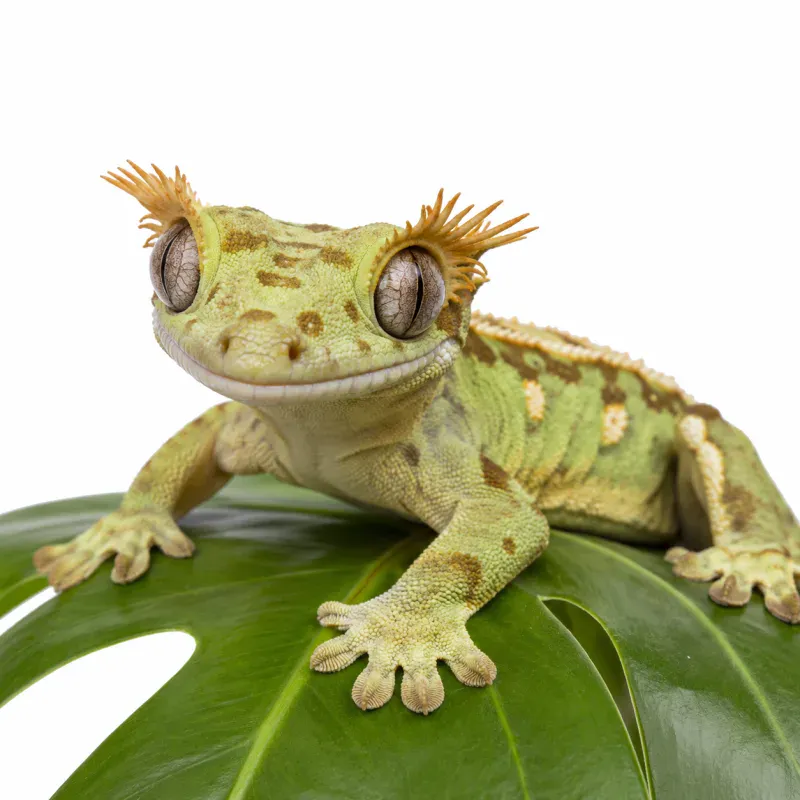
Crested geckos (Correlophus ciliatus) are native to the humid, tropical forests of New Caledonia, where they inhabit the understory and mid-canopy layers. These arboreal lizards experience stable temperatures year-round (70–80°F / 21–27°C), high humidity (70–80%), and filtered, dappled sunlight. Replicating these conditions in captivity is essential for their health, activity, and longevity.
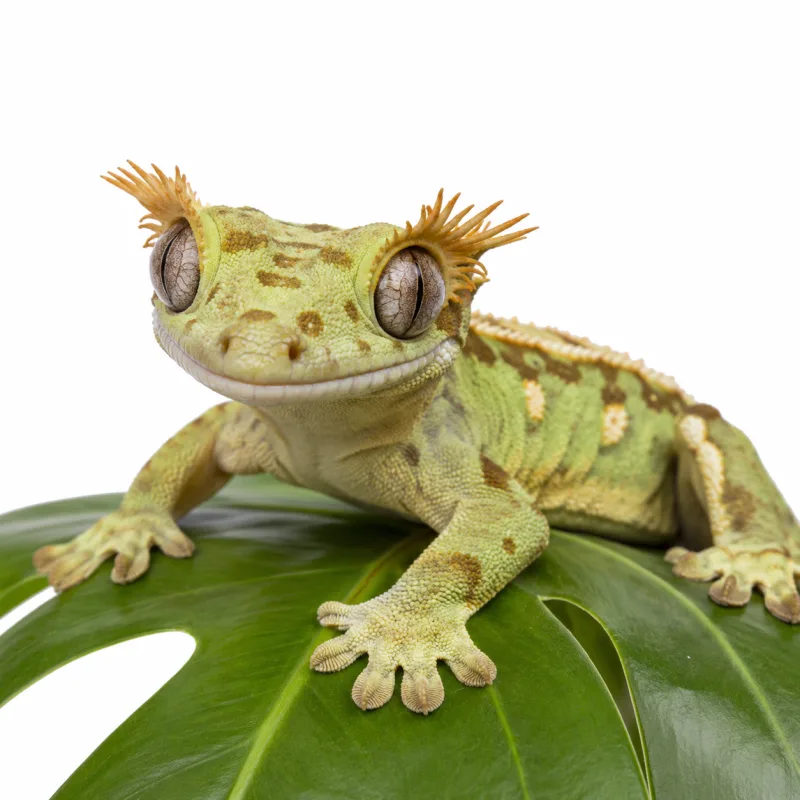
In the wild, crested geckos are most active during the cooler, humid hours of dawn and dusk. They spend their days hidden in foliage or crevices, emerging to hunt insects and lick fruit nectar. The temperature gradient in their natural habitat is subtle — the understory rarely experiences extreme heat, and nights are always cooler. This is why captive enclosures should mimic a gentle, consistent gradient rather than a hot basking zone.
Optimal Temperature Range
Crested geckos are ectothermic and rely on external heat sources to regulate body temperature. The ideal daytime ambient temperature is 72–78°F (22–26°C). A small, localized basking spot of up to 80°F (27°C) can be provided but is not strictly necessary. Nighttime temperatures should drop to 65–72°F (18–22°C), mimicking their natural diurnal cycle.
Why Temperature Matters
- Metabolism: Correct temperatures ensure proper digestion and nutrient absorption.
- Immune function: Chronic cold (<70°F) suppresses immunity; chronic heat (>82°F) causes stress and dehydration.
- Reproduction: A seasonal temperature drop (65–70°F for 4–6 weeks) can stimulate breeding.
Beyond these basics, temperature also influences activity levels and gut motility. At the low end of the range (72°F), geckos may be sluggish and feed less frequently. At the high end (78–80°F), they are more active but also require higher humidity to avoid dehydration. Always provide a thermal gradient within the enclosure — a warm side and a cooler side — so your gecko can self-regulate.
Heating Equipment
Use a low-wattage ceramic heat emitter (CHE) or a deep heat projector (DHP) connected to a dimming thermostat. Avoid heat mats (inefficient for arboreal species) and bright lights at night. For small enclosures (12x12x18 inches), a 25–40W CHE is sufficient. Larger enclosures (18x18x24 inches) may require 50–75W.
When choosing a thermostat, opt for a dimming or pulse-proportional model rather than a simple on/off switch. On/off thermostats can cause temperature swings that stress your gecko. Dimming thermostats gradually adjust power output, maintaining a stable temperature. Place the thermostat probe near the basking area, but not directly under the heat source, to avoid false readings.
For a 20-gallon tall enclosure, a 50W CHE is often adequate. If your room temperature is particularly cold (below 68°F), you may need a 75W CHE. Always use a ceramic socket rated for the wattage, and secure the fixture to a screen top or a lamp stand to prevent burns.
Step-by-Step: Setting Up Heating and Lighting
Follow these steps to create a safe, effective thermal and lighting environment for your crested gecko:
- Choose your heat source: Select a CHE or DHP rated for your enclosure size. For a 20-gallon tall, a 50W CHE is a good starting point.
- Connect a dimming thermostat: Attach the thermostat probe in the middle of the enclosure, away from direct heat, and set it to 75°F (24°C) for daytime.
- Position the heat source: Place it on one side of the screen top to create a warm side. Ensure it is securely fastened and out of reach of your gecko.
- Add UVB if desired: Install a T5 5.0 linear fixture 12–18 inches (30–45 cm) above the basking area. Use a Solarmeter 6.5 to verify UVI 1.0–2.0.
- Set up daylight LED: Mount a 6500K LED strip on the same side as the heat source for a 10–12 hour photoperiod.
- Program a timer: Set lights and heat to turn on at 7 AM and off at 7 PM. Use a separate timer for any nighttime heat if needed.
- Monitor temperatures: Place digital thermometers on both the warm and cool sides. Adjust the thermostat as needed to maintain the gradient.
Lighting Requirements
UVB Lighting: The Evidence
Recent studies (e.g., Journal of Herpetological Medicine and Surgery, 2020) show that crested geckos benefit from low-level UVB exposure. UVB is not mandatory for survival (they can synthesize vitamin D3 from diet), but it improves calcium metabolism, activity levels, and natural behaviors.
UVB is particularly beneficial for juvenile geckos, breeding females, and geckos on a primarily insect-based diet. It allows them to produce vitamin D3 endogenously, reducing reliance on dietary supplements. However, excessive UVB can cause eye damage and skin burns, so careful distance and output management is essential.
| UVB Type | Recommended Output | Distance from Gecko | Photoperiod |
|---|---|---|---|
| Linear T5 (5.0/6% UVB) | UVI 1.0–2.0 at basking level | 12–18 inches (30–45 cm) | 10–12 hours/day |
| Compact/Coil (2.0 UVB) | UVI 0.5–1.5 | 8–12 inches (20–30 cm) | 10–12 hours/day |
Important: UVB must be paired with a separate daylight LED or fluorescent bulb to provide visible light. Use a Solarmeter 6.5 to verify UVI levels.
If you opt for a compact UVB, place it on the same side as the heat source to create a warm, bright basking zone. Replace UVB bulbs every 6–12 months, even if they still emit light, because UVB output diminishes over time. A Solarmeter can help you determine when replacement is needed.
LED Options
Full-spectrum LEDs (e.g., Jungle Dawn, Arcadia Jungle Dawn) or standard 6500K daylight LEDs work well. They promote plant growth in bioactive setups and support circadian rhythms. Avoid colored or “moonlight” bulbs—they disrupt sleep.
LEDs are our top choice for crested geckos because they produce minimal heat and are energy-efficient. A 6500K LED strip or floodlight can illuminate the enclosure for 10–12 hours per day. For bioactive enclosures, choose a full-spectrum LED designed for plant growth, such as the Arcadia Jungle Dawn, to keep live plants healthy.
Always provide a distinct light-dark cycle. Use a timer to ensure consistency — turning lights on and off at the same time each day helps regulate your gecko's circadian rhythm.
Nighttime Drops
Complete darkness at night is crucial. No red, blue, or purple lights. A nighttime temperature drop of 5–10°F (3–6°C) is natural and healthy. If your home stays above 72°F at night, no additional heat is needed. If it drops below 65°F, use a CHE on a thermostat set to 68°F.
Nighttime temperature drops are not just natural — they are essential for proper metabolic function and sleep. Studies show that reptiles experience deeper sleep when temperatures drop at night, similar to mammals. Avoid any light source during the night, as it can suppress melatonin production and disrupt the sleep-wake cycle.
Seasonal Care Adjustments
Temperature and lighting needs change with the seasons, especially in regions with significant climate variation.
- Summer: If your home stays warm (above 75°F), reduce or turn off heating during the day. Monitor for overheating; use fans for ventilation but avoid direct drafts.
- Winter: Room temperatures may drop below 65°F. Increase CHE wattage or add a second heat source, always on a thermostat. Keep the enclosure away from cold windows.
- Spring/Fall: These are ideal for simulating a natural breeding cycle. Gradually lower nighttime temperatures to 65–70°F for 4–6 weeks to encourage breeding behavior.
- Photoperiod: Adjust daylight hours to mimic natural seasons: 10 hours in winter, 12 hours in summer. Use a timer for consistency.
Always monitor your gecko's behavior and adjust based on individual needs. Sudden temperature spikes can be fatal, so make changes gradually over several days.
Humidity and Misting
Target 60–80% humidity during the day, with spikes to 90–100% after misting. Use a pressure sprayer or automatic misting system (e.g., MistKing). Allow the enclosure to dry out to 50–60% between mistings to prevent bacterial/fungal growth.
Humidity is just as critical as temperature for crested geckos. In the wild, they experience heavy rainfall and high humidity, especially at night. In captivity, misting twice daily (morning and evening) usually suffices. If you use an automatic misting system, set it to mist for 30–60 seconds, 2–4 times per day, depending on your ambient humidity.
Use a digital hygrometer to monitor humidity levels. Place the probe in the middle of the enclosure, away from direct misting, to get an accurate reading. During hot, dry spells, you may need to mist more frequently. Always ensure good ventilation to prevent stagnant, overly damp conditions that can lead to respiratory infections.
For a humid hide, fill a small container with moist sphagnum moss and place it on the cooler side of the enclosure. This is especially helpful during shedding.
Troubleshooting Common Temperature and Lighting Issues
Even with careful setup, problems can arise. Here are solutions to common issues:
- Enclosure too hot: Reduce CHE wattage, move the thermostat probe closer to the heat source, or raise the fixture higher. Ensure the basking spot does not exceed 80°F (27°C).
- Enclosure too cold: Increase CHE wattage or add a second heat source. Check that the thermostat is functioning and the probe is correctly placed. In winter, move the enclosure to a warmer room.
- Uneven temperature gradient: Ensure the heat source is on one side only. Add insulation to the cool side if it drops below 65°F (18°C).
- UVB too strong: Raise the fixture or switch to a lower-output bulb. Verify with a Solarmeter; UVI should not exceed 2.0.
- Lights not turning on/off: Use a reliable timer and check batteries or connections. Consistent photoperiods are vital for health.
Enclosure Setup
A minimum 20-gallon tall (18x18x24 inches) for one adult. Use a front-opening glass or PVC enclosure with excellent ventilation. Substrate: coconut fiber, sphagnum moss, or a bioactive mix. Provide vertical climbing branches, cork bark, and live or artificial plants (pothos, bromeliads).
When setting up the enclosure, create distinct zones: a warm side (near the heat source), a cool side (opposite), and a humid hide. Place a digital thermometer on each side to monitor the gradient. The basking spot should be on one side, not in the center, to allow your gecko to thermoregulate.
For a bioactive setup, add a drainage layer (e.g., clay balls) beneath the substrate to prevent waterlogging. Use a mix of organic topsoil, coconut fiber, and sphagnum moss. Add leaf litter and springtails to complete the cleanup crew. Live plants like pothos, bromeliads, and ferns thrive in these conditions and help maintain humidity.
Vertical space is more important than floor space for these arboreal geckos. Provide plenty of climbing opportunities — cork bark tubes, bamboo poles, and sturdy vines. Ensure all decorations are securely anchored to prevent falls.
Diet and Feeding
Feed a commercial crested gecko diet (CGD) like Repashy or Pangea as a staple. Offer 2–3 times per week. Supplement with calcium + D3 (if no UVB) or calcium without D3 (if UVB provided) every other feeding. Gut-loaded insects (crickets, dubia roaches) can be offered 1–2 times per month for enrichment.
CGD provides a balanced ratio of calcium to phosphorus and includes essential vitamins. Choose a flavor your gecko likes — Pangea offers varieties like fig, apricot, and watermelon. To prepare, mix one part powder with two parts water to a ketchup-like consistency. Offer in a shallow dish, and remove any uneaten food after 24–48 hours to prevent spoilage.
If you provide UVB, dust insects with a calcium supplement that lacks D3, since your gecko will synthesize its own. Without UVB, use a calcium + D3 supplement. Always dust insects lightly — a light coating is sufficient.
Insects should be no larger than the space between your gecko's eyes. Offer 3–6 insects per feeding, 1–2 times per month. Avoid mealworms (high fat, hard exoskeleton) and wild-caught insects (pesticide risk).
Cost Breakdown: Heating and Lighting Equipment
Understanding the upfront and ongoing costs helps you budget for your crested gecko's needs:
| Equipment | Initial Cost (USD) | Replacement Frequency | Annual Cost (USD) |
|---|---|---|---|
| Ceramic Heat Emitter (50W) | $10–15 | 1–2 years | $5–15 |
| Dimming Thermostat | $30–60 | 3–5 years | $10–20 |
| T5 UVB Fixture + Bulb | $40–80 | Bulb every 6–12 months | $20–40 |
| LED Daylight (6500K) | $15–30 | 2–3 years | $5–15 |
| Timer | $10–20 | 2–3 years | $5–10 |
| Digital Thermometer/Hygrometer | $10–25 | 2–3 years | $5–15 |
Total initial investment for a complete setup is approximately $115–230, with an annual ongoing cost of $50–115. These are estimates; prices vary by brand and retailer. Investing in quality equipment reduces long-term costs and health risks.
Handling and Temperament
Crested geckos are generally docile but can be skittish. Wait 2 weeks after acquisition before handling. Support the body fully; never grab the tail (they drop it as a defense). Keep sessions to 10–15 minutes. Avoid handling during shedding or after feeding.
To build trust, start by placing your hand flat in the enclosure for a few minutes each day, allowing your gecko to approach you. Once your gecko is comfortable, gently scoop it up from below, supporting the chest and hindquarters. Avoid sudden movements. If your gecko jumps, let it land on a soft surface — never grab it mid-air.
Handling frequency: 2–3 times per week is ideal. More frequent handling can stress your gecko, while less may make it more skittish. Always wash your hands before and after handling to prevent the spread of pathogens.
Common Health Issues
- Metabolic Bone Disease (MBD): Caused by calcium deficiency or inadequate UVB. Signs: tremors, soft jaw, limb deformities.
- Dysecdysis (stuck shed): Low humidity. Provide a humid hide or increase misting.
- Respiratory infections: Usually from cold, damp conditions. Signs: wheezing, open-mouth breathing.
- Tail loss (autotomy): Stress-related. Regrows but never as long.
MBD is the most serious of these conditions and can be fatal if untreated. If you notice any signs of MBD, consult a reptile veterinarian immediately. Treatment often involves calcium injections and UVB therapy. Prevention is key: ensure proper calcium supplementation and UVB exposure.
Dysecdysis is easily treated by soaking your gecko in shallow, lukewarm water and gently removing the shed. Increase humidity and provide a humid hide. Never pull off stuck shed, as this can damage the skin.
Respiratory infections require veterinary care, often with antibiotics. Keep the enclosure warm and dry during treatment. Tail loss is a natural defense mechanism; the tail will regrow, but it will be shorter and less defined. Keep the stump clean and monitor for infection.
Pitfalls to Avoid
- Overheating: Using heat lamps or basking bulbs that exceed 82°F.
- No nighttime drop: Constant 75°F disrupts sleep and metabolism.
- Over-misting: Constant 100% humidity causes scale rot.
- No UVB or D3 overdose: Using UVB without a proper gradient, or supplementing D3 when UVB is present.
Other common mistakes include using a heat mat (which does little for arboreal species), placing the enclosure in direct sunlight (which can overheat it), and failing to provide a temperature gradient. Always research before making changes to your setup.
Another pitfall is ignoring ambient room temperature. If your home is very warm in summer, you may need to reduce heating. Conversely, in winter, you may need additional heating. Always monitor temperatures with a digital thermometer.
Comparison Table: Lighting and Heating Options
| Equipment | Purpose | Pros | Cons |
|---|---|---|---|
| Ceramic Heat Emitter | Night heat | No light, long lifespan | Can dry air, needs thermostat |
| Deep Heat Projector | Day/night heat | Penetrates deep, IR-A/B | More expensive |
| T5 UVB 5.0 | UVB + visible light | Best for calcium metabolism | Needs fixture, distance-sensitive |
| Compact UVB 2.0 | Low UVB | Smaller, cheaper | Narrow beam, lower output |
| LED Daylight (6500K) | Visible light + plants | Energy-efficient, promotes growth | No heat or UVB |
For further reading, consult the Journal of Herpetological Medicine and Surgery (2020) and Reptiles Magazine care sheets. Always monitor your gecko’s behavior and adjust based on individual needs.
Frequently Asked Questions
What is the ideal temperature for a crested gecko?
The ideal daytime ambient temperature is 72–78°F (22–26°C), with a localized basking spot of up to 80°F (27°C). Nighttime temperatures should drop to 65–72°F (18–22°C).
Do crested geckos need UVB lighting?
UVB is not mandatory for survival, but recent studies (e.g., Journal of Herpetological Medicine and Surgery, 2020) show that low-level UVB (UVI 1.0–2.0) improves calcium metabolism, activity, and natural behaviors. It should be paired with a daylight LED.
Can I use a heat lamp for my crested gecko?
No, avoid heat lamps that emit bright light. Use a low-wattage ceramic heat emitter (CHE) or deep heat projector (DHP) connected to a dimming thermostat. Heat lamps can overheat the enclosure and disrupt sleep.
What humidity level should I maintain?
Target 60–80% humidity during the day, with spikes to 90–100% after misting. Allow the enclosure to dry to 50–60% between mistings to prevent bacterial growth.
How often should I replace UVB bulbs?
Replace UVB bulbs every 6–12 months, even if they still emit light, because UVB output diminishes over time. Use a Solarmeter 6.5 to verify UVI levels.
What is the best way to measure temperature in the enclosure?
Use digital thermometers placed on both the warm and cool sides of the enclosure. Place the thermostat probe near the basking area, but not directly under the heat source, to avoid false readings.
Can I use a heat mat for my crested gecko?
No, heat mats are inefficient for arboreal species like crested geckos. They do not effectively warm the air and can cause burns if not properly controlled. Use a CHE or DHP instead.
Related Reading
- Crested Gecko Care Guide: Complete Setup & Feeding — A full care overview covering enclosure, feeding, and husbandry essentials.
- Crested Gecko Bioactive Vivarium Guide — Learn how to build a self-cleaning bioactive setup that maintains proper temperature and humidity.
- Crested Gecko Diet Guide: CGD Rotation & Insects — Discover feeding schedules and insect variety to support your gecko's health and energy.
- Crested Gecko Morphs: Harlequin, Dalmatian & More — Explore common crestie morphs and how temperature affects their color and pattern expression.
Not a timer — it reads the actual humidity and stops when it hits your target. Two temperature probes, failsafes, no cloud account. We don't know yet whether it's worth making, so we're asking keepers first. Two-minute survey →
One email when there's news — including if we decide not to build it. No newsletter.
Check optimal temps, calculate feeding, and find your perfect species match.
References
- Journal of Herpetological Medicine and Surgery (2020). UVB and Calcium Metabolism in Crested Geckos.
- Reptiles Magazine (2021). Crested Gecko Care Sheet.
🐾 Join the Community
See how other keepers set up their enclosures, ask questions, and share your experience.
🛠️ Apply What You Learned
Check optimal temps, calculate feeding schedules, and get calcium dosage — all personalized for your species.
Comments
No account needed — corrections, updates and questions are all welcome. For a full question with photos, the community Q&A is the better place.