Crested Gecko Bioactive Vivarium Guide
Natural Habitat & Why Bioactive Matters
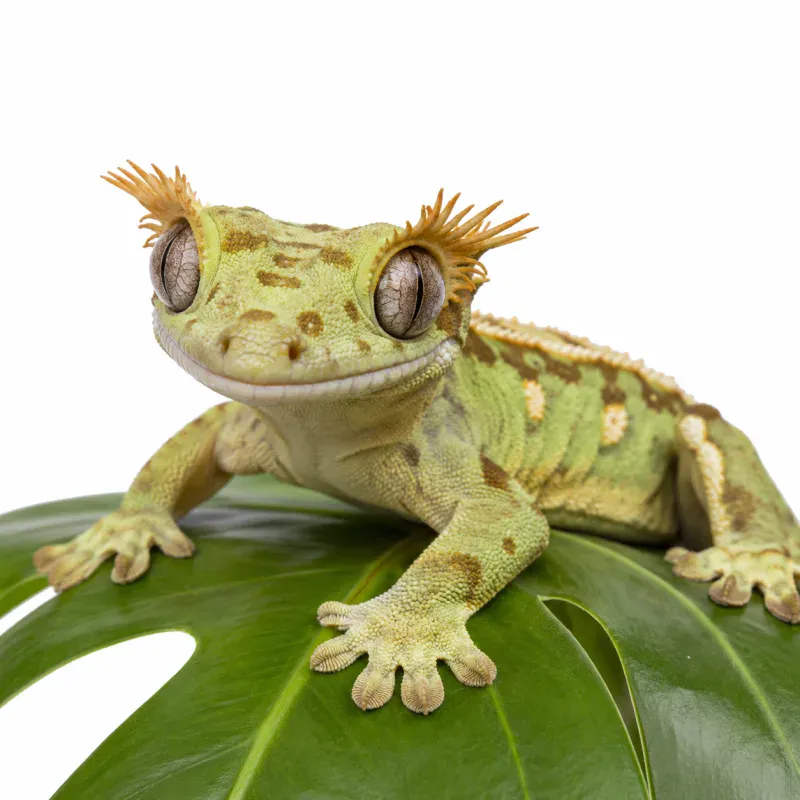
Crested geckos (Correlophus ciliatus) hail from the tropical rainforests of New Caledonia, where they spend most of their time in the understory and mid-canopy. Their natural environment is warm, humid, and densely planted, with leaf litter, rotting logs, and a constant supply of small insects and fruit. A bioactive setup mimics this ecosystem: live plants, a drainage layer, specialized substrate, and a clean-up crew (CUC) of isopods and springtails that break down waste, mold, and shed skin. The result is a self-regulating, low-maintenance habitat that reduces odor, prevents bacterial buildup, and provides enrichment for your gecko.
Enclosure Setup: Step-by-Step
Choosing the Right Enclosure
A single adult crested gecko needs a minimum of an 18×18×24 inch (45×45×60 cm) vertical terrarium. Larger is always better. Front-opening doors make maintenance easier. Glass or PVC enclosures both work, but glass retains humidity better. Avoid mesh tops for high-humidity setups unless you cover part of the mesh with acrylic or glass.
Drainage Layer
Start with a 2–3 inch drainage layer of LECA (lightweight expanded clay aggregate) or hydroballs. This prevents waterlogging and root rot. Cover with a piece of landscape fabric or fiberglass screen to separate substrate from drainage.
Substrate
A bioactive substrate should be a mix of organic topsoil, sphagnum peat moss, and coconut coir, with added leaf litter and charcoal. Commercial mixes like ABG (Atlanta Botanical Garden) mix work perfectly. Aim for 3–4 inches deep to allow burrowing and root growth.
Hardscape & Decor
Use cork bark rounds, grapewood, or manzanita branches to create vertical climbing surfaces and hiding spots. Arrange them to maximize usable space. Add a water dish (shallow, heavy) and a humid hide (a small container with damp sphagnum moss).
Plants for Crested Gecko Bioactive Vivariums
Choose tropical, humidity-loving plants that can tolerate moderate light and occasional foot traffic. Excellent options include:
- Pothos (Epipremnum aureum) – virtually indestructible, great for climbing
- Bromeliads (Neoregalia spp.) – provide water reservoirs and perches
- Snake plant (Sansevieria trifasciata) – tough, upright leaves for hiding
- Ferns (e.g., Nephrolepis exaltata) – add humidity and texture
- Philodendron (Philodendron scandens) – fast-growing vine
- Ficus pumila (creeping fig) – covers background walls
Quarantine all plants for 2–4 weeks before introducing them to the vivarium to avoid hitchhiking pests.
Clean-Up Crew (CUC)
The CUC is the backbone of a bioactive setup. For crested gecko enclosures, use:
- Springtails (Folsomia candida) – consume mold, fungus, and decaying matter
- Dwarf white isopods (Trichorhina tomentosa) – small, prolific, and safe
- Powder orange isopods (Porcellionides pruinosus) – slightly larger, good for heavy waste
Add a starter culture of 50+ springtails and 20–30 isopods. Provide leaf litter and a piece of cork for them to hide under. Spot-clean large waste and replace leaf litter every few months.
Heating & Lighting
Temperature
Crested geckos thrive at 72–78°F (22–26°C). Nighttime drops to 65–70°F (18–21°C) are acceptable. Use a low-wattage ceramic heat emitter or a deep heat projector if your room runs cold. Never use heat rocks or bright basking bulbs – these can burn geckos or cause stress. Place the heat source on one side to create a thermal gradient. Monitor with a digital thermometer and a temperature gun.
Lighting
Provide a 12-hour day/night cycle. A low-output LED grow light (e.g., 6500K, 10–15 lumens) supports plant growth without overheating the enclosure. UVB is not strictly required for crested geckos, but a low-level UVB (2–5% T5) can improve vitamin D synthesis and behavior. If using UVB, ensure plenty of shaded areas and a distance of 12–18 inches from the gecko.
Humidity & Misting
Maintain 60–70% relative humidity during the day, with spikes to 80–90% at night. Use a pressure sprayer or an automatic misting system (e.g., MistKing) to achieve this. Mist heavily in the evening, then allow the enclosure to dry out during the day. A hygrometer and a timer are essential. If humidity stays too high, increase ventilation. If too low, add a larger water dish or mist more frequently.
Pro tip: Place a digital hygrometer at mid-height to get an accurate reading. Avoid constant wetness – it can cause respiratory infections and scale rot.
Feeding & Diet Schedule
Staple Diet
Crested geckos are omnivores. Feed a high-quality powdered crested gecko diet (CGD) like Repashy, Pangea, or Zoo Med. These contain the perfect balance of protein, calcium, and vitamins. Offer fresh CGD every 2–3 days. Discard any uneaten food after 24–48 hours to prevent spoilage.
Insects
Supplement with live insects once or twice a week. Good options:
- Small crickets (gut-loaded)
- Dubia roaches (nymphs)
- Black soldier fly larvae
- Waxworms (occasional treat)
Dust insects with calcium + D3 powder every other feeding, and a multivitamin once a week.
Hydration
Provide a shallow water dish with fresh, dechlorinated water. Change daily. Misting also provides drinking water – geckos will lap droplets from leaves.
Common Health Issues
| Issue | Symptoms | Cause | Treatment |
|---|---|---|---|
| Metabolic Bone Disease (MBD) | Soft jaw, tremors, bent limbs | Calcium deficiency, lack of UVB | Calcium supplements, UVB light, vet visit |
| Respiratory Infection | Wheezing, bubbles from nose, lethargy | High humidity, poor ventilation | Improve airflow, vet-prescribed antibiotics |
| Stuck Shed | Dry skin on toes, tail, or eyes | Low humidity, dehydration | Increase humidity, gentle soak in shallow warm water |
| Impaction | Constipation, bloating, lack of appetite | Ingesting substrate or large prey | Warm baths, vet if severe |
| Tail Loss (Autotomy) | Tail falls off | Stress, rough handling, predator threat | Keep enclosure clean; tail will not regrow |
Prevention: Maintain proper temperatures and humidity, provide a varied diet with supplements, and handle gently. Quarantine new geckos for 30 days.
Handling Tips & Temperament
Crested geckos are generally docile but can be skittish. Follow these guidelines:
- Wait at least 2 weeks after bringing your gecko home before handling
- Handle in a quiet, warm room (70–75°F)
- Approach slowly from the side, not from above (predator mimicry)
- Support the body with both hands; never grab the tail
- Sessions should be 5–10 minutes at first, gradually increasing
- Watch for stress signs: fast breathing, jumping, tail waving, or dropping the tail
- Wash hands before and after handling
Geckos that are handled regularly (2–3 times per week) become more tolerant. Juveniles are more flighty than adults.
Breeding Basics
Breeding crested geckos requires a healthy male and female (both at least 30 grams and 1.5–2 years old). Introduce the female to the male’s enclosure for 2–3 days. After mating, the female will lay two eggs every 30–45 days. Provide a lay box (a small container with damp sphagnum moss or vermiculite) in the female’s enclosure. Remove eggs immediately and incubate at 72–78°F (22–26°C) in a ventilated container with moist vermiculite. Hatching takes 60–90 days. Hatchlings can be kept in 6-quart bins with paper towels and small hides. Feed them CGD and tiny insects (pinhead crickets, fruit flies).
Common Mistakes & How to Avoid Them
- Over-misting: Leads to mold, bacterial blooms, and respiratory issues. Use a timer and let the enclosure dry out during the day.
- Too much heat: Temperatures above 82°F (28°C) can be fatal. Use a thermostat on any heat source.
- Insufficient ventilation: Stagnant air promotes mold. Add a small computer fan on a timer if needed.
- Wrong CUC: Large isopods (e.g., giant orange) may eat gecko eggs or small hatchlings. Stick to dwarf species.
- Skipping quarantine: New plants or geckos can introduce mites, parasites, or diseases. Always quarantine.
- Overcrowding: A bioactive setup can support only one gecko per 18×18×24 enclosure. More geckos = more waste = system overload.
With proper planning and maintenance, a bioactive crested gecko vivarium can thrive for years with minimal intervention. The key is balance: plants, CUC, and environment working together. Enjoy your slice of New Caledonia!
Related Reading
- Crested Gecko Care Guide: Complete Setup & Feeding
- Why Is My Crested Gecko Not Sticking to Glass?
- Fire Skink Substrate and Humidity Guide: Creating th...
- Crested Gecko Morph Guide: Harlequin, Dalmatian, Fla...
- Complete Crested Gecko Diet & Feeding Guide: CGD Rot...
- Crested Gecko Temperature and Lighting Guide: Optima...
- Crested Gecko Handling and Taming Guide: Building Tr...
- Crested Gecko Breeding Guide: Pairing, Egg Laying, I...
Check optimal temps, calculate feeding, and find your perfect species match.
References
- de Vosjoli, P., & Klingenberg, R. (2004). The Herpetoculture of the Crested Gecko. Advanced Vivarium Systems.
- Mills, T. (2020). The Crested Gecko Care Guide. Reptiles Magazine.
- Banks, C. (2019). Bioactive Terrariums: A Guide to Naturalistic Vivariums. CreateSpace.
🐾 Join the Community
See how other keepers set up their enclosures, ask questions, and share your experience.
🛠️ Apply What You Learned
Check optimal temps, calculate feeding schedules, and get calcium dosage — all personalized for your species.
Comments
No account needed — corrections, updates and questions are all welcome. For a full question with photos, the community Q&A is the better place.