Panther Chameleon Care: Advanced Guide
Natural Habitat and Evolutionary Adaptations
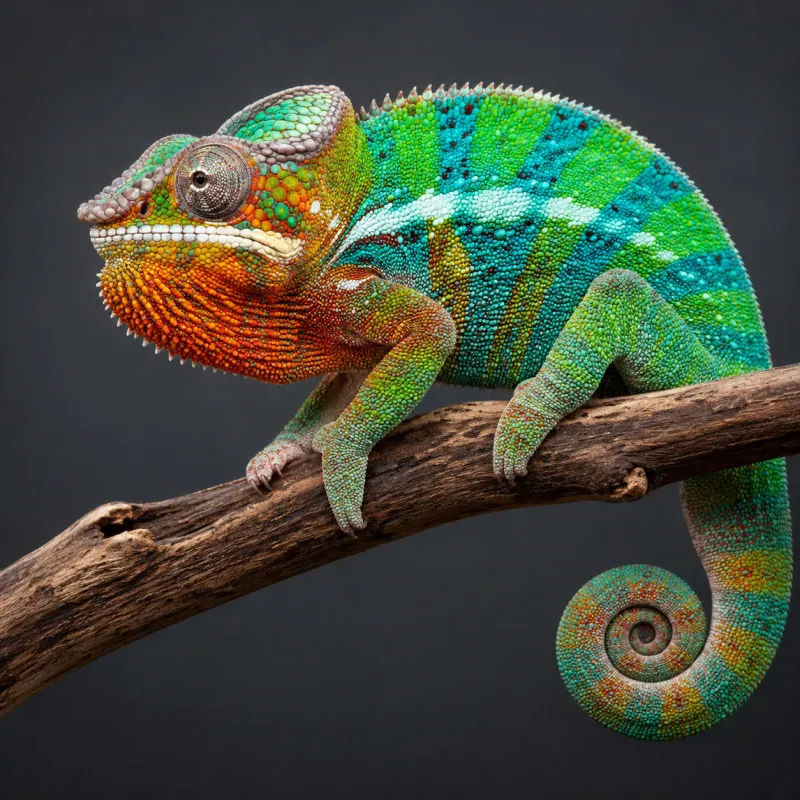
Panther chameleons (Chamaeleo pardalis) are native to the humid coastal forests and montane regions of northeastern Madagascar. Their natural environment is characterized by high rainfall (200–300 cm annually), moderate temperatures (68–85°F / 20–29°C), and dense vegetation with strong vertical structure. Chameleons are arboreal, spending nearly all their time in trees and shrubs, where they rely on cryptic coloration and slow, deliberate movement to ambush prey. Understanding this ecology is critical for replicating conditions in captivity—failure to provide adequate vertical space, foliage density, and hydration gradients leads to chronic stress and immunosuppression.
Enclosure Setup: The Vertical Rainforest
Minimum Dimensions and Material
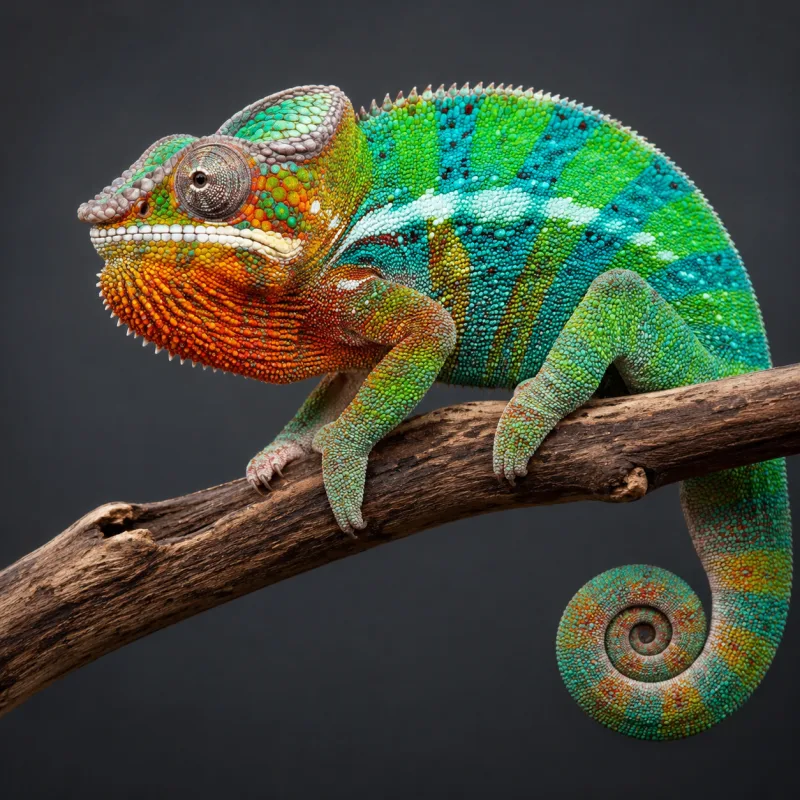
Panther chameleons require large, well-ventilated enclosures. For a single adult male (up to 22 inches / 56 cm total length), the minimum is 2×2×4 feet (60×60×120 cm) of screen or hybrid mesh/glass. Females are slightly smaller but still need at least 2×2×3 feet. Glass terrariums with front ventilation are acceptable if the top is screened, but all-screen enclosures (e.g., ReptiBreeze) are preferred for superior airflow, which prevents respiratory infections and skin scale rot.
Substrate and Drainage
Use a bioactive substrate layer: 2–3 inches of drainage (hydroballs or lava rock) topped with a screen separator, then 4–6 inches of organic topsoil mixed with coco coir and leaf litter. This supports isopods and springtails that break down waste and maintain humidity. Avoid bark chips, sand, or artificial turf, which harbor bacteria and are difficult to clean.
Foliage and Perches
Provide a dense canopy of live, nontoxic plants—Ficus benjamina, Pothos, Dracaena, and Schefflera are excellent. Use horizontal and angled branches (1–2 inches thick) placed at multiple heights to create basking zones near the top and cooler retreats near the bottom. A minimum of 70% of the enclosure volume should be filled with vegetation and branches to reduce stress and provide visual barriers.
Heating, Lighting, and UVB
Temperature Gradients
Panther chameleons are ectothermic and require a thermal gradient: basking spot of 88–92°F (31–33°C) at the top, ambient daytime temperature of 75–82°F (24–28°C), and nighttime drop to 65–72°F (18–22°C). Use a low-wattage halogen flood bulb (50–75W) on a dimmer to achieve basking temps; never use ceramic heat emitters or heat mats, which dehydrate the air and cannot be regulated precisely. Monitor with a digital thermometer with probe at the basking perch.
UVB Lighting
UVB is non-negotiable for calcium metabolism and vitamin D3 synthesis. Use a linear T5 HO fluorescent bulb (e.g., Arcadia 6% or 12%, Zoo Med ReptiSun 5.0) spanning at least two-thirds of the enclosure length. The basking perch should be 8–12 inches from the bulb. Replace the bulb every 6–12 months (output degrades even if light remains visible). Pair UVB with a bright LED plant light (6500K) to encourage plant growth and simulate daylight.
Photoperiod
Provide 12–14 hours of light daily, with a 10–12 hour dark period. Use a timer for consistency. Nighttime temperature drops are essential for natural circadian rhythms and immune function.
Humidity and Hydration
Humidity Levels
Maintain 60–80% relative humidity during the day, with spikes to 90–100% at night. Use a hygrometer with a remote probe placed at mid-enclosure. Achieve this with a combination of: (1) a cool-mist ultrasonic humidifier (set on a timer to run for 15–30 minutes every 2–3 hours during the day, and continuously at night); (2) daily hand-misting for 30–60 seconds; (3) a drip system (a small water cup with a pinhole drips onto a leaf). Avoid constant wet substrate—allow the top layer to dry slightly between mistings to prevent bacterial growth.
Drinking
Chameleons rarely drink from bowls; they lap water droplets from leaves. Ensure that the misting and drip system creates large, visible droplets on foliage. A clear sign of dehydration is sunken eyes and thickened urates (white part of droppings).
Diet and Feeding Schedule
Staple Foods
Feed a variety of live insects: crickets (small to medium), dubia roaches, black soldier fly larvae, hornworms (for hydration), silkworms, and occasional waxworms (treats only). Gut-load all insects 24–48 hours before feeding with calcium-rich foods (collard greens, carrots, sweet potatoes, commercial gut-load). Dust insects with a calcium supplement (without D3) at every feeding for juveniles and every other feeding for adults. Use a multivitamin with D3 once a week.
Feeding Schedule
- Juveniles (0–6 months): Feed 2–3 times daily, as many insects as they can eat in 10 minutes (10–15 small insects per session).
- Subadults (6–12 months): Feed once daily, 6–10 medium insects per session.
- Adults (12+ months): Feed every other day, 4–6 large insects per session. Reduce feeding frequency for females to prevent egg binding and obesity.
Always remove uneaten insects after 15 minutes to avoid stress and bites.
Handling and Social Behavior
Panther chameleons are solitary and highly territorial. Handling should be minimized—only for health checks, cage cleaning, or veterinary visits. When necessary, approach slowly from below (never from above, which triggers a predator response). Gently slide your hand under the belly and allow the chameleon to step onto your palm. Never grab the tail or squeeze the body. Sessions should last no more than 5–10 minutes. Signs of stress include gaping, hissing, dark coloration, and rapid color changes. If observed, return the chameleon to its enclosure immediately.
Common Health Issues and Prevention
| Condition | Symptoms | Causes | Prevention/Treatment |
|---|---|---|---|
| Metabolic Bone Disease (MBD) | Soft jaw, tremors, leg deformities | Insufficient UVB or calcium | Proper UVB + calcium supplementation; vet-administered calcium injections |
| Respiratory Infection | Open-mouth breathing, wheezing, bubbles | Low temps, high humidity, poor ventilation | Increase ventilation, raise basking temp; vet-prescribed antibiotics |
| Stomatitis (Mouth Rot) | Swollen gums, yellow/white plaque | Bacterial infection from injury or stress | Vet cleaning and antibiotics; improve hygiene |
| Egg Binding (Dystocia) | Lethargy, swollen abdomen, no egg-laying | Obesity, lack of laying substrate, calcium deficiency | Provide 12-inch deep laying bin; vet intervention if needed |
| Dehydration | Sunken eyes, sticky saliva, urates dry | Insufficient misting or low humidity | Increase misting frequency; offer dripper; soak chameleon in shallow warm water |
Breeding Basics
Sexing and Maturity
Males are more colorful (blues, reds, greens) and have a wider tail base (hemipenal bulge). Females are generally duller (tan, green, pink) and smaller. Sexual maturity occurs at 12–18 months. Do not breed females under 12 months or under 50 grams—risk of egg binding and death.
Conditioning and Pairing
Condition both sexes for 4–6 weeks with increased calcium and vitamin D3 supplementation, and slightly higher basking temps (90–92°F). Introduce the female into the male’s enclosure (never the reverse) and supervise closely. Mating lasts 10–30 minutes. Remove the female immediately after to prevent aggression.
Egg Laying and Incubation
After 4–6 weeks, provide a 12-inch deep laying bin filled with moist sand/soil mix (consistency for tunnel building). The female will dig a tunnel and lay 10–40 eggs. Incubate eggs at 72–78°F (22–26°C) with 80–90% humidity in vermiculite or perlite. Hatching occurs in 200–300 days. Hatchlings are independent and require fruit fly-sized insects.
Common Mistakes to Avoid
- Over-handling: Causes chronic stress, leading to immunosuppression and anorexia.
- Incorrect UVB: Using compact bulbs or placing the bulb too far away—results in MBD.
- Poor ventilation: Using all-glass enclosures with no screen top leads to respiratory infections.
- Overfeeding adults: Obesity shortens lifespan and causes egg binding in females.
- Ignoring humidity spikes: Constant 80%+ humidity without dry periods encourages fungal growth.
- Using heat rocks: Can cause severe burns; chameleons cannot detect heat from below.
By adhering to these advanced husbandry protocols, you will provide a thriving environment that mirrors the panther chameleon’s wild habitat. Regular veterinary checkups and meticulous record-keeping of temperatures, humidity, and feeding are essential for long-term success.
Frequently Asked Questions
How big do panther chameleons get?
An adult male reaches up to 22 inches (56 cm) total length including the tail, so the minimum enclosure is 2×2×4 feet (60×60×120 cm) of screen or hybrid mesh. Females stay slightly smaller but still need at least 2×2×3 feet.
What temperatures does a panther chameleon need?
Aim for a basking spot of about 85–90°F driven by a low-wattage halogen flood bulb (50–75W) on a dimmer, ambient daytime 75–82°F (24–28°C) and a nighttime drop to 65–72°F (18–22°C).
How long do panther chameleons live?
Well-kept males commonly reach 5–7 years, and females often less because egg production shortens lifespan. Avoiding overfeeding — especially in females — is one of the biggest lifespan factors.
Related Reading
- Panther Chameleon Supplement and Health Guide: Calci...
- Panther Chameleon Feeding Guide: Complete Insect Die...
- Panther Chameleon Enclosure Setup Guide: Screen Cage...
Check optimal temps, calculate feeding, and find your perfect species match.
References
- Ferguson, G. W., et al. (2010). UVB exposure and vitamin D synthesis in captive reptiles. Journal of Herpetological Medicine and Surgery, 20(1), 12–18.
- Hoefer, H. (2019). Chameleon Care: A Comprehensive Guide. Reptile Publications.
- Kubota, M., & Hara, K. (2021). Thermal gradients and behavior in Chamaeleo pardalis. Zoo Biology, 40(3), 215–223.
- Mancini, R. (2020). Panther Chameleons: Natural History and Captive Management. Advanced Vivarium Systems.
- Stahl, S. J. (2015). Common medical conditions in captive chameleons. Veterinary Clinics: Exotic Animal Practice, 18(2), 309–328.
🐾 Join the Community
See how other keepers set up their enclosures, ask questions, and share your experience.
🛠️ Apply What You Learned
Check optimal temps, calculate feeding schedules, and get calcium dosage — all personalized for your species.
Comments