Panther Chameleon Locales: Ambilobe & Nosy Be
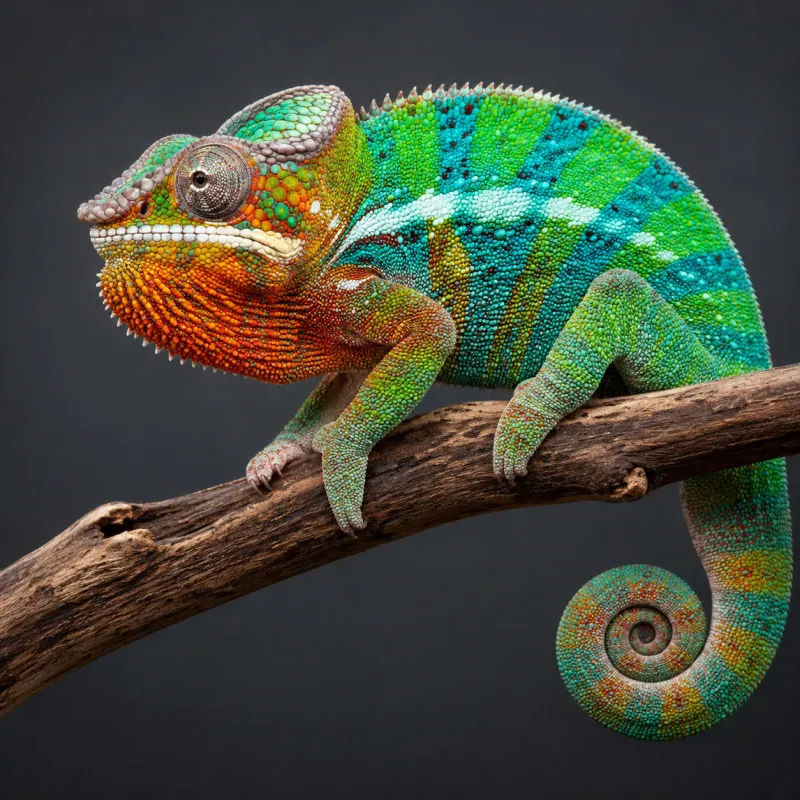
Introduction to Panther Chameleon Locale Morphs
Panther chameleons (Furcifer pardalis) are among the most vibrant reptiles in the pet trade, with color morphs linked to specific geographic locales in Madagascar. The four most popular captive-bred locales—Ambilobe, Nosy Be, Ambanja, and Sambava—each display distinct color patterns and subtle care differences. Understanding these locale morphs helps you select the right chameleon for your experience level and setup.
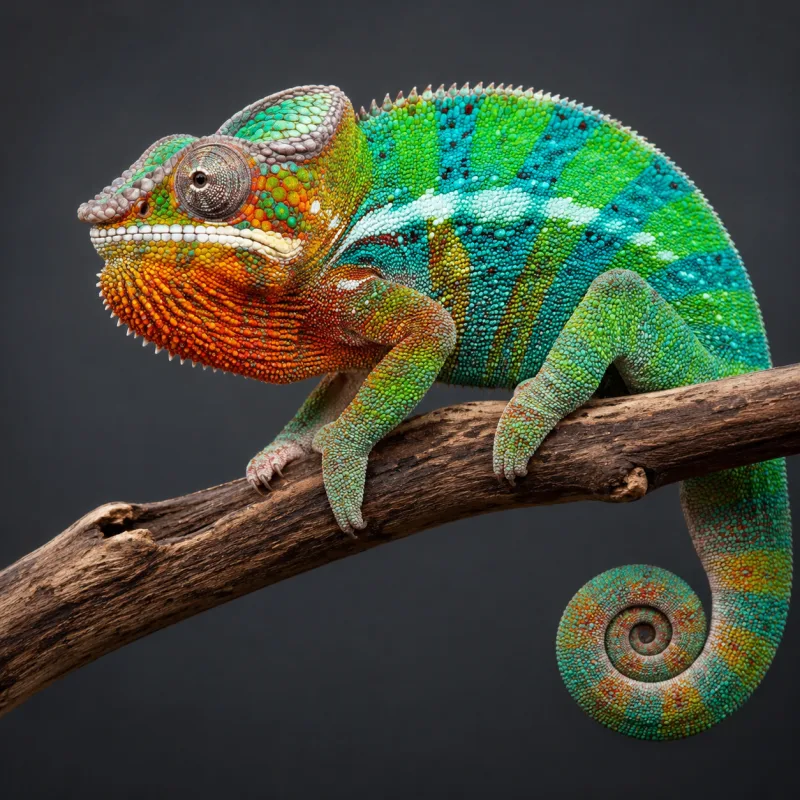
In the wild, panther chameleons are found only in Madagascar, but their range spans diverse microclimates—from the humid coastal forests of Nosy Be to the drier, inland regions around Ambilobe. These environmental differences have driven the evolution of unique colorations and, to a lesser extent, physiological preferences. While all locales share the same basic care requirements, tailoring your husbandry to your chameleon's native conditions can significantly improve its health and coloration.
This guide expands on every aspect of panther chameleon care—from selecting the right locale to preventing common health issues—so you can provide the best possible life for your reptilian companion.
Choosing Your Locale: What to Know Before You Buy
Ambilobe: The Bold and Colorful
Ambilobe panther chameleons originate from the northwest region of Madagascar, near the town of Ambilobe. They are renowned for their striking red, orange, and yellow bodies with blue bars, making them a favorite among hobbyists. Males are bold and curious, often approaching the front of the enclosure to investigate activity—a trait that makes them more handleable and enjoyable to observe.
Ambilobes are intermediate in care difficulty. They tolerate slightly higher basking temperatures (85–90°F) and lower humidity (50–60%) compared to coastal locales. This makes them a good choice for keepers who live in drier climates or who prefer a more forgiving humidity schedule. However, their fast growth rate means they are slightly more prone to metabolic bone disease (MBD) if calcium and UVB are not meticulously managed.
Nosy Be: The Shy Blue Beauty
Nosy Be is a small island off Madagascar's northwest coast, known for its lush, humid forests. Nosy Be panther chameleons display brilliant blues and greens with white bars, and they are often considered the most visually striking of all locales. However, they are also the most delicate in terms of temperament and care.
These chameleons are skittish and stress easily, making them better suited for advanced keepers who understand the importance of minimal handling and a stress-free environment. They require higher humidity (65–75%) and cooler basking temperatures (82–86°F) to mimic their coastal home. If you're new to chameleons, a Nosy Be may not be the best starting point, but for experienced keepers, they are a rewarding challenge.
Ambanja: The Adaptable Middle Ground
Ambanja chameleons come from the Ambanja region, also in northwest Madagascar, but slightly inland. They exhibit deep blues and purples with red bars, and their temperament is more moderate and adaptable than Nosy Be's. Ambanjas usually tolerate handling better than Nosy Bes but are not as bold as Ambilobes.
In terms of care, Ambanjas fall between Ambilobe and Nosy Be: they prefer humidity of 55–65% and basking temperatures of 85–90°F. This makes them a versatile choice for keepers who want a balance between visual appeal and manageability. They are classified as intermediate difficulty, making them a good step up for those with some chameleon experience.
Sambava: The Yellow-Green Alternative
Sambava is located on the northeast coast of Madagascar, and its chameleons are known for their yellow and green bodies with red or blue bars. They are similar to Nosy Be in their humidity and temperature preferences (65–75% humidity, 82–86°F basking) but have a slightly less skittish temperament, often described as moderately shy.
Sambavas are a good option for keepers who want a coastal locale but are concerned about the extreme sensitivity of Nosy Bes. They are still considered intermediate difficulty, as they require consistent humidity and careful temperature management.
Which Locale Is Right for You?
Your choice should depend on your experience level, your local climate, and the amount of time you can dedicate to misting and monitoring. Beginners should lean toward Ambilobe or Ambanja; advanced keepers may enjoy the challenge of Nosy Be. Sambava is a nice middle-ground for those who want coastal conditions without the most extreme shyness.
| Locale | Best For | Key Challenge |
|---|---|---|
| Ambilobe | Beginners to intermediate | Faster growth rate, MBD risk |
| Nosy Be | Advanced keepers | Skittishness, high humidity needs |
| Ambanja | Intermediate keepers | Balanced care requirements |
| Sambava | Intermediate keepers | Coastal humidity maintenance |
Enclosure Setup
Minimum Cage Size
All panther chameleons require a well-ventilated, vertically oriented enclosure. A single adult needs at least a 24×24×48-inch (60×60×120 cm) screen cage. Larger is always better, especially for males who are territorial. For females, a slightly smaller enclosure can be acceptable, but never go below the minimum—cramped spaces cause stress and health issues.
If you have the space, consider a 36×36×72-inch enclosure, which gives your chameleon more room to thermoregulate and explore. Remember, panther chameleons are arboreal, so height is more important than width or depth. The enclosure should be placed in a quiet, low-traffic area away from direct sunlight through windows (which can overheat the cage) and away from heating vents or air conditioning drafts.
Substrate and Décor
Use a bioactive or bare-bottom setup. Bare-bottom (with paper towels or newspaper) is easiest to clean and monitor for feces, but bioactive setups with a drainage layer, soil, and clean-up crew (springtails, isopods) provide a more natural environment and help maintain humidity. Avoid loose substrates like coconut coir that can cause impaction if ingested. If using a bioactive setup, ensure the substrate is deep enough for plants to root and for females to dig if they need to lay eggs.
Provide live plants (e.g., Ficus benjamina, Schefflera, pothos) and sturdy branches for climbing. Ensure all plants are pesticide-free. Rinse leaves thoroughly and consider quarantining plants for a few weeks before introducing them to the enclosure. Ambilobe and Ambanja males benefit from extra horizontal perches near the top for basking, while Nosy Be males prefer dense foliage for hiding. This is because Ambilobe and Ambanja are more likely to bask openly, while Nosy Be feels more secure with cover.
Ventilation
Screen cages are essential for airflow. Glass or plastic enclosures trap humidity and can lead to respiratory infections. High humidity locales (Nosy Be, Sambava) require more frequent misting but still need good ventilation to prevent fungal and bacterial growth. If you live in a very dry climate, you can partially cover the screen sides with a plastic sheet or wet towel to increase humidity, but always leave at least two sides open for airflow.
Place the enclosure in a room with natural air circulation, but avoid placing it directly in front of a fan or air conditioner, which can cause drafts. A small computer fan placed on top of the screen can improve ventilation in particularly humid rooms.
Heating and Lighting
Temperature Gradient
Provide a basking spot at 85–90°F (29–32°C) and an ambient temperature of 72–80°F (22–27°C). Nighttime drops to 65–70°F (18–21°C) are acceptable. Ambilobe and Ambanja chameleons tolerate slightly higher basking temperatures, while Nosy Be and Sambava prefer cooler basking spots (82–86°F / 28–30°C) due to their coastal origin.
To create a proper gradient, place a basking lamp (e.g., a 50-watt incandescent bulb or a ceramic heat emitter) on one side of the enclosure, leaving the other side cooler. Use a thermometer at both the basking spot and the cool end to monitor. A digital thermometer with a probe is more accurate than stick-on thermometers. For nighttime, if your room drops below 65°F, use a ceramic heat emitter on a thermostat to maintain the minimum temperature without emitting light.
UVB Lighting
Use a linear 5.0 or 6% UVB bulb (e.g., ReptiSun T5 HO) running 10–12 hours daily. Replace bulbs every 6–12 months. UVB is critical for calcium metabolism and preventing metabolic bone disease (MBD). Compact UVB bulbs are insufficient because they produce a narrow beam of UVB that doesn't cover the entire enclosure. A linear T5 HO bulb should span at least two-thirds of the enclosure's length.
Place the UVB bulb so that the chameleon can bask within 6–8 inches of it (for T5 HO bulbs) or 8–12 inches (for T5 standard). Use a UVB meter to verify output, or replace the bulb every 6 months as a precaution. Remember that UVB output decreases over time, even if the bulb still emits visible light.
Combine UVB with a separate basking light for heat. Do not use UVB bulbs that also emit heat, as they can cause burns. Provide a photoperiod of 12 hours on, 12 hours off to mimic natural day-night cycles.
Humidity and Hydration
Panther chameleons require humidity levels of 50–70% during the day, with spikes to 80–100% at night. Nosy Be and Sambava locales need higher average humidity (65–75%) and more frequent misting (3–4 times daily). Ambilobe and Ambanja can tolerate slightly drier conditions (50–60%) but still need daily misting. Use a drip system or spray bottle; chameleons rarely drink from standing water.
To maintain proper humidity, use a hygrometer to monitor levels. A digital hygrometer is more accurate than analog ones. Misting should be done in the morning and evening, with an additional midday misting for high-humidity locales. A drip system (e.g., a plastic cup with a small hole or a commercial dripper) placed on the top screen provides a slow water source that chameleons can drink from as droplets fall on leaves.
For nighttime humidity spikes, you can use a fogger or a cool-mist humidifier for a few hours after lights out. This mimics the natural dew that forms in Madagascar's forests. Ensure that the enclosure does not become waterlogged—ventilation is key to preventing mold.
Always use dechlorinated water. Tap water contains chlorine and chloramines that can irritate a chameleon's eyes and respiratory tract. Let tap water sit for 24 hours or use a water conditioner.
Diet and Feeding
Staple Insects
Feed gut-loaded crickets, dubia roaches, black soldier fly larvae, and silkworms. Dust with calcium powder (no D3) at every feeding, and a multivitamin with D3 once every two weeks. Ambilobe and Ambanja chameleons are more voracious and may need slightly larger prey items; Nosy Be and Sambava are more selective and prefer smaller insects.
Gut-loading is crucial: feed your feeder insects a nutritious diet (e.g., commercial gut-load, fresh vegetables, and fruits) for 24–48 hours before offering them to your chameleon. This ensures your pet receives essential vitamins and minerals. Dusting with calcium is essential because captive insects are naturally low in calcium. Use a calcium powder without D3 for most feedings, and a multivitamin with D3 every two weeks to prevent D3 toxicity.
Feeding Schedule
- Juveniles (under 6 months): Feed daily, as many insects as they can eat in 10–15 minutes.
- Adults (over 6 months): Feed every other day, 5–8 appropriately sized insects per feeding.
- Variety is key; rotate feeders to prevent nutritional deficiencies.
Insects should be no larger than the space between your chameleon's eyes. Larger prey can cause impaction. For juveniles, use small crickets or pinhead roaches. For adults, you can offer adult crickets, dubia roaches, and even occasional waxworms or hornworms as treats (but not as staples, due to high fat content).
Feed insects in a bowl or let them roam? Some keepers prefer to release insects into the enclosure to encourage natural hunting behavior, but this can lead to insects hiding and bothering the chameleon at night. A feeding cup or bowl is easier to monitor and prevents uneaten insects from stressing your pet.
Always remove uneaten insects after 15–20 minutes to prevent them from biting your chameleon or reproducing in the enclosure.
Handling and Temperament
Panther chameleons are generally more tolerant of handling than other chameleon species, but individual temperament varies by locale. Ambilobe males are often bold and curious, while Nosy Be males can be skittish and stress easily. Ambanja and Sambava fall in between. Always support the body fully, never grab the tail, and limit handling to 10–15 minutes. Overhandling can cause chronic stress and illness.
To handle your chameleon safely, approach it from the side and gently coax it onto your hand with a finger or a branch. Never pick it up from above, as this mimics a predator attack. Allow the chameleon to walk onto you; do not squeeze or restrain it. If the chameleon hisses or opens its mouth, it is stressed—give it time and try again later.
Young chameleons should be handled less frequently to allow them to acclimate to their new home. Wait at least 2 weeks after bringing your chameleon home before attempting to handle it. Start with short sessions (5 minutes) and gradually increase as your pet becomes more comfortable.
Signs of stress include dark coloration, hissing, gaping, and trying to flee. If you notice these, stop handling and leave the chameleon alone for a few days. Chronic stress can suppress the immune system, leading to illness.
Common Health Issues
Metabolic Bone Disease (MBD)
MBD results from insufficient UVB or calcium. Symptoms include swollen limbs, tremors, and a soft jaw. Prevent with proper lighting and supplementation. Ambilobe and Ambanja are slightly more prone to MBD due to faster growth rates. If you notice any of these signs, consult a reptile veterinarian immediately. Treatment may involve injectable calcium, oral supplements, and correcting the UVB and diet.
Respiratory Infections
Signs include open-mouth breathing, wheezing, and excess mucus. Often caused by low temperatures or poor ventilation. Nosy Be and Sambava are more susceptible if humidity is too low or airflow is restricted. Ensure the basking spot is warm enough and that the enclosure has adequate screen ventilation. A vet may prescribe antibiotics.
Stomatitis (Mouth Rot)
Yellowish plaque in the mouth, often from injury or poor hygiene. Clean the enclosure regularly and avoid sharp decor. If you see plaque or swelling around the mouth, seek veterinary care. Treatment includes cleaning the mouth and antibiotics.
Egg Binding (Dystocia)
Females of all locales can become egg-bound if not provided a proper laying bin (12 inches deep of moist sand/soil mix). Signs include lethargy and straining. Provide a laying bin in the enclosure once your female is gravid (you may see her becoming plumper and spending time near the substrate). If she fails to lay within a few days of showing signs, a vet's intervention is critical.
Parasites
Internal parasites (e.g., pinworms, coccidia) are common in wild-caught chameleons but can also occur in captive-bred ones. Symptoms include weight loss, diarrhea, and poor appetite. Have a fecal exam done annually and treat with vet-prescribed medications.
Dehydration
Signs of dehydration include sunken eyes, wrinkled skin, and thick, yellow urates. Ensure you provide a drip system and mist regularly. If dehydrated, you can offer water via a syringe (without a needle) or give a longer misting session.
Where Things Go Wrong: Common Mistakes to Avoid
- Glass enclosures: Trap humidity and cause respiratory issues. Always use screen cages.
- Overhandling: Leads to chronic stress, reduced appetite, and weakened immune system.
- Poor hydration: Chameleons need moving water; a drip system or misting is essential.
- Incorrect UVB: Compact bulbs are insufficient; use linear T5 HO fixtures.
- Ignoring locale differences: Nosy Be and Sambava require higher humidity and slightly cooler basking than Ambilobe and Ambanja.
- Using incorrect substrate: Loose substrates can cause impaction; use paper towels or bioactive soil.
- Feeding improperly sized insects: Large insects can cause impaction; always size prey appropriately.
- Skipping gut-loading: Feeder insects without gut-loading lack essential nutrients.
- Not providing a laying bin: Gravid females without a laying bin can become egg-bound and die.
- Placing enclosure in high-traffic areas: Stress from activity can cause chronic health problems.
Locale Comparison Table
| Locale | Color Morph | Size (Male) | Humidity Preference | Basking Temp | Temperament | Care Difficulty |
|---|---|---|---|---|---|---|
| Ambilobe | Red, orange, yellow with blue bars | 16–22 in (40–55 cm) | 50–60% | 85–90°F (29–32°C) | Bold, curious | Intermediate |
| Nosy Be | Bright blue, green, with white bars | 14–18 in (35–45 cm) | 65–75% | 82–86°F (28–30°C) | Skittish, shy | Advanced |
| Ambanja | Deep blue, purple, with red bars | 16–20 in (40–50 cm) | 55–65% | 85–90°F (29–32°C) | Moderate, adaptable | Intermediate |
| Sambava | Yellow, green, with red/blue bars | 15–19 in (38–48 cm) | 65–75% | 82–86°F (28–30°C) | Moderate, slightly shy | Intermediate |
Choosing the right panther chameleon locale depends on your ability to replicate its native microclimate. With proper care, these stunning reptiles can thrive for 5–8 years and reward you with breathtaking colors.
Frequently Asked Questions
Can I keep a male and female together?
No, panther chameleons are solitary and territorial. Keeping a male and female together will cause stress and aggression. Only introduce them briefly for breeding, and always supervise the interaction. Females can also be stressed by the presence of a male, so they should be housed separately at all other times.
How often should I mist my panther chameleon's enclosure?
Misting frequency depends on the locale. Ambilobe and Ambanja need misting once or twice daily to maintain 50–60% humidity. Nosy Be and Sambava require more frequent misting—3 to 4 times daily—to sustain 65–75% humidity. Always monitor with a hygrometer and adjust as needed. Additionally, a nightly fogging session can help achieve the 80–100% nighttime humidity spike.
What size prey should I feed my adult panther chameleon?
For adult panther chameleons, feed 5–8 appropriately sized insects every other day. The insects should be no larger than the space between your chameleon's eyes. For most adults, this means medium to large crickets (1/2 to 3/4 inch) or dubia roaches of similar size. Avoid oversized prey, which can cause impaction.
Why is my panther chameleon turning dark brown?
Dark brown coloration often indicates stress, illness, or low temperature. Check your basking temperature and humidity levels. If the environment is correct, examine for signs of illness (e.g., lethargy, loss of appetite). Stress from handling or a new environment can also cause darkening. Give your chameleon time to acclimate and avoid handling until it returns to its normal color.
Related Reading
- Panther Chameleon Care: Advanced Guide — Master overall husbandry essentials for a healthy, thriving panther chameleon.
- Panther Chameleon Health & Supplements — Learn key health issues and supplement routines to keep your chameleon vibrant.
- Panther Chameleon Feeding: Insects & Gutloading — Discover proper insect choices and gutloading techniques for optimal nutrition.
- Panther Chameleon Enclosure: Cage & Plants — Set up the perfect habitat with correct cage size, plants, and climbing branches.
- Reptile UVB Lighting Guide: Ferguson Zones & Bulb Selection — Understand UVB requirements and Ferguson zones vital for chameleon health.
Check optimal temps, calculate feeding, and find your perfect species match.
References
- Ferguson, G. W., & Brunt, A. M. (2020). Panther Chameleon Care: A Comprehensive Guide. Reptile Publishing.
- Madagascar Conservation & Development. (2018). Habitat and Ecology of Furcifer pardalis. Journal of Herpetology, 52(3), 245–258.
- Smith, J. (2021). Metabolic Bone Disease in Captive Reptiles: Prevention and Treatment. Veterinary Reptile Journal, 14(2), 112–130.
🐾 Join the Community
See how other keepers set up their enclosures, ask questions, and share your experience.
🛠️ Apply What You Learned
Check optimal temps, calculate feeding schedules, and get calcium dosage — all personalized for your species.
Comments
No account needed — corrections, updates and questions are all welcome. For a full question with photos, the community Q&A is the better place.