African Fat-Tailed Gecko Care: Complete Guide
Species Overview
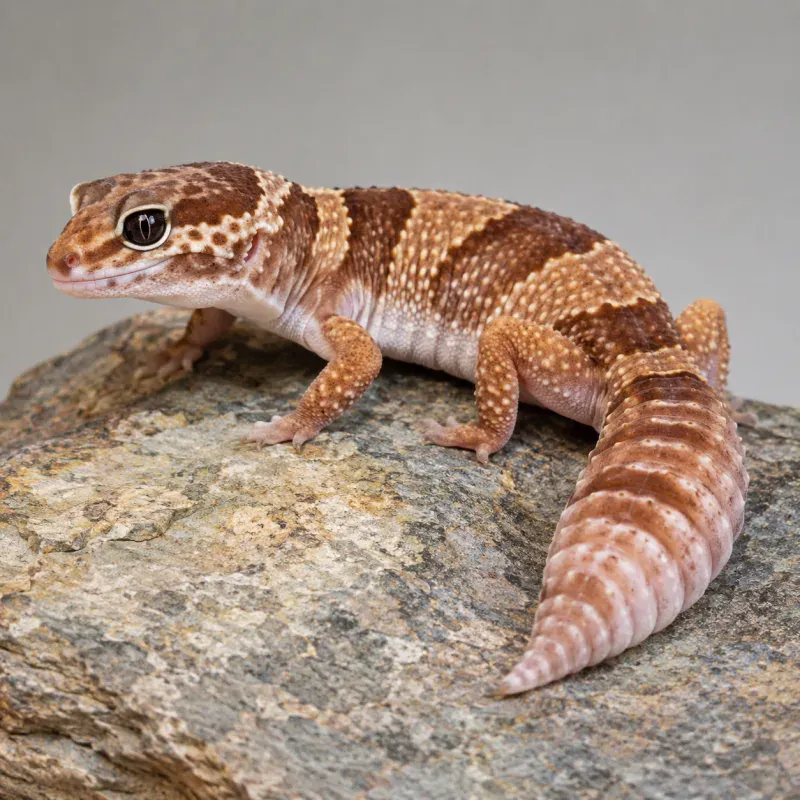
The African fat-tailed gecko (Hemitheconyx caudicinctus) is the leopard gecko's West African equivalent — with higher humidity requirements. Gentle, deliberate, with charming eyelids. Perfect for those who love leopard geckos but want something a little different.
Native to the arid and semi-arid regions of West Africa, these geckos are ground-dwelling and nocturnal. They are known for their docile temperament and ease of handling, making them an excellent choice for beginners and families. Unlike leopard geckos, they require higher humidity and a more moisture-retentive substrate. Their natural habitat includes savannas and dry forests, where they hide under logs and rocks during the day and emerge at night to hunt insects.
Behavior and Temperament
African fat-tailed geckos are generally calm and rarely bite. They are curious and can become accustomed to handling with regular, gentle interaction. They are also vocal, making soft chirping sounds when distressed or during mating. These geckos are solitary by nature, so they should be housed alone except during breeding.
Lifespan and Size
With proper care, African fat-tailed geckos can live 15–20 years in captivity. Adults typically reach 7–9 inches (18–23 cm) in length, with females slightly smaller than males. Their tail stores fat, which is why they have a plump appearance — a sign of good health.
Enclosure Setup
Minimum: 20-gallon long for one adult. Substrate: cypress mulch, coco coir, or paper towels for quarantine. Minimum 3 hides — warm, cool, and humid hide with damp sphagnum moss.
Choosing the Right Enclosure
A 20-gallon long tank (30" x 12" x 12") is the minimum for a single adult. If you have more space, a 40-gallon breeder tank offers more enrichment and a better thermal gradient. Avoid tall tanks — these geckos are terrestrial and need floor space, not height. A front-opening enclosure can make maintenance and feeding easier.
Substrate Options
| Substrate | Pros | Cons |
|---|---|---|
| Cypress mulch | Retains humidity well, natural look | Can be dusty when dry, may harbor mold if not maintained |
| Coco coir | Excellent moisture retention, soft, easy to spot clean | Can be messy when wet, needs frequent replacement |
| Paper towels | Cheap, easy to clean, ideal for quarantine | Not natural, doesn't hold humidity |
| Reptile carpet | Reusable, easy to clean | Can snag claws, doesn't retain moisture well |
For a bioactive setup, you can mix organic topsoil with play sand (70/30 ratio) and add leaf litter, but ensure it's free of fertilizers and pesticides. Avoid sand and walnut shells — they can cause impaction if ingested.
Hides and Decor
Provide at least three hides: one on the warm side, one on the cool side, and a humid hide in the middle or slightly warm side. The humid hide should be filled with damp sphagnum moss or vermiculite to aid shedding. Add branches, cork bark, and silk or live plants for enrichment. Ensure all decor is stable to prevent crushing.
Quarantine Setup
When you first bring your gecko home, set up a simple enclosure with paper towels, a hide, and a water dish. This allows you to monitor health and fecal output for at least 30 days before moving to a permanent setup. Quarantine also prevents introducing parasites to other reptiles.
Step-by-Step: Setting Up a 20-Gallon Enclosure
Follow these steps to create a safe, comfortable home for your African fat-tailed gecko:
- Clean the tank: Wipe the glass or plastic with a reptile-safe disinfectant and rinse thoroughly. Let it dry completely.
- Add substrate: Spread 2–3 inches of cypress mulch or coco coir across the bottom. For a quarantine setup, use paper towels instead.
- Place hides: Position one hide on the warm side, one on the cool side, and a humid hide in the middle. Ensure each hide is stable and large enough for the gecko to turn around.
- Add decor: Arrange branches, cork bark, and silk plants for climbing and cover. Avoid sharp or unstable items.
- Install heating: Attach an under-tank heater to one side, covering about 1/3 of the floor. Connect it to a thermostat and set the probe on the floor above the heater.
- Set up lighting (optional): If using a low-level UVB bulb, place it on the ceiling, out of reach. Use a timer for 10–12 hours per day.
- Adjust humidity: Mist the substrate lightly and place a digital hygrometer on the cool side. Add damp sphagnum moss to the humid hide.
- Check temperatures: Wait 24 hours, then verify warm side is 88–90°F and cool side is 75–78°F using a digital thermometer. Adjust as needed.
- Introduce the gecko: Gently place your gecko in the enclosure and allow it to explore undisturbed for the first few days.
Heating
| Zone | Temperature |
|---|---|
| Warm side floor | 88–90°F (31–32°C) |
| Cool side | 75–78°F (24–26°C) |
| Night | 68–75°F (20–24°C) |
UTH on thermostat — belly heat essential, same as leopard geckos.
Heating Equipment Options
- Under-tank heater (UTH): The most reliable method for belly heat. Place it on one side of the tank, covering about 1/3 of the floor. Always connect to a thermostat to prevent overheating.
- Ceramic heat emitter (CHE): Can be used to raise ambient temperature, but avoid direct overhead heat that dries out the enclosure. Use with a thermostat and ensure it's guarded.
- Heat tape: Similar to UTH, but more flexible. Use with a thermostat.
Do not use heat rocks — they can cause severe burns. Also avoid hot rocks and unregulated heating pads.
Thermostat Setup
Place the thermostat probe directly on the floor above the heat mat to ensure accurate readings. Set the thermostat to 90°F (32°C) for the warm side. Check temperatures daily with a digital thermometer or infrared temperature gun. Adjust as needed, especially during seasonal changes.
Troubleshooting Heating Issues
- Warm side too hot: Increase ventilation, reduce thermostat setting, or move the heat mat slightly.
- Cool side too cold: Add a low-wattage CHE or move the enclosure to a warmer room.
- Temperature fluctuations: Ensure thermostat is working, and avoid placing the tank near windows or air vents.
Humidity
Key difference from leopard geckos: 50–60% ambient humidity (vs. 30–40%). Use humidity-retaining substrate and daily light misting. Humid hide at 70–80% for shedding.
Measuring and Maintaining Humidity
Use a digital hygrometer placed on the cool side at mid-height to measure ambient humidity. Mist the enclosure once or twice daily with dechlorinated water. If humidity is too low, add more sphagnum moss, increase misting frequency, or use a larger water dish. If too high, increase ventilation by adding mesh or a small fan.
The Humid Hide
The humid hide should be a closed container with a small entrance, filled with damp sphagnum moss. Keep it consistently moist but not dripping. Check daily and re-mist as needed. This hide is essential for proper shedding — without it, your gecko may experience stuck shed, especially on toes and tail, leading to constriction and loss of digits.
Seasonal Humidity Adjustments
In dry climates or during winter, you may need to mist more frequently. In humid summers, reduce misting to avoid mold. Always monitor the substrate and replace any moldy or overly wet substrate immediately.
Seasonal Care: Temperature and Humidity Through the Year
| Season | Temperature Adjustments | Humidity Adjustments | Additional Tips |
|---|---|---|---|
| Spring | Gradually raise temps to normal range | Maintain 50–60%, increase misting if dry | Watch for increased activity and appetite |
| Summer | Keep cool side below 80°F, avoid overheating | May need less misting if ambient humidity is high | Ensure good ventilation to prevent mold |
| Autumn | Gradually lower night temps to 68–70°F if breeding | Monitor for drops, add misting if needed | Reduce feeding slightly as activity slows |
| Winter | Maintain normal day temps, night can drop to 68°F | Increase misting frequency in dry indoor air | Check for signs of brumation (reduced appetite) and adjust feeding |
Always use a thermostat and hygrometer to track conditions. Seasonal changes may require small adjustments to keep your gecko healthy.
Feeding & Diet
Same as leopard geckos — strict insectivores. Crickets, dubia, mealworms. Calcium (no D3) in dish, calcium with D3 2×/week, multivitamin 1×/week.
Feeder Insects
| Insect | Size for Adult | Frequency | Notes |
|---|---|---|---|
| Crickets | 1/2" – 3/4" | Every other day | Gut-load 24h before feeding |
| Dubia roaches | 1/2" – 3/4" | Every other day | High protein, low fat |
| Mealworms | 1/2" – 3/4" | 1–2×/week | High fat, use as treat |
| Superworms | 1" – 1.5" | Rarely | Very high fat, only for weight gain |
Feed juveniles daily, offering as many insects as they can eat in 10–15 minutes. Adults can be fed every other day. Always dust with supplements according to the schedule below.
Supplementation Schedule
- Calcium without D3: Provide a small dish in the enclosure at all times.
- Calcium with D3: Dust insects 2 times per week.
- Multivitamin: Dust insects 1 time per week.
Use a reptile-specific multivitamin. Avoid over-supplementing with D3, as it can cause toxicity. If you use a UVB light, you can reduce D3 supplementation to once per week.
Water and Hydration
Provide a shallow water dish with fresh dechlorinated water at all times. Change daily. Mist the enclosure regularly to provide drinking droplets on leaves and walls. Some geckos prefer drinking from droplets, so misting also serves as a hydration method.
Feeding Troubleshooting
- Refusing food: Check temperatures and humidity. Stress, shedding, or illness can cause appetite loss. If it persists more than a week, consult a vet.
- Overweight: Reduce feeding frequency and avoid fatty insects like mealworms.
- Underweight: Increase feeding frequency and offer a variety of insects. Check for parasites.
Common Feeding Mistakes to Avoid
- Feeding insects larger than the space between the gecko's eyes: This can cause impaction or choking. Always match insect size to the gecko's head width.
- Leaving live insects in the enclosure overnight: Crickets can bite your gecko and cause stress or injury. Offer only what can be eaten in 10–15 minutes.
- Skipping gut-loading: Feeder insects fed nutrient-poor diets provide less nutrition. Gut-load them with fresh vegetables and commercial gut-load formulas 24 hours before feeding.
- Using wild-caught insects: They may carry pesticides or parasites. Always buy from reputable suppliers.
- Forgetting to dust with supplements: Inconsistent supplementation can lead to metabolic bone disease over time. Stick to the schedule.
Handling and Temperament
African fat-tailed geckos are docile and can be handled regularly. Start with short sessions (5 minutes) and gradually increase. Support their body fully and avoid grabbing the tail — they can drop it as a defense mechanism. Wash your hands before and after handling to prevent transferring oils or bacteria.
Never handle during shedding or after eating (allow 48 hours for digestion). If your gecko shows stress (e.g., squeaking, tail waving), return it to the enclosure and try later.
Step-by-Step: Taming Your Gecko
- Let it acclimate: Leave the gecko alone for the first week after bringing it home. Allow it to explore its new enclosure without disturbance.
- Introduce your scent: Place a worn t-shirt or towel near the enclosure for a few days so the gecko becomes familiar with your smell.
- Hand feeding (optional): Offer a mealworm or cricket from tongs to build positive associations with your presence. Do this once or twice.
- First handling session: After a week, gently scoop the gecko with both hands, supporting its body and tail. Keep the session to 5 minutes.
- Gradually increase time: Add 1–2 minutes per session, a few times per week. Watch for stress signals like squeaking or tail waving.
- Be consistent: Regular, short handling sessions are better than infrequent long ones. Over time, your gecko will become comfortable.
Health and Common Issues
Signs of a Healthy Gecko
- Clear, bright eyes
- Plump tail (fat storage)
- Smooth skin without stuck shed
- Active and alert at night
- Regular, solid feces
Common Health Problems
| Issue | Symptoms | Prevention/Treatment |
|---|---|---|
| Stuck shed | Dried skin on toes, tail, or eyes | Provide humid hide, increase humidity, soak in shallow warm water |
| Respiratory infection | Wheezing, mouth breathing, mucus | Ensure proper temps, reduce humidity if too high, vet visit |
| Metabolic bone disease | Soft jaw, tremors, deformities | Calcium with D3 supplementation, UVB light, vet treatment |
| Parasites | Weight loss, diarrhea, lethargy | Fecal exam, vet-prescribed deworming |
| Impaction | Constipation, swollen abdomen | Avoid loose substrate, ensure proper temps, vet if severe |
Always quarantine new geckos and have a reptile vet on hand. Regular fecal checks annually are recommended.
Cost Breakdown: Initial Setup and Ongoing Care
| Item | Estimated Cost (USD) | Notes |
|---|---|---|
| Enclosure (20-gallon long) | $40–$80 | New or used; front-opening may cost more |
| Under-tank heater | $15–$30 | Must be used with a thermostat |
| Thermostat | $25–$60 | Essential for safety; digital recommended |
| Substrate (cypress mulch or coco coir) | $10–$20 per bag | Lasts 2–3 months |
| Hides (3) | $15–$40 | Can use DIY items like cork bark or plastic containers |
| Water dish | $5–$15 | Shallow, heavy to prevent tipping |
| Humid hide materials (sphagnum moss) | $5–$10 | Reusable after cleaning |
| Thermometer and hygrometer | $10–$25 | Digital combo units are convenient |
| Feeder insects (monthly) | $15–$30 | Depends on colony vs. store-bought |
| Supplements (calcium, multivitamin) | $15–$25 | Last several months |
| Misting bottle | $5–$15 | Or use a spray bottle you already own |
| Initial vet check (optional) | $50–$100 | Fecal exam recommended |
Total initial setup: approximately $150–$400. Ongoing monthly costs: approximately $30–$60, depending on insect source and replacement frequency.
Avoid These Errors
- Low humidity: Treating them like leopard geckos causes dehydration and stuck shed.
- Unregulated heat mats: Same burn risk as all terrestrial geckos.
- No humid hide: Essential for proper shedding — prevents toe loss.
- Incorrect substrate: Using sand or walnut shells can lead to impaction.
- Overhandling: Too much handling can stress your gecko, leading to health issues.
- Feeding too many fatty insects: Obesity is common in captive geckos. Stick to a balanced diet.
Breeding Basics
Breeding African fat-tailed geckos is similar to leopard geckos. Provide a cooling period of 6–8 weeks at 68–70°F (20–21°C) to stimulate breeding. Introduce the female to the male's enclosure, not vice versa, to avoid territorial aggression. After mating, the female will lay 2 eggs per clutch, up to 6–8 clutches per season. Incubate eggs at 82–88°F (28–31°C) for 50–70 days. Temperature-dependent sex determination: higher temps produce more males.
Ensure females are in good body condition before breeding and provide extra calcium. Have a separate laying box with moist vermiculite for egg deposition.
Related Reading
- AFT Gecko Diet Guide — Insect feeding and supplements.
- AFT Gecko Morph Guide — Patternless, Oreo, Zulu morphs.
- Leopard Gecko Care Guide — Compare arid vs humid gecko care.
Frequently Asked Questions
Do African fat-tailed geckos need UVB lighting?
African fat-tailed geckos are nocturnal and can survive without UVB if provided with proper calcium and D3 supplementation. However, low-level UVB (2–5%) can be beneficial for overall health and vitamin D synthesis. If you use UVB, reduce D3 supplementation to once per week to avoid toxicity.
How often should I clean the enclosure?
Spot clean daily by removing feces and uneaten insects. Replace the substrate every 2–3 months or when it becomes soiled or moldy. Disinfect the enclosure and decor with a reptile-safe cleaner during substrate changes. A water dish should be washed and refilled daily.
Can I house multiple African fat-tailed geckos together?
No, African fat-tailed geckos are solitary and territorial. Housing multiple geckos together can lead to stress, fighting, and injury. Exceptions are during breeding, when a male and female are introduced temporarily under supervision. Always house them separately otherwise.
Why is my African fat-tailed gecko losing weight?
Weight loss can be caused by parasites, illness, improper temperatures, or stress. Check that the warm side is 88–90°F and humidity is 50–60%. Ensure you are providing a varied diet and supplementing correctly. If weight loss persists for more than two weeks, consult a reptile veterinarian for a fecal exam and health check.
What is the best substrate for African fat-tailed geckos?
For humidity retention and natural aesthetics, cypress mulch and coco coir are excellent choices. They help maintain the required 50–60% ambient humidity. Paper towels are ideal for quarantine setups because they are easy to clean and allow monitoring of feces. Avoid sand and walnut shells, which can cause impaction if ingested.
How can I tell if my gecko is about to shed?
Before shedding, your gecko's skin will appear dull and grayish, and its eyes may look cloudy or bluish. During this time, ensure the humid hide is moist and avoid handling. The gecko will typically eat the shed skin after it comes off, which is normal.
Why is my gecko's tail getting thin?
A thin tail indicates that your gecko is using its fat reserves, which can be due to underfeeding, illness, or stress. Check that you are feeding appropriately sized insects every other day and that temperatures and humidity are within the recommended ranges. If the tail continues to shrink, consult a vet to rule out parasites or other health issues.
Check optimal temps, calculate feeding, and find your perfect species match.
References
- De Vosjoli, P. (2004). The Herpetoculture of Leopard Geckos and African Fat-Tailed Geckos. Advanced Vivarium Systems.
- McKeown, S. (1993). The General Care and Maintenance of Leopard Geckos and African Fat-Tailed Geckos. Advanced Vivarium Systems.
- Sprackland, R. G. (2009). Giant Lizards. TFH Publications.
🐾 Join the Community
See how other keepers set up their enclosures, ask questions, and share your experience.
🛠️ Apply What You Learned
Check optimal temps, calculate feeding schedules, and get calcium dosage — all personalized for your species.
Comments