Ackie Monitor Care Guide: Setup & Handling
Introduction
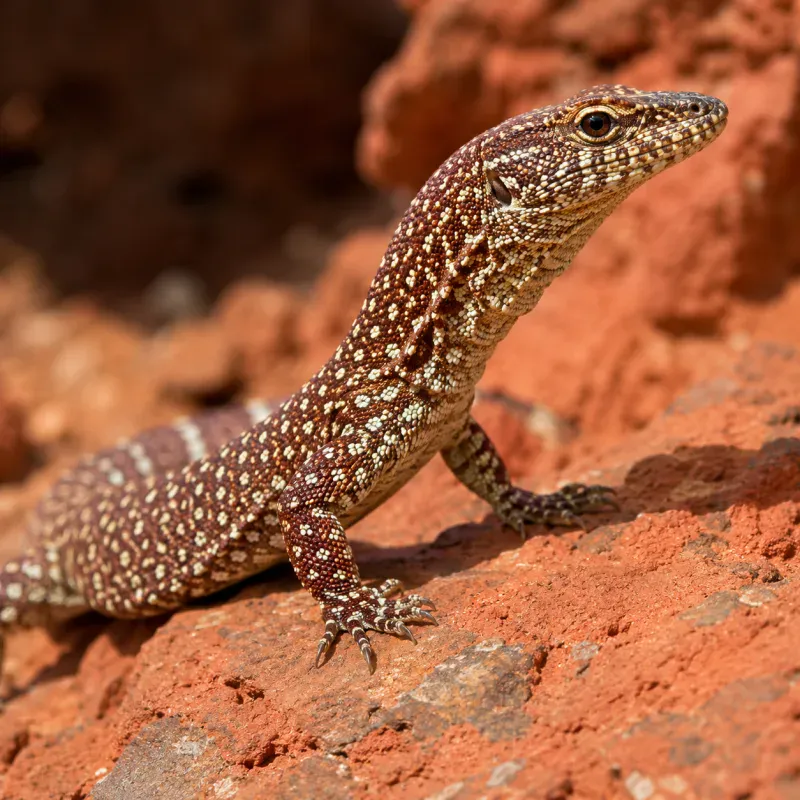
The Ackie Monitor (Varanus acanthurus), also known as the Ridge-tailed Monitor or Spiny-tailed Monitor, is widely considered the perfect dwarf monitor for reptile enthusiasts. Native to the arid regions of northern and central Australia, this intelligent, active lizard grows to only 24–30 inches (60–75 cm) total length, making it manageable in size yet full of personality. Ackies are curious, diurnal, and highly responsive to enrichment, earning them a reputation as the "dog of the lizard world." This comprehensive guide covers everything from natural habitat to captive care, feeding, health, handling, and even basic breeding. Whether you're a seasoned keeper or a dedicated beginner, this evidence-backed guide will set you up for success.
Natural Habitat & Behavior
In the wild, Ackie Monitors inhabit rocky outcrops, termite mounds, and sparse woodlands across northern Australia. They are semi-arboreal and spend much of their time basking on rocks, foraging for insects, and retreating into crevices to escape predators and extreme heat. Their spiny tails are used for defense, wedging them into tight spaces. Understanding this environment is crucial for replicating it in captivity.
Key behavioral traits:
- Diurnal (active during the day)
- Highly intelligent – can learn to recognize their keeper
- Strong burrowing instinct – need deep substrate
- Territorial but can be housed in pairs or trios with proper space
Enclosure Setup & Substrate
Despite their modest size, Ackies are active and need a large, vertically oriented enclosure. A single adult requires at least a 4×2×3 ft (120×60×90 cm) enclosure, but bigger is always better. For a pair or trio, aim for 6×2×4 ft (180×60×120 cm).
Substrate
Deep, burrowable substrate is non-negotiable. Use a mix of 60% organic topsoil (no fertilizers) and 40% play sand, or a commercial arid reptile mix. Depth should be 12–18 inches (30–45 cm) to allow tunneling. Keep the lower layers slightly damp to maintain humidity and prevent collapse.
Furniture & Hides
Provide multiple basking spots, flat rocks, cork bark tubes, and sturdy branches for climbing. Ackies love to dig, so include a few large, stable rocks or slate tiles to create basking platforms. Place hides at both cool and warm ends.
Lighting
Full-spectrum UVB lighting (T5 10.0 or 12%) is essential for vitamin D3 synthesis and calcium metabolism. Run UVB 10–12 hours daily, replacing bulbs every 6–12 months. LED plant lights can help live plants, but UVB is the priority.
Temperature & Humidity
Ackies are heat-loving animals. Provide a thermal gradient with a basking surface temperature of 120–140°F (49–60°C) – yes, that hot! Use a spot lamp or a radiant heat panel. The warm side ambient should be 90–100°F (32–38°C), cool side 75–85°F (24–29°C). Nighttime temps can drop to 70–75°F (21–24°C).
Humidity should be moderate: 40–60% during the day, with spikes to 70–80% at night or after misting. Provide a humid hide (moss-filled) to aid shedding. Use a digital hygrometer and mist the enclosure once or twice daily, focusing on the substrate and lower areas.
| Parameter | Day | Night |
|---|---|---|
| Basking surface temp | 120–140°F (49–60°C) | Off |
| Warm side ambient | 90–100°F (32–38°C) | 75–85°F (24–29°C) |
| Cool side ambient | 75–85°F (24–29°C) | 70–75°F (21–24°C) |
| Humidity | 40–60% | 60–80% |
Feeding, Diet & Supplementation
Ackies are insectivorous, but will also take small rodents, eggs, and even pinky mice as treats. In captivity, feed a varied diet of gut-loaded insects: crickets, dubia roaches, black soldier fly larvae, silkworms, hornworms, and occasional mealworms (in moderation). Adults eat every 2–3 days; juveniles daily.
Supplementation
- Dust insects with calcium powder (without D3) at every feeding for juveniles, every other feeding for adults.
- Use a multivitamin (with D3) once a week for juveniles, every two weeks for adults.
- Provide a small dish of crushed oyster shell or cuttlebone for extra calcium.
Feeding Schedule
- Juveniles (0–12 months): Feed daily, 6–10 appropriately sized insects (no larger than the space between their eyes).
- Subadults (1–2 years): Feed every other day, 8–12 insects.
- Adults (2+ years): Feed every 2–3 days, 10–15 insects or 1–2 pinky mice (treat only).
Always offer fresh water in a shallow dish. Ackies may also soak to hydrate – change water daily.
Handling & Temperament
Ackies are generally calm and can become very tame with consistent, positive interaction. However, they are fast and can be nervous as juveniles. Start handling from a young age, using slow movements and letting the lizard come to you.
Tips for Taming
- Spend time near the enclosure daily so they associate you with safety.
- Offer food from tongs to build trust.
- Never grab or restrain – let them walk onto your hand.
- Support the body fully; never hold by the tail.
- Keep sessions short (5–10 minutes) initially, gradually lengthening.
With patience, most Ackies become comfortable being handled, even allowing gentle petting. Signs of stress include tail whipping, hissing, puffing up, and darkening of color. If observed, give them space.
Common Health Issues
Ackies are hardy but can suffer from husbandry-related problems. The most common issues include:
- Metabolic Bone Disease (MBD): Caused by insufficient UVB or calcium. Symptoms: tremors, swollen limbs, soft jaw. Prevent with proper UVB and supplementation.
- Respiratory Infections (RI): Often due to low temperatures or high humidity. Signs: open-mouth breathing, wheezing, nasal discharge. Correct temps and vet care.
- Dehydration & Dysecdysis (bad shed): Low humidity or poor diet. Provide a humid hide and mist regularly.
- Parasites: Internal (worms, coccidia) or external (mites). Quarantine new animals and have a fecal exam done annually.
- Obesity: Overfeeding or too many fatty insects. Stick to the feeding schedule and offer plenty of exercise via climbing.
Find a reptile-savvy veterinarian before you need one. Annual checkups are recommended.
Breeding Basics
Breeding Ackies is achievable for intermediate keepers. They reach sexual maturity at 18–24 months. Key steps:
- Sexing: Males have wider heads, broader jowls, and larger femoral pores on the underside of the thighs. Females are smaller and more slender.
- Cooling period: Simulate the dry season by reducing temperatures by 5–10°F (2–5°C) for 4–6 weeks, and reduce daylight hours to 8–10. Then gradually increase temps and photoperiod to trigger breeding.
- Mating: Introduce the male to the female's enclosure. Monitor for aggression – separate if needed. Copulation may last several hours.
- Egg laying: Provide a deep (12+ inches) laying box filled with moist sand/soil mix. Females will dig and lay 4–12 eggs per clutch, up to 3 clutches per year.
- Incubation: Incubate eggs at 82–86°F (28–30°C) with 80–90% humidity. Hatching occurs in 80–120 days. Hatchlings are tiny (3–4 inches) and need small insects and high humidity.
Common Mistakes & How to Avoid Them
Even experienced keepers can slip up. Here are the top pitfalls:
- Underestimating enclosure size: A 40-gallon breeder is too small for an adult Ackie. Invest in a large enclosure from the start.
- Insufficient heat: Basking spots below 110°F (43°C) will lead to poor digestion and lethargy. Use a temp gun to verify.
- No UVB: Ackies require UVB – not just a basking bulb. Use a quality T5 bulb.
- Too dry: While they are arid animals, they need occasional humidity for shedding. Provide a humid hide.
- Handling too soon: Give new Ackies 1–2 weeks to settle before attempting handling. Rushing can cause chronic stress.
- Overfeeding: Obesity is a real risk. Stick to the feeding schedule and offer plenty of climbing enrichment.
Conclusion
The Ackie Monitor is one of the most rewarding lizards to keep, combining intelligence, beauty, and a manageable size. By replicating their natural habitat – with hot basking spots, deep substrate, UVB, and a varied diet – you'll have a healthy, active companion for 15–20 years. Avoid common mistakes, invest in proper equipment, and take time to build trust through gentle handling. Whether you're a first-time monitor keeper or adding to a collection, the Ackie Monitor truly is the perfect dwarf monitor. For further reading, consult the references below.
Related Reading
- Ackie Monitor Diet and Feeding Guide: Insect Variety...
- Ackie Monitor Enclosure: Custom PVC & Wood Vivarium ...
- Ackie Monitor Handling: Building Trust & Taming Guide
Check optimal temps, calculate feeding, and find your perfect species match.
References
- Bennett, D. (1998). Monitor Lizards: Natural History, Biology & Husbandry. Edition Chimaira.
- Pianka, E. R., & Vitt, L. J. (2003). Lizards: Windows to the Evolution of Diversity. University of California Press.
- Stahl, S. J. (2003). Veterinary Management of Monitor Lizards. Journal of Herpetological Medicine and Surgery, 13(4), 22–28.
- Gillespie, D. (2020). Ackie Monitor Care Guide. Reptiles Magazine.
🐾 Join the Community
See how other keepers set up their enclosures, ask questions, and share your experience.
🛠️ Apply What You Learned
Check optimal temps, calculate feeding schedules, and get calcium dosage — all personalized for your species.
Comments