Ackie Monitor Handling: Building Trust & Taming Guide
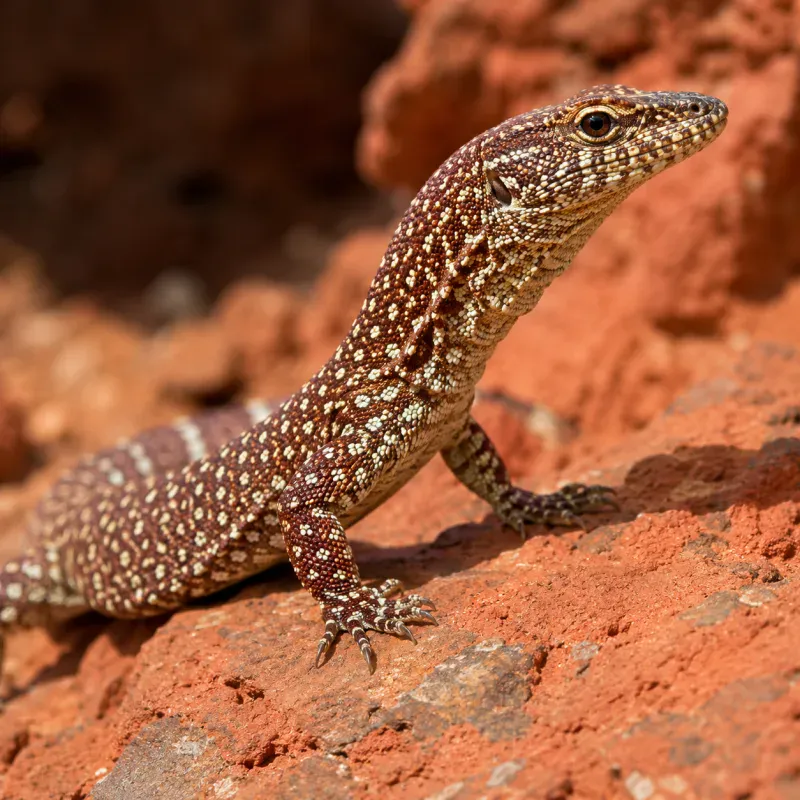
Enclosure Setup for a Happy, Secure Ackie
A proper enclosure is the foundation of trust. Ackie monitors are active, burrowing lizards that need space to explore and hide. A minimum 4 ft x 2 ft x 3 ft (120 cm x 60 cm x 90 cm) enclosure is recommended for one adult, with larger being better. Use a front-opening PVC or wooden vivarium to reduce stress from top-down approaches. Provide a deep substrate of 8–12 inches (20–30 cm) of a mix: 70% organic topsoil, 30% play sand, with a few inches of cypress mulch on top to hold humidity. Include multiple hides (cork bark, rock caves) on both the warm and cool sides, plus sturdy branches for climbing. A water dish large enough for soaking (but not deep enough to drown) should always be available.
Choosing the Right Enclosure Type
Front-opening vivariums are strongly preferred over top-opening tanks because ackies perceive overhead movement as a predatory threat. PVC enclosures excel at retaining heat and humidity, while wooden vivariums offer better insulation in cooler rooms. Avoid glass tanks with screen tops—they dry out too quickly and make temperature gradients difficult to maintain.
Substrate Depth and Composition
The substrate mix of 70% organic topsoil and 30% play sand allows for natural burrowing, which is essential for an ackie's mental and physical health. Adding cypress mulch on top helps retain moisture and creates microclimates. Ensure the substrate is kept slightly damp at the bottom layers but dry on the surface to prevent scale rot. Replace the top layer every 2–3 months and spot-clean daily.
Decor and Enrichment
Provide at least two hides—one on the warm side and one on the cool side—so your ackie can thermoregulate without feeling exposed. Cork bark tubes, rock caves, and half-buried clay pots all work well. Sturdy branches and driftwood allow climbing, which ackies enjoy. Adding leaf litter and fake plants increases security and encourages natural foraging behavior.
Heating and Lighting: Basking and UVB Essentials
Ackies are diurnal heliotherms requiring a strong basking spot of 130–150°F (54–65°C) measured with a temperature gun. Use a halogen flood bulb in a ceramic fixture, placed safely above a basking rock or slate. Ambient warm side should be 90–95°F (32–35°C), cool side 75–80°F (24–27°C). Nighttime temps can drop to 70–75°F (21–24°C). Provide a linear UVB bulb (e.g., Arcadia 12% or Zoo Med Reptisun 10.0) covering 2/3 of the enclosure, changed every 6–12 months. UVB is critical for vitamin D3 synthesis and calcium metabolism. Use a thermostat to regulate basking and ambient heat sources, and a hygrometer to monitor humidity.
Setting Up the Basking Spot
Place a flat basking rock or slate tile directly under the heat lamp at a distance that achieves the target surface temperature. Use a temperature gun to measure the surface of the rock, not the air temperature. The basking spot should be large enough for the entire body of the ackie to fit comfortably. Avoid using heat rocks—they can cause burns.
UVB Lighting: Placement and Replacement
Mount the UVB tube inside the enclosure (if mesh blocks more than 30% of UVB) or on top with a reflector. The bulb should be replaced every 6–12 months even if it still emits visible light, as UVB output diminishes over time. Position the basking area within 12–18 inches of the UVB bulb for optimal exposure.
Thermostat and Safety
Always connect heat sources to a thermostat to prevent overheating and fires. Use a dimming thermostat for halogen bulbs to extend their lifespan and maintain a steady temperature. Place the probe near the basking spot, but not directly under the lamp, to get an accurate reading.
Humidity and Hydration
Maintain 50–70% humidity, with spikes to 80% after misting. Mist the enclosure 1–2 times daily, especially the substrate and hides. A fogger or automatic misting system can help. Provide a humid hide (e.g., a plastic container with damp sphagnum moss) to aid shedding. Ensure good ventilation to prevent mold. A water bowl large enough for soaking helps with hydration and humidity. Check humidity with a digital hygrometer placed at mid-level.
Creating a Humid Hide
A humid hide is a small, enclosed container with an entrance hole, filled with damp sphagnum moss or coco fiber. Place it on the cool side to avoid raising basking temperatures. This hide is especially important during shedding periods. Replace the moss weekly to prevent bacterial growth.
Monitoring Humidity
Place a digital hygrometer at mid-level, away from direct misting, to get an accurate reading. If humidity is consistently below 50%, increase misting frequency or add a larger water bowl. If above 70% persistently, improve ventilation by adding more vents or reducing misting. Aim for a daily cycle of 50–70% with brief spikes to 80%.
Diet and Feeding: Nutrition for Growth and Trust
Ackies are insectivores. Feed a variety of gut-loaded insects: crickets, dubia roaches, black soldier fly larvae, mealworms (as treats), and occasional pinky mice (once a month for adults). Dust all feeders with calcium powder (without D3) at every feeding, and a multivitamin once a week. Juveniles (under 1 year) should be fed daily, adults every other day. Offer food in a shallow bowl or tong-feed to associate your presence with positive experiences. Avoid overfeeding; a slightly lean monitor is healthier than an obese one. Provide a shallow water dish and change water daily.
Gut-Loading and Supplementation
Gut-load insects with nutritious foods like leafy greens, carrots, and commercial gut-load diets for at least 24 hours before feeding. Dust with calcium powder (without D3) at every feeding for juveniles, and for adults, every other feeding. Use a multivitamin once a week. If you provide UVB, avoid calcium with D3 to prevent hypervitaminosis.
Feeding Schedule and Portions
Juveniles (under 1 year) should be fed daily, offering as many insects as they can eat in 10–15 minutes. Adults every other day, with 5–10 appropriately sized insects. Pinky mice should be offered once a month for adults only—they are high in fat and should not be a staple. Always offer water fresh daily.
Tong-Feeding and Target Training
Tong-feeding creates a positive association with your presence. Use long metal tongs to offer insects one at a time. Target training involves a chopstick with a colorful cap; touch the target to the ground near the monitor, and when it investigates, reward with a treat. This builds a bridge between your presence and positive experiences.
Handling and Taming: Building Trust Step by Step
Trust is earned, not forced. Begin by sitting near the enclosure for 10–15 minutes daily so your ackie learns you are not a threat. After a week, open the door and place your hand inside (still) for 5 minutes. Use target training: a chopstick with a colorful cap, touched to the ground near the monitor, then reward with a treat (e.g., a roach). This builds positive association. Once your ackie voluntarily approaches the target, you can guide it onto your hand. Never grab or restrain; let the monitor walk onto you. Start with 5–10 minute sessions, gradually increasing. Use a soft, calm voice. Signs of stress: tail whipping, puffing up, hissing, or rapid breathing. If you see these, retreat and try later. Always handle in a safe, enclosed area to prevent falls. For taming, consistency is key—daily short sessions are better than long, infrequent ones.
Step-by-Step Taming Timeline
Week 1: Sit near the enclosure for 10–15 minutes daily. Talk softly and avoid sudden movements. Do not open the enclosure yet.
Week 2: Begin opening the door and placing your hand inside for 5 minutes, keeping it still. Let the ackie approach you if it wishes. Do not move your hand toward it.
Week 3: Introduce target training. Touch the target near the ackie and reward with a treat when it investigates. Repeat daily until it consistently touches the target.
Week 4: Use the target to guide the ackie onto your open palm. Support its body fully and keep your hand low. Start with 5-minute sessions, gradually increasing to 10–15 minutes.
Handling Techniques
Always let the ackie walk onto you voluntarily. Support its body with both hands, allowing it to wrap its tail around your fingers for security. Keep your hands low to the ground or over a soft surface to prevent injury if it jumps. Never grab, squeeze, or restrain—this destroys trust and can cause bites.
Signs of Stress and How to Respond
If your ackie tail whips, puffs up, hisses, or breathes rapidly, it is stressed. Immediately retreat by slowly removing your hand and closing the enclosure. Wait at least a few hours or until the next day before trying again. Pushing through stress will only prolong the taming process.
Understanding Ackie Monitor Body Language
Reading your ackie’s cues prevents bites and builds trust. A relaxed monitor: slow, fluid movements, tongue flicking at normal pace, body flat against the ground. A curious monitor: head raised, tongue flicking rapidly, eyes tracking you. A stressed or defensive monitor: tail curled up or whipping, body puffed (inflation), mouth open (gaping), hissing, or darkening of color. A threatened ackie may also arch its back and flatten its body to look larger. If you see these, back off and give space. Over time, you’ll learn your individual’s personality. Some ackies are naturally bolder; others need more patience. Never punish—negative reinforcement destroys trust.
Relaxed vs. Curious vs. Stressed
A relaxed ackie moves slowly and fluidly, with its body low to the ground and tail trailing. A curious ackie raises its head, flicks its tongue rapidly, and tracks your movements with its eyes. A stressed ackie may puff up, whip its tail, gape, hiss, or darken in color. Understanding these differences helps you adjust your approach.
Individual Personalities
Some ackies are naturally bolder and may approach you within days, while others need weeks or months. Respect your ackie's pace. Never compare your progress to others—each monitor is unique. Consistency and patience are the keys to success.
Common Health Issues and Prevention
Metabolic bone disease (MBD) from lack of UVB or calcium is the most common preventable issue: signs include lethargy, tremors, soft jaw, and deformities. Respiratory infections (RI) occur due to low temps or high humidity without ventilation: symptoms include wheezing, nasal discharge, open-mouth breathing. Parasites (internal/external) can be detected via fecal exam. Scale rot from wet substrate: look for discolored, raised scales. Prevent all these with correct husbandry: proper basking temps, UVB, clean water, and a dry basking area. Quarantine new animals for 30–60 days. Annual vet check-ups with a reptile specialist are recommended.
Metabolic Bone Disease (MBD)
MBD is caused by insufficient UVB or calcium in the diet. Symptoms include lethargy, tremors, soft jaw, and limb deformities. Prevention is straightforward: provide a linear UVB bulb (Arcadia 12% or Zoo Med Reptisun 10.0) and dust feeders with calcium (without D3) at every feeding. If you suspect MBD, consult a reptile vet immediately.
Respiratory Infections (RI)
RIs are often caused by low temperatures or high humidity without adequate ventilation. Symptoms include wheezing, nasal discharge, and open-mouth breathing. Ensure the basking spot reaches 130–150°F and ambient temps are within range. If an RI is suspected, increase ventilation and seek veterinary care, as antibiotics may be needed.
Parasites and Scale Rot
Parasites (internal and external) can be detected through a fecal exam by a vet. Scale rot appears as discolored, raised scales, usually from wet, dirty substrate. Keep the substrate dry on the surface and spot-clean daily. Quarantine new animals for 30–60 days to prevent introducing diseases.
Pitfalls and How to Avoid Them
Mistake 1: Handling too soon. Wait at least 2 weeks after acquisition before attempting taming. Mistake 2: Using overhead heat only without a basking spot—Ackies need a focused hot spot. Mistake 3: Low humidity causing stuck shed. Mistake 4: Overfeeding high-fat feeders (e.g., mealworms) leading to obesity. Mistake 5: Ignoring signs of stress—forcing interaction will make taming take longer. Mistake 6: Small enclosure—Ackies are active and need space. Mistake 7: Not providing a hide on both sides—causes chronic stress. Avoid these with research and patience.
Common Mistakes and Solutions
| Mistake | Solution |
|---|---|
| Handling too soon | Wait at least 2 weeks after acquisition before starting taming. |
| No focused basking spot | Use a halogen flood bulb to create a basking area of 130–150°F. |
| Low humidity | Mist 1–2 times daily and use a humid hide. |
| Overfeeding mealworms | Offer mealworms only as treats, not staples. |
| Ignoring stress signs | Retreat immediately and try again later. |
| Small enclosure | Use at least 4x2x3 ft for one adult. |
| No hides on both sides | Provide hides on both warm and cool sides. |
Comparison: Ackie Monitor vs. Other Popular Monitor Species
| Feature | Ackie Monitor (V. acanthurus) | Savannah Monitor (V. exanthematicus) | Asian Water Monitor (V. salvator) |
|---|---|---|---|
| Adult size | 24–30 in (61–76 cm) | 3–4 ft (91–122 cm) | 5–7 ft (152–213 cm) |
| Difficulty | Intermediate | Advanced | Advanced |
| Basking temp | 130–150°F | 120–130°F | 120–130°F |
| Humidity | 50–70% | 40–60% | 70–90% |
| Enclosure size (min) | 4x2x3 ft | 6x3x4 ft | 8x4x6 ft |
| Temperament | Curious, can be tamed | Often defensive | Intelligent, large, requires experience |
Frequently Asked Questions
How long does it take to tame an Ackie monitor?
Taming time varies by individual, but with daily short sessions (10–15 minutes), most ackies start showing trust within 4–6 weeks. Some may take longer, especially if they are naturally shy. Consistency is more important than session length.
What should I do if my Ackie monitor bites me?
If bitten, remain calm and do not pull away sharply, as this can cause injury. Gently place the ackie back in its enclosure and give it space. Bites are usually a sign of fear or stress, so review your handling approach and ensure you are not forcing interaction.
Can I handle my Ackie monitor every day?
Yes, but keep sessions short (5–10 minutes) and always watch for signs of stress. Daily handling helps build trust, but if your ackie shows stress, reduce frequency and give it time to adjust.
Is it safe to let my Ackie monitor roam outside its enclosure?
Only if the area is securely enclosed and free of hazards like gaps, other pets, or extreme temperatures. Ackies are fast and can easily escape, so supervision is essential. For taming, it's safer to handle them over a soft surface or inside a playpen.
Related Reading
- Ackie Monitor Care Guide: Setup & Handling — Get the full care overview, including habitat setup and handling basics for your Ackie.
- Ackie Monitor Enclosure: Custom PVC & Wood Vivarium Build — Learn how to construct an ideal custom vivarium that promotes natural behavior and trust.
- Ackie Monitor Diet Guide: Insects, Supplements & Schedule — Discover proper feeding schedules and supplements to keep your Ackie healthy and responsive.
- Ackie Monitor Locality Guide: Red vs Yellow — Understand red vs yellow Ackie differences and how each locality adapts to handling.
- Reptile UVB Lighting Guide: Ferguson Zones & Bulb Selection — Ensure proper UVB lighting to support your Ackie's health and reduce stress during taming.
Comments