Ackie Monitor Locality Guide: Red vs Yellow
Introduction
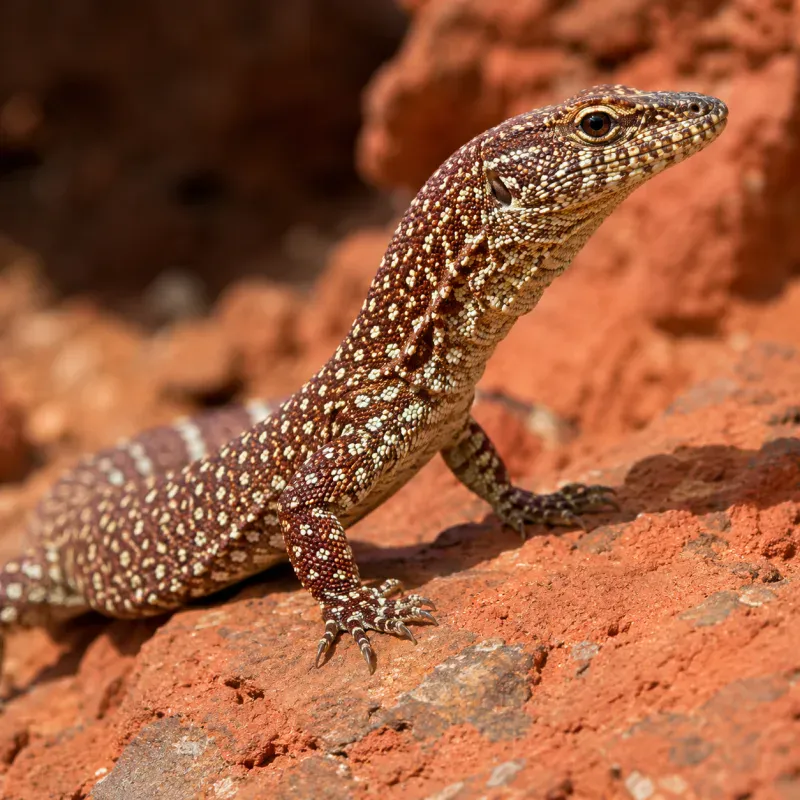
Ackie monitors (Varanus acanthurus) are among the most popular dwarf monitor lizards in the reptile hobby, prized for their intelligence, active nature, and manageable size. However, within this species, two distinct color morphs—red and yellow—are commonly available. While both share the same basic care requirements, subtle differences in size, temperament, price, and appearance can influence which is the better pet for you. This guide provides a comprehensive locality comparison, covering everything from enclosure setup to health concerns, so you can make an informed decision.
Species Quick Facts
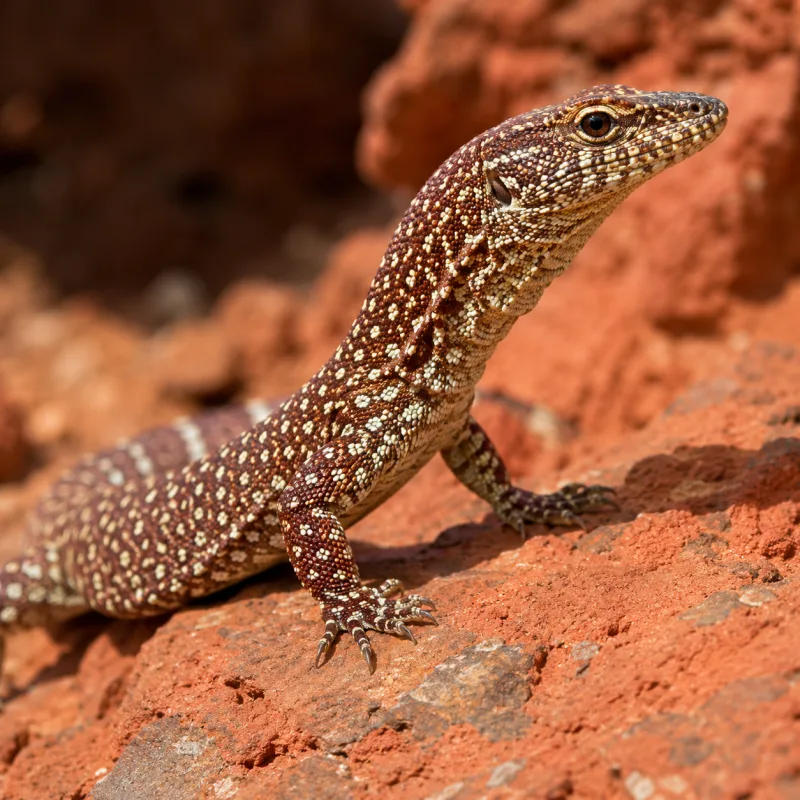
Scientific Name: Varanus acanthurus
Common Names: Ackie monitor, ridge-tailed monitor, spiny-tailed monitor
Lifespan: 15–20 years (captivity)
Adult Size: 24–30 inches (61–76 cm) total length; 18–24 inches (46–61 cm) SVL
Difficulty: Intermediate
Price Range: $300–$800 (red) / $200–$500 (yellow) initial setup
Red vs Yellow Ackie: Comparison Table
| Feature | Red Ackie | Yellow Ackie |
|---|---|---|
| Adult Size | 24–30 in (61–76 cm) | 20–26 in (51–66 cm) |
| Coloration | Deep red-orange with black bands | Bright yellow with black bands |
| Temperament | Moderately bold, may be more defensive | Generally calmer, more handleable |
| Price (juvenile) | $400–$800 | $200–$500 |
| Availability | Less common, often captive-bred | More common, wild-caught available |
| Best For | Experienced keepers, display animals | Intermediate keepers, handling |
Understanding the Differences
The table above highlights the key differences. Red Ackies are generally larger, more expensive, and less commonly available. They tend to be bolder but can be more defensive, especially if wild-caught. Yellow Ackies are smaller, more affordable, and often have a calmer disposition, making them a popular choice for those new to monitor keeping. However, individual temperament varies, and proper socialization is crucial for both morphs.
Enclosure Setup
Both red and yellow Ackies require a large, arid-terrarium setup. A single adult needs a minimum 4×2×2 ft (120×60×60 cm) enclosure; larger is always better. Use a deep substrate mix of 60% topsoil, 30% play sand, and 10% clay to allow burrowing. Provide multiple hides, cork bark, and rock piles to create a thermal gradient. Both morphs benefit from a basking platform that reaches 140–150°F (60–65°C) surface temperature, with a cool end around 80°F (27°C).
Step-by-Step Enclosure Setup
- Choose the enclosure: Start with at least a 4×2×2 ft (120×60×60 cm) front-opening terrarium for a single adult. Larger enclosures (e.g., 6×2×2 ft) are recommended for breeding pairs or if space allows.
- Prepare the substrate: Mix 60% topsoil (organic, without fertilizers), 30% play sand (washed), and 10% clay (excavator clay or natural clay) thoroughly. Dampen slightly to hold burrows but not soggy. Depth should be at least 12 inches (30 cm) to allow natural digging.
- Install heating and lighting: Place a basking bulb (halogen or mercury vapor) at one end on a thermostat. Add a UVB tube (5–6% or 10–12% depending on distance) spanning 2/3 of the enclosure. Ensure the basking platform is directly under the bulb.
- Create hides and enrichment: Use cork bark tubes, half logs, and rock piles to create multiple hiding spots at both warm and cool ends. Add branches for climbing.
- Set up a water dish: Provide a large, shallow water dish large enough for soaking. Place it in the cool end to avoid raising humidity too much in the warm zone.
- Test temperatures: Let the enclosure run for at least 24 hours and verify basking surface temps with an infrared thermometer, ambient temps with digital thermometers, and humidity with a hygrometer.
Substrate Options and Burrowing
Deep substrate is essential for Ackie well-being. They are natural burrowers, and providing a substrate that holds tunnels reduces stress and encourages natural behaviors. Avoid substrates like reptile carpet or paper towels, which do not allow digging. A mix of organic topsoil, play sand, and clay is ideal. Some keepers add a small amount of coconut coir to retain humidity, but avoid making it too moisture-retentive, as Ackies prefer arid conditions.
Enclosure Furnishings
Beyond hides and water, consider adding:
- Basking platform: A flat rock or slate tile that absorbs heat.
- Climbing branches: Sturdy branches for exercise.
- Humid hide: A plastic container with damp sphagnum moss to aid shedding.
- Leaf litter: Safe, non-toxic leaves for cover.
Heating and Lighting
Ackies are heliothermic, requiring intense basking spots. Use a high-wattage halogen or mercury vapor bulb for basking. Provide a UVB tube (5–6% or 10–12% depending on distance) spanning 2/3 of the enclosure. Daytime ambient temperature: 88–95°F (31–35°C) hot end, 75–80°F (24–27°C) cool end. Nighttime drop to 70–75°F (21–24°C). Red and yellow Ackies have identical thermal needs. Use a thermostat for basking bulbs to prevent burns.
Choosing the Right Bulbs
- Basking bulb: Halogen flood lights (e.g., 50–100W) are efficient and provide a focused hot spot. Mercury vapor bulbs also emit UVB but may be too intense for smaller enclosures; use with caution.
- UVB tube: T5 HO linear tubes (5–6% for low-output, 10–12% for high-output) are recommended. Place them so the lizard can get within 8–12 inches (20–30 cm) for adequate exposure.
- Thermostat: Always connect the basking bulb to a dimming thermostat or pulse-proportional thermostat to maintain precise temperatures and prevent overheating.
Photoperiod
Provide a 12-hour light/dark cycle. Use a timer to ensure consistency. During winter, some keepers reduce photoperiod to 10 hours to simulate seasonal changes, but this is optional. Always provide complete darkness at night; no red or blue night bulbs are needed.
Troubleshooting Temperature Issues
- Basking spot too hot: Raise the bulb higher or use a lower wattage. Ensure the thermostat is working.
- Cool end too warm: Increase ventilation or use a small fan. Move the water dish to the cool end.
- Nighttime drop not happening: Turn off all heating devices except a ceramic heat emitter if ambient temps fall below 70°F (21°C).
Humidity and Hydration
Humidity should be 30–50% during the day, with a nightly spike to 60–70% to simulate monsoonal rains. Mist the enclosure heavily in the evening; a humid hide with damp sphagnum moss aids shedding. Provide a large water dish for soaking. Both morphs require the same humidity regime, but red Ackies from arid regions may tolerate slightly lower levels.
Creating the Nightly Humidity Spike
- In the evening, after lights off, mist the entire enclosure with warm water, focusing on substrate and decor.
- Ensure the humid hide is moist but not dripping.
- Monitor humidity with a digital hygrometer. The spike should last several hours and gradually decrease overnight.
- In the morning, allow humidity to drop back to daytime levels (30–50%).
Hydration Tips
- Always provide a large water dish that is cleaned and refilled daily.
- Some Ackies prefer to drink from dripping water; consider a slow drip system or misting that creates droplets on leaves.
- Soaking in the water dish is normal and helps with shedding and hydration.
Diet and Feeding
Ackies are insectivorous carnivores. Feed a variety of gut-loaded insects: crickets, dubia roaches, black soldier fly larvae, silkworms, and occasional pinky mice (adults only). Juveniles eat 3–5 appropriately sized insects daily; adults every other day. Dust insects with calcium + D3 twice weekly, and a multivitamin once weekly. Both morphs have identical dietary needs, though red Ackies may be slightly more voracious feeders.
Feeding Schedule by Age
| Age Group | Frequency | Portion Size |
|---|---|---|
| Juveniles (under 6 months) | Daily | 3–5 small insects (e.g., 1/4-inch crickets, small dubia) |
| Sub-adults (6–18 months) | Every other day | 5–8 medium insects |
| Adults (over 18 months) | Every 2–3 days | 8–12 large insects or equivalent |
Gut-Loading and Supplementation
Gut-load insects for at least 24 hours before feeding with nutritious foods like dark leafy greens, carrots, and commercial gut-load diets. Dust insects with calcium + D3 twice weekly for adults, and for juveniles, dust with calcium + D3 at every feeding. Multivitamins should be given once weekly. Avoid over-supplementing with D3, as it can lead to toxicity.
Safe and Unsafe Foods
- Safe insects: Crickets, dubia roaches, discoid roaches, black soldier fly larvae, silkworms, hornworms, mealworms (in moderation), superworms (in moderation).
- Occasional treats: Pinky mice (adults only, once a month max), quail eggs, and small pieces of cooked egg.
- Avoid: Wild-caught insects (pesticide risk), fireflies (toxic), and high-fat insects like waxworms (too fatty).
Common Feeding Mistakes
- Overfeeding pinkies: Can cause obesity and liver issues. Limit to once a month or less.
- Feeding insects too large: Can cause impaction. Insects should be no larger than the space between the eyes.
- Skipping calcium: Leads to MBD. Be consistent with supplementation.
Handling and Temperament
Yellow Ackies are generally more tolerant of handling, especially if started young. They are curious and will often climb onto hands willingly. Red Ackies can be more skittish and defensive, especially if wild-caught. Regular, gentle handling from a young age improves behavior. Always support the body and avoid grabbing the tail, which can break. Both morphs can be tamed, but yellow Ackies are easier for beginners.
Building Trust
- Start slow: For the first week, only observe and feed without handling.
- Introduce your hand: Place your hand in the enclosure for a few minutes daily, allowing the Ackie to investigate.
- Offer food from tongs: This associates your presence with positive experiences.
- Gradual handling: Once the Ackie is comfortable, gently scoop it up with both hands, supporting the body and tail.
- Short sessions: Keep handling sessions to 5–10 minutes initially, gradually increasing as trust builds.
Handling Do's and Don'ts
- Do: Support the full body, keep sessions short, and handle in a quiet room.
- Don't: Grab the tail (it can break), squeeze, or handle when the lizard is shedding or stressed.
- Don't: Handle immediately after eating to avoid regurgitation.
Signs of Stress
- Hissing, tail whipping, or biting.
- Hiding excessively.
- Refusing food.
- Darkening of coloration (though not always a sign).
If you notice these signs, reduce handling frequency and give the Ackie more time to adjust.
Common Health Issues
Metabolic Bone Disease (MBD): Caused by insufficient UVB or calcium. Prevent with proper lighting and supplementation.
Respiratory Infections: From persistent low temperatures or high humidity. Ensure thermal gradient and ventilation.
Parasites: Wild-caught yellow Ackies often carry internal parasites. Fecal exams are essential.
Tail Rot: From retained shed or injury. Maintain humidity and inspect regularly.
Both morphs are susceptible, but red Ackies (often captive-bred) have fewer parasite issues.
Detailed Overview of Each Condition
- MBD: Symptoms include soft jaw, tremors, and deformed limbs. Treatment involves correcting UVB and calcium, and veterinary care. Prevention is key.
- Respiratory Infections: Wheezing, open-mouth breathing, and nasal discharge. Caused by temps below 75°F (24°C) or humidity above 60% for prolonged periods. Treat with increased temps and vet-prescribed antibiotics.
- Parasites: Weight loss, diarrhea, and lethargy. A fecal exam by a reptile vet can identify parasites, and appropriate deworming medication is needed.
- Tail Rot: The tail tip becomes necrotic due to retained shed or injury. Soaking the tail in warm water and gently removing shed can help. Severe cases may require amputation by a vet.
Preventive Health Care
- Schedule annual vet check-ups.
- Perform fecal exams on new animals, especially wild-caught.
- Maintain proper temperatures, humidity, and diet.
- Quarantine new arrivals for at least 30 days.
Common Mistakes
- Undersized enclosures: Ackies need space to thermoregulate and explore.
- Incorrect basking temps: Too low causes lethargy and poor digestion.
- Overhandling: Stresses the animal, especially red Ackies.
- Poor humidity cycles: Not providing nightly spikes leads to shedding problems.
- Feeding too many pinkies: Can cause obesity and liver issues.
- Using an all-sand substrate: Can cause impaction if ingested; use a soil mix instead.
- Ignoring UVB: Without UVB, MBD is almost guaranteed.
- Keeping in groups without proper space: Can lead to fighting; only cohabitate if you have a large enclosure and proper ratios.
Which Ackie Is the Best Pet?
For most keepers, the yellow Ackie is the better choice: more affordable, more handleable, and easier to find captive-bred. The red Ackie is a stunning display animal for experienced keepers willing to invest in higher cost and potentially more defensive behavior. Ultimately, both make rewarding pets when provided with proper care.
Decision Matrix
| Factor | Choose Red | Choose Yellow |
|---|---|---|
| Budget | If you can afford $400–$800+ | If you prefer $200–$500 |
| Experience | If you have kept monitors before | If you are new to monitors |
| Handling | If you don't mind less handling | If you want a more handleable pet |
| Display | If you want a striking red display | If you prefer yellow or want a more common morph |
| Availability | If you are willing to search for a breeder | If you want easier sourcing |
Related Reading
- Ackie Monitor Care Guide
- Ackie Monitor Diet Guide
- Ackie Monitor Enclosure Build
- Ackie Monitor Handling Guide
Frequently Asked Questions
Are red Ackie monitors more aggressive than yellow Ackies?
Generally, yellow Ackies are calmer and more handleable, especially when started young. Red Ackies can be more defensive, particularly if wild-caught, but with regular gentle handling both can be tamed.
Can red and yellow Ackies be housed together?
Housing multiple Ackies together is possible only in a very large enclosure (e.g., 6×2×2 ft or larger) with proper female-to-male ratios and monitoring for aggression. It is not recommended for beginners, and never house two males together.
What is the main difference in care between red and yellow Ackies?
There is no significant difference in care requirements. Both need the same enclosure size, temperatures, humidity, and diet. The only minor difference is that red Ackies from arid regions may tolerate slightly lower humidity levels, but both should be maintained within the recommended ranges.
Which Ackie morph is better for a first-time monitor owner?
The yellow Ackie is generally recommended for first-time owners due to its lower price, wider availability, and typically calmer temperament. Red Ackies are better suited for experienced keepers who are prepared for a more challenging but rewarding display animal.
Check optimal temps, calculate feeding, and find your perfect species match.
References
- Bennett, D. (1995). A Little Book of Monitor Lizards. Viper Press.
- Sprackland, R. G. (1992). Giant Lizards. TFH Publications.
- Eidenmüller, B. (2007). Monitor Lizards: Natural History, Captive Care, and Breeding. Edition Chimaira.
🐾 Join the Community
See how other keepers set up their enclosures, ask questions, and share your experience.
🛠️ Apply What You Learned
Check optimal temps, calculate feeding schedules, and get calcium dosage — all personalized for your species.
Comments
No account needed — corrections, updates and questions are all welcome. For a full question with photos, the community Q&A is the better place.