Schneider's Skink Diet: Insects & Veggies
Enclosure Setup
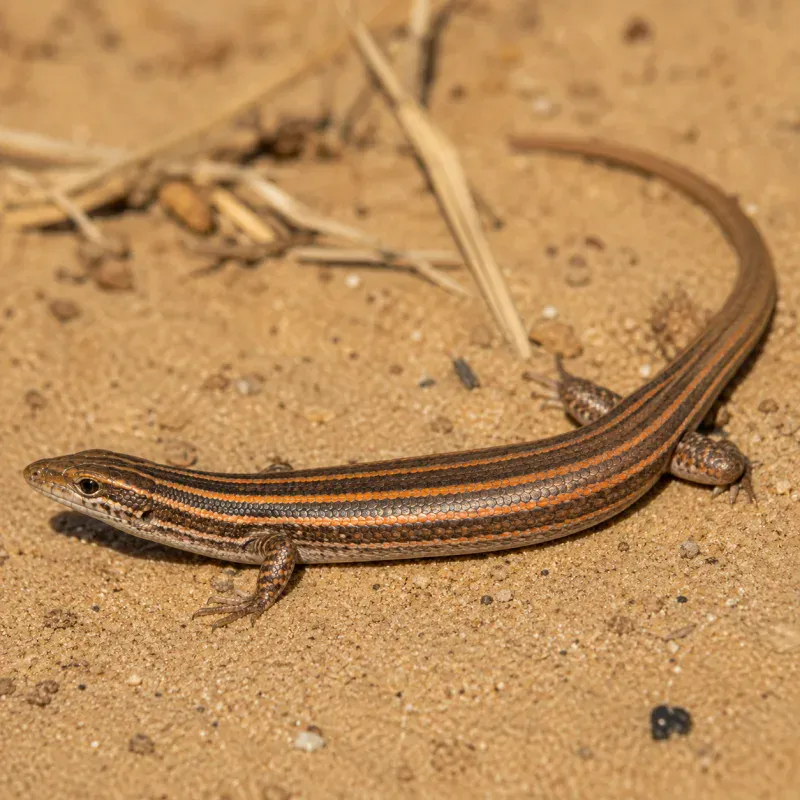
Schneider skinks (Eumeces schneideri) are active, terrestrial lizards native to North Africa and the Middle East. A single adult requires a 40-gallon breeder tank (36" x 18" x 16") as a minimum, with larger enclosures (4' x 2' x 2') recommended for a pair or trio. Use a solid substrate like a 50/50 mix of organic topsoil and play sand (4–6 inches deep) to allow burrowing. Provide multiple hides—one warm, one cool, and one moist hide filled with sphagnum moss to aid shedding. Include flat rocks, cork bark, and sturdy branches for climbing and basking. A water dish large enough for soaking (but shallow) should be placed on the cool side.
When setting up the enclosure, follow these steps:
- Choose the right tank size: A 40-gallon breeder (36" x 18" x 16") is the absolute minimum for one adult. For a pair or trio, upgrade to a 4' x 2' x 2' enclosure. Larger is always better—Schneider skinks are active foragers.
- Layer the substrate: Mix 50% organic topsoil with 50% play sand. Aim for a depth of 4–6 inches to allow natural burrowing. Avoid substrates with added chemicals or dyes.
- Place hides strategically: Put one hide on the warm side (near the basking spot), one on the cool side, and a moist hide in the middle. The moist hide should contain sphagnum moss that is kept slightly damp to aid shedding.
- Add decor: Use flat rocks for basking surfaces (ensure they are stable and won't collapse), cork bark for hiding and climbing, and sturdy branches for enrichment. Avoid sharp objects that could injure the skink.
- Set up the water dish: Choose a shallow dish that is large enough for soaking but not deep enough to pose a drowning risk. Place it on the cool side to maintain humidity gradients.
A well-structured enclosure reduces stress and encourages natural behaviors like burrowing and climbing, which are essential for the skink's physical and mental well-being.
Heating and Lighting
Schneider skinks are heliothermic, requiring a basking spot of 95–100°F (35–38°C) achieved with a halogen or ceramic heat emitter. The ambient warm side should be 85–90°F (29–32°C), with a cool side of 70–75°F (21–24°C). Nighttime temperatures can drop to 65–70°F (18–21°C). Use a thermostat to regulate heat sources. Provide UVB lighting (5–6% T5 HO bulb, 10–12 hours daily) for vitamin D3 synthesis and calcium metabolism. Without UVB, skinks are prone to metabolic bone disease. Place the UVB bulb 12–18 inches from the basking surface. Replace bulbs every 6–12 months.
To set up heating and lighting correctly:
- Use a thermostat: Connect all heat sources to a thermostat to prevent overheating and ensure consistent temperatures. Place the probe near the basking spot.
- Create a thermal gradient: Position the heat source at one end of the enclosure, leaving the other end cooler. This allows the skink to regulate its body temperature by moving between zones.
- Monitor temperatures daily: Use digital thermometers (one on the warm side, one on the cool side) and a temperature gun to verify basking spot temperatures.
- Choose the right UVB bulb: A 5–6% T5 HO bulb (e.g., Arcadia Forest 6% or Zoo Med ReptiSun 5.0) is ideal. Mount it 12–18 inches from the basking surface, ensuring no glass or plastic blocks the UVB rays.
- Replace UVB bulbs regularly: Even if the bulb still emits visible light, UVB output diminishes over time. Replace every 6–12 months to maintain effectiveness.
Common heating mistakes to avoid:
- Using heat rocks: Heat rocks can cause severe burns due to uneven heating. Always use overhead heat sources.
- Placing the UVB bulb too far: If the bulb is more than 18 inches away, the skink won't receive adequate UVB, leading to calcium deficiency.
- Ignoring nighttime drops: While nighttime temperatures can drop to 65–70°F, avoid letting them fall below 60°F, as this can stress the skink and impair digestion.
Humidity and Hydration
Maintain ambient humidity at 40–50%, with a spike to 60–70% in the moist hide. Use a digital hygrometer to monitor. Misting the enclosure lightly in the morning helps, but avoid waterlogging the substrate. Provide a clean water dish at all times, changed daily. Skinks often defecate in water, so check and clean frequently. Soaking your skink in shallow warm water (85°F) once a week for 10–15 minutes promotes hydration and healthy shedding.
Here's how to manage humidity effectively:
- Place a hygrometer on the cool side: This gives a representative reading of ambient humidity. Check it daily.
- Mist in the morning: Lightly mist the enclosure (especially around the moist hide) to create a morning dew effect. Avoid saturating the substrate, as excessive moisture can lead to scale rot.
- Maintain the moist hide: Keep the sphagnum moss damp but not dripping. Replace the moss weekly to prevent mold growth.
- Soak weekly: Fill a shallow container with warm (85°F) water at a depth of about 1 inch. Place your skink in it for 10–15 minutes. Always supervise the soak and never leave your skink unattended.
Signs of improper humidity:
- Too dry: Retained shed, especially around the toes and tail, and dry, flaky skin.
- Too wet: Scale rot (characterized by red, swollen, or blistered scales) and respiratory issues.
Diet and Feeding
Schneider skinks are omnivorous, requiring a balanced mix of insects, vegetables, and occasional fruits. Insects should make up 70% of the diet, vegetables 25%, and fruits 5%.
Insect Variety
Offer a rotation of gut-loaded insects: crickets, dubia roaches, black soldier fly larvae, mealworms (in moderation due to fat), superworms (treats only), and hornworms. Dust all insects with a calcium supplement (without D3) at every feeding for juveniles and every other feeding for adults. Use a multivitamin (with D3) once weekly for adults, twice weekly for juveniles. Avoid wild-caught insects due to pesticide risk.
To ensure a balanced insect diet:
- Gut-load insects: Feed feeder insects nutritious foods (carrots, dark leafy greens, commercial gut-load diets) for 24–48 hours before offering them to your skink. This transfers essential nutrients to your pet.
- Rotate insect types: Different insects offer different nutritional profiles. For example, dubia roaches are high in protein, while black soldier fly larvae are rich in calcium. Rotating prevents nutritional deficiencies and boredom.
- Limit fatty insects: Mealworms and superworms are high in fat. Offer mealworms no more than once a week and superworms as rare treats. Overfeeding can lead to obesity and fatty liver disease.
- Size matters: Insects should be no larger than the space between the skink's eyes. For juveniles, opt for small crickets or dubia roach nymphs.
- Never feed wild-caught insects: They may carry pesticides or parasites that can harm your skink.
Vegetable Supplements
Finely chop or grate dark leafy greens (collard, mustard, dandelion, escarole), squash, zucchini, bell peppers, and carrots. Avoid spinach, kale (high oxalates), and iceberg lettuce (low nutrition). Offer a vegetable salad 2–3 times weekly. Fruits like berries, mango, or papaya can be offered as treats once weekly. Always remove uneaten vegetables after 24 hours.
Preparation tips:
- Chop finely: Use a knife or grater to make pieces small enough for the skink to eat easily. This also reduces the risk of choking.
- Mix colors: A variety of colors indicates a range of vitamins and minerals. For example, add shredded carrots for beta-carotene and bell peppers for vitamin C.
- Wash thoroughly: Rinse all produce to remove pesticide residues, even if organic.
- Offer in a shallow dish: Use a heavy, shallow bowl to prevent tipping. Place it on the cool side to avoid rapid wilting.
Vegetables to avoid:
- Spinach and kale: High in oxalates, which bind calcium and prevent absorption.
- Iceberg lettuce: Contains little nutritional value and mostly water.
- Rhubarb: Toxic to reptiles.
Feeding Schedule
| Age | Insects per Feeding | Frequency | Vegetables | Supplements |
|---|---|---|---|---|
| Juveniles (0–12 months) | 5–8 appropriately sized insects | Daily | Small pinch daily | Calcium w/ D3 daily; multivitamin 2x/week |
| Adults (12+ months) | 8–12 insects | Every other day | 1–2 tbsp 2–3x/week | Calcium w/o D3 every other feeding; multivitamin 1x/week |
Adjust the schedule based on your skink's body condition. A healthy skink should have a rounded belly but not be obese. If you notice weight gain, reduce the number of insects or frequency. Conversely, if your skink is losing weight, increase portions slightly.
Supplement Dusting
Place insects in a plastic bag or container with a pinch of supplement powder, shake gently to coat, then feed immediately. For calcium, choose a product without vitamin D3 if UVB is provided (e.g., Repashy Calcium Plus). For multivitamins, use a balanced reptile multivitamin (e.g., Zoo Med Reptivite). Over-supplementation can cause toxicity, so follow the schedule strictly.
Step-by-step dusting process:
- Measure the supplement: Use a small pinch (about 1/8 teaspoon) for a batch of 5–10 insects. Too much can be harmful.
- Place insects in a bag: Use a clean plastic bag or a deli cup. Add the insects and the supplement.
- Shake gently: Swirl the bag to coat the insects evenly. Avoid vigorous shaking that could injure the insects.
- Feed immediately: Offer the dusted insects to your skink right away to ensure the powder adheres well and is consumed.
Supplement types explained:
- Calcium without D3: Use if you provide UVB lighting. The skink's body synthesizes vitamin D3 from UVB, so additional D3 from supplements can lead to toxicity.
- Calcium with D3: Use for juveniles that are still growing and may need extra D3, especially if UVB exposure is limited. Follow the schedule strictly.
- Multivitamin: Provides other essential vitamins (A, E, B-complex) that may be lacking in insect-only diets. Use as directed to avoid hypervitaminosis.
Common mistakes in supplementing:
- Over-supplementing: Too much calcium or vitamins can cause organ damage. Stick to the recommended schedule.
- Using the wrong type: If you provide UVB, avoid calcium with D3 for adults to prevent D3 toxicity.
- Skipping multivitamins: A diet of only insects and vegetables may lack certain vitamins, so multivitamins are essential for long-term health.
Handling
Schneider skinks can be tamed with consistent, gentle handling. Start with short sessions (5–10 minutes) after the skink has settled in for a week. Support the body fully, never grab the tail (it can drop). Handle in a quiet room to reduce stress. Avoid handling after feeding (wait 24 hours) or during shedding. Signs of stress include hissing, tail twitching, and attempting to bite. With patience, most become docile and enjoy exploring hands.
Handling tips:
- Wait at least a week: Allow your new skink to acclimate to its enclosure before handling. This reduces stress and helps the skink feel secure.
- Start slow: Begin with short sessions of 5–10 minutes, gradually increasing the duration as your skink becomes more comfortable.
- Support the body: Use both hands to create a stable platform. Never lift by the tail, as autotomy (tail dropping) is a defense mechanism.
- Choose a quiet environment: Handle in a room without loud noises or other pets. This minimizes stress and helps the skink trust you.
- Watch for stress signals: Hissing, tail twitching, and attempting to bite are signs that your skink is stressed. If these occur, end the session and try again later.
- Time your handling: Avoid handling immediately after feeding (wait 24 hours to prevent regurgitation) and during shedding (when the skin is sensitive).
Common Health Issues
- Metabolic Bone Disease (MBD): Caused by insufficient UVB or calcium. Symptoms: soft jaw, tremors, lethargy. Prevent with proper lighting and supplementation.
- Respiratory Infections: Signs: wheezing, nasal discharge, open-mouth breathing. Caused by low temperatures or high humidity. Keep basking temps correct.
- Parasites: Internal (worms, coccidia) or external (mites). Quarantine new animals, fecal exams annually.
- Tail Drop (Autotomy): Stress-induced. Allow to heal on its own; keep substrate clean. Regrowth occurs over months.
- Impaction: From loose substrate ingestion. Use proper substrate, avoid feeding on sand. Symptoms: constipation, loss of appetite.
Prevention and treatment:
- MBD: Ensure UVB lighting is functioning and replace bulbs every 6–12 months. Provide calcium supplements as scheduled. If symptoms appear, consult a reptile veterinarian immediately.
- Respiratory Infections: Maintain proper temperatures (basking 95–100°F, ambient 85–90°F) and avoid high humidity (keep below 50%). If you see wheezing or nasal discharge, increase temperatures slightly and consult a vet if symptoms persist.
- Parasites: Quarantine new skinks for at least 30 days. Have a fecal exam done annually by a vet. If parasites are found, follow the prescribed deworming treatment.
- Tail Drop: This is a stress response. Keep the substrate clean to prevent infection. The tail will regrow over months, but it may look different. Avoid handling until the wound heals.
- Impaction: Use a substrate that is not easily ingested (e.g., a mix that is too coarse). Never feed insects directly on sand. If impaction is suspected, soak the skink in warm water to encourage bowel movements and consult a vet if symptoms persist.
Avoid These Errors
- Overfeeding fatty insects: Mealworms and superworms should be limited—obesity leads to fatty liver disease.
- Skipping UVB: Even with D3 supplements, UVB is essential for natural behavior and bone health.
- Incorrect humidity: Too dry causes shedding issues; too wet causes scale rot.
- Handling too soon: Stress can suppress appetite and immune function. Wait at least a week.
- Using heat rocks: They cause burns. Stick to overhead heat sources.
- Not gut-loading insects: Feeder insects must be fed nutritious foods (carrots, greens, commercial gut-load) for 24–48 hours before feeding to your skink.
Additional mistakes to avoid:
- Feeding insects that are too large: This can cause choking or impaction. Always choose appropriately sized prey.
- Leaving uneaten vegetables for too long: They spoil quickly and can harbor bacteria. Remove after 24 hours.
- Using a water dish that is too deep: Even though skinks can swim, a deep dish poses a drowning risk, especially for juveniles.
- Ignoring temperature gradients: Without a proper gradient, the skink cannot regulate its body temperature, leading to stress and illness.
- Not providing a moist hide: This can lead to shedding difficulties, especially around the eyes and toes.
Frequently Asked Questions
How often should I feed my adult Schneider skink?
Adult Schneider skinks (12+ months) should be fed every other day. Each feeding should consist of 8–12 appropriately sized insects, dusted with calcium without D3 every other feeding, and a multivitamin once weekly. Additionally, offer 1–2 tablespoons of finely chopped vegetables 2–3 times per week.
Can I feed my Schneider skink only insects?
No, Schneider skinks are omnivorous. A diet consisting solely of insects lacks essential vitamins and minerals found in vegetables and fruits. The recommended diet is 70% insects, 25% vegetables, and 5% fruits. A balanced diet prevents nutritional deficiencies and promotes long-term health.
What are the signs of metabolic bone disease in Schneider skinks?
Metabolic bone disease (MBD) is caused by insufficient UVB or calcium. Symptoms include a soft jaw, tremors, lethargy, and difficulty moving. If you notice these signs, consult a reptile veterinarian immediately. Prevention involves providing UVB lighting (5–6% T5 HO bulb) for 10–12 hours daily, replacing the bulb every 6–12 months, and dusting insects with calcium as scheduled.
How do I safely handle my Schneider skink without causing stress?
Wait at least a week after bringing your skink home before handling. Start with short sessions of 5–10 minutes in a quiet room, supporting the body fully with both hands. Never grab the tail, as it can drop (autotomy). Avoid handling after feeding (wait 24 hours) or during shedding. Watch for stress signals like hissing, tail twitching, or biting, and end the session if they occur.
Related Reading
- Schneider's Skink Care: Setup, Diet, and Health — Get the full care overview covering habitat, feeding, and health essentials.
- Schneider Skink Enclosure: Heating & Substrate — Learn how to set up the perfect enclosure with proper heating and substrate.
- Reptile Vitamins & Supplements: Calcium With or Without D3 — Understand calcium and vitamin supplements to keep your skink healthy.
- Reptile UVB Lighting Guide: Ferguson Zones & Bulb Selection — Discover UVB lighting needs and how to choose the right bulb.
- Garter Snake Diet Guide: Fish, Worms & Feeding Schedule — Compare feeding practices with another insect and protein-loving reptile.
Check optimal temps, calculate feeding, and find your perfect species match.
References
- Vosjoli, P. (2004). The Lizard Keeper's Handbook. Advanced Vivarium Systems.
- McKeown, S. (1996). A Field Guide to Reptiles and Amphibians in the Hawaiian Islands. Island Heritage Publishing.
- Kaplan, M. (2015). Reptile Lighting: A Guide to UVB and Other Light Sources. Reptile Apartment.
🐾 Join the Community
See how other keepers set up their enclosures, ask questions, and share your experience.
🛠️ Apply What You Learned
Check optimal temps, calculate feeding schedules, and get calcium dosage — all personalized for your species.
Comments
No account needed — corrections, updates and questions are all welcome. For a full question with photos, the community Q&A is the better place.